











Popular
What is the significance of the main character's journey throughout the film?
How does the character of the old man influence the protagonist's journey?
What role does love play in the protagonist's encounters with different women?
How does the protagonist's relationship with his family affect his character development?
What are the key challenges the protagonist faces during his travels?
Should I watch it?
Ask Your Own Question

What is the plot?
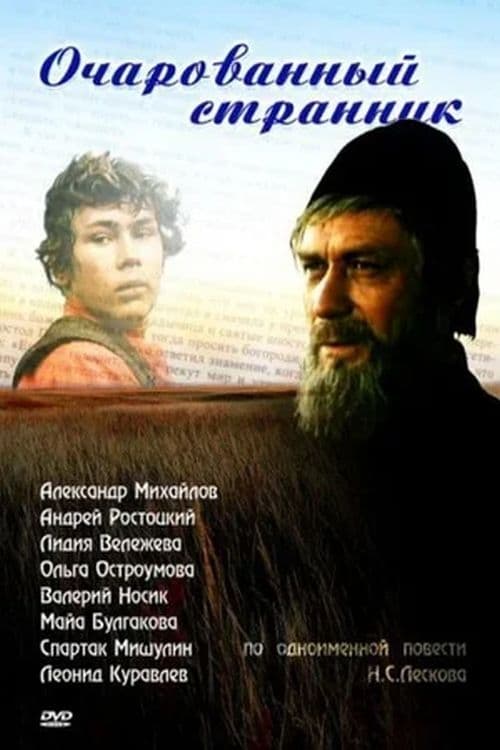
Aboard a steamship, a priest introduces Ivan Severyanych Flyagin as "a great sinner," and from that confession the whole film unfolds as one long, memory-scarred admission of guilt. Ivan is no ordinary wanderer: he is a man promised to God by his mother before he is fully grown, a fact that hangs over every catastrophe in his life like a hidden judgment, even when he himself does not understand it.
His story begins in the world of serfdom, on his lord's estate, where he serves as a horse driver and stable hand. The estate is not just a place of work but the first cage in a life of cages. Ivan is already marked by a strange intimacy with animals, especially horses, and by a stubborn, impulsive temperament that will keep dragging him into disaster. One of his earliest memories is of brutal labor and childish rage. When a household cat kills the pigeons he has cared for, Ivan, furious and half-blind with grief, cuts off the cat's tail. It is a small act, almost petty in scale, but the consequences are enormous. The household masters learn of it, and punishment descends with the full violence of class power. Ivan is whipped, humiliated, and thrown out of the stable and off the path of the life he loves. That first expulsion is a turning point: once he is driven from the horses, he begins to drift into the long chain of wanderings that will define him.
Shame and rage push him toward despair. Cast out from the work that gives shape to his life, he attempts to hang himself. The film treats this moment not as melodrama but as the first deep sign that Ivan's destiny is already tied to suffering and spiritual failure. Yet even here, the world refuses to let him disappear quietly. He survives, and survival becomes his curse. He cannot simply die; he must continue living through the consequences of everything he does.
Ivan's path turns darker after this. He kills a monk early in his life, and though the death is described as accidental, it becomes one of the heaviest burdens in the film. The image of the monk does not vanish with the body; it returns in Ivan's mind, in dreams and visions, like an accusation that can never be answered. The dead man becomes a spiritual echo, a reminder that Ivan's sins are never buried, only carried forward. The film's religious frame grows heavier here, because the murder is not just a crime but evidence that his life, from the beginning, is a struggle between violence and repentance.
He later comes to the horse fair, a place alive with noise, trading, pride, and animal power. This setting brings out Ivan's uncanny gift: he can judge horses with near-mystical accuracy. In the bustle of the fair, amid bargaining and swaggering men, he displays a practical genius that makes him look almost inspired. But the same scene turns murderous. Ivan gets into a violent confrontation with a Tartar, and the fight ends in a killing. Unlike the earlier death of the monk, this one is direct and unmistakable. Ivan's hands are not innocent; he is capable of lethal force, and the film makes sure the audience understands that every new talent he shows is shadowed by a new sin. The fair, with its bright movement and worldly bustle, becomes another threshold: he enters it as a gifted horseman and leaves it stained by blood.
The wandering continues, and with it the sense that Ivan is being pushed from one identity to the next by forces larger than himself. He becomes soldier, servant, prisoner, horse trader, bodyguard, actor, and drifter across a series of households and borders. His life is less a line than a storm of reinventions. At every stage he seems to have the skill to belong somewhere, and at every stage he loses his place. That instability is not only social; it is moral and spiritual. Ivan never quite knows whether he is being punished, tested, or led.
At some point he is taken into Tartar captivity, and the film lingers on this part of his life as a long ordeal of suffering and endurance. The steppe world is harsh and alien, stripping him away from Russian order and placing him among another people, another language, another law. Captivity among the Tatars becomes a trial of body and identity. He is not simply imprisoned; he is remade by deprivation. The vastness of the steppe, rather than offering freedom, becomes another kind of isolation. Ivan endures hunger, coercion, instability, and the continuous threat of violence. These years are less a single event than a prolonged test of whether a man can remain himself when everything familiar has been taken away.
When he eventually reenters Russian life, he does so into another web of desire and humiliation, this time in the household of a prince. The prince becomes one of the most important figures in the story because he represents wealth, caprice, and the moral emptiness of the upper class. In his service Ivan again finds himself near horses and travel, but the household is also where the film's central tragedy begins to gather shape. The prince acquires Grusha, the beautiful Gypsy woman, for fifty thousand rubles. That detail matters because money is not just background here; it is the mechanism by which human beings are treated as objects. Grusha is bought, admired, used, and abandoned with aristocratic ease. The amount itself, repeated in the story, carries the weight of a moral insult: a woman's fate is priced as though it were a horse or a piece of property.
Grusha enters the film as a figure of haunting beauty and emotional force. She is not merely decorative; she draws the film's whole later tragedy toward her. Ivan is fascinated by her, but the prince is the one who possesses her socially and economically. That imbalance creates the emotional center of the narrative. During a drunken spree with the Gypsies, Ivan wastes a large sum of the prince's money in the company of the seductive Grusha. This could have destroyed him, but the prince forgives him, not out of generosity, but because he too is consumed by desire. He has already spent vastly more on Grusha himself, and his forgiveness is really a form of self-excusing hypocrisy. He wants the woman, so Ivan's recklessness can be absorbed into the prince's own obsession.
Grusha is drawn into the prince's world, and for a while she seems to believe there is a place for her there. The prince persuades her to come live with him. The arrangement, however, is built on vanity, appetite, and deception. Once the novelty fades, he grows tired of her. The man who spent a fortune to possess her now abandons her when she becomes inconvenient. This betrayal is the emotional center of the story's second half. It exposes the entire aristocratic world as fundamentally false: women are purchased, desire is temporary, promises are disposable, and the people who hold power feel no obligation to the lives they ruin.
Grusha's humiliation becomes unbearable. She is left not only rejected but spiritually shattered. The film gives this descent a tragic gravity; she is not merely heartbroken, she is cornered by the knowledge that she has been used and discarded. In her desperation she returns to Ivan and forces the narrative toward its darkest point. She takes a terrible oath from him, binding him with a promise, and asks him to kill her. Her request is not framed as melodramatic self-destruction but as a final act of agency in a world that has stripped her of all power. She declares, in effect, that if she cannot escape dishonor and if the prince's treachery stands unpunished, she will not live to be destroyed further. The prince's betrayal has made her life unlivable.
Ivan is crushed by the request. He has already carried one death in guilt and another in blood; now he must decide whether to become the instrument of the woman's final wish. Grusha's plea forces all of Ivan's moral contradictions into one unbearable moment. He is a sinner, but he is also a man who knows compassion. He is violent, yet he is capable of fidelity. He has failed many times, but here failure and mercy are the same act. In the end he obeys the oath and kills her, carrying out the act she demands. The film's account makes clear that he fulfills her request by throwing her from a steep height into the river. The image is devastating: Grusha's beauty, pain, and dignity vanish into the current, while Ivan stands as both lover, executioner, and witness to his own damnation.
This is the great tragic climax of the film, the moment around which the rest of Ivan's life turns into aftermath. Grusha's death is not presented as a simple murder but as the culmination of a chain of abandonment, possession, and remorse. The prince's greed and fickleness cause it, Ivan performs it, and Grusha herself insists on it. No one escapes blame. The prince betrays; Ivan obeys; Grusha chooses the only exit left to her. It is one of the film's cruelest twists: the most tender or beautiful figure in the story is the one crushed by the system of male desire and aristocratic convenience.
After Grusha dies, the film does not offer cleansing relief. Instead, Ivan remains burdened by the voices of the dead. The monk he killed earlier returns in his visions, and now Grusha too joins the company of those whose deaths press on his conscience. The supernatural atmosphere becomes more pronounced, as if the film is telling us that the dead do not simply vanish but continue to speak in the soul of the living. Ivan's guilt is no longer just memory; it is spiritual possession. The dead inhabit him, and his wandering is revealed to be as much an inner exile as a physical one.
At this point, the film's frame story begins to feel like the only possible form for such a life. On the steamship, Ivan tells fellow passengers about everything he has endured, and the act of telling becomes a kind of confession. The priest's opening judgment now makes sense in fuller depth: Ivan is not boasting, nor merely entertaining his listeners. He is seeking purification. He speaks because his life, with all its strange turns, can only be survived if it is turned into testimony. The journey is literal and spiritual at once. He is moving through water while recounting a life that has repeatedly plunged into moral drowning.
The film continues to emphasize how many times Ivan has been remade by forces beyond his control. He has been a serf and horse driver, a captive among the Tatars, a servant in noble households, a man of warlike impulse, and a wanderer passing through roles without ever settling into one. This sequence of identities matters because it shows that the title "enchanted wanderer" is not just poetic. Ivan is bewitched by fate, by guilt, by circumstance, and by a strange, half-understood calling toward monastic life. He is drawn toward the monastery even when he resists it, because the promise made by his mother keeps asserting itself. The film's spiritual logic insists that he was never simply free to live as he pleased. He is moving, however erratically, toward a final reckoning.
The ending does not give him a worldly resolution. There is no triumphant vindication, no restoration of love, no public justice for Grusha, and no resurrection for the monk or the others he has lost. Instead, the final movement of the story brings Ivan to the monastery, where his life is absorbed into religious withdrawal and penance. The setting is quiet compared with the rest of the film, but the quiet is not peace so much as exhaustion. The wanderer who once moved through estates, fairs, camps, and princely households now reaches the place his mother's vow had pointed toward from the start. It is not a reward. It is the last station in a life marked by sin.
The last scenes preserve the atmosphere of confession rather than closure. Ivan's story has been told, but it cannot be undone. The film leaves him as a man still haunted by the dead, still aware of his own guilt, and still living under the weight of divine promise. What survives is not innocence but memory, and not salvation in any simple sense but the possibility that his suffering has become prayer. The wandering ends not with release from the past, but with the past gathered into speech. Ivan Flyagin, the "great sinner," arrives at the monastery after a lifetime of violence, longing, captivity, and ruin, and the film closes on the terrible knowledge that even now he remains a man seeking mercy for deeds that can never be forgotten.



What is the ending?
In the ending of "The Enchanted Wanderer," the protagonist, Ivan, faces the consequences of his choices and the magical events that have unfolded throughout his journey. He ultimately finds himself in a confrontation with the forces of fate and magic, leading to a resolution that intertwines his destiny with that of the enchanted world around him.
As the story unfolds towards its conclusion, we see Ivan, weary from his travels and the burdens of his past, arrive at a mystical forest. The atmosphere is thick with enchantment, and the trees seem to whisper secrets of the past. Ivan is drawn deeper into the woods, where he encounters a series of fantastical beings, each representing different aspects of his journey and the choices he has made.
In a pivotal scene, Ivan meets a wise old man who reveals the truth about his past and the nature of his enchantment. The old man speaks with a voice that resonates with the weight of time, urging Ivan to confront his fears and regrets. This moment is filled with tension as Ivan grapples with his identity and the consequences of his actions. The old man's words echo in Ivan's mind, pushing him to reflect on his life choices and the impact they have had on those around him.
As Ivan continues through the forest, he encounters the spirits of those he has wronged, including a lost love and friends he abandoned. Each spirit confronts him with their pain, forcing Ivan to confront the emotional turmoil he has caused. The visuals are haunting, with ethereal light illuminating the faces of the spirits, their expressions a mix of sorrow and longing. Ivan's emotional state shifts from guilt to a desperate need for redemption, and he begins to understand the weight of his wanderings.
In the climax of the film, Ivan faces a final test--a confrontation with the embodiment of his enchantment, a powerful force that has guided his fate. This being challenges Ivan to choose between continuing his aimless wandering or embracing his true self and the responsibilities that come with it. The scene is charged with energy, as Ivan stands at a crossroads, the forest around him pulsating with magic and tension.
Ultimately, Ivan chooses to accept his past and the consequences of his actions. In a moment of clarity, he breaks the enchantment that has held him captive, symbolizing his acceptance of responsibility and his desire to forge a new path. The forest begins to transform, the oppressive atmosphere lifting as light breaks through the trees, signifying hope and renewal.
As the film draws to a close, we see Ivan emerge from the forest, changed and resolute. He is no longer the lost wanderer but a man who has faced his demons and is ready to embrace a new beginning. The final scenes depict him walking towards a distant village, a sense of purpose in his stride. The camera lingers on his face, capturing a mixture of relief and determination, as he steps into the light of a new day.
The fates of the other characters are intertwined with Ivan's journey. The spirits he encountered find peace as Ivan acknowledges their pain, suggesting that his acceptance of responsibility has allowed them to move on. The film ends on a note of hope, emphasizing the themes of redemption, the importance of facing one's past, and the transformative power of self-acceptance.
Is there a post-credit scene?
The movie "The Enchanted Wanderer," produced in 1990, does not have a post-credit scene. The film concludes its narrative without any additional scenes or content after the credits roll. The story wraps up with the protagonist's journey, leaving the audience with a sense of closure regarding the character's fate and the themes explored throughout the film.
What is the significance of the main character's journey throughout the film?
The main character, a wandering minstrel, embarks on a journey that symbolizes the search for identity and purpose. His travels take him through various landscapes and encounters with different people, each experience shaping his understanding of love, loss, and the human condition.
How does the character of the old man influence the protagonist's journey?
The old man serves as a mentor figure, providing wisdom and guidance to the protagonist. His stories and experiences reflect the struggles of life, and he encourages the protagonist to embrace his own path, ultimately influencing his decisions and growth.
What role does love play in the protagonist's encounters with different women?
Love is a recurring theme in the protagonist's interactions with various women he meets on his journey. Each relationship reveals different facets of love, from passion to heartbreak, and highlights the protagonist's evolving understanding of emotional connection and vulnerability.
How does the protagonist's relationship with his family affect his character development?
The protagonist's relationship with his family, particularly his parents, is marked by conflict and longing. Their expectations and the protagonist's desire for freedom create an internal struggle that drives his actions and decisions throughout the film, ultimately leading to a deeper understanding of his own desires.
What are the key challenges the protagonist faces during his travels?
Throughout his travels, the protagonist faces numerous challenges, including physical hardships, emotional turmoil, and moral dilemmas. These challenges test his resilience and force him to confront his fears, ultimately shaping his character and leading to moments of profound self-discovery.
Is this family friendly?
"The Enchanted Wanderer," produced in 1990, is a film that weaves together elements of fantasy and adventure, but it does contain some scenes that may be considered objectionable or upsetting for children or sensitive viewers.
-
Violence and Conflict: The film includes scenes of battles and confrontations that may depict violence, which could be distressing for younger audiences.
-
Death and Loss: There are moments that involve themes of death and loss, which may evoke strong emotions and could be upsetting for sensitive viewers.
-
Supernatural Elements: The presence of supernatural beings and dark forces may be frightening for some children, as they can create a sense of unease.
-
Emotional Turmoil: Characters experience significant emotional struggles, including despair and betrayal, which may be intense for younger viewers to process.
-
Mature Themes: The film explores complex themes such as fate, destiny, and the human condition, which may be difficult for children to fully understand.
Overall, while the film has enchanting elements, parents may want to consider these aspects when determining its suitability for younger audiences.







