




Popular
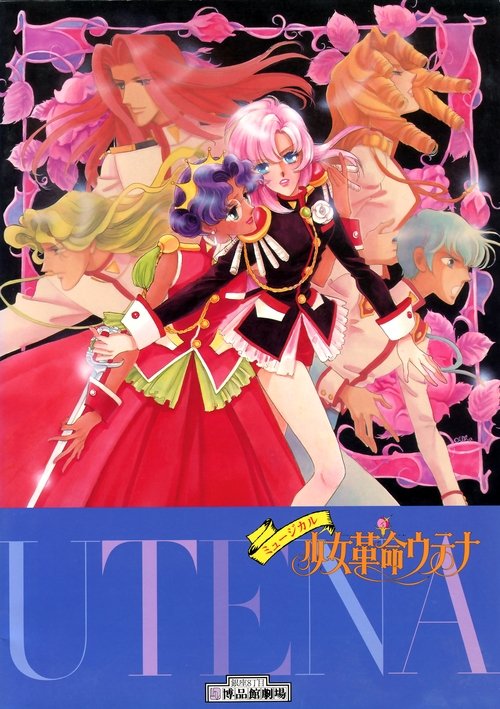
What is the significance of Utena's prince in her life and how does it influence her actions throughout the story?
How does Anthy Himemiya's character evolve throughout the musical, particularly in relation to Utena?
What role does Akio Ohtori play in the story, and how does his character impact the other characters?
What is the significance of the duels in the story, and how do they affect the characters involved?
How does the musical format enhance the storytelling of Revolutionary Girl Utena?
Should I watch it?
Ask Your Own Question

What is the plot?
Sorry, we aren't able to watch and write up a full detailed plot yet. Check back in a few days.


What is the ending?
In the ending of "Revolutionary Girl Utena: The Musical Comedy," Utena Tenjou confronts the final challenges of the dueling system at Ohtori Academy. After a series of intense battles and emotional revelations, she ultimately faces Akio Ohtori, the manipulative prince figure. Utena's determination to protect Anthy Himemiya leads her to reject the cycle of dueling and the oppressive system that has ensnared them. In a climactic moment, Utena transforms, symbolizing her growth and resolve. The story concludes with Utena and Anthy breaking free from the confines of their roles, suggesting a new beginning for both characters.
As the final act unfolds, the stage is set with a dramatic backdrop of the Ohtori Academy, its towering structures looming ominously. The atmosphere is charged with tension as Utena, clad in her signature uniform, stands resolute, her heart pounding with the weight of her mission. She has come to understand the true nature of the dueling system and the pain it has caused not only her but also Anthy, the Rose Bride.
Scene by scene, the narrative progresses. Utena enters the arena, where the final duel is to take place. The audience can feel her determination radiating from her as she grips her sword tightly, her eyes reflecting both fear and courage. Akio, with his charming yet sinister demeanor, taunts her, reminding her of the futility of her quest. He embodies the oppressive forces that have manipulated the students of Ohtori Academy, and Utena's resolve only strengthens in response to his provocations.
As the duel commences, the choreography is both graceful and fierce, with Utena and Akio exchanging blows that symbolize their conflicting ideologies. Utena fights not just for victory but for the freedom of Anthy, who has been trapped in a cycle of abuse and manipulation. The audience witnesses Utena's internal struggle; she is not just battling Akio but also the doubts that threaten to undermine her mission. Each clash of their swords echoes the emotional stakes at play, and Utena's determination shines through as she recalls her promise to protect Anthy.
In a pivotal moment, Utena gains the upper hand, and the stage is filled with a blinding light as she transforms, embodying the ideals of a true prince. This transformation is not merely physical; it represents her acceptance of her role as a protector and her rejection of the toxic legacy of the dueling system. The light envelops her, and the audience can feel the shift in the atmosphere, a palpable sense of hope emerging from the darkness.
As the duel reaches its climax, Utena confronts Akio with a powerful declaration of her intentions. She refuses to be a pawn in his game any longer. In a moment of vulnerability, she reaches out to Anthy, who has been watching the duel with a mixture of fear and hope. Utena's words resonate deeply with Anthy, who has longed for someone to break the chains of her past.
In the final confrontation, Utena's sword pierces through the illusions that Akio has created, shattering the oppressive system that has governed their lives. The audience witnesses a transformation not only in Utena but also in Anthy, who steps forward, empowered by Utena's courage. Together, they stand against Akio, who is left powerless, his manipulations undone.
As the dust settles, Utena and Anthy embrace, symbolizing their newfound freedom. The stage is filled with a sense of liberation as they step away from the remnants of the dueling system. Utena's journey has come full circle; she has not only fought for herself but for Anthy, breaking the cycle of violence and oppression.
The final scene leaves the audience with a sense of hope and possibility. Utena and Anthy walk hand in hand, ready to face the future together, free from the burdens of their past. The fate of Akio is one of isolation, stripped of his power and influence, a reminder of the consequences of manipulation and control. The curtain falls, leaving the audience to reflect on the themes of friendship, empowerment, and the courage to challenge oppressive systems.
Is there a post-credit scene?
In "Revolutionary Girl Utena: The Musical Comedy," there is no post-credit scene. The musical concludes with a powerful and emotional finale that encapsulates the themes of love, revolution, and the quest for identity that permeate the story. The final moments focus on Utena's journey and her relationships with the other characters, particularly Anthy and Akio, leaving the audience with a sense of resolution and reflection on the events that have transpired throughout the performance. The absence of a post-credit scene allows the audience to fully absorb the impact of the narrative and the characters' growth without any additional distractions.
What is the significance of Utena's prince in her life and how does it influence her actions throughout the story?
Utena Tenjou, the protagonist, is deeply influenced by her childhood encounter with a prince who saved her. This memory shapes her desire to embody the ideals of chivalry and heroism. Throughout the musical, Utena's quest to become a prince herself drives her to challenge the oppressive structures at Ohtori Academy, particularly the dueling system. Her motivation stems from a longing to protect those she cares about, especially Anthy Himemiya, whom she sees as a damsel in distress. Utena's internal conflict between her identity as a girl and her aspiration to be a prince creates a rich emotional landscape, showcasing her determination and vulnerability.
How does Anthy Himemiya's character evolve throughout the musical, particularly in relation to Utena?
Anthy Himemiya starts as a seemingly submissive and passive character, often referred to as the Rose Bride. Her initial portrayal evokes sympathy, as she is trapped in a cycle of manipulation and control by the dueling system and the enigmatic Akio Ohtori. However, as Utena's influence grows, Anthy begins to awaken to her own desires and agency. The emotional bond between Utena and Anthy deepens, leading to moments of vulnerability where Anthy reveals her pain and longing for freedom. This evolution culminates in a powerful climax where Anthy must confront her own identity and the choices she has made, ultimately reflecting the themes of empowerment and self-discovery.
What role does Akio Ohtori play in the story, and how does his character impact the other characters?
Akio Ohtori serves as a manipulative and charismatic figure who embodies the darker aspects of power and control within the Ohtori Academy. He is the orchestrator of the dueling game, using his charm to seduce and deceive the other characters, particularly Utena and Anthy. Akio's motivations are rooted in a desire to maintain the status quo and exploit the vulnerabilities of those around him. His interactions with Utena are particularly significant, as he attempts to undermine her ideals of heroism and chivalry, presenting a cynical view of love and power. Akio's presence creates tension and conflict, forcing Utena and Anthy to confront their own beliefs and the reality of their circumstances.
What is the significance of the duels in the story, and how do they affect the characters involved?
The duels in 'Revolutionary Girl Utena: The Musical Comedy' serve as a central mechanism for exploring themes of power, identity, and the struggle for agency. Each duel represents not only a physical confrontation but also a clash of ideals and personal motivations. Characters like Touga and Saionji are driven by their own ambitions and desires, often leading to emotional turmoil. For Utena, the duels are a means to protect Anthy and challenge the oppressive structures of the academy. The stakes are high, as the winner gains control over Anthy, further complicating the relationships between the characters. The duels ultimately force each character to confront their own vulnerabilities and the consequences of their actions.
How does the musical format enhance the storytelling of Revolutionary Girl Utena?
The musical format of 'Revolutionary Girl Utena: The Musical Comedy' enhances the storytelling by infusing emotional depth and vibrancy into the characters' journeys. The use of song and dance allows for a more expressive portrayal of their inner thoughts and feelings, making the themes of love, betrayal, and self-discovery more palpable. The choreography and staging create a dynamic visual experience that reflects the characters' emotional states, such as Utena's fierce determination or Anthy's quiet despair. Musical numbers often serve as pivotal moments that advance the plot and deepen character relationships, allowing the audience to connect with the characters on a more intimate level. This artistic choice elevates the narrative, transforming it into a multi-sensory experience that resonates with the audience.
Is this family friendly?
Revolutionary Girl Utena: The Musical Comedy, produced in 1997, contains several themes and scenes that may be considered objectionable or upsetting for children or sensitive viewers. Here are some aspects to consider:
-
Complex Themes of Identity and Gender: The musical explores themes of gender identity and societal roles, which may be confusing or challenging for younger audiences to fully grasp.
-
Romantic Tension: There are intense romantic relationships and emotional conflicts that may be difficult for children to understand, including unrequited love and jealousy.
-
Violence and Duels: The story features duels that can be intense and may include physical confrontations, which could be unsettling for some viewers.
-
Psychological Manipulation: Characters experience emotional manipulation and betrayal, which may evoke feelings of distress or discomfort.
-
Dark Imagery: The visual style includes surreal and sometimes dark imagery that may be frightening or unsettling for younger viewers.
-
Existential Themes: The narrative delves into existential questions and the search for meaning, which may be too complex for children.
These elements contribute to a narrative that, while artistically rich and thought-provoking, may not be suitable for all audiences, particularly younger children or those sensitive to such themes.








