



Popular
How does the film portray the theme of trust among the characters?
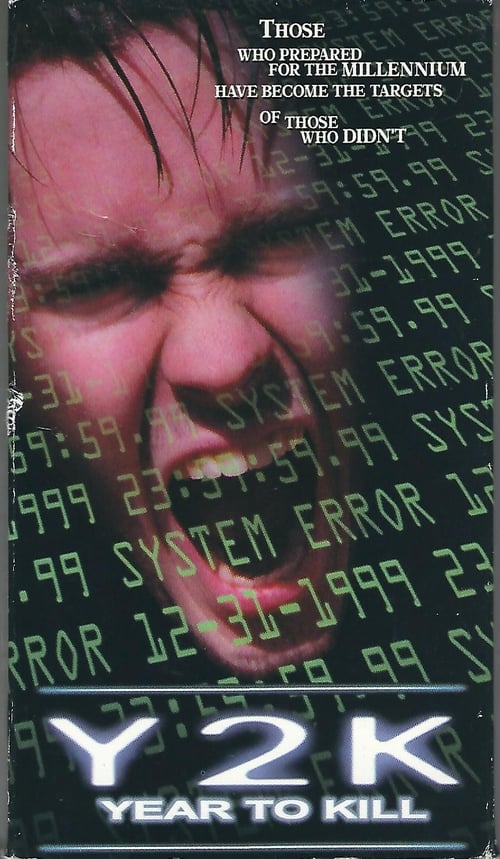
What motivates the main character, a hitman, to take on the job in Y2K - Year to Kill?
How does the Y2K crisis impact the characters' decisions throughout the film?
What is the relationship between Jack and his target, and how does it evolve?
What role does the character of the hacker play in the plot of Y2K - Year to Kill?
Should I watch it?
Ask Your Own Question

What is the plot?
Sorry, we aren't able to watch and write up a full detailed plot yet. Check back in a few days.


What is the ending?
In the ending of "Y2K - Year to Kill," the main character, a hitman named Jack, confronts his past and the consequences of his actions. After a series of intense confrontations, he ultimately decides to take a stand against the corrupt forces that have manipulated him. The film concludes with Jack making a significant sacrifice, leading to a resolution that leaves his fate uncertain but hints at redemption.
Now, let's delve into the ending in a more detailed narrative fashion:
As the clock ticks down to midnight on New Year's Eve, the atmosphere is thick with tension. Jack, the hitman who has been caught in a web of deceit and violence, finds himself in a dimly lit warehouse, the site of a final showdown. The air is heavy with the scent of gunpowder and the distant sounds of celebration echoing outside, a stark contrast to the chaos unfolding within.
Jack stands at the center of the room, his heart racing as he faces off against his former employer, a ruthless crime lord named Victor. Victor, with his cold, calculating demeanor, taunts Jack, reminding him of the blood on his hands and the lives he has taken. Jack's internal struggle is palpable; he grapples with feelings of guilt and the desire for redemption. The flickering fluorescent lights cast shadows across his face, highlighting the conflict raging within him.
In a moment of clarity, Jack recalls the innocent lives he has affected, particularly a young woman named Sarah, who had once been a target but became a symbol of hope for him. Her image fuels his resolve. He knows he cannot continue down this path of destruction. As Victor draws closer, Jack's determination solidifies. He reaches for a weapon, not to kill, but to confront the evil that has ensnared him.
The confrontation escalates into a violent struggle. Jack fights not just for his life but for a chance to break free from the cycle of violence. The warehouse becomes a battleground, filled with the sounds of struggle and the shattering of glass. Jack's movements are fueled by desperation and a newfound sense of purpose. He manages to overpower Victor, but instead of delivering a fatal blow, he chooses to disarm him, symbolizing his rejection of the life he once led.
As the clock strikes midnight, the celebrations outside reach a fever pitch. Fireworks explode in the sky, illuminating the darkness. Jack stands over Victor, breathing heavily, the weight of his decision heavy on his shoulders. He realizes that true strength lies not in taking lives but in saving them. With a final look at Victor, Jack walks away, leaving the crime lord to face the consequences of his actions.
In the aftermath, Jack's fate remains ambiguous. He steps out into the night, the sounds of celebration surrounding him. The camera lingers on his face, a mixture of relief and uncertainty etched across it. He has chosen a path toward redemption, but the future is unclear. The film closes with a sense of hope, suggesting that while the journey ahead may be fraught with challenges, Jack has taken the first step toward a new life.
The other characters, such as Sarah, are left in a state of uncertainty as well. Jack's decision to spare Victor may have implications for their safety, but it also signifies a break from the cycle of violence that has defined his life. The film ends on a note of potential, leaving viewers to ponder the choices made and the possibility of change.
Is there a post-credit scene?
The movie "Y2K - Year to Kill," produced in 1999, does not feature a post-credit scene. The film concludes without any additional scenes or content after the credits roll. The narrative wraps up with the resolution of the main plot, focusing on the characters' experiences and the implications of the Y2K crisis, leaving no further developments or surprises for the audience after the credits.
How does the film portray the theme of trust among the characters?
Trust is a central theme in Y2K - Year to Kill, as characters navigate a web of deception. Jack struggles to trust those around him, including his clients and the hacker, leading to tense moments where alliances shift and betrayals occur, ultimately affecting the outcome of his mission.
What motivates the main character, a hitman, to take on the job in Y2K - Year to Kill?
The main character, a hitman named Jack, is motivated by a combination of financial desperation and a desire to escape his troubled past. As the Y2K deadline approaches, he sees this job as a way to secure his future and possibly redeem himself from a life of crime.
How does the Y2K crisis impact the characters' decisions throughout the film?
The impending Y2K crisis creates a sense of urgency and paranoia among the characters. Jack's clients are anxious about the potential chaos, which influences their decisions and actions, pushing them to act more recklessly as they believe the world may end.
What is the relationship between Jack and his target, and how does it evolve?
Jack's relationship with his target, a wealthy businessman, is complex. Initially, Jack views the target as just another job, but as he learns more about the man's life and family, he begins to question the morality of his assignment, leading to an internal conflict that drives the narrative.
What role does the character of the hacker play in the plot of Y2K - Year to Kill?
The hacker serves as a crucial ally to Jack, providing him with information and technical support. Their interactions reveal the hacker's own motivations, which are tied to the Y2K crisis, and they form a bond that complicates Jack's mission as he grapples with the implications of their actions.
Is this family friendly?
"Y2K - Year to Kill" is not considered family-friendly due to several potentially objectionable elements. Here are some aspects that might be upsetting for children or sensitive viewers:
-
Violence: The film contains scenes of violence, including confrontations and threats that may be intense or distressing.
-
Mature Themes: The plot revolves around a conspiracy and the potential for global catastrophe, which may be frightening for younger audiences.
-
Language: There are instances of strong language that may not be suitable for children.
-
Tension and Suspense: The film builds a sense of paranoia and urgency that could be unsettling, particularly for sensitive viewers.
-
Character Struggles: Characters face moral dilemmas and personal conflicts that may evoke strong emotional responses.
These elements contribute to a tone that may not be appropriate for all viewers, especially younger children.









