




Popular
What motivates the main character, İsmail, throughout the film?
How does the relationship between İsmail and his childhood friend evolve in the film?
What role does the setting play in İsmail's journey?
What are the key conflicts that İsmail faces in the film?
How does the film portray the theme of nostalgia through İsmail's experiences?
Should I watch it?
Ask Your Own Question

What is the plot?
Cemil is a boy whose life is quietly distorted before he is even old enough to understand what is being done to him: his birth is registered late, with an age that makes him legally older than he really is, and that single clerical lie becomes the mechanism that pushes him toward marriage and then military service. In the village, where gossip moves faster than reason, the adults treat the official record as more real than the child standing in front of them, and Cemil is forced into the adult world while still thinking and behaving like a boy.
The story opens in a rural household shaped by pressure, pride, and impatience. Cemil is still in the stage of life where he would rather be in the street with his friends than sitting beside a wife, and the film makes that childish mismatch painfully clear from the start. He has reached puberty in body, but not in mind, and everyone around him mistakes the former for the latter. His parents decide it is time to marry him to Gülsüm, a girl older than him, because the paperwork says he is old enough and because the family wants to force life into the shape they believe it should take. The marriage is not presented as a romantic union but as a social act imposed from above, a transaction made in the name of custom and legitimacy.
Gülsüm enters the story as the older bride who must carry the weight of a marriage built on a lie. She is not marrying a man in the emotional sense the village expects; she is marrying a child who does not understand what marriage is. The tension is immediate and cruel because the adults see only the surface: a boy who is legally old enough and a girl who can be assigned the duty of becoming a wife and, almost instantly, a mother. The family's expectations narrow around the same demand over and over again: Gülsüm must produce a baby, preferably a son or at least a grandchild, to satisfy the household and end the whispers.
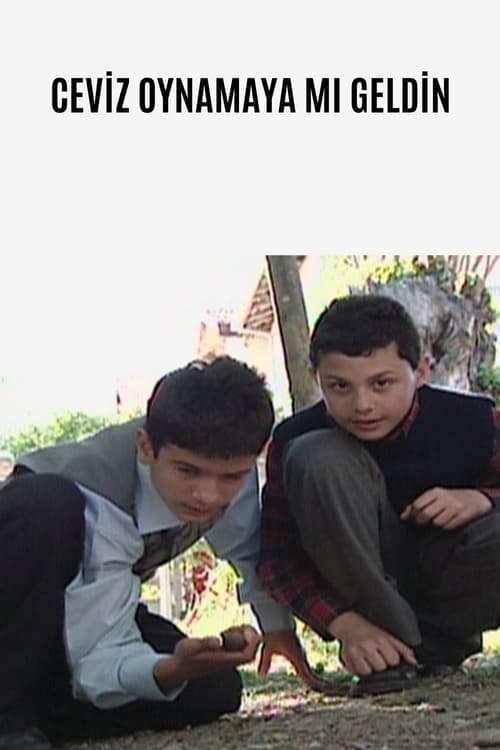
From the first moments after the marriage, Cemil remains trapped in his own world. He goes back outside, returning to the street and to his friends, continuing the same games he played before the wedding as if the ceremony has not changed anything inside him. The title image of ceviz oyunu, the walnut game, becomes the perfect symbol of this condition. Cemil's favorite pastime is to play with walnuts, tapping and rolling them with the absorbed seriousness of a child, and the image recurs as a bitter reminder that the adults have married a boy who still belongs to play, not to conjugal responsibility. In the most telling moments, he sits in the marital space with the same vacant, boyish concentration, as if the room itself cannot force him into adulthood.
The wedding-night material that the popular plot descriptions preserve is especially revealing. Instead of the expected intimacy of a new husband, Cemil arrives in the room and sits down, absorbed again by his walnut game, unable or unwilling to understand the significance of the night. Gülsüm, who has to live through the consequences of everyone else's decision, responds with patience rather than anger, because she sees that the person beside her is not truly a husband in the adult sense at all. Their relationship begins not with mutual understanding but with asymmetry: she knows more about the emotional reality of the situation than he does, while he remains protected by childish ignorance.
The village family, however, does not live in the same emotional register. Cemil's mother turns into one of the story's most oppressive figures, repeatedly demanding a grandchild and treating Gülsüm's body as the site where the family's honor must be fulfilled. According to the user-generated plot descriptions, she grows harsher as the months pass, accusing Gülsüm of being unable to conceive and threatening to cast her aside if no baby arrives. This pressure is among the film's central confrontations: Gülsüm is not just being asked to become a mother, she is being interrogated and blamed for failing to complete a role that has been imposed on her under impossible conditions. The emotional violence is not physical in the available summaries, but it is relentless, public, and deeply degrading.
Gülsüm's silence becomes one of the film's most important dramatic facts. She cannot speak openly to her own family, to Cemil, or to Cemil's family about what is happening to her. That silence is not simple passivity; it is a trap. If she speaks, she risks humiliation, disbelief, or abandonment. If she stays quiet, she absorbs the burden alone. The film's rural world gives her few safe places to stand, and almost no one around her is prepared to hear the truth that the marriage is structurally wrong from the beginning. This silence is what allows the pressure to build scene by scene, turning the home into a place of surveillance rather than comfort.
The village itself is not neutral. It is a closed social space where everyone knows the business of everyone else, and that collective gaze intensifies the cruelty of the arrangement. One of the young men in the village, Hüseyin, becomes aware of Gülsüm's secret and begins to corner her. The available plot descriptions do not provide a fully detailed confrontation scene, but they clearly identify him as someone who senses her vulnerability and uses that knowledge to pressure her. His presence adds another layer of threat because Gülsüm is already trapped inside the marriage; now, in addition to the household pressure, there is a village man who sees her isolation as an opportunity to exploit. The outcome of this confrontation is not resolution but further strain, deepening her inability to breathe freely inside the community.
Cemil remains, in contrast, almost comically innocent, though the film treats that innocence as tragic rather than funny. He continues to spend his time with the boys in the street, playing as before, as if adulthood were something happening somewhere else to someone else. Even in the house, he does not move toward the adult responsibilities expected of him. The title question, "Ceviz Oynamaya Mı Geldin?" functions like a rebuke and an accusation: are you here to play walnuts, or are you here to live as a husband? The story's answer, for most of its running time, is that Cemil is still entirely in the world of play. The tragedy is not that he refuses marriage in a rebellious sense; it is that he cannot comprehend it.
As time passes, the pressure around the marriage intensifies rather than easing. The household wants results. The older generation does not care that Cemil is emotionally a child or that Gülsüm is carrying a burden beyond her years. The family's desire for a grandchild transforms the marital relationship into a test, and Gülsüm becomes the one measured against that test. In the rough outline given by the sources, she is repeatedly blamed for infertility, even threatened with being sent away, which turns the marriage bed into a place of accusation rather than intimacy. There is no evidence in the available plot information of a murder or any on-screen death; the story's violence is social and psychological, not mortal.
The next decisive turn comes from the same false record that forced the marriage. Because Cemil is officially older than he really is, he is called up for military service. This is one of the film's most bitter ironies: the state document that ignored his real childhood now sends him to the army as though he were a man. The plot descriptions make clear that this is not a choice but an obligation, and that the misregistration has practical consequences that push him further away from any real understanding of what his life has become. The army sequence is important because it separates the already fragile couple and leaves Gülsüm alone to endure the household pressures without even the presence of the boy-husband whose absence she had once at least been able to interpret.
Cemil's departure to military service leaves Gülsüm in a harsher loneliness than before. The household's demand for a child does not disappear; if anything, it becomes more unbearable because the one person who might have offered her some innocent companionship is gone. She remains in the village, exposed to gossip and suspicion, while the mother-in-law's pressure continues. The available sources present this as a period of suffering and isolation, not of escape. In this stretch of the story, the emotional temperature rises through accumulation: silence, blame, waiting, and the sense that the whole village is watching her life fail to conform to its expectations.
There is also a deeper revelation hidden inside the plot structure itself. Cemil's late registration is not just a bureaucratic error; it is the central lie that governs the rest of the narrative. The film exposes how official identity can overwhelm lived truth. The birth certificate says one thing, the body says another, the mind says a third, and the village chooses the version that best serves its customs. This is why the marriage is so devastating: Cemil is not merely young, he is rendered legally available to be treated as older than his childhood by a system that privileges paperwork over reality. The story's sadness comes from watching a child be forcibly translated into an adult role he has not yet entered internally.
The user-generated plot details add a small but telling human thread between Cemil and Gülsüm. Despite the awkwardness of their marriage, the two begin to develop a fragile bond over time: she gives him a headscarf or veil, and he gives her gifts in return. Those gestures do not erase the injustice, but they do show that tenderness can emerge inside a relationship founded on coercion. Gülsüm, unlike the rest of the household, seems to understand that Cemil is not a fully formed husband, and her patience gives the film some of its quietest emotional scenes. The relationship is therefore not a simple story of hatred; it is a sad coexistence between a child and a young woman both trapped by the village order.
Eventually the military service ends, and Cemil returns to the village. The return is the story's final movement, and the sources emphasize that he is not the same Cemil anymore. That change is crucial: whatever happened during his service has altered him enough that the old image of the boy playing walnuts in the street no longer fully fits. The film does not, in the available summaries, spell out every step of that transformation in detail, but it makes the result unmistakable. He comes back older, changed by time, duty, and absence, and he re-enters a village still thick with unresolved problems.
The ending is therefore not a neat resolution but a recognition of damage. Cemil returns to find that the household tensions have not disappeared during his absence. Gülsüm has suffered through the loneliness, the pressure to bear a child, and the village's scrutiny, while the wider community remains bound to the same social rules that created the problem in the first place. The final scene, as described in the available plot material, leaves the viewer with the sense that childhood has ended only in the most brutal external sense: the boy has been pushed into the army, and then the army has pushed him back changed. The childlike world of ceviz oyunu is over, but not because the village has learned anything; it is over because time and force have burned it away.
What remains at the end is the film's central ache: a child has been made into a husband by paperwork, a young woman has been made into a vessel for the family's hopes, and both are trapped inside a social structure that mistakes compliance for maturity. Cemil's life is shaped by an official age he does not possess, Gülsüm's life by expectations she cannot safely refuse, and Hüseyin's pressure adds the threat of predatory attention to an already suffocating environment. No deaths interrupt the story to punctuate its tragedy; instead, the film lets the ongoing, ordinary damage of custom and silence do the work. By the end, Cemil's return marks not a happy homecoming but the closing of a painful circle: the boy who once played with walnuts is gone, the marriage remains wounded, and the village stands unchanged around them.









What is the ending?
In the ending of "Ceviz Oynamaya Mı Geldin," the main characters confront their personal struggles and relationships, leading to a resolution that reflects their growth and the choices they have made throughout the film. The film concludes with a sense of acceptance and understanding among the characters, as they come to terms with their past and the impact of their decisions.
As the final scenes unfold, we see the characters in a series of poignant moments that encapsulate their journeys. The protagonist, who has faced numerous challenges, finds a moment of clarity and connection with those around him. The film closes on a note of hope, suggesting that despite the difficulties they have faced, there is a possibility for reconciliation and a new beginning.
Now, let's delve into the ending in a more detailed, chronological narrative.
The climax of "Ceviz Oynamaya Mı Geldin" unfolds in a small, dimly lit room where the main characters gather for a final confrontation. The atmosphere is thick with tension as unresolved conflicts bubble to the surface. The protagonist, burdened by guilt and regret, stands at the center, his face a mixture of determination and vulnerability. He knows that this moment is crucial for his own redemption and for the relationships he has strained.
As the characters exchange heated words, the camera captures their emotional states--anger, sadness, and a longing for understanding. The protagonist's voice trembles as he admits his mistakes, revealing the weight of his choices. His confession is met with a mix of reactions; some characters are defensive, while others soften, recognizing their shared pain.
In a pivotal moment, one of the supporting characters, who has been a source of conflict, breaks down. Tears stream down their face as they express their own struggles and the impact of the protagonist's actions on their life. This moment of vulnerability shifts the dynamic in the room, allowing for a deeper connection to form. The protagonist reaches out, offering a gesture of reconciliation, which is met with hesitance but ultimately leads to a tentative embrace.
As the scene progresses, the characters begin to share their own stories, revealing the complexities of their relationships. The dialogue flows, filled with raw emotion, as they confront not only each other but also their own fears and insecurities. The camera pans across their faces, capturing the nuances of their expressions--hope, despair, and the flicker of forgiveness.
The climax reaches its peak when the protagonist makes a heartfelt plea for understanding, urging everyone to let go of the past and move forward together. The room falls silent, and for a moment, it feels as if time stands still. Slowly, one by one, the characters begin to nod, signaling their willingness to embrace change.
In the final moments, the characters step outside into the light, symbolizing a new beginning. The sun shines brightly, casting a warm glow over them as they walk together, side by side. The protagonist, now visibly lighter, shares a smile with the others, a silent acknowledgment of their shared journey and the hope that lies ahead.
As the credits roll, we see glimpses of their lives post-confrontation--each character taking steps towards healing and growth. The protagonist is shown engaging in community activities, helping others, while the supporting characters are seen reconnecting with their own families and friends, suggesting that they have all learned valuable lessons about forgiveness and the importance of relationships.
In summary, the ending of "Ceviz Oynamaya Mı Geldin" encapsulates the themes of redemption, connection, and the power of vulnerability, leaving the audience with a sense of hope for the characters' futures.
Is there a post-credit scene?
The movie "Ceviz Oynamaya Mı Geldin," produced in 2007, does not feature a post-credit scene. The film concludes its narrative without any additional scenes or content after the credits roll. The story wraps up with the final moments of the characters, leaving the audience with a sense of closure regarding the plot and character arcs.
What motivates the main character, İsmail, throughout the film?
İsmail is driven by a deep sense of nostalgia and a longing for connection. As he navigates his life, he is haunted by memories of his past, particularly his childhood and the relationships he had. His desire to reconnect with his roots and the people from his past propels him into various situations that reveal his internal struggles and emotional state.
How does the relationship between İsmail and his childhood friend evolve in the film?
The relationship between İsmail and his childhood friend, who represents a link to his past, is central to the narrative. Initially, there is a sense of camaraderie and shared memories, but as the story unfolds, tensions arise due to differing life choices and the passage of time. This evolution highlights themes of friendship, regret, and the impact of time on personal relationships.
What role does the setting play in İsmail's journey?
The setting, primarily the small town where İsmail grew up, serves as a character in itself. It evokes a sense of nostalgia and reflects İsmail's internal conflict. The familiar streets, homes, and landscapes trigger memories that shape his emotional journey, illustrating how place can influence identity and belonging.
What are the key conflicts that İsmail faces in the film?
İsmail faces several key conflicts, both internal and external. Internally, he grapples with feelings of inadequacy and the fear of confronting his past. Externally, he encounters resistance from those who have moved on, as well as societal expectations that clash with his desire for authenticity. These conflicts drive the narrative and highlight his struggle for self-acceptance.
How does the film portray the theme of nostalgia through İsmail's experiences?
Nostalgia is portrayed through İsmail's experiences as he revisits places and people from his past. The film uses flashbacks and poignant moments to illustrate how these memories shape his current identity. İsmail's emotional responses to these encounters reveal a longing for simpler times, but also a recognition of the complexities of adult life, creating a bittersweet exploration of nostalgia.
Is this family friendly?
"Ceviz Oynamaya Mı Geldin," a 2007 Turkish film, contains themes and scenes that may not be suitable for all children or sensitive viewers. Here are some potentially objectionable aspects:
-
Family Conflict: The film explores complex family dynamics, including arguments and emotional distress, which may be upsetting for younger viewers.
-
Social Issues: It addresses themes of poverty and social struggles, which could be heavy or distressing for sensitive audiences.
-
Emotional Turmoil: Characters experience significant emotional pain and conflict, which may resonate deeply and evoke strong feelings.
-
Mature Themes: The film touches on adult themes such as betrayal and loss, which may not be appropriate for children.
-
Cultural Context: Some cultural references and situations may be difficult for younger audiences to understand fully.
Overall, while the film has artistic merit, its emotional depth and mature themes may make it more suitable for older teens and adults rather than young children.








