




Popular
Were there any notable interactions between the band members during the performance?
What songs did the Arctic Monkeys perform during their set at the Reading Festival 2009?
How did the audience react to the Arctic Monkeys' performance at Reading Festival 2009?
What was the band's stage presence like during the performance at Reading Festival 2009?
What was the visual setup of the stage during the Arctic Monkeys' performance at Reading Festival 2009?
Should I watch it?
Ask Your Own Question

What is the plot?
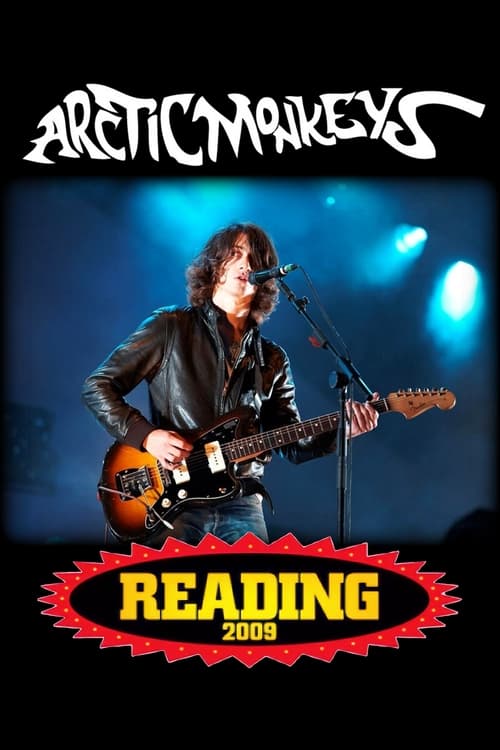
Arctic Monkeys' Reading Festival 2009 set is not a film with characters, deaths, twists, or a fictional ending; it is a live headline concert at Little John's Farm in Reading, England, on Saturday, 29 August 2009, with the band on the main stage in the 22:00–23:30 slot. What unfolds is still a story of sorts: a slow-burn, tension-heavy festival climax that deliberately resists the crowd's expectations, beginning with a hushed, almost sly opening and building into a triumphantly controlled late-night set.
The night is already charged before Arctic Monkeys even appear. The Saturday main stage billing places them after The Prodigy and ahead of the festival's final rush, so the audience is primed for a violent, moshpit-starting explosion when Alex Turner, Jamie Cook, Nick O'Malley, and Matt Helders step into the spotlight at around 22:00. Instead, the band chooses defiance. They do not come roaring in with an obvious anthem; they begin with "My Propeller," and that choice alone tilts the mood away from the expected chaos. The opening feels almost like a deliberate tease, as if the band is asking the crowd to lean in rather than jump immediately. The response from the audience is a visible scramble to catch the rhythm and match the pace, and the tension comes from that mismatch between expectation and reality.
The first real shock is the transition into Nick Cave's "Red Right Hand," which is folded into the opening with a dark, theatrical edge. The performance takes on a smoky, sinister quality, and the crowd that may have come for sweat and catharsis instead gets atmosphere first. That low-key introduction works like a gate opening slowly in a storm: the band is not rushing the moment, but stretching it, making the audience wait for release. The set's structure, rather than simply stacking hits, starts to tell its own emotional story. It is a story about control, confidence, and a band testing how much they can dominate a huge festival crowd without giving in to easy gratification.
From there the set begins to gather force. "Crying Lightning" arrives as one of the evening's key statements, and the band moves into material that balances their newer, moodier direction with the sharper energy that made them famous. "Brianstorm" snaps the audience awake with its frantic momentum, and then "Still Take You Home" and "I Bet You Look Good on the Dancefloor" restore the familiar voltage of a band whose reputation was built on urgency. The crowd's energy rises and falls in waves, but the set never loses its central tension: Arctic Monkeys are refusing to play as if they owe anyone a simple victory lap. Instead, they make every shift feel like a decision, every harder hit more effective because the opening was so restrained.
As the performance continues, the band threads in "Potion Approaching" and "Pretty Visitors," deepening the darker, more textured sound associated with the Humbug era. These songs are not just filler between the old favorites; they are part of the band's larger transformation, and the set uses them to reveal that Arctic Monkeys are no longer just a feral indie-rock machine. The atmosphere thickens. "This House Is a Circus" and "If You Were There, Beware" sharpen the sense that the show is moving through contrasting moods--restlessness, menace, swagger, and then a sudden glance backward toward the earlier, more explosive incarnation of the band. The effect is cumulative: each song feels like another layer of the night's identity being exposed.
The emotional center of the set arrives when "When the Sun Goes Down" and "Dangerous Animals" keep the momentum alive while also reinforcing the band's control over timing and pacing. Matt Helders drives the songs with relentless precision, while Turner's vocal delivery sounds less like youthful panic than like a performer fully in command of the room. "The View From the Afternoon" lands as a reminder of the band's original breakthrough intensity, and it sharpens the contrast between the band's past and present selves. The crowd gets the nostalgic eruption it wants, but even then the set refuses to become purely retrospective. Arctic Monkeys are clearly using the festival headline slot to show evolution rather than just replaying history.
Then comes one of the night's most memorable details: "Fluorescent Adolescent" is shaped with a fragment of Dion's "Only You Know," creating a dreamy, slightly surreal interlude that softens the song's familiar pop edge. That interpolation changes the mood of the performance in a subtle but striking way. The song glows differently here, not as a simple singalong but as a drifting, almost wistful moment suspended in the middle of a late-night headline set. The addition makes the whole show feel more fluid and unpredictable, as if the band is willing to let the audience glimpse a more romantic, less obvious version of their own identity. It is one of those moments where the concert stops feeling like a sequence of tracks and starts feeling like a curated emotional narrative.
By this stage the set has fully won the room. Any earlier confusion over the restrained opener has transformed into appreciation for the band's confidence. The festival crowd is no longer demanding an immediate payoff; they are inside the performance's logic, following its turns. The band's control over the audience is one of the evening's quiet triumphs. They have taken a slot built for spectacle and turned it into something more nuanced, but they do not forget the need for a climax. The final stretch of the main set gathers the sharper edges again, with the older anthems and heavier numbers giving the crowd the release it has been waiting for.
The encore arrives with "Secret Door" and "505," and this ending gives the set its final emotional arc. "Secret Door" brings a haunting, reflective quality, as though the band is opening one last portal into the darker, dreamier side of the Humbug material. Then "505" closes the night with the kind of slow-burning intensity that feels both dramatic and inevitable. The song stretches the finale rather than ending it abruptly, letting the band and audience ride the last wave together in a shared, exhausted high. There is no narrative death, no revelation of a hidden secret, no villain to defeat, and no literal resolution beyond the completion of the performance itself--but in concert terms the ending is decisive. Arctic Monkeys finish not by over-explaining themselves, but by proving they can command a festival headline slot on their own terms.
The final scene is simple and powerful: the band stands in the glow of a Reading Festival night, having transformed skepticism into applause through sheer confidence and sequencing. The performance ends as a statement of identity. Arctic Monkeys are no longer the band that must open with the biggest possible explosion; they are the band that can begin with restraint, bend the crowd to their will, and close with a song like "505" that leaves the atmosphere hanging in the air long after the last note fades.
More Movies Like This
Browse All Movies →

What is the ending?
The ending of "Arctic Monkeys at Reading Festival 2009" features the band concluding their electrifying performance with a powerful rendition of their hit songs. The crowd is ecstatic, singing along and fully immersed in the experience. As the final notes fade, the band members share a moment of camaraderie, acknowledging the energy of the audience and the success of their show. The film closes with a sense of triumph and fulfillment, capturing the essence of live music and the connection between the band and their fans.
In a more detailed narrative, the ending unfolds as the Arctic Monkeys take the stage for the final segment of their set. The atmosphere is electric, with the audience buzzing in anticipation. The camera captures the sea of fans, their faces illuminated by the stage lights, a mix of excitement and euphoria evident in their expressions. As the band launches into their closing song, the sound reverberates through the air, a powerful anthem that resonates with the crowd.
The lead singer, Alex Turner, exudes confidence and charisma, his voice cutting through the night as he engages with the audience. The band members, Jamie Cook, Nick O'Malley, and Matt Helders, are in sync, their energy infectious. Each strum of the guitar and beat of the drums fuels the crowd's enthusiasm, creating a palpable connection between the performers and their fans.
As the song progresses, the camera shifts focus to the audience, capturing moments of pure joy and unity. Fans are singing along, arms raised, lost in the music. The visuals are interspersed with shots of the band, showcasing their passion and dedication to their craft. The emotional weight of the performance builds, culminating in a climactic moment where the music reaches its peak.
In the final moments, as the last chord rings out, the band members exchange glances filled with pride and satisfaction. They take a moment to soak in the applause, the cheers echoing around them. The camera captures their smiles, a reflection of their shared experience and the bond they have with each other and their fans.
As they leave the stage, the sense of accomplishment is palpable. Each member of the band has played a crucial role in this moment, and their individual contributions have culminated in a successful performance. The film concludes with a lingering shot of the crowd, still buzzing with excitement, a testament to the impact of live music and the connection it fosters. The screen fades to black, leaving the audience with a sense of fulfillment and the memory of a night that celebrated the power of music.
Is there a post-credit scene?
The movie "Arctic Monkeys at Reading Festival 2009" does not feature a post-credit scene. The film primarily focuses on the band's performance at the festival, capturing the energy of the crowd, the band's interactions, and the overall atmosphere of the event. It concludes with the final moments of their set, leaving the audience with the exhilaration of the live music experience without any additional scenes after the credits.
Were there any notable interactions between the band members during the performance?
Yes, there were several notable interactions, including moments of camaraderie and playful banter between band members, which added to the overall enjoyment of the performance and showcased their chemistry.
What songs did the Arctic Monkeys perform during their set at the Reading Festival 2009?
The Arctic Monkeys performed a selection of their popular songs including 'I Bet You Look Good on the Dancefloor', 'Brianstorm', 'Teddy Picker', 'Crying Lightning', and '505', showcasing their energetic style and engaging the crowd.
How did the audience react to the Arctic Monkeys' performance at Reading Festival 2009?
The audience reacted with overwhelming enthusiasm, singing along to the lyrics, cheering, and creating a vibrant atmosphere that highlighted the band's connection with their fans.
What was the band's stage presence like during the performance at Reading Festival 2009?
The band's stage presence was dynamic and charismatic, with lead singer Alex Turner exuding confidence and engaging with the crowd, while the rest of the band maintained a tight, energetic performance that captivated the audience.
What was the visual setup of the stage during the Arctic Monkeys' performance at Reading Festival 2009?
The stage was visually striking, featuring dramatic lighting that changed with the mood of the songs, and a backdrop that complemented the band's aesthetic, enhancing the overall experience for the audience.
Is this family friendly?
The movie "Arctic Monkeys at Reading Festival 2009" primarily features a live concert performance by the band Arctic Monkeys, showcasing their music and the vibrant atmosphere of the festival. While the film is centered around a musical experience, there are a few aspects that may be considered potentially objectionable or upsetting for children or sensitive viewers:
-
Language: The performance includes some strong language in the lyrics of the songs, which may not be suitable for younger audiences.
-
Crowd Behavior: The festival setting features large crowds, which can sometimes lead to rowdy behavior. This may include instances of pushing or shoving, which could be overwhelming for sensitive viewers.
-
Themes of Rebellion: The overall vibe of the festival and the band's music often touches on themes of youth rebellion and disillusionment, which might not resonate well with all viewers.
-
Visuals of Intense Energy: The high-energy atmosphere, including mosh pits and enthusiastic fans, may be intense for some children or those who are sensitive to chaotic environments.
Overall, while the film is primarily a celebration of music and performance, these elements may warrant consideration for family viewing.









