
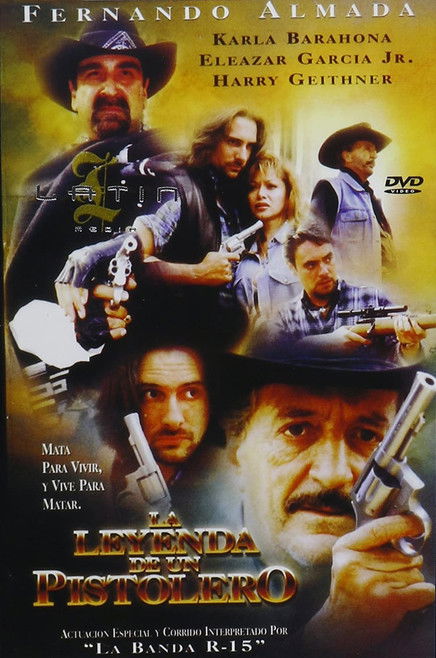


Popular
Who is the main character in La leyenda del pistolero and what drives his actions throughout the film?
What is the significance of the character La Muerte in the film?
How does El Pistolero's relationship with the townspeople evolve during the film?
What role does the antagonist play in El Pistolero's journey?
What are the key moments that showcase El Pistolero's internal struggle throughout the film?
Should I watch it?
Ask Your Own Question

What is the plot?
Sorry, we aren't able to watch and write up a full detailed plot yet. Check back in a few days.








What is the ending?
In the ending of "La leyenda del pistolero," the protagonist, a skilled gunslinger named El Pistolero, confronts his past and the consequences of his violent lifestyle. After a series of intense confrontations, he ultimately faces his nemesis, leading to a climactic showdown. The film concludes with El Pistolero coming to terms with his choices, leaving behind a legacy that is both feared and respected.
As the final act unfolds, the tension escalates. El Pistolero, having been pursued by both lawmen and outlaws, finds himself cornered in a dusty, desolate town. The sun hangs low in the sky, casting long shadows that seem to echo the weight of his past. He stands alone, his hand resting on the grip of his revolver, a symbol of both his power and his burden.
In a pivotal scene, El Pistolero encounters a group of menacing outlaws who have been terrorizing the town. The leader, a ruthless gunslinger with a reputation for brutality, taunts El Pistolero, challenging him to a duel. The townsfolk, who have witnessed the violence and chaos brought by these outlaws, look on with a mix of fear and hope. They see in El Pistolero a chance for redemption, not just for themselves but for him as well.
As the duel approaches, the atmosphere thickens with anticipation. El Pistolero's heart races, a mix of adrenaline and regret coursing through him. He reflects on the lives he has taken and the friends he has lost, haunted by the ghosts of his past. The weight of his choices presses heavily on his shoulders, yet he knows he must confront this final challenge.
The duel begins, and the sound of gunfire shatters the silence. El Pistolero moves with a fluid grace, his instincts honed from years of survival. He dodges bullets, his mind sharp and focused, but the emotional turmoil within him is palpable. Each shot fired is not just a fight for survival; it is a reckoning with his own identity.
In a climactic moment, El Pistolero manages to outmaneuver his opponent, delivering a fatal shot that echoes through the town. The outlaws are defeated, and the townspeople erupt in a mix of relief and celebration. However, the victory is bittersweet for El Pistolero. He stands amidst the chaos, realizing that while he has saved the town, he cannot escape the legacy of violence that follows him.
As the dust settles, El Pistolero makes a choice. He decides to leave the town, understanding that his path is one of solitude. He walks away, the sun setting behind him, casting a golden hue over the landscape. The townsfolk watch him go, their expressions a blend of gratitude and sorrow. They know that while he has brought them peace, he is also a man forever marked by his past.
In the final moments, El Pistolero rides off into the horizon, a lone figure against the vast expanse of the desert. His fate remains uncertain, but he carries with him the weight of his decisions and the hope that perhaps, one day, he can find redemption. The film closes on this poignant note, leaving the audience to reflect on the complexities of his character and the enduring impact of his choices.
Is there a post-credit scene?
"La leyenda del pistolero," produced in 1998, does not feature a post-credit scene. The film concludes its narrative without any additional scenes or content after the credits roll. The story wraps up with the resolution of the main plot, focusing on the character of the legendary gunslinger and his journey, leaving no further developments or cliffhangers for the audience to ponder after the film ends.
Who is the main character in La leyenda del pistolero and what drives his actions throughout the film?
The main character in La leyenda del pistolero is a skilled gunslinger named El Pistolero. His actions are driven by a deep sense of honor and a quest for redemption. Haunted by his past and the violence he has inflicted, he seeks to protect the innocent and confront the demons of his former life.
What is the significance of the character La Muerte in the film?
La Muerte, or Death, is a pivotal character who represents the inevitable fate that awaits El Pistolero. She appears throughout the film, often in a haunting and ethereal manner, serving as a reminder of the consequences of a life filled with violence. Her presence challenges El Pistolero to confront his mortality and the choices he has made.
How does El Pistolero's relationship with the townspeople evolve during the film?
Initially, the townspeople view El Pistolero with suspicion and fear due to his reputation as a gunslinger. However, as he begins to protect them from external threats and demonstrates his willingness to sacrifice for their safety, their perception shifts. They come to see him as a reluctant hero, and this evolution highlights themes of trust and redemption.
What role does the antagonist play in El Pistolero's journey?
The antagonist, a ruthless outlaw or gang leader, serves as a catalyst for El Pistolero's transformation. Their confrontations force El Pistolero to confront not only the physical threat posed by the antagonist but also his own inner turmoil. The antagonist embodies the chaos and violence that El Pistolero seeks to escape, making their conflict deeply personal.
What are the key moments that showcase El Pistolero's internal struggle throughout the film?
Key moments that showcase El Pistolero's internal struggle include flashbacks to his violent past, encounters with La Muerte that force him to reflect on his life choices, and moments of vulnerability when he connects with the townspeople. These scenes reveal his desire for redemption and the weight of his guilt, illustrating the emotional complexity of his character.
Is this family friendly?
"La leyenda del pistolero," produced in 1998, is a film that contains several elements that may not be suitable for children or sensitive viewers. Here are some potentially objectionable aspects:
-
Violence: The film features gunfights and scenes of shooting, which may be intense for younger audiences. The portrayal of violence is central to the narrative and can be graphic at times.
-
Death: There are moments that depict the consequences of violence, including the death of characters, which can be emotionally heavy and distressing.
-
Themes of Revenge: The storyline revolves around themes of vengeance and justice, which may be complex and unsettling for younger viewers to fully grasp.
-
Emotional Turmoil: Characters experience significant emotional struggles, including loss and betrayal, which may resonate deeply and evoke strong feelings.
-
Mature Language: The dialogue may include strong language or adult themes that could be inappropriate for children.
These elements contribute to a tone that may be more suitable for older teens and adults rather than a family-friendly viewing experience.