
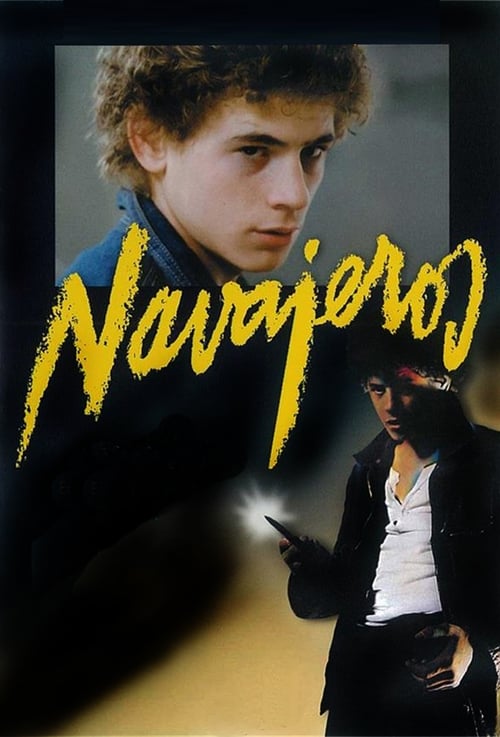




















Popular
What motivates the main character, José, throughout the film?
How does the relationship between José and his father evolve in the film?
What role does the character of Charo play in José's life?
How does the film depict the theme of friendship among the group of friends?
What are the consequences of José's choices throughout the film?
Should I watch it?
Ask Your Own Question

What is the plot?
Sorry, we aren't able to watch and write up a full detailed plot yet. Check back in a few days.








What is the ending?
In the ending of "Navajeros," the main character, a young man named José, faces the consequences of his life choices. After a series of violent confrontations and betrayals, he finds himself alone and cornered. The film concludes with a tragic confrontation that leads to his demise, leaving behind a sense of loss and the harsh realities of street life.
As the final scenes unfold, the atmosphere is thick with tension. José, having been embroiled in a world of crime and violence, is now isolated. The streets, once a playground for him and his friends, have turned into a battleground. The camera captures the gritty urban landscape, filled with shadows and the remnants of a life lived on the edge.
In a pivotal scene, José is confronted by rival gang members. The air is heavy with anticipation as he stands his ground, a mix of defiance and desperation etched on his face. His internal struggle is palpable; he knows the risks but feels trapped by his circumstances. The confrontation escalates quickly, and the violence erupts. The sound of shouting and the clash of bodies fills the air, underscoring the chaos of his life.
As the fight intensifies, José's friends, who have been his companions throughout the film, begin to fall one by one. Each loss weighs heavily on him, and the realization of his solitude sinks in. The camera lingers on his expressions, capturing the flicker of fear and regret as he fights not just for survival but for a sense of belonging that is slipping away.
In the climax, José finds himself cornered, outnumbered, and with nowhere to escape. The rival gang members close in, and in a moment of desperation, he makes a final stand. The scene is visceral, with close-ups of his face reflecting a mix of anger, fear, and a longing for redemption. But the outcome is inevitable; he is overwhelmed, and the screen fades to black as the sounds of the struggle echo into silence.
The film concludes with a haunting sense of finality. José's fate is sealed, and the streets that once promised freedom and excitement have become his grave. The remaining characters, those who survived the chaos, are left to grapple with the aftermath of their choices. The emotional weight of loss hangs heavy in the air, and the film closes on a somber note, emphasizing the harsh realities of life in the streets and the consequences of a life led by violence and betrayal.
Is there a post-credit scene?
The movie "Navajeros," produced in 1980, does not have a post-credit scene. The film concludes its narrative without any additional scenes or content after the credits roll. The story wraps up with the main characters facing the consequences of their actions, leaving the audience with a sense of closure regarding their fates. The focus remains on the gritty and intense journey of the characters throughout the film, rather than extending the narrative beyond its conclusion.
What motivates the main character, José, throughout the film?
José, a young man caught in the gritty underbelly of Madrid, is driven by a desire for freedom and a sense of belonging. His tumultuous relationship with his father, who represents authority and societal expectations, fuels his rebellion against the system. José's internal conflict is palpable as he navigates the harsh realities of street life, seeking validation and purpose among his peers.
How does the relationship between José and his father evolve in the film?
The relationship between José and his father is fraught with tension and misunderstanding. Initially, José feels suffocated by his father's expectations and the weight of familial duty. As the story progresses, moments of vulnerability reveal the father's concern for José's well-being, but these are often overshadowed by José's defiance. Their interactions are charged with emotion, showcasing a struggle between love and resentment, ultimately leading to a poignant confrontation that highlights their differing worldviews.
What role does the character of Charo play in José's life?
Charo serves as a pivotal figure in José's life, representing both a source of affection and a reminder of the consequences of his lifestyle. Their relationship is marked by passion and tenderness, yet it is also fraught with the dangers of the world they inhabit. Charo's struggles with her own circumstances reflect the harsh realities of their environment, and her influence on José is significant as he grapples with his feelings for her amidst the chaos of street life.
How does the film depict the theme of friendship among the group of friends?
The camaraderie among José and his friends is depicted with a raw intensity, showcasing both loyalty and betrayal. Their bond is forged in the fires of shared experiences, from petty crimes to moments of joy and despair. However, as tensions rise and conflicts emerge, the fragility of their friendships becomes evident. The film captures the emotional highs and lows of their interactions, illustrating how the pressures of their environment can strain even the closest of ties.
What are the consequences of José's choices throughout the film?
José's choices lead him down a path of increasing danger and moral ambiguity. His decisions, often impulsive and driven by a desire to assert his independence, result in escalating conflicts with rival groups and law enforcement. The consequences of his actions ripple through his relationships, particularly with Charo and his friends, leading to moments of heartbreak and loss. The film poignantly illustrates how José's quest for identity and freedom ultimately entangles him in a web of violence and despair.
Is this family friendly?
"Navajeros," produced in 1980, is not considered family-friendly. The film contains several potentially objectionable or upsetting elements, including:
-
Violence and Crime: The narrative revolves around a group of young delinquents involved in criminal activities, which includes scenes of violence and confrontations.
-
Drug Use: There are depictions of drug use and the associated lifestyle, which may be disturbing for younger viewers or sensitive individuals.
-
Strong Language: The dialogue includes coarse language and profanity, reflecting the gritty reality of the characters' lives.
-
Sexual Content: The film features adult themes and sexual situations that may not be appropriate for children.
-
Emotional Turmoil: Characters experience significant emotional struggles, including betrayal, loss, and despair, which could be distressing for some viewers.
These elements contribute to the film's mature themes and overall tone, making it unsuitable for a younger audience.









