
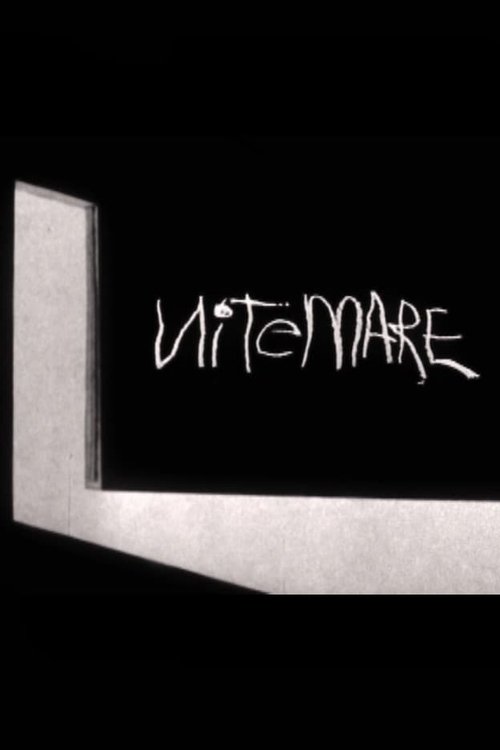


Popular
What is the significance of the recurring motif of mirrors in the film?
What is the significance of the character's dreams in Nitemare?
How does Christine's relationship with her mother influence the plot?
What role does the character of the psychiatrist play in the story?
How do the visual elements of the nightmares contribute to the film's atmosphere?
Should I watch it?
Ask Your Own Question

What is the plot?
Sorry, we aren't able to watch and write up a full detailed plot yet. Check back in a few days.
More Movies Like This
Browse All Movies →








What is the ending?
In the ending of "Nitemare," the protagonist, a young woman named Christine, confronts the terrifying reality of her nightmares. As she struggles to escape the clutches of a malevolent force, she ultimately faces a tragic fate, leading to a shocking conclusion that leaves her friends in despair.
As the film approaches its climax, Christine finds herself trapped in a nightmarish landscape that blurs the lines between reality and her dreams. The tension escalates as she battles against the dark entity that has been haunting her. In a desperate attempt to break free, she confronts her fears head-on, but the struggle proves to be overwhelming.
In the final scenes, Christine's friends, who have been trying to help her throughout her ordeal, are drawn into the chaos. One by one, they face their own demons, leading to a series of harrowing events. The film culminates in a tragic resolution where Christine's fate is sealed, leaving her friends to grapple with the aftermath of their failed attempts to save her.
As the screen fades to black, the haunting implications of the nightmare linger, emphasizing the film's themes of fear, helplessness, and the inescapable nature of one's inner demons.
As the film "Nitemare" unfolds towards its conclusion, the atmosphere thickens with dread. Christine, the central character, is ensnared in a web of her own nightmares, which have been escalating throughout the film. The setting shifts to a surreal landscape that mirrors her deepest fears, a place where the boundaries of reality are distorted and the familiar becomes grotesque.
In the first scene of the climax, Christine stands alone in a darkened room, the walls pulsating as if alive. Shadows flicker and dance around her, whispering her name, taunting her with memories of her past. Her heart races, and she feels the weight of despair pressing down on her. She knows she must confront the malevolent force that has been tormenting her, but the fear of what lies ahead paralyzes her.
As she gathers her courage, the scene transitions to her friends, who have been desperately trying to reach her. They are in a separate location, frantically searching for clues to help Christine escape her nightmare. The tension is palpable as they uncover the dark history of the entity that haunts her, realizing that it feeds on fear and despair. Their determination to save Christine is evident, but they are also plagued by their own insecurities and doubts.
The narrative shifts back to Christine, who is now in a confrontation with the dark entity. The air crackles with energy as she faces it, her emotions swirling between anger, fear, and a flicker of hope. She screams defiantly, demanding to be released from its grasp. The entity, a shadowy figure with piercing eyes, responds with a chilling laugh, feeding off her fear. The struggle is intense, and Christine's internal battle is mirrored in the chaotic environment around her.
In the next scene, her friends finally locate Christine, but they are met with a horrifying sight. The room is filled with swirling shadows, and Christine appears to be in a trance, caught between the real world and her nightmare. They reach out to her, calling her name, but their voices are drowned out by the cacophony of the entity's laughter. The friends attempt to pull her away, but the force is too strong, and they are thrown back, helpless.
As the climax reaches its peak, Christine's friends are forced to confront their own fears as they try to save her. One by one, they are drawn into the nightmare, each facing their own personal demons. The scenes are filled with visceral imagery: one friend is engulfed by darkness, another is haunted by visions of failure, and yet another is trapped in a loop of regret. The emotional weight of their struggles is palpable, and the audience can feel the desperation in their attempts to reach Christine.
In the final moments, Christine, now fully aware of the stakes, makes a heart-wrenching decision. She realizes that to defeat the entity, she must confront her own fears and accept her past. With tears streaming down her face, she embraces the darkness, declaring that it will not control her any longer. The entity roars in fury as Christine's friends watch in horror, unable to intervene.
The screen fades to black as a chilling silence envelops the scene. The fate of Christine is sealed; she has become one with the nightmare, a tragic victim of her own fears. Her friends, left in the aftermath, are shattered, grappling with the loss of their friend and the realization that they could not save her. The film closes on a haunting note, leaving the audience with a lingering sense of dread and the stark reminder of the power of one's inner demons.
Is there a post-credit scene?
The movie "Nitemare," produced in 1980, does not have a post-credit scene. The film concludes without any additional scenes or content after the credits roll. The story wraps up with the main narrative, focusing on the psychological horror experienced by the protagonist, and there are no further developments or revelations presented after the credits.
What is the significance of the recurring motif of mirrors in the film?
Mirrors in Nitemare serve as a recurring motif that symbolizes self-reflection and the duality of Christine's existence. Throughout the film, mirrors often appear during her nightmares, representing her internal conflict and the struggle to confront her true self. The reflections in the mirrors can distort her image, suggesting her feelings of inadequacy and fear of losing her identity. This motif deepens the psychological horror of the film, as it emphasizes Christine's battle with her own mind and the perception of reality.
What is the significance of the character's dreams in Nitemare?
In Nitemare, the protagonist, a young woman named Christine, experiences vivid and terrifying dreams that blur the line between reality and nightmare. These dreams serve as a manifestation of her inner fears and unresolved trauma, particularly related to her past and her relationships. As the film progresses, the dreams become increasingly intense and violent, reflecting Christine's deteriorating mental state and her struggle to confront her demons.
How does Christine's relationship with her mother influence the plot?
Christine's relationship with her mother is fraught with tension and conflict, which significantly impacts the plot of Nitemare. Her mother is overbearing and dismissive of Christine's fears, often belittling her experiences. This dynamic creates a sense of isolation for Christine, making her more vulnerable to the horrors she faces in her dreams. The strained relationship serves as a catalyst for Christine's emotional turmoil, driving her deeper into her nightmarish experiences.
What role does the character of the psychiatrist play in the story?
The psychiatrist in Nitemare serves as a pivotal figure in Christine's journey. He attempts to help her understand and cope with her nightmares, providing a semblance of hope and guidance. However, as the story unfolds, it becomes clear that his methods may not be effective, and his inability to fully grasp the depth of Christine's trauma leads to further complications. His character embodies the struggle between rationality and the irrational nature of fear, ultimately highlighting the limitations of traditional psychological approaches in the face of deep-seated emotional issues.
How do the visual elements of the nightmares contribute to the film's atmosphere?
The visual elements of Christine's nightmares in Nitemare are crucial in establishing the film's eerie and unsettling atmosphere. The use of surreal imagery, distorted landscapes, and unsettling sound design creates a sense of disorientation and dread. The nightmares often feature grotesque figures and nightmarish scenarios that reflect Christine's fears, enhancing the emotional weight of her experiences. These visuals not only serve to frighten the audience but also provide insight into Christine's psyche, making her struggles more palpable and relatable.
Is this family friendly?
"Nitemare," produced in 1980, is not considered family-friendly. The film contains several potentially objectionable or upsetting scenes that may be distressing for children or sensitive viewers.
-
Graphic Violence: The film features scenes of intense violence, including bloodshed and physical confrontations that may be disturbing.
-
Nightmarish Imagery: The visual style includes surreal and unsettling dream sequences that can evoke fear and anxiety.
-
Psychological Horror: The film delves into themes of madness and paranoia, which may be unsettling for younger audiences.
-
Adult Themes: There are elements of adult relationships and situations that may not be appropriate for children.
-
Tension and Suspense: The overall atmosphere is filled with dread and tension, which could be frightening for sensitive viewers.
These aspects contribute to a dark and unsettling tone throughout the film, making it unsuitable for a younger audience.