












Popular
What role does the character of Lisa play in the story?
What transformation does Dr. Jekyll undergo in the film?
How does the character of Mr. Hyde differ from Dr. Jekyll in the film?
What comedic elements are present in the film's portrayal of the Jekyll and Hyde story?
How does Dr. Jekyll's experimentation affect his relationships with others?
Should I watch it?
Ask Your Own Question

What is the plot?
Sorry, we aren't able to watch and write up a full detailed plot yet. Check back in a few days.

What is the ending?
In the ending of "Jekyll and Hyde... Together Again," Dr. Jekyll, having transformed into Mr. Hyde, faces the consequences of his dual existence. After a series of chaotic events, he ultimately reconciles his two identities, leading to a resolution that allows him to embrace his true self. The film concludes with a sense of acceptance and understanding of the complexities of human nature.
As the final act unfolds, the scene opens in a dimly lit laboratory, where Dr. Jekyll, portrayed by Mark Blankfield, is grappling with the chaos that has ensued from his experiments. The tension is palpable as he realizes that his alter ego, Mr. Hyde, has wreaked havoc not only on his life but also on the lives of those around him. The laboratory is cluttered with beakers and vials, remnants of his scientific pursuits, and the air is thick with a sense of impending doom.
In a moment of desperation, Jekyll confronts Hyde, who is reveling in the chaos he has created. The two characters engage in a heated exchange, with Jekyll pleading for control over his own life. Hyde, embodying the darker impulses of Jekyll's personality, taunts him, relishing the freedom that comes with his reckless behavior. The internal struggle is visually represented as the camera alternates between the two men, highlighting their contrasting appearances and the emotional turmoil within Jekyll.
As the confrontation escalates, Jekyll realizes that he must take drastic measures to reclaim his identity. He rushes to his laboratory, where he prepares a final potion, hoping to permanently rid himself of Hyde. The scene is charged with urgency as he mixes the ingredients, sweat beading on his forehead, reflecting his anxiety and determination. The lighting shifts, casting shadows that symbolize the battle between good and evil within him.
In a climactic moment, Jekyll drinks the potion, and a transformation occurs. The special effects showcase a dramatic change as he morphs back into Hyde, but this time, he is more aware of the consequences of his actions. The transformation is painful, and the audience can feel Jekyll's internal conflict as he struggles against the overwhelming power of Hyde.
As Hyde, he confronts the chaos he has caused, and in a moment of clarity, he realizes that he cannot continue living this dual life. The emotional weight of his choices crashes down on him, and he begins to understand that he must accept both sides of himself. In a poignant scene, he looks into a mirror, seeing both Jekyll and Hyde reflected back at him, symbolizing his acceptance of his complex nature.
The climax reaches its peak when Jekyll, now fully embracing his identity, confronts the people he has wronged, including his love interest, a character named Lisa, played by Bess Armstrong. Their relationship has been strained by the chaos of Hyde's actions, but in this moment, Jekyll seeks forgiveness. The emotional stakes are high as he expresses his remorse, and Lisa, torn between her feelings for Jekyll and the horror of Hyde's actions, begins to see the man behind the monster.
In the final moments, Jekyll and Lisa share a heartfelt embrace, symbolizing hope and redemption. The film closes with a sense of resolution as Jekyll, now fully integrated, walks away from the laboratory, leaving behind the chaos of Hyde. The camera pans out, showing the city skyline, suggesting a new beginning for Jekyll as he steps into the light, ready to face the world as his true self.
The fate of each main character is intertwined in this resolution. Dr. Jekyll emerges as a more complete individual, having reconciled his inner demons. Lisa, having witnessed Jekyll's transformation and acceptance, stands by him, indicating a renewed relationship built on understanding. Mr. Hyde, while not entirely vanquished, is now a part of Jekyll's past, a reminder of the struggles he has overcome. The film concludes with a message about the complexity of human nature and the importance of self-acceptance.
Is there a post-credit scene?
In "Jekyll and Hyde... Together Again," there is no post-credit scene. The film concludes without any additional scenes or content after the credits roll. The story wraps up with the resolution of Dr. Jekyll's transformation and the comedic chaos that ensues from his dual identity, leaving the audience with a sense of closure regarding the characters and their journeys. The film focuses on the humorous and absurd situations that arise from Jekyll's experiments and his interactions with various characters, culminating in a light-hearted ending that does not extend into a post-credit sequence.
What role does the character of Lisa play in the story?
Lisa, played by Bess Armstrong, serves as a love interest for Dr. Jekyll. She is portrayed as a strong and independent woman who becomes entangled in the chaos that ensues from Jekyll's transformations. Her character adds emotional depth to the narrative, as she is both drawn to Jekyll's charm and repulsed by Hyde's behavior. Lisa's interactions with both sides of Jekyll highlight the conflict within him and ultimately influence his journey toward self-acceptance.
What transformation does Dr. Jekyll undergo in the film?
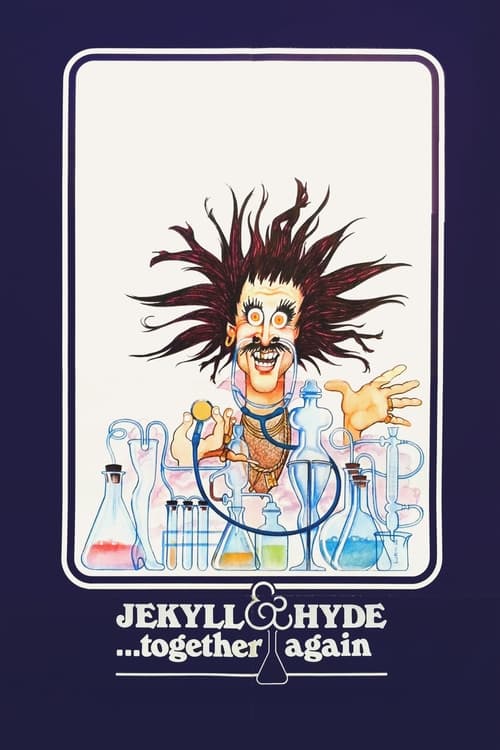
In 'Jekyll and Hyde... Together Again', Dr. Jekyll, played by Mark Blankfield, undergoes a transformation into his alter ego, Mr. Hyde, after experimenting with a new formula. This transformation is marked by a physical change where he becomes more disheveled and wild, embodying a more primal and reckless personality. The transformation is both a physical and psychological shift, showcasing Jekyll's internal struggle between his civilized self and the chaotic nature of Hyde.
How does the character of Mr. Hyde differ from Dr. Jekyll in the film?
Mr. Hyde, as portrayed in the film, is a stark contrast to Dr. Jekyll. While Jekyll is depicted as a well-mannered and respectable doctor, Hyde is brash, impulsive, and often engages in morally questionable behavior. This duality is emphasized through Hyde's crude mannerisms and lack of social decorum, which creates a comedic yet dark dynamic as Jekyll grapples with the consequences of his alter ego's actions.
What comedic elements are present in the film's portrayal of the Jekyll and Hyde story?
The film incorporates various comedic elements, particularly through the absurdity of Jekyll's transformations and the situations that arise from them. For instance, the film features slapstick humor, such as Jekyll's clumsy attempts to navigate life while dealing with Hyde's antics. The juxtaposition of horror and comedy is evident in scenes where Hyde's outrageous behavior leads to humorous misunderstandings, creating a lighthearted take on the classic tale.
How does Dr. Jekyll's experimentation affect his relationships with others?
Dr. Jekyll's experimentation with the formula significantly strains his relationships, particularly with Lisa and his colleagues. As he becomes more consumed by his alter ego, Hyde, he begins to alienate those around him. His friends express concern over his erratic behavior, and Lisa feels conflicted as she witnesses the changes in Jekyll. This emotional turmoil reflects Jekyll's internal battle, as he struggles to maintain his connections while grappling with the darker aspects of his personality.
Is this family friendly?
"Jekyll and Hyde... Together Again" is a comedy that features elements that may not be suitable for all family audiences. Here are some potentially objectionable or upsetting aspects:
-
Adult Themes: The film includes themes of sexuality and relationships that may not be appropriate for younger viewers. There are suggestive situations and innuendos throughout.
-
Violence and Gore: While the film is comedic, it does contain scenes of transformation and violence that may be unsettling. The transformation of Dr. Jekyll into Mr. Hyde is depicted in a way that could be frightening for children.
-
Drug Use: There are references to drug use, particularly in the context of the character's experiments and transformations, which may not be suitable for sensitive viewers.
-
Mature Humor: The humor often leans towards the risqué and may include jokes that are more appropriate for an adult audience, potentially making it uncomfortable for children.
-
Scary Imagery: The visual representation of Mr. Hyde can be grotesque and may evoke fear in younger viewers, as it plays on horror tropes.
These elements contribute to the film's overall tone, which is more aligned with adult comedy than family-friendly entertainment.