








Popular
Who is the main character in Un marziano a Roma and what is his significance to the story?
What challenges does Amedeo face while trying to adapt to life on Earth?
How does Amedeo's presence affect the lives of the people he encounters in Rome?
What role does the character of the journalist play in Amedeo's journey?
What specific events lead to Amedeo's realization about human emotions?
Should I watch it?
Ask Your Own Question

What is the plot?
Sorry, we aren't able to watch and write up a full detailed plot yet. Check back in a few days.


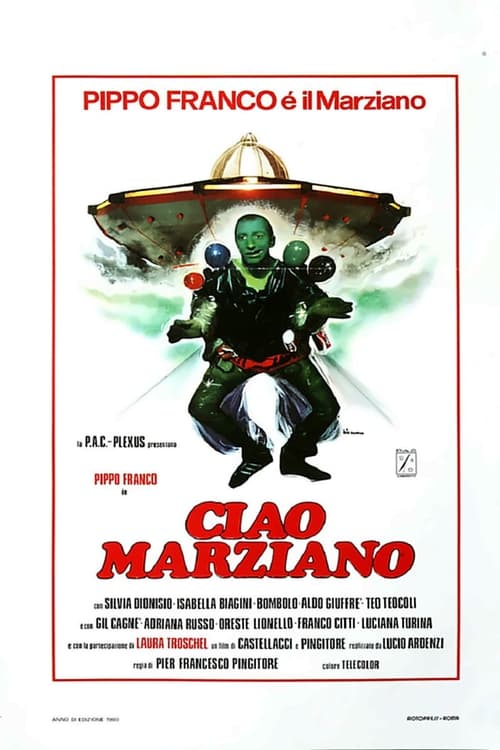

What is the ending?
In the ending of "Un marziano a Roma," the alien, who has been living among humans, ultimately decides to leave Earth. He bids farewell to the people he has come to know, particularly to the young boy who befriended him. The alien's departure is marked by a sense of melancholy and reflection on the experiences he had during his time on Earth.
As the film concludes, the alien ascends into the sky, leaving behind a world that has both fascinated and confused him. The boy watches in awe, feeling a mix of sadness and wonder at the alien's journey back to his home planet.
Now, let's delve into the ending in a more detailed, chronological narrative.
The final scenes of "Un marziano a Roma" unfold with a palpable tension as the alien, who has been living incognito among the people of Rome, prepares to leave. The atmosphere is heavy with emotion, as the alien reflects on his time spent on Earth. He has formed a bond with a young boy, who has been his companion and guide through the complexities of human life.
In a poignant moment, the alien and the boy sit together in a quiet spot, surrounded by the bustling city. The boy, innocent and curious, asks the alien questions about his home planet and what it is like to be a Martian. The alien, with a mix of nostalgia and sadness, shares stories of his world, painting vivid pictures of landscapes and experiences that are foreign yet enchanting to the boy. This exchange highlights the deep connection they have forged, transcending the boundaries of their different worlds.
As the time for departure draws near, the alien feels a sense of longing for the friendships he has made, yet he knows he must return to his own kind. The boy, sensing the impending farewell, becomes increasingly emotional. He struggles to understand why the alien must leave, expressing a childlike desire to keep his friend close. The alien reassures him, explaining that their bond will always remain, no matter the distance.
In the climactic moment of the ending, the alien ascends into the sky, a visual spectacle that captures the awe of the onlookers below. The boy watches with wide eyes, a mixture of wonder and sorrow etched on his face. As the alien rises higher, the city of Rome becomes a backdrop to this extraordinary farewell, symbolizing the fleeting nature of their connection.
The alien's departure is not just a physical journey but also an emotional one, as he leaves behind the warmth of human relationships and the lessons learned during his time on Earth. The boy, now alone, feels the weight of the alien's absence but also carries the memories of their adventures together.
As the film concludes, the alien's fate is to return to his home planet, where he will share the stories of humanity and the friendships he formed. The boy, left with a sense of wonder and a heart full of memories, symbolizes the innocence of childhood and the impact of interstellar friendship. The ending encapsulates the themes of connection, loss, and the beauty of experiencing life through the eyes of another, regardless of their origins.
Is there a post-credit scene?
The movie "Un marziano a Roma," produced in 1983, does not have a post-credit scene. The film concludes its narrative without any additional scenes or content after the credits roll. The story wraps up with the main characters and their experiences, leaving the audience with a sense of closure regarding the events that unfolded throughout the film.
Who is the main character in Un marziano a Roma and what is his significance to the story?
The main character in 'Un marziano a Roma' is a Martian named Amedeo, who arrives on Earth and finds himself in the bustling city of Rome. His significance lies in his outsider perspective, which allows him to observe and comment on human behavior and societal norms, often leading to humorous and poignant situations.
What challenges does Amedeo face while trying to adapt to life on Earth?
Amedeo faces numerous challenges as he tries to adapt to life on Earth, including language barriers, cultural misunderstandings, and the complexities of human emotions. His naivety often leads to comedic situations, but it also highlights the absurdities of human life, as he struggles to understand concepts like love, friendship, and societal expectations.
How does Amedeo's presence affect the lives of the people he encounters in Rome?
Amedeo's presence significantly impacts the lives of the people he encounters in Rome. His innocent and curious nature brings out both the best and worst in those around him, prompting characters to reflect on their own lives, relationships, and the often mundane routines they follow. His interactions lead to moments of self-discovery and transformation for several characters.
What role does the character of the journalist play in Amedeo's journey?
The journalist, who becomes fascinated by Amedeo, plays a crucial role in his journey by documenting his experiences and helping him navigate the complexities of human society. This character serves as a bridge between Amedeo and the human world, providing insights and guidance while also grappling with his own motivations and the implications of Amedeo's presence.
What specific events lead to Amedeo's realization about human emotions?
Amedeo's realization about human emotions unfolds through a series of specific events, including witnessing acts of kindness, love, and conflict among the people he meets. Key moments include observing a romantic relationship develop, experiencing betrayal, and encountering moments of joy and sorrow, all of which contribute to his growing understanding of the depth and complexity of human feelings.
Is this family friendly?
"Un marziano a Roma," directed by Enrico Oldoini, is a comedy that revolves around the arrival of a Martian in Rome and the ensuing chaos. While the film is primarily light-hearted and comedic, there are a few elements that may be considered objectionable or upsetting for children or sensitive viewers:
-
Mild Language: The film contains some instances of mild profanity that may not be suitable for younger audiences.
-
Social Commentary: The film includes themes of alienation and societal critique, which may be complex for children to fully understand.
-
Cultural References: Some jokes and references may be rooted in Italian culture, which could be confusing for viewers unfamiliar with the context.
-
Slightly Dark Humor: There are moments of humor that touch on darker themes, which might be unsettling for sensitive viewers.
-
Character Conflicts: The interactions between characters can sometimes escalate into arguments or misunderstandings, which may be distressing for younger viewers.
Overall, while the film is intended to be comedic and entertaining, these elements may warrant parental guidance for younger audiences.







