












Popular
What is the significance of the song 'Do You Remember Love?' in the film?
How does the character of Minmay evolve throughout the story?
What role does the Zentradi play in the conflict of the film?
How does Hikaru's relationship with Misa change throughout the film?
What is the impact of the battle sequences on the characters' development?
Should I watch it?
Ask Your Own Question

What is the plot?
Sorry, we aren't able to watch and write up a full detailed plot yet. Check back in a few days.
More Movies Like This
Browse All Movies →


What is the ending?
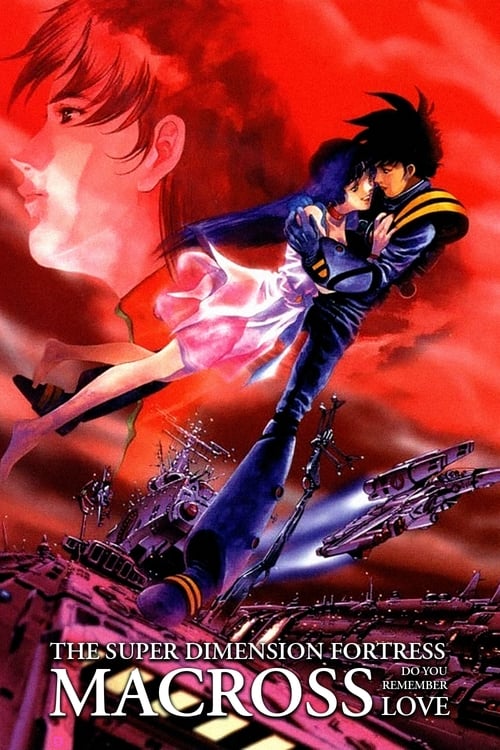
In the ending of "Macross: Do You Remember Love?", the conflict between humanity and the Zentradi reaches a climax. Hikaru Ichijyo, Misa Hayase, and Minmay are central to the resolution. The film culminates in a battle where Hikaru pilots the VF-1 Valkyrie to confront the Zentradi forces. Misa, who has developed deep feelings for Hikaru, supports him from the command center. Minmay, who has also been a significant part of Hikaru's life, uses her singing to bridge the gap between the two races. The film concludes with a moment of unity as the Zentradi begin to understand love and culture through Minmay's song, leading to a ceasefire. The final scenes show Hikaru and Misa together, hinting at a hopeful future.
As the film approaches its conclusion, the atmosphere is charged with tension. The Zentradi, a race of giant warriors, have been relentlessly pursuing the SDF-1 Macross, the human flagship. The battle rages on, and the stakes are higher than ever. Hikaru Ichijyo, now a seasoned pilot, is in the cockpit of his VF-1 Valkyrie, his heart racing not just from the adrenaline of combat but also from the weight of his feelings for Misa Hayase, who has been his steadfast ally throughout the war.
Scene by scene, the climax unfolds. The SDF-1 is under siege, and the Zentradi forces are closing in. Hikaru, with determination etched on his face, engages in aerial dogfights, showcasing his growth as a pilot. He recalls moments with Misa and Minmay, their laughter and shared experiences fueling his resolve. Misa, in the command center, watches Hikaru's every move, her heart filled with a mix of pride and fear. She knows that their fates are intertwined, and she desperately wants him to return safely.
Meanwhile, Minmay, who has been a symbol of hope and love for both humans and Zentradi, prepares to perform a song that she believes can resonate with the Zentradi. As she steps onto the makeshift stage, her voice carries through the chaos of battle, a haunting melody that speaks of love and understanding. The Zentradi, initially confused by the emotions stirred by her song, begin to hesitate, their combat instincts clashing with newfound feelings.
As Hikaru continues to fight, he receives a transmission from Misa, urging him to focus on the mission but also expressing her feelings for him. This moment of vulnerability strengthens Hikaru's resolve. He realizes that the battle is not just about survival but about the future they can build together. He pushes his Valkyrie to its limits, taking down enemy fighters while keeping Minmay's song in his heart.
The turning point comes when the Zentradi leaders, witnessing the impact of Minmay's performance, begin to question their own existence and the purpose of their conflict. The once-unyielding warriors start to experience emotions they had long suppressed. The film visually contrasts the cold, mechanical nature of the Zentradi with the warmth of human emotions, embodied by Minmay's song.
In the final moments, as the battle reaches its peak, Hikaru makes a daring move to confront the Zentradi flagship. He channels all his feelings for Misa and Minmay into a final attack, which ultimately leads to a ceasefire. The Zentradi, now understanding the concept of love through Minmay's song, lower their weapons, and the battlefield falls silent.
The film concludes with a poignant scene where Hikaru and Misa stand together, looking out over the remnants of the battle. Their hands brush against each other, a silent acknowledgment of their bond. Minmay, having played a crucial role in bridging the gap between the two races, watches them with a bittersweet smile, knowing that her journey has also led to a new beginning for all.
In the aftermath, the fate of the main characters is revealed. Hikaru and Misa, having survived the conflict, are left with the hope of building a future together, their love forged in the fires of war. Minmay, while still a vital part of their lives, begins to explore her own path, having discovered the power of her voice and the impact it can have on others. The film closes on a note of optimism, suggesting that love and understanding can transcend even the deepest divides.
Is there a post-credit scene?
"Macross: Do You Remember Love?" does not have a post-credit scene. The film concludes with a poignant ending that encapsulates the themes of love, sacrifice, and the enduring human spirit. After the climactic battle against the Zentradi forces, the story wraps up with a sense of hope and resolution, focusing on the characters' emotional journeys rather than leaving room for additional scenes after the credits. The final moments emphasize the connection between the characters, particularly between Hikaru Ichijo, Minmay, and Misa Hayase, as they reflect on their experiences and the bonds formed through their struggles.
What is the significance of the song 'Do You Remember Love?' in the film?
The song 'Do You Remember Love?' serves as a central emotional anchor throughout the film, symbolizing the connection between the characters, particularly between Hikaru Ichijo and Minmay. It encapsulates their feelings of love, longing, and nostalgia, and is used in key moments to evoke memories and emotions, especially during battles and personal conflicts.
How does the character of Minmay evolve throughout the story?
Minmay begins as a naive and aspiring pop singer, focused on her dreams of fame. As the story progresses, she faces the harsh realities of war and loss, which lead her to mature emotionally. Her experiences shape her into a more resilient and self-aware individual, ultimately influencing her relationship with Hikaru and her role in the conflict against the Zentradi.
What role does the Zentradi play in the conflict of the film?
The Zentradi are a race of giant warriors who serve as the primary antagonists in the film. Their conflict with humanity is rooted in their mission to retrieve the SDF-1 Macross and its technology. However, as they encounter human culture, particularly through Minmay's music, they begin to question their own existence and the nature of their mission, leading to pivotal moments of transformation and conflict.
How does Hikaru's relationship with Misa change throughout the film?
Hikaru's relationship with Misa begins with tension and misunderstanding, as Misa is initially portrayed as a strict and focused officer. However, as they face the challenges of war together, their bond deepens. Hikaru comes to appreciate Misa's strength and dedication, while Misa learns to open up emotionally, leading to a romantic connection that contrasts with his feelings for Minmay.
What is the impact of the battle sequences on the characters' development?
The battle sequences in 'Macross: Do You Remember Love?' serve as critical turning points for character development. Each confrontation forces the characters, especially Hikaru, Misa, and Minmay, to confront their fears, desires, and the harsh realities of war. These intense moments of action not only drive the plot forward but also catalyze personal growth, revealing their vulnerabilities and shaping their relationships.
Is this family friendly?
"Macross: Do You Remember Love?" is generally considered suitable for older children and teens, but it does contain some elements that may be objectionable or upsetting for younger viewers or sensitive individuals. Here are some aspects to consider:
-
Violence and Destruction: The film features intense space battles, showcasing destruction of ships and cities, which may be distressing for some viewers. The stakes are high, and there are scenes of characters in peril.
-
Death and Loss: There are moments that deal with themes of loss and sacrifice, including the deaths of characters, which can evoke strong emotional responses.
-
Romantic Tension: The film explores complex romantic relationships, including unrequited love and emotional turmoil, which may be difficult for younger audiences to fully understand.
-
Alien Encounters: The presence of alien beings and the conflict between humans and these extraterrestrial forces may be unsettling for some children.
-
Emotional Struggles: Characters experience significant emotional struggles, including feelings of loneliness, longing, and existential crises, which may resonate deeply but could also be heavy for sensitive viewers.
Overall, while the film is a classic in the mecha and anime genres, its themes and content may require parental guidance for younger audiences.









