





Popular
What is the significance of Figaro's relationship with Susanna in the story?
How does the Count's pursuit of Susanna affect his relationship with the Countess?
What role does Cherubino play in the story, and how does his character influence the plot?
What is the significance of the 'letter' subplot involving Susanna and the Countess?
How does the character of Bartolo contribute to the overall conflict in the story?
Should I watch it?
Ask Your Own Question

What is the plot?
Sorry, we aren't able to watch and write up a full detailed plot yet. Check back in a few days.








What is the ending?
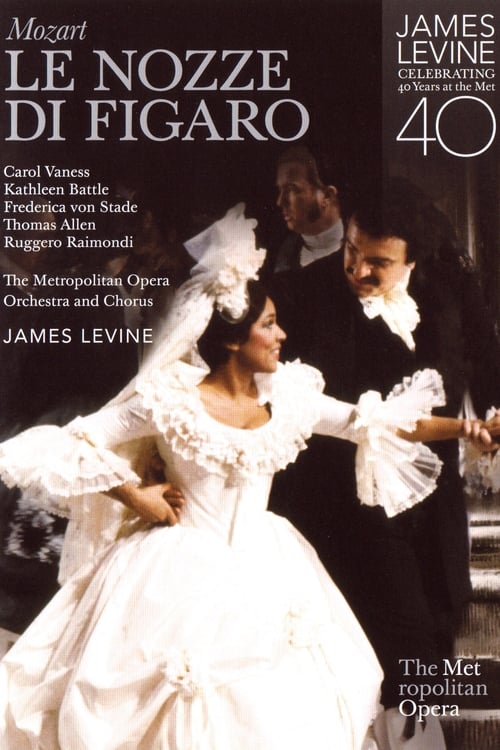
In the ending of "Le Nozze di Figaro" at The Met's 1985 production, the characters come together in a resolution of misunderstandings and conflicts. Figaro and Susanna finally unite in marriage, while Count Almaviva's attempts to seduce Susanna are thwarted. The Count, realizing the error of his ways, seeks forgiveness. The story concludes with a celebration of love and fidelity, as the characters embrace their relationships and the bonds of marriage.
As the final act unfolds, the scene is set in the garden of Count Almaviva's estate, where the characters are preparing for the wedding festivities. The atmosphere is charged with anticipation, yet undercurrents of tension remain due to the various romantic entanglements and misunderstandings that have transpired.
The act begins with Figaro and Susanna discussing their wedding plans, both excited yet anxious about the Count's intentions. They are determined to outsmart the Count, who has been scheming to seduce Susanna. Figaro, filled with a mix of love and determination, vows to protect his bride from the Count's advances.
As night falls, the garden is illuminated by soft moonlight, creating a romantic yet deceptive ambiance. The characters, cloaked in darkness, engage in a series of mistaken identities and playful deceptions. Susanna, dressed as the Countess, and Figaro, unaware of her true identity, are caught in a web of intrigue. The Count, believing he is pursuing Susanna, is actually drawn into a trap set by Figaro and Susanna.
The tension escalates when the Count arrives, expecting to find Susanna alone. Instead, he is confronted by the Countess, who reveals her true identity. The Count is taken aback, realizing that he has been outsmarted. The emotional weight of the moment hangs heavy as he grapples with his actions and the consequences of his infidelity.
In a moment of vulnerability, the Count seeks forgiveness from the Countess, acknowledging his faults and expressing remorse for his behavior. The Countess, embodying grace and dignity, ultimately forgives him, highlighting the themes of love, redemption, and the complexities of marriage.
As the characters gather for the wedding celebration, Figaro and Susanna finally unite in a heartfelt moment, surrounded by their friends and family. Their love triumphs over the chaos that has ensued, symbolizing hope and fidelity. The joyous atmosphere is palpable as the couple exchanges vows, sealing their commitment to one another.
The opera concludes with a grand celebration, where all the characters come together in harmony. The Count, Countess, Figaro, and Susanna, along with the other characters, join in a chorus that emphasizes the importance of love, forgiveness, and the bonds of marriage. Each character finds resolution: Figaro and Susanna embark on their new life together, while the Count and Countess reaffirm their relationship, having navigated the trials of jealousy and betrayal.
In this final scene, the audience is left with a sense of closure and the understanding that love, despite its challenges, can prevail, bringing joy and unity to all involved.
Is there a post-credit scene?
The 1985 production of "Le Nozze di Figaro" by The Met does not include a post-credit scene. The opera concludes with the final act, where the characters resolve their conflicts and misunderstandings, leading to a celebratory atmosphere. The focus remains on the culmination of the story and the themes of love, forgiveness, and social commentary, rather than any additional scenes after the conclusion of the performance. The opera ends with a sense of closure, leaving the audience with the emotional resonance of the characters' journeys.
What is the significance of Figaro's relationship with Susanna in the story?
Figaro and Susanna's relationship is central to the plot of 'Le Nozze di Figaro.' They are engaged to be married, and their love is characterized by mutual affection and playful banter. However, their relationship is tested by the Count's attempts to seduce Susanna, which creates tension and drives much of the action. Figaro's determination to protect Susanna and outsmart the Count showcases his loyalty and cleverness, while Susanna's wit and resourcefulness highlight her strength as a character.
How does the Count's pursuit of Susanna affect his relationship with the Countess?
The Count's pursuit of Susanna creates a rift in his marriage with the Countess, Rosina. Initially, the Countess is portrayed as a loving and devoted wife, but she becomes increasingly aware of her husband's infidelity. This betrayal leads to feelings of jealousy and sadness, prompting her to seek revenge through a plan to expose the Count's unfaithfulness. The emotional turmoil experienced by the Countess adds depth to her character, as she grapples with feelings of betrayal and the desire to reclaim her husband's love.
What role does Cherubino play in the story, and how does his character influence the plot?
Cherubino is a young page who embodies youthful passion and impulsiveness. His infatuation with women, particularly the Countess, adds a layer of comedic chaos to the narrative. His character serves as a catalyst for several key events, including the Count's jealousy and the Countess's schemes. Cherubino's disguise as a woman to escape the Count's wrath leads to humorous misunderstandings and ultimately helps to unite the other characters against the Count's oppressive behavior.
What is the significance of the 'letter' subplot involving Susanna and the Countess?
The subplot involving the letter is crucial to the unfolding drama in 'Le Nozze di Figaro.' Susanna and the Countess devise a plan to use a letter to trick the Count into revealing his intentions. This letter becomes a symbol of deception and manipulation, as it is meant to expose the Count's infidelity. The miscommunication surrounding the letter leads to a series of comedic and dramatic moments, ultimately culminating in the Count's realization of his wrongdoings and the restoration of harmony among the characters.
How does the character of Bartolo contribute to the overall conflict in the story?
Bartolo, the doctor, is a character driven by his desire for revenge against Figaro, who once thwarted his plans to marry Rosina. His presence adds an additional layer of conflict, as he seeks to disrupt Figaro and Susanna's wedding. Bartolo's schemes and his alliance with Marcellina create obstacles for the protagonists, highlighting themes of class struggle and the consequences of past grievances. His character serves as a reminder of the interconnectedness of the various plots and the impact of personal vendettas on the larger narrative.
Is this family friendly?
"Le Nozze di Figaro," produced by The Met in 1985, is generally considered family-friendly, but it does contain some themes and scenes that may be sensitive for children or more sensitive viewers.
-
Infidelity and Romantic Entanglements: The plot revolves around complex romantic relationships, including themes of infidelity and desire, which may be difficult for younger audiences to fully understand.
-
Class Struggles: The opera explores social class dynamics, with characters expressing frustration and rebellion against their societal roles, which could be unsettling for some viewers.
-
Deception and Manipulation: Several characters engage in schemes and deceptions, which may present moral dilemmas that could be confusing or distressing for children.
-
Emotional Turmoil: Characters experience jealousy, betrayal, and emotional conflict, which may evoke strong feelings and could be intense for sensitive viewers.
-
Mature Themes: The overarching themes of love, power, and revenge may include mature undertones that require a certain level of emotional maturity to fully grasp.
While the opera is rich in humor and ultimately resolves in a positive manner, these elements may warrant parental guidance for younger audiences.