



Popular
What motivates Tosca to kill Scarpia?
How does Mario Cavaradossi's fate unfold throughout the film?
What role does the character of Scarpia play in Tosca's emotional journey?
How does the setting of Rome influence the events of Tosca?
What is the significance of the final scene between Tosca and Mario?
Should I watch it?
Ask Your Own Question

What is the plot?
Sorry, we aren't able to watch and write up a full detailed plot yet. Check back in a few days.


What is the ending?
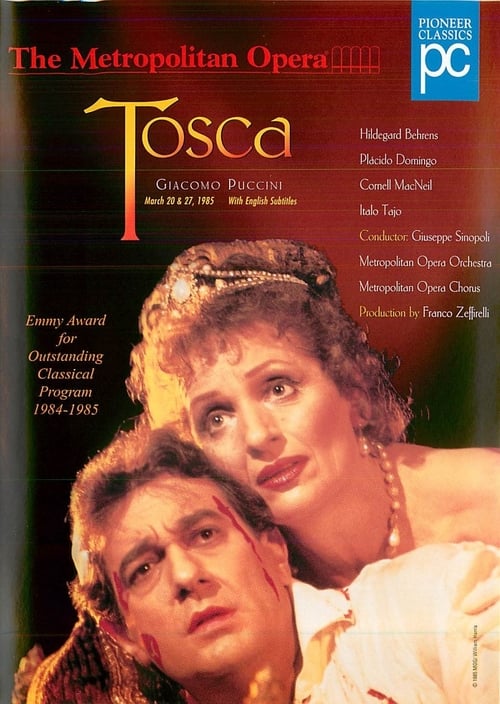
In the ending of the 1985 film "Tosca," the opera singer Floria Tosca is devastated by the death of her lover, Mario Cavaradossi, who has been executed. In a desperate act of love and defiance, she kills the corrupt chief of police, Scarpia, who had manipulated her and sought to possess her. Ultimately, Tosca, realizing that she cannot escape the consequences of her actions, leaps to her death from the battlements of the castle.
Now, let's delve into the ending in a more detailed narrative fashion:
As the final act unfolds, the atmosphere is thick with tension and despair. The scene opens in the dimly lit chambers of the Castel Sant'Angelo, where Floria Tosca, her heart heavy with grief, stands alone. The weight of her lover Mario Cavaradossi's impending execution looms over her, and her mind races with thoughts of their love and the betrayal she has faced at the hands of Scarpia. The walls seem to close in around her, echoing her anguish.
In a flashback, we see the moments leading up to this tragic conclusion. Scarpia, the manipulative chief of police, has just been killed by Tosca in a fit of rage and desperation. The blood on her hands symbolizes not just the act of murder but the loss of her innocence. She had hoped to save Mario by agreeing to Scarpia's demands, but his treachery has left her with no choice. The room is filled with the remnants of their struggle, the flickering candlelight casting shadows that dance ominously on the walls.
Tosca, now a woman driven by love and vengeance, clutches the dagger she used to kill Scarpia. Her heart races as she recalls the moments of passion shared with Mario, the dreams they had woven together. But those dreams are shattered, and the reality of her situation sinks in. She knows that the guards will soon discover Scarpia's body, and she must act quickly.
In a desperate bid to save Mario, she retrieves the letter that Scarpia had promised would grant them safe passage. However, as she rushes to the execution site, the sound of the firing squad echoes in her ears, a grim reminder of the time slipping away. The urgency of her mission propels her forward, but with each step, the weight of her actions bears down on her.
When she finally reaches the courtyard, she finds Mario, bound and blindfolded, moments away from death. The sight of him, so close yet so far, ignites a fierce determination within her. She reveals the truth of Scarpia's death to Mario, and for a fleeting moment, hope flickers in their eyes. They share a passionate embrace, but the reality of their situation is inescapable.
As the soldiers prepare to execute Mario, Tosca pleads for mercy, but her cries fall on deaf ears. In a moment of desperation, she reveals the truth about Scarpia's death, but the soldiers are unmoved. In a heart-wrenching moment, Mario is shot, and Tosca's world crumbles around her. She rushes to his side, cradling his lifeless body, her screams of anguish piercing the air.
Overwhelmed by grief and despair, Tosca realizes that she cannot live in a world without Mario. The weight of her actions, the loss of her love, and the betrayal she has suffered culminate in a moment of clarity. She ascends to the battlements of the castle, the wind whipping around her as she gazes out over the city. The beauty of Rome contrasts sharply with the darkness in her heart.
In a final act of defiance and love, Tosca leaps from the battlements, choosing to join Mario in death rather than face a life filled with sorrow and regret. The camera captures her fall, a tragic end to a love story marred by betrayal and loss.
As the film concludes, the fate of the main characters is sealed: Mario Cavaradossi lies dead, a victim of political machinations and personal vendettas; Scarpia, the embodiment of corruption and desire, has met his end at the hands of the woman he sought to control; and Floria Tosca, in her final act, becomes a tragic figure, a symbol of love's power and the devastating consequences of a world rife with cruelty and betrayal. The curtain falls, leaving the audience to grapple with the profound tragedy of their intertwined fates.
Is there a post-credit scene?
The 1985 film "Tosca," directed by Franco Zeffirelli, does not contain a post-credit scene. The film concludes with the dramatic and tragic ending of the opera, where the main characters, Tosca and Cavaradossi, face their fates. The emotional weight of the story culminates in a powerful finale, leaving the audience with the intense feelings of love, betrayal, and loss that define the opera. The film ends on a somber note, focusing on the tragic consequences of the characters' actions, without any additional scenes or epilogues following the credits.
What motivates Tosca to kill Scarpia?
Tosca's motivation to kill Scarpia stems from her desperation to protect her lover, Mario Cavaradossi. Scarpia, the chief of police, has captured Mario and threatens to execute him unless Tosca submits to his desires. In a moment of intense emotional turmoil, Tosca realizes that she must take drastic action to save Mario, leading her to stab Scarpia in a fit of rage and fear.
How does Mario Cavaradossi's fate unfold throughout the film?
Mario Cavaradossi's fate is marked by tragedy and sacrifice. Initially, he is arrested by Scarpia for his political beliefs and his association with the revolutionary cause. Despite his imprisonment and torture, he remains steadfast in his love for Tosca. As the story progresses, he is sentenced to death, and his fate becomes a catalyst for Tosca's desperate actions, culminating in her decision to kill Scarpia to save him.
What role does the character of Scarpia play in Tosca's emotional journey?
Scarpia serves as the primary antagonist in Tosca's emotional journey. His manipulative and predatory nature forces Tosca into a position of vulnerability, where she must confront her own desires and fears. Scarpia's relentless pursuit of Tosca not only heightens her emotional turmoil but also drives her to commit murder, marking a significant turning point in her character arc as she transitions from a passive lover to a desperate woman fighting for her love.
How does the setting of Rome influence the events of Tosca?
The setting of Rome plays a crucial role in shaping the events of Tosca. The political unrest of the time, with the backdrop of the Napoleonic Wars, creates a tense atmosphere that influences the characters' actions. Iconic locations such as the Church of Sant'Andrea della Valle and the Castel Sant'Angelo serve as dramatic stages for the unfolding tragedy, amplifying the emotional stakes and the sense of impending doom that permeates the narrative.
What is the significance of the final scene between Tosca and Mario?
The final scene between Tosca and Mario is laden with emotional weight and tragic irony. After Tosca believes she has secured Mario's freedom through deception, they share a moment of hope and love. However, the revelation of Mario's execution shatters this illusion, leading Tosca to a state of despair. This poignant moment encapsulates the themes of love, sacrifice, and the harsh realities of their world, ultimately culminating in Tosca's tragic decision to take her own life.
Is this family friendly?
The 1985 film "Tosca," directed by Franco Zeffirelli, is an adaptation of Giacomo Puccini's opera and contains several elements that may not be suitable for children or sensitive viewers. Here are some potentially objectionable or upsetting aspects:
-
Violence and Death: The film includes scenes of violence, including executions and the portrayal of death, which may be distressing for younger audiences.
-
Torture: There are moments that depict torture and suffering, particularly involving the character of Mario Cavaradossi, which can be intense and unsettling.
-
Romantic Betrayal: The emotional turmoil stemming from romantic betrayal and jealousy is a central theme, which may be complex for younger viewers to understand.
-
Themes of Despair: The overarching themes of despair, loss, and sacrifice can evoke strong emotions and may be heavy for sensitive individuals.
-
Mature Relationships: The film explores adult relationships and the consequences of passion, which may not be appropriate for children.
These elements contribute to a dramatic and intense narrative that may be better suited for older teens and adults.







