
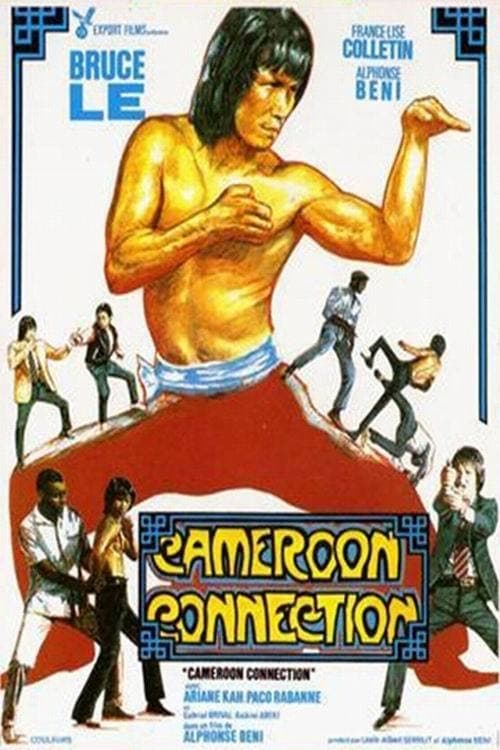





Popular
What role does the antagonist play in the protagonist's journey?
What motivates the main character to travel to Cameroon?
How does the protagonist's relationship with local characters evolve throughout the film?
What specific challenges does the protagonist face while investigating in Cameroon?
How does the setting of Cameroon influence the story's events?
Should I watch it?
Ask Your Own Question

What is the plot?
Inspector Baïko's story begins in Douala, Cameroon, where a young woman is snatched into death by a mystery that looks at first like a single murder but quickly feels like the edge of a much larger rot. The film opens with the woman receiving a strange phone call that pulls her out of ordinary life and into something predatory and unseen; she leaves home, and by the time she stumbles back, wounded and terrified, the night has already taken its claim on her. Her death is the event that wakes Inspector Baïko, an incorruptible police officer and kung-fu champion, and he is assigned to find out who killed her and why. From the start, he does not treat the case as routine. The killing feels staged, almost ritualistic, and as he begins to move through the streets and institutions of Cameroon, he senses that the crime is attached to missing women, corruption, and forces that those around him are reluctant to name aloud.
Baïko's first steps are rooted in the local world that produced the crime. In Douala, he investigates the victim's background and learns that this is not an isolated death but part of a pattern involving disappearing women. One of the first major turns comes when the murdered woman's twin sister emerges as a key presence in the investigation. Her existence deepens the emotional wound at the center of the story: the dead woman is no longer just a victim, but one half of a mirrored pair, and the surviving sister becomes both witness and avenger in spirit. Her grief is not passive. She is drawn into Baïko's search, helping him piece together what happened, and her presence keeps the case personal even as it widens into something political and criminal.
The trail leads Baïko away from the surface of the murder and toward a broader network of exploitation. What begins as a homicide inquiry opens into a web of pimps, prostitutes, black-market operators, and people connected to power. The film's world is messy and predatory, and Baïko keeps pushing through it because he understands that the murder is only one node in a larger system. The further he digs, the more the case points beyond ordinary crime and toward "politico-economic intrigue" mixed with sorcery and witchcraft. That strange combination gives the film its feverish tone: every corridor of corruption seems to have both a bureaucratic and supernatural shadow attached to it. Baïko is forced to navigate not only gangsters and fixers but also the suggestion that the conspiracy is protected by occult practices and fear.
At this stage the story becomes a transnational chase. The investigation carries Baïko from Cameroon to France, with the film shifting between Douala, Yaoundé, and Paris as if the crime itself has learned to travel. In Cameroon, the pressure builds around the missing women and the people who profit from them. In France, the conspiracy acquires a new face and new terrain. Baïko follows the thread to Paris, where the network's reach is exposed as international rather than local. This move to France broadens the film from a murder mystery into a globe-spanning exploitation thriller, and the contrast between African and European locations underscores the story's sense of hidden systems linking both worlds.
In Paris, Baïko encounters Bruce Le, who enters the story as both a martial-arts ally and a comic, kinetic counterweight to the corruption surrounding the case. The two men meet at an African nightclub, a location that feels like a crossing point between diaspora culture, nightlife, and criminal undercurrents. Bruce Le is not simply a side character; the film treats him as a useful partner in the physical battle ahead. Their alliance is immediate and practical. Bruce helps Baïko move through the French portion of the story, and the connection between them is made with the sort of blunt, improbable camaraderie the film embraces fully. The nightclub scenes carry a buzzing energy, with music, spectacle, and menace colliding in the same space. The investigation's emotional tone changes here: Baïko is still hunting the truth, but now the search is paired with action, movement, and open confrontation.
The film's middle stretch is driven by revelations rather than tidy detective work. Baïko learns that the murder is connected to a chain of disappearances, and the chain itself is tied to a system that uses women as commodities and bodies as currency. The criminal network is not an accident of local vice; it is a structure sustained by people who understand how to hide in plain sight. The presence of sorcery in the conspiracy adds a layer of dread because it suggests that the villains are not only violent but also invested in spiritual intimidation. The story never lets that supernatural element become abstract. Instead, it hangs over scenes like a threat from another realm, making the physical investigation feel even more dangerous.
As the pressure rises, the film moves toward action confrontations. Baïko and Bruce Le end up fighting racists together in France, turning the investigation into a street-level eruption of violence. The fights are important not only because they are energetic set pieces, but because they dramatize Baïko's refusal to be contained by either criminal power or social hostility. Every confrontation seems to confirm that the conspiracy stretches into public space, where prejudice and exploitation become part of the same atmosphere. Bruce Le's martial presence gives these scenes momentum, while Baïko's calm determination keeps them anchored in purpose. He is not fighting for spectacle alone; he is fighting because each blow is part of the path back to the truth behind the woman's death.
The film's emotional center remains the murdered woman and her twin sister, even as the scope widens. The sister's role continues to make the case feel intimate, and her involvement suggests that the dead woman's life was connected to secrets more dangerous than anyone initially imagined. The twin relationship implies a hidden doubling in the story: one woman dead, one woman alive, both linked to the same shadowed world. That doubling plays into the film's fascination with masks, imposture, and concealed identities. Baïko has to read people carefully, because nearly everyone attached to the case seems to be hiding either fear, profit, or guilt.
The final movements of the story push Baïko deeper into the criminal structure until the corruption and the occult layers collapse into one another. The film does not present a tidy detective-board moment where everything is explained in sober detail. Instead, the climax gathers the case's threads into a bizarre twist ending, the kind of ending that the film's reputation promises from the start. The network of pimps, prostitutes, and political operators is exposed, but not in a manner that suggests easy justice. The revelation is less about a single mastermind than about the full, grotesque shape of the system itself. Baïko's pursuit shows that the murder was only one consequence of a larger arrangement of greed, violence, and ritualized control.
The ending lands with a sense of hard-earned confrontation rather than neat closure. Baïko reaches the final stage of his investigation after moving between Cameroon and France, and the story resolves with the exposure of the corruption-and-sorcery network that has been feeding on vulnerable women and shielding itself through intimidation. Bruce Le remains a crucial ally through the film's French section, and his role in the action gives the climax its fighting spirit. The final sense is that the murder case has been solved only by tearing open a much larger social wound. The dead woman is avenged in principle, even if the film's wild structure refuses to make that revenge feel clean or complete.
What survives at the end is Baïko's relentless refusal to look away. He begins with one body and ends by dragging an entire hidden system into the light. The twin sister's presence turns the investigation into a tragedy of shared identity and loss, while the Paris section, the nightclub alliance, and the street fights give the film its momentum toward an ending that is strange, violent, and memorable. By the final scene, the story has traveled from a mysterious phone call in Cameroon to a transnational web of crime, sorcery, and brutality, and Baïko stands as the force that exposes it all. The murdered woman remains the spark, but the full fire of the film is the corruption her death uncovers, and the ending leaves that larger darkness lingering even after the last confrontation is over.


What is the ending?
In the ending of "Cameroon Connection," the main characters confront their adversaries in a climactic showdown. The protagonist, a determined and resourceful individual, manages to outsmart the villains, leading to a resolution of the conflict. The film concludes with a sense of justice served, as the characters find closure and a new beginning.
As the final act unfolds, the tension escalates. The protagonist, having gathered crucial information about the nefarious activities of the antagonists, prepares for a confrontation. The scene shifts to a dimly lit warehouse, where the villains are gathered, discussing their plans. The atmosphere is thick with anticipation and danger, as the protagonist stealthily approaches, heart racing with a mix of fear and determination.
In a pivotal moment, the protagonist bursts into the room, catching the villains off guard. A fierce exchange ensues, filled with adrenaline and desperation. The protagonist's motivation is clear: to protect loved ones and bring the criminals to justice. Each movement is calculated, showcasing the protagonist's growth throughout the film. The villains, initially confident, begin to falter as the protagonist reveals their knowledge of the operation.
As the confrontation escalates, the protagonist's allies arrive, turning the tide of the battle. The scene is chaotic, with shouts and the sounds of struggle echoing through the warehouse. The protagonist's allies, each with their own motivations and backstories, fight valiantly alongside them, showcasing their loyalty and courage. The emotional stakes are high, as the protagonist reflects on the journey that brought them to this moment, filled with loss and hope.
In the climax, the protagonist faces the main antagonist in a one-on-one showdown. The tension is palpable as they exchange blows, each strike representing the culmination of their conflicting ideologies. The protagonist, fueled by a desire for justice and the memories of those they've lost, ultimately gains the upper hand. With a final, decisive move, the antagonist is defeated, symbolizing the triumph of good over evil.
As the dust settles, the remaining villains are apprehended by law enforcement, who arrive just in time to witness the aftermath. The protagonist stands amidst the chaos, breathing heavily, a mix of relief and sorrow washing over them. They look around at their allies, who share in the victory but also bear the weight of the battle fought.
In the closing scenes, the protagonist reflects on the journey, acknowledging the sacrifices made along the way. They share a moment of camaraderie with their allies, solidifying their bond forged through adversity. The film ends on a hopeful note, with the protagonist looking towards the horizon, symbolizing new beginnings and the promise of a brighter future. Each character finds their own path forward, having faced their fears and emerged stronger, leaving the audience with a sense of closure and resolution.
Is there a post-credit scene?
The movie "Cameroon Connection," produced in 1985, does not feature a post-credit scene. The film concludes its narrative without any additional scenes or content after the credits roll. The story wraps up with a sense of resolution, focusing on the characters' journeys and the outcomes of their conflicts, leaving no further developments or cliffhangers for the audience to ponder after the film ends.
What role does the antagonist play in the protagonist's journey?
The antagonist, a corrupt government official, serves as a formidable obstacle for the protagonist. His ruthless tactics to suppress dissent and maintain power create a palpable tension throughout the film. The protagonist's encounters with the antagonist reveal the stakes of his investigation, pushing him to confront his fears and ultimately galvanizing his resolve to expose the truth.
What motivates the main character to travel to Cameroon?
The main character, a determined journalist, is driven by a desire to uncover the truth behind a series of mysterious events linked to political unrest in Cameroon. His internal conflict revolves around the need for a compelling story that could elevate his career, but he also grapples with the moral implications of exposing sensitive information that could endanger lives.
How does the protagonist's relationship with local characters evolve throughout the film?
Initially, the protagonist struggles to connect with the local characters, facing cultural barriers and mistrust. However, as he immerses himself in their struggles and begins to understand their perspectives, he forms deep bonds with several key figures, including a local activist who becomes both a guide and a source of emotional support, ultimately leading to a profound transformation in his worldview.
What specific challenges does the protagonist face while investigating in Cameroon?
The protagonist faces numerous challenges, including language barriers, hostile locals who are wary of outsiders, and the constant threat of surveillance from government forces. These obstacles not only test his journalistic skills but also force him to confront his own biases and assumptions about the people and culture he is trying to understand.
How does the setting of Cameroon influence the story's events?
The vibrant yet tumultuous setting of Cameroon plays a crucial role in shaping the narrative. The lush landscapes contrast sharply with the underlying tension of political strife, creating a backdrop that enhances the emotional stakes. The protagonist's experiences in various locales, from bustling markets to remote villages, highlight the complexities of the region and serve as a catalyst for his personal growth and the unfolding of the plot.
Is this family friendly?
"Cameroon Connection," produced in 1985, is an action-adventure film that contains several elements that may not be suitable for children or sensitive viewers.
-
Violence: The film features scenes of physical confrontations, including hand-to-hand combat and the use of weapons. These sequences may be intense and could be distressing for younger audiences.
-
Mature Themes: The storyline involves themes of crime, betrayal, and survival, which may be complex and unsettling for children to understand fully.
-
Emotional Tension: Characters experience significant emotional turmoil, including fear, desperation, and loss, which could be upsetting for sensitive viewers.
-
Language: There may be instances of strong language or suggestive dialogue that could be inappropriate for younger audiences.
-
Dangerous Situations: The characters often find themselves in perilous situations that could evoke anxiety or fear, particularly for younger viewers.
Overall, while the film may appeal to older teens and adults who enjoy action and adventure, it contains elements that could be objectionable for a family-friendly viewing experience.








