







Popular
What motivates the main character, Captain Kelsey, throughout the film?
How does the relationship between Captain Kelsey and his first officer, Lieutenant Rhea, evolve during the film?
What role does the alien artifact play in the plot of Orion's Belt?
How does the crew's encounter with the alien race impact their mission?
What is the significance of the title 'Orion's Belt' in relation to the characters' journey?
Should I watch it?
Ask Your Own Question

What is the plot?
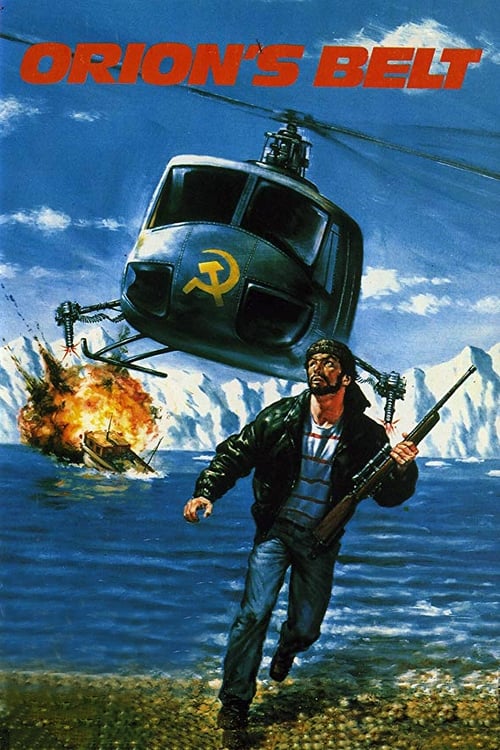
The film opens in the bleak, wind-scoured Arctic world of Svalbard, where three Norwegian seamen and small-time hustlers--Tom Jansen, Lars, and Sverre--are already trying to survive by scraping together money from whatever jobs they can find. They are the sort of men who live by improvisation, always half a step from trouble, and the film establishes that they are not heroes in the polished sense but rough, practical men who know the sea and the cold and the ways of cheating a little to get by. In one of their schemes, they plan to dump a bulldozer into the sea as part of an insurance fraud, a petty trick that perfectly fits their lives: reckless, opportunistic, and just believable enough to work if no one looks too closely. But the world around them is larger and more dangerous than their little scam. What begins as a crooked money-making stunt is swallowed by the Arctic weather, and when a real storm hits, their boat, the Sandy Hook, is driven off course into isolation and danger.
The storm becomes the film's first great pivot. With their equipment damaged and no easy route home, the three men are forced ashore to search for shelter and supplies. The landscape is cold, empty, and visually overwhelming: jagged rock, frozen ground, and a silence so complete it feels like a warning. The men move deeper inland, following a cable that seems oddly out of place in the wilderness. At first it is just an object of curiosity and possible profit, something they might salvage and sell, but the cable leads them toward a hidden cave system and then into a secret Soviet installation concealed in the Arctic. What they discover is not a mine and not a harmless research post, but a covert listening station, a military surveillance site hidden under the cover of ordinary industrial activity. The revelation lands with a real sense of shock: the Soviets are not just mining coal in Svalbard, they are operating a clandestine intelligence facility in territory that should not hold such a thing in secret.
That discovery instantly transforms the story from adventure comedy into Cold War thriller. The men are now witnesses to something that could embarrass governments, trigger diplomatic crises, and expose the larger balance of power in the Arctic. As soon as they are spotted, the Russians react with violent urgency. A Soviet guard opens fire, and Sverre is wounded in the attack. Lars, in a burst of panic and instinctive loyalty, fires back and kills the Russian. This is the first death on screen, and it is crucial because it proves that the men are no longer just accidental trespassers; they are now murder witnesses and murderers in the eyes of the Soviet side. The atmosphere turns desperate. They scramble away from the station and back to Sandy Hook, but the escape is not the end of the danger. It is only the beginning.
Once the discovery is made, the men are hunted from multiple directions. The Soviets want to silence them because they have seen the station and know it exists. American interests also come into play because the existence of such a facility changes the strategic equation, and no superpower wants the other side to gain advantage from the truth. Even the Norwegian authorities become implicated, because the scandal reaches into their own political sphere and threatens to force uncomfortable admissions about what is happening in Svalbard. The story's tension comes from this three-way squeeze: Soviet liquidation, American containment, and Norwegian suppression. The men are caught between states that are larger, colder, and far more ruthless than anything they imagined when they set out to make a little money.
The film keeps the pressure rising as the trio tries to escape across the sea. They attempt to blend in with fishing traffic and keep moving, but the Soviets are already mobilizing against them. The pursuit becomes increasingly cinematic and lethal: helicopters appear in the sky, bringing armed Russian pursuers who are determined to kill the witnesses before the secret can spread. The Arctic seas and rocks become a battlefield. Tom, Lars, and Sverre are no match for the machinery closing in on them, and the film repeatedly shows how small and exposed they are in comparison to the power hunting them. Their boat is damaged further, and their improvisations begin to fail as the net tightens around them.
The most catastrophic moment comes when Tom rows ashore to look for supplies while Lars and Sverre remain with Sandy Hook. Tom is away from the vessel when a Soviet helicopter attacks. The bombing is swift and merciless, and the boat is destroyed with Lars and Sverre on it. Both men are killed in the attack, and the film makes clear that this is not an accident of war so much as a deliberate effort to erase witnesses. Lars dies after having earlier killed the Russian guard, and Sverre dies still recovering from the wound he received in the initial firefight. Tom returns to find the horror of the wreckage and the full realization that he is now alone. The emotional weight of the film shifts here: the comedic roughness that defined the men's friendship is gone, replaced by silence, shock, and a grim sense of being the last survivor of a story that no one will want to believe.
Tom's survival becomes the next long ordeal. He must cross Spitsbergen on foot, alone in the Arctic wilderness, carrying the knowledge that he has seen too much and that every side may want him dead. The journey is not merely physical; it is a passage through isolation and disbelief. He trudges through snow, wind, and ice until he reaches a closed mine. There he finds an aerial tramway used for coal transport, and he rides it toward Longyearbyen, turning the industrial remains of the Arctic economy into his only path back to civilization. The imagery is stark: a lone man hanging over the frozen land, carried by a line of metal through emptiness, moving from the hidden violence of the wilderness toward a town that may or may not be safer.
When Tom finally reaches Norway and tries to tell what happened, he runs straight into the film's political conspiracy. Government officials do not rush to help him; instead, they refuse to believe his account or actively work to bury it. The truth about the Soviet station is too dangerous. It would provoke an international incident, risk a confrontation with Russia, and expose how much is hidden behind the veneer of neutrality and order. The Norwegian state would rather manage the problem than publicize it. In some versions of the story's political machinery, this reaches as high as Governor Bache, the Justice Minister, and the Secretary of State, all part of a chain of official pressure intended to keep the matter quiet. Tom, however, is not ready to vanish into silence. He wants the story made public. He wants someone to know what happened to Lars and Sverre, and he wants the world to hear about the Soviet listening station in Svalbard. Only his girlfriend, Eva, believes him. Her belief matters because it is the last human validation he receives in a world of denial, but it is also fragile, because belief alone cannot protect him from the machinery closing in.
The film's final movement turns from Arctic survival into urban pursuit. Tom is offered a new identity and a job on a foreign trade vessel, as if he can simply be renamed and folded back into the system that has already swallowed his friends. That offer is less a kindness than an attempt to control him: a way to erase his testimony by relocating him, reshaping him, and ending the danger he represents. But Tom does not submit quietly. On his way to the port, he escapes from the military police by disappearing into a carnival parade, the bright colors and movement of the procession briefly swallowing the darker machinery of state power. It is a wonderfully uneasy final run: a hunted man moving through noise and celebration while authorities search for him, the absurdity of public festivity masking the violence of the chase.
The film's ending is grimly definitive and yet deliberately ambiguous about who finally kills Tom. In the version described in the plot sources, Tom is killed at the end no matter which cut is considered, though the film leaves open whether the bullet or blow comes from Soviet intelligence or American intelligence. That uncertainty is the point. Tom's death is not about solving the mystery so much as showing that once he has seen the secret, no state will allow him to remain alive as an uncontrollable witness. The final question is not whether he is marked for death, but whose hand completes the sentence. His attempt to outmaneuver the authorities ends in failure, and the film closes with the bitter implication that truth has no safe place in the Cold War world he has stumbled into.
So the story ends as a full-circle tragedy. Tom, Lars, and Sverre begin as petty schemers trying to make money from an insurance scam and end as casualties of geopolitical paranoia. The Soviet guard dies first when Lars shoots him during the escape from the listening station. Lars and Sverre then die when the Soviet helicopter bombs Sandy Hook. Tom survives the wilderness, the officials, and the false offers of reinvention only to be killed at the end by an unseen intelligence operation whose exact allegiance is left unresolved. The hidden station remains the central secret, the men's discovery remains the inciting catastrophe, and the Arctic landscape remains as cold and indifferent at the end as it is at the start. The final feeling is one of exhaustion and bleak inevitability: in this world, the smallest accidental discovery is enough to make ordinary men expendable, and once the great powers decide a secret must stay buried, survival itself becomes temporary.
More Movies Like This
Browse All Movies →
What is the ending?
In the ending of "Orion's Belt," the main characters confront their fates as the story reaches its climax. The protagonist, a determined and resourceful individual, faces a final showdown that tests their resolve and relationships. The resolution brings closure to the conflicts that have been building throughout the film, leading to a bittersweet conclusion for the characters involved.
As the film approaches its conclusion, the tension escalates. The protagonist, having navigated a series of challenges and betrayals, finds themselves in a critical situation. The stakes are high, and the emotional weight of their journey is palpable. They confront the antagonist in a dramatic setting, where the culmination of their struggles comes to a head. The confrontation is intense, filled with both physical and emotional conflict, as the protagonist fights not just for their own survival but for the lives of those they care about.
In the final moments, the protagonist makes a significant choice that reflects their growth throughout the film. This decision impacts not only their fate but also the fates of their allies and adversaries. The resolution of the conflict is both satisfying and poignant, as it encapsulates the themes of sacrifice, loyalty, and the complexity of human relationships.
As the dust settles, the fates of the main characters are revealed. The protagonist emerges changed, having faced their fears and made difficult choices. Their journey has transformed them, and they are left with a sense of purpose moving forward. Other key characters also find their resolutions, with some experiencing redemption while others face the consequences of their actions. The film closes on a note that reflects the intertwined destinies of the characters, leaving the audience with a sense of closure while hinting at the ongoing nature of life and relationships.
As the final act of "Orion's Belt" unfolds, the atmosphere is thick with tension. The protagonist, who has been on a relentless quest for truth and justice, stands at the precipice of their greatest challenge. The setting is a dimly lit warehouse, filled with shadows that seem to echo the uncertainty of the moment. The air is heavy, charged with the anticipation of the confrontation that is about to take place.
Scene 1: The Confrontation The protagonist enters the warehouse, heart pounding, every step echoing in the silence. They are aware that this is not just a physical battle but a culmination of emotional struggles. The antagonist, a figure shrouded in darkness and deceit, waits for them, a smirk playing on their lips. The dialogue is sharp, filled with tension as they exchange words that reveal their motivations and the stakes of their conflict. The protagonist's determination is palpable; they are not just fighting for themselves but for the lives of those they love.
Scene 2: The Fight As the confrontation escalates, the fight becomes a dance of desperation and resolve. The protagonist uses their wits and skills, recalling the lessons learned throughout their journey. Each blow exchanged is not just physical but laden with the weight of betrayal and loss. The camera captures the intensity of their expressions, the sweat glistening on their brows, and the determination in their eyes. The fight is brutal, showcasing the protagonist's growth as they push through pain and fear.
Scene 3: The Turning Point In a pivotal moment, the protagonist faces a choice that could change everything. They have the opportunity to end the antagonist's reign of terror once and for all, but it comes at a cost. The internal struggle is evident; they reflect on the journey that brought them here, the friends lost, and the sacrifices made. With a deep breath, they make their choice, opting for a path that embodies their newfound strength and compassion.
Scene 4: Resolution As the dust settles, the antagonist is defeated, but the victory feels bittersweet. The protagonist stands amidst the wreckage, breathing heavily, the weight of their decision settling in. They look around, seeing the remnants of the battle, and realize that while they have won, the scars of the journey will remain. The camera pans to their allies, who emerge from the shadows, relief washing over their faces. Each character's fate is revealed: some find redemption, while others must face the consequences of their actions.
Scene 5: Moving Forward In the final moments, the protagonist reflects on their journey. They are changed, more resilient and aware of the complexities of life. The film closes with a sense of hope, as they step into a new chapter, ready to face whatever comes next. The relationships forged through struggle remain, a testament to the bonds that can withstand even the darkest of times. The screen fades to black, leaving the audience with a lingering sense of the intertwined fates of the characters, a reminder that every ending is also a new beginning.
Is there a post-credit scene?
The movie "Orion's Belt," produced in 1985, does not feature a post-credit scene. The film concludes its narrative without any additional scenes or content after the credits roll. The story wraps up with a sense of resolution, focusing on the characters' journeys and the themes explored throughout the film. As such, viewers are left with the final moments of the film, which encapsulate the emotional arcs of the characters without any further developments or surprises in the credits.
What motivates the main character, Captain Kelsey, throughout the film?
Captain Kelsey is driven by a deep sense of duty and a desire to protect his crew and the mission. His internal conflict arises from the pressure of leadership and the moral dilemmas he faces as he navigates the dangers of space.
How does the relationship between Captain Kelsey and his first officer, Lieutenant Rhea, evolve during the film?
Initially, there is tension between Captain Kelsey and Lieutenant Rhea due to differing leadership styles. As the story progresses, they develop mutual respect and understanding, culminating in a partnership that strengthens their resolve against external threats.
What role does the alien artifact play in the plot of Orion's Belt?
The alien artifact serves as a catalyst for the events of the film, drawing the crew into a conflict with an alien race. Its mysterious powers challenge the crew's understanding of technology and morality, forcing them to confront their own beliefs.
How does the crew's encounter with the alien race impact their mission?
The encounter with the alien race complicates the crew's mission, leading to unexpected alliances and confrontations. It tests their resourcefulness and unity, ultimately forcing them to make difficult choices that affect their survival.
What is the significance of the title 'Orion's Belt' in relation to the characters' journey?
The title 'Orion's Belt' symbolizes the navigation through both physical and emotional challenges faced by the characters. It represents their quest for direction and purpose in the vastness of space, mirroring their personal growth and the bonds they form along the way.
Is this family friendly?
"Orion's Belt," produced in 1985, is a science fiction film that contains several elements that may not be considered family-friendly. Here are some potentially objectionable or upsetting aspects:
-
Violence: The film includes scenes of conflict and physical altercations that may be intense for younger viewers.
-
Mature Themes: There are underlying themes of betrayal, loss, and existential dilemmas that could be heavy for children or sensitive audiences.
-
Language: The dialogue may include strong language or adult conversations that are not suitable for younger audiences.
-
Tension and Suspense: The film has moments of high tension and suspense that could be frightening or anxiety-inducing for some viewers.
-
Character Struggles: Characters face moral dilemmas and personal struggles that may be difficult for children to understand or process.
These elements contribute to a tone that may not be appropriate for all audiences, particularly younger children or those sensitive to such themes.








