

















Popular
Should I watch it?
Ask Your Own Question

What is the plot?
Sorry, we aren't able to watch and write up a full detailed plot yet. Check back in a few days.



What is the ending?
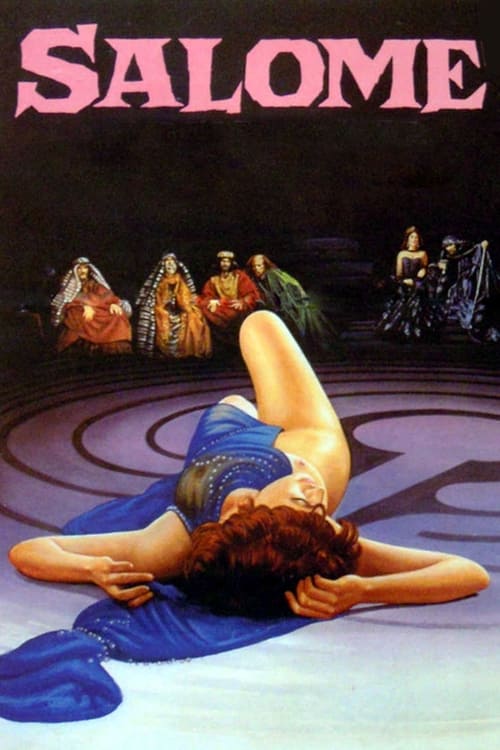
In the ending of the 1986 film "Salomé," Salomé dances for Herod, demanding the head of John the Baptist as a reward. Herod, conflicted but ultimately compelled by his desire for Salomé, agrees. The film concludes with the tragic beheading of John the Baptist, and Salomé, holding his severed head, is left in a state of both triumph and despair.
Now, let's delve into the ending in a more detailed narrative fashion.
As the climax of the film approaches, the atmosphere in Herod's palace grows tense. The opulent setting, filled with lavish decorations and flickering candlelight, contrasts sharply with the dark fate that looms over John the Baptist. Salomé, portrayed with a mix of innocence and cunning, prepares to perform her dance. Her heart races with anticipation, knowing that her performance will lead to a pivotal moment in her life.
Scene by scene, the tension builds. Salomé steps onto the stage, her movements graceful yet charged with an underlying intensity. The music swells, and she dances with a fervor that captivates Herod and his guests. Herod, entranced by her beauty and talent, watches with a mixture of desire and dread. He is aware that his promise to grant her any wish hangs heavily in the air, and the stakes are high.
As the dance concludes, Salomé approaches Herod, her eyes gleaming with determination. She makes her request: the head of John the Baptist on a silver platter. Herod's face pales, and a wave of horror washes over him. He had admired John for his wisdom and feared him for his influence, but Salomé's demand is unyielding. The room falls silent, the guests exchanging shocked glances, as Herod grapples with the implications of his promise.
Despite his initial reluctance, Herod's desire for Salomé overrides his moral qualms. He reluctantly orders the execution, his voice trembling as he gives the command. The scene shifts to the dark, foreboding dungeon where John is imprisoned. The guards approach him, and the atmosphere is thick with impending doom. John, aware of his fate, remains resolute, embodying a sense of peace amidst the chaos.
The execution is swift and brutal. The camera captures the grim reality of John's beheading, a stark contrast to the earlier opulence of the palace. As the guards return with John's head, the atmosphere is heavy with sorrow and regret. Salomé, now holding the severed head, experiences a complex mix of triumph and horror. Her expression is one of both victory and loss, as she realizes the true cost of her desires.
The film concludes with Salomé standing alone, the head of John the Baptist before her. The once vibrant dance has transformed into a haunting tableau of sacrifice and consequence. Herod, now trapped by his own decisions, watches from a distance, his expression a blend of regret and despair. The final moments linger on Salomé's face, capturing the weight of her actions and the tragic fate that has befallen them all.
In the end, Salomé's quest for power and validation leads to irreversible consequences. Herod, once a figure of authority, is left powerless in the wake of his choices. John the Baptist, a martyr for his beliefs, meets a tragic end, symbolizing the clash between desire and morality. The film closes on a somber note, leaving the audience to reflect on the intertwined fates of these characters and the dark themes of ambition, sacrifice, and the human condition.
Is there a post-credit scene?
The movie "Salomé," produced in 1986, does not have a post-credit scene. The film concludes its narrative without any additional scenes or content after the credits roll. The story wraps up with the dramatic events surrounding Salomé's dance and the subsequent consequences, leaving the audience to reflect on the themes of desire, power, and sacrifice presented throughout the film.
How does Salomé's relationship with her mother influence her actions?
Salomé's relationship with her mother, Herodias, is pivotal in shaping her motivations. Herodias instills in Salomé a sense of vengeance against John the Baptist for his condemnation of their relationship. This maternal influence drives Salomé to seek revenge, ultimately leading to the tragic climax of the story.
What motivates Salomé to dance for Herod?
Salomé is driven by a complex mix of desire, revenge, and the need for recognition. Her dance is not just a performance; it is a means to assert her power and agency in a world dominated by men. She seeks to captivate Herod, not only to fulfill her own desires but also to manipulate him into granting her a wish.
How does Herod react to Salomé's dance?
Herod is entranced and overwhelmed by Salomé's beauty and the sensuality of her dance. His reaction is a blend of lust and admiration, which ultimately leads him to make a rash promise to grant her any wish, showcasing his infatuation and the precariousness of his power.
What is the significance of the head of John the Baptist in the story?
The head of John the Baptist symbolizes the consequences of Salomé's actions and the moral decay of Herod's court. It serves as a physical manifestation of Herod's guilt and the tragic outcome of Salomé's desire for revenge against John, who had rejected her advances and condemned her mother.
What internal conflict does Salomé experience throughout the film?
Salomé grapples with her desires and the societal expectations placed upon her. She is torn between her longing for love and acceptance from Herod and her need for autonomy and revenge against John the Baptist. This internal struggle heightens her emotional turmoil and propels her towards her fateful decision.
Is this family friendly?
The 1986 film "Salomé," directed by Claude Chabrol, contains several elements that may not be suitable for children or sensitive viewers. Here are some potentially objectionable aspects:
-
Violence and Death: The film includes themes of violence, particularly surrounding the fate of John the Baptist, which may be distressing for younger audiences.
-
Sexual Themes: The story revolves around Salomé's seductive dance and her complex relationship with Herod, which includes suggestive and provocative elements that may be inappropriate for children.
-
Religious Context: The film deals with biblical themes and characters, which may be unsettling for some viewers, especially in the portrayal of religious figures and their fates.
-
Emotional Turmoil: Characters experience intense emotional struggles, including jealousy, manipulation, and betrayal, which could be heavy for younger viewers to process.
-
Dark Atmosphere: The overall tone of the film is somber and can evoke feelings of tension and unease, which might be upsetting for sensitive individuals.
These elements contribute to a narrative that is more suited for mature audiences, as it explores complex themes of desire, power, and consequence.







