



























Popular
What motivates Thornton Melon to enroll in college?
How does Thornton Melon approach his college experience differently than traditional students?
What role does the character of Dr. Diane Turner play in Thornton's college journey?
How does Thornton's relationship with his son Jason evolve throughout the film?
What challenges does Thornton face in his academic pursuits, and how does he overcome them?
Should I watch it?
Ask Your Own Question

What is the plot?
Sorry, we aren't able to watch and write up a full detailed plot yet. Check back in a few days.
More Movies Like This
Browse All Movies →




What is the ending?
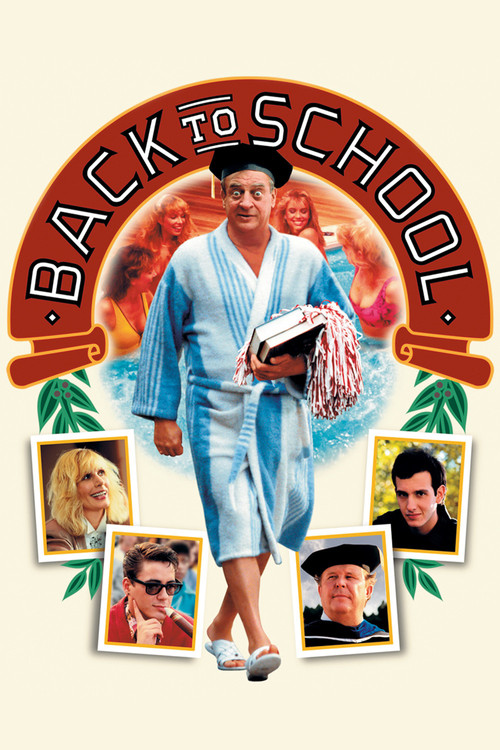
In the ending of "Back to School," Thornton Melon successfully graduates from college, proving to himself and his son that education is valuable. He also wins the heart of his professor, Dr. Diane Turner. The film concludes with a celebratory atmosphere, showcasing the importance of family, personal growth, and the pursuit of knowledge.
As the film approaches its climax, we find Thornton Melon, played by Rodney Dangerfield, in a tense situation as he prepares for his final exam. He has been navigating the challenges of college life, not just for himself but also to support his son, Jason, who is struggling to find his own path. Thornton's determination to succeed is palpable; he wants to show Jason that education matters, even if he himself has not taken it seriously in the past.
In the final exam scene, Thornton is visibly nervous but also excited. He has been studying hard, and the stakes are high. The exam is a culmination of everything he has learned, and he is eager to prove that he can succeed in this academic environment. As he sits down to take the test, the camera captures his anxious expressions, highlighting his internal struggle and desire to make his son proud.
Meanwhile, Jason, who has been dealing with his own issues of self-doubt and the pressure of living up to his father's expectations, is also present. He has been inspired by Thornton's journey and is beginning to find his own confidence. The bond between father and son is strengthened as they both face their respective challenges.
After the exam, the scene shifts to the graduation ceremony. Thornton, dressed in his cap and gown, stands proudly among his fellow graduates. The atmosphere is filled with excitement and anticipation. As the names are called, Thornton's heart races. When his name is finally announced, he walks across the stage, beaming with pride. The audience erupts in applause, and his son Jason watches with admiration, realizing the significance of this moment.
In a touching moment, Thornton is awarded an honorary degree, recognizing not just his academic achievements but also his contributions to the university community. This moment symbolizes his growth and transformation throughout the film. He has gone from a wealthy businessman who dismissed education to a man who values knowledge and the experiences that come with it.
As the ceremony concludes, Thornton approaches Dr. Diane Turner, his professor and love interest. Their relationship has blossomed throughout the film, and in this final scene, they share a heartfelt moment. Thornton expresses his feelings for her, and she reciprocates, solidifying their connection. This relationship represents Thornton's personal growth and his ability to embrace love and commitment.
The film ends on a celebratory note, with Thornton and Jason sharing a proud father-son moment. They have both learned valuable lessons about perseverance, the importance of education, and the strength of their relationship. The final scenes capture the joy of graduation, the promise of new beginnings, and the realization that it is never too late to pursue one's dreams. The credits roll as the audience is left with a sense of hope and inspiration, reflecting the film's core themes of growth, family, and the pursuit of knowledge.
Is there a post-credit scene?
The movie "Back to School," produced in 1986, does not have a post-credit scene. The film concludes with a celebratory atmosphere as Thornton Melon, played by Rodney Dangerfield, successfully graduates from college alongside his son, Jason. The final moments feature a lively graduation ceremony, where Thornton's humorous and larger-than-life personality shines through, leaving the audience with a sense of joy and accomplishment. The credits roll without any additional scenes or content following them.
What motivates Thornton Melon to enroll in college?
Thornton Melon, played by Rodney Dangerfield, is motivated to enroll in college primarily to support his son, Jason, who is struggling to fit in at school. After visiting Jason at college and witnessing his son's difficulties, Thornton decides to go back to school himself, believing that his presence will help Jason feel more confident and accepted.
How does Thornton Melon approach his college experience differently than traditional students?
Thornton Melon approaches his college experience with a carefree and humorous attitude, contrasting sharply with the more serious and studious demeanor of traditional students. He throws extravagant parties, engages in outrageous antics, and uses his wealth to navigate college life, often disregarding the academic norms and expectations.
What role does the character of Dr. Diane Turner play in Thornton's college journey?
Dr. Diane Turner, portrayed by Sally Kellerman, serves as a love interest for Thornton Melon and also as a mentor figure. She initially disapproves of Thornton's unconventional methods but gradually comes to appreciate his genuine nature and his desire to learn. Their relationship adds emotional depth to the story, as Thornton seeks her approval while also trying to prove himself academically.
How does Thornton's relationship with his son Jason evolve throughout the film?
Thornton's relationship with his son Jason evolves from one of distance and misunderstanding to a deeper bond based on mutual respect and support. Initially, Jason is embarrassed by his father's antics, but as Thornton demonstrates his commitment to education and personal growth, Jason begins to see his father in a new light, ultimately leading to a stronger father-son relationship.
What challenges does Thornton face in his academic pursuits, and how does he overcome them?
Thornton faces several challenges in his academic pursuits, including skepticism from professors and the struggle to keep up with coursework. He often relies on his charm and humor to navigate these obstacles. Additionally, he enlists the help of his friends and even his son to study and prepare for exams. His determination to succeed, despite his unconventional approach, ultimately leads to his academic triumph.
Is this family friendly?
"Back to School," produced in 1986, is a comedy that features several elements that may be considered objectionable or upsetting for children or sensitive viewers. Here are some aspects to consider:
-
Language: The film contains instances of strong language, including profanity, which may not be suitable for younger audiences.
-
Sexual Content: There are scenes that involve suggestive themes and innuendos, including discussions about relationships and sexual situations that may be inappropriate for children.
-
Alcohol and Partying: The film depicts college life, which includes scenes of drinking and partying. This portrayal may not be suitable for younger viewers and could send mixed messages about alcohol consumption.
-
Bullying and Conflict: There are moments of bullying and conflict between characters, which may be distressing for sensitive viewers, especially those who have experienced similar situations.
-
Mature Themes: The film touches on themes of self-discovery, identity, and the pressures of academic life, which may resonate differently with younger audiences.
While "Back to School" is primarily a comedy, these elements may warrant parental guidance for younger viewers.








