













Popular
What is the significance of the flashbacks that John experiences throughout the film?
What role does the setting play in enhancing the tension of the story?
What happens to the main character, a man named John, after he wakes up in the hospital?
Who is the mysterious woman that John encounters, and what role does she play in his recovery?
How does John's relationship with his family evolve as he tries to regain his memory?
Should I watch it?
Ask Your Own Question

What is the plot?
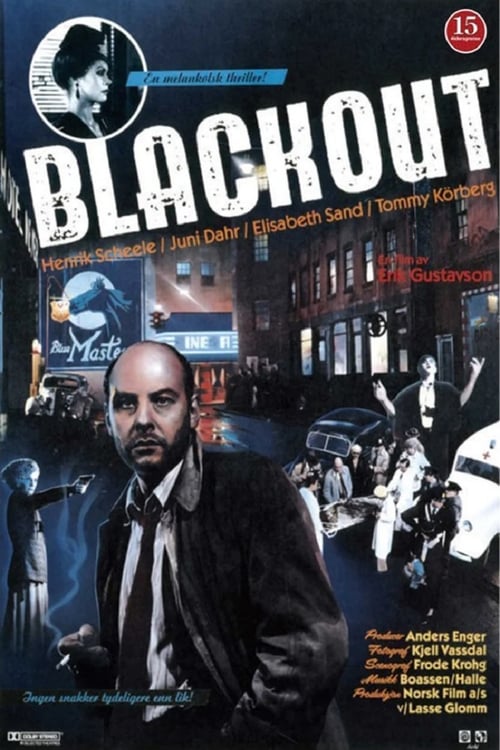
Werner's story begins in the dim glow of Harry's bar on a night in October, around midnight, where he sits with a drink and a friend, keeping to his usual routine and trying to remain detached from trouble. The quiet is broken when he hears that a dead boy has been found in Chinatown, and that simple piece of bad news pulls him out of the bar and straight into the city's underbelly. He goes to the scene at once, moving through the night with the grim, practiced caution of a man who knows that any case involving Chinatown is never just one death, and never just one neighborhood. The body of the boy lies there as the first visible crack in a much larger rot, and as Werner looks over the scene, the film makes it clear that the murder is already tangled up with the power structure of the city. Chinatown is not an isolated place in this story; it is a doorway into the criminal machinery of back-alley brothels, narcotics, and police protection, all under the control of the gangster known only as the Spaniard.
Werner is not a fool, and he is not the kind of detective who throws himself into every mystery with heroic confidence. He is described as smart, careful, and aware of his limits, taking only the jobs he thinks he can handle. That instinct matters, because this case immediately starts to push beyond his control. The death in Chinatown is not simply a dead-end police matter, and the city's official channels are already compromised by the Spaniard's influence. The danger is not only on the streets but inside the institutions meant to investigate the crime. The Spaniard has the police in his pocket, and that fact turns the entire city into a trap. Anyone who gets too close to the truth risks being swallowed by it.
The next thread enters Werner's life through his shabby office, where a wealthy and striking woman named Stella Hvidsteen arrives and changes the shape of the story. Stella is elegant, distressed, and determined, and she hires Werner to find her missing sister, Evy. Her most important detail is also the simplest: Evy has red hair. That single description becomes a haunting marker in the investigation, a physical clue that gives the missing woman a sharp identity even before Werner learns what has happened to her. Stella's plea does more than launch a missing-person search. It links Werner's case with a deeper pattern of disappearances, hidden lives, and criminal concealment, and it draws him away from a single murder and into a widening maze where every answer seems to open onto another lie.
As Werner begins to move between Chinatown, the city's shadowy alleys, and the places where the Spaniard's influence reaches, the narrative steadily shifts from a hard-boiled detective setup into something more sinister and more personal. The red-haired Evy is no ordinary missing woman; her disappearance is connected to a network of power and exploitation that includes prostitution, narcotics, and police corruption. What first looks like a standard private-eye assignment becomes a descent into a criminal ecosystem that has been carefully protected from exposure. Werner starts to realize that the dead boy in Chinatown is not an isolated victim, and Stella's request is not a separate matter from the murder. The same forces are moving through both cases.
The Spaniard emerges as the central threat in this world, a boss who is not merely feared but structurally embedded in the city. He controls the brothels in the back alleys and the drug trade, and he maintains that control through corruption so complete that even the police cannot be trusted. This creates a pressure-cooker atmosphere around Werner, because every move toward the truth is also a move toward a man who can make evidence disappear, witnesses vanish, and official resistance crumble. The detective's usual tools--questions, observation, persistence--are suddenly weak against a machine that has money, brutality, and state protection on its side.
One of the film's major revelations deepens the sense that the mystery is also about identity. A local husband and father who has recently undergone facial surgery after injuries from a car accident may actually be the same man who committed a quadruple murder years earlier. That is not just a clue; it is a devastating inversion of the idea that appearance can reveal moral truth. The suggestion that a murderer can hide behind a surgically altered face makes the film's world feel unstable, where the past does not stay buried and the present can be manufactured to conceal it. It also raises the stakes of every encounter Werner has with strangers and suspects, because anyone might be someone else wearing a rebuilt face and a borrowed life.
This revelation ties directly into the film's larger obsession with hidden identities. The missing Evy may not simply be missing; she may be part of a chain of concealment, exploitation, or silencing that extends to the city's criminal leadership and to the past crime now resurfacing. The dead boy in Chinatown becomes a grim marker of how disposable people are in this system, and the murder of years ago hovers over the present as proof that the powerful can change names, faces, and narratives to escape accountability. Werner is left trying to stitch together a story that has been deliberately shredded by the people who benefit from confusion.
As the investigation deepens, tension mounts through confrontation rather than open action. Werner is forced again and again into the orbit of the Spaniard's world, where every conversation is weighted by threat and every location feels watched. The back alleys and brothels are not just settings; they are active mechanisms of control, places where the vulnerable are traded, hidden, or destroyed. The police are no refuge, because the Spaniard's influence reaches into law enforcement itself. That means Werner is fighting on two fronts at once: against a criminal empire and against the official structures that should stop it.
The story's emotional core comes from the collision between Werner's professional caution and the enormity of what he has uncovered. He begins by treating the Chinatown death as a manageable case, then accepts Stella's request as another job, but each step forward only reveals that both threads are bound together by corruption, violence, and a buried past that refuses to stay hidden. The more Werner learns, the closer he gets to the Spaniard, and the closer he gets, the less safe anyone around him becomes. Stella's concern for Evy now feels tragic, because what began as a sister's plea is revealed as the opening of a door into a system designed to swallow truth whole.
The film's momentum comes from the way each answer sharpens the danger. The dead boy in Chinatown is not an accidental casualty; he is connected to the Spaniard's criminal network. Stella's missing sister is not simply lost; she has vanished into a world Werner is only now beginning to understand. The surgically altered man is not merely a local figure with a medical history; he may be a murderer trying to erase his own identity. Every revelation narrows the distance between Werner and the heart of the conspiracy, and every narrowing makes the surrounding world feel more hostile.
The confrontations themselves, though not fully detailed in the available plot material, clearly escalate Werner's struggle with a femme fatale, a brutal chief of police, and the gangster known as the Spaniard. The femme fatale presence adds danger in a different register, one built on seduction, concealment, and divided loyalties. The chief of police embodies the system's rot, a man whose brutality is amplified by institutional power. Together with the Spaniard, they create a triangle of threats that keeps Werner off balance. He is not simply investigating crime; he is trying to survive a city where the boundaries between law, vice, and personal betrayal have dissolved.
The fact that the police are compromised matters not just practically but thematically. It means justice is not merely delayed; it is actively obstructed by the people who should deliver it. When Werner digs deeper, he is not uncovering a clean chain of evidence but pushing against a wall of silence enforced by fear and money. The city becomes a place where truth must be extracted from layers of deception rather than discovered in plain sight. That structure gives the investigation a suffocating inevitability. The more Werner uncovers, the more obvious it becomes that the Spaniard's reach extends everywhere.
The climax of the story is shaped by these converging strands: the dead boy, Stella's search for Evy, the Spaniard's rule over crime and police, and the possibility that a man with a reconstructed face has hidden a murderous past. Werner is drawn into a final convergence where the mystery of identity and the reality of organized corruption meet head-on. The available source material does not give a scene-by-scene account of the ending, but the narrative logic is clear: Werner's investigation forces him to confront the Spaniard's protected empire and the human cost of the lies surrounding Evy and the Chinatown murder. The final tension comes from whether Werner can expose what he has learned before the machinery of corruption crushes the truth.
What is certain is that the case resolves around Werner being pulled ever closer to the Spaniard's orbit, until the missing-person search and the murder investigation are no longer separable. The boy's death is the first clue; Evy's disappearance is the human wound; the facial surgery revelation is the twist that exposes how completely the past has been disguised. The outcome leaves no doubt that the film's world is one of corruption protected by authority, where innocent-looking surfaces conceal guilt and where the cost of uncovering the truth is high. The final scene and precise fate of every major player are not fully specified in the available plot sources, but the resolution centers on Werner reaching the point where the city's hidden connections can no longer remain hidden, and where the false identities built to protect murder and power begin to come apart.
More Movies Like This
Browse All Movies →
What is the ending?
In the ending of "Blackout," the protagonist, a man named John, confronts the antagonist, a criminal named Frank, in a tense showdown. After a series of dramatic events, John manages to outsmart Frank, leading to his arrest. The film concludes with John reflecting on the chaos that ensued, hinting at a sense of closure but also the lingering effects of the trauma he experienced.
Now, let's delve into the ending in a more detailed, chronological narrative.
As the climax of "Blackout" unfolds, John finds himself cornered in a dimly lit warehouse, the air thick with tension. The flickering overhead lights cast eerie shadows, heightening the sense of danger. Frank, the criminal mastermind, stands across from him, a smug grin plastered on his face, confident in his power. John's heart races; he knows he must act quickly to escape this dire situation.
In a moment of desperation, John recalls the various encounters he had with Frank throughout the film, each one more harrowing than the last. The memories flood his mind, fueling his determination. He takes a deep breath, steeling himself for the confrontation. As Frank taunts him, John's resolve hardens. He knows he cannot let fear dictate his actions any longer.
Suddenly, John spots a metal pipe lying on the ground nearby. With a surge of adrenaline, he lunges for it, swinging it with all his might. The impact catches Frank off guard, and he stumbles back, momentarily disoriented. This brief window of opportunity allows John to gain the upper hand. He presses forward, using the pipe to keep Frank at bay while he searches for a way to escape.
The struggle intensifies as Frank regains his composure, and the two engage in a fierce physical altercation. The sound of grunts and the clashing of metal echoes through the warehouse. John's determination is palpable; he fights not just for his own survival but for the lives that Frank has threatened throughout the film. Each blow he lands is fueled by the memories of those he has lost and the chaos that Frank has caused.
Finally, in a climactic moment, John manages to disarm Frank, sending the weapon clattering across the floor. With Frank now vulnerable, John seizes the moment to call the police, his voice steady despite the chaos around him. As he waits for the authorities to arrive, he keeps a watchful eye on Frank, who is now seething with rage and humiliation.
When the police finally burst into the warehouse, they apprehend Frank, handcuffing him and leading him away. John watches, a mix of relief and exhaustion washing over him. The weight of the ordeal begins to lift, but the emotional scars remain. He knows that while he has triumphed over Frank, the journey has changed him irrevocably.
In the final scenes, John stands alone in the warehouse, the sounds of sirens fading into the distance. He reflects on the chaos that has unfolded, the lives affected by Frank's criminal activities, and the personal toll it has taken on him. The camera lingers on his face, capturing the complexity of his emotions--relief, sorrow, and a hint of uncertainty about the future.
As the credits roll, viewers are left with a sense of closure regarding John's immediate conflict with Frank, but also an understanding that the aftermath of such trauma is not easily resolved. Each character's fate is intertwined with the choices they made throughout the film, leaving a lasting impact on John as he steps into an uncertain future, forever changed by the events of that fateful night.
Is there a post-credit scene?
The movie "Blackout," produced in 1986, does not have a post-credit scene. The film concludes without any additional scenes or content after the credits roll. The story wraps up with the resolution of the main plot, focusing on the characters' experiences and the aftermath of the events that transpired throughout the film.
What is the significance of the flashbacks that John experiences throughout the film?
The flashbacks serve as a crucial narrative device that reveals John's troubled past and the events leading to his blackout. Each flashback is laden with emotional weight, showcasing his internal struggles, guilt, and the relationships he had before the accident. They gradually build suspense and provide insight into his character, ultimately leading to the revelation of his true self.
What role does the setting play in enhancing the tension of the story?
The setting, primarily the hospital and the surrounding urban environment, plays a significant role in enhancing the tension of the story. The sterile, claustrophobic atmosphere of the hospital mirrors John's mental state, while the chaotic city outside symbolizes the confusion and danger he faces. The contrast between these spaces amplifies his feelings of isolation and vulnerability as he navigates his journey of self-discovery.
What happens to the main character, a man named John, after he wakes up in the hospital?
After John wakes up in the hospital, he is disoriented and struggles to remember the events leading up to his accident. He learns that he has lost his memory and is haunted by fragmented flashbacks that hint at a darker past. His emotional state is one of confusion and fear as he tries to piece together his identity and the circumstances surrounding his blackout.
Who is the mysterious woman that John encounters, and what role does she play in his recovery?
The mysterious woman, named Lisa, becomes a pivotal figure in John's recovery. She appears to have a connection to his past, and as they interact, she helps him uncover hidden memories. Lisa's motivations are complex; she is both a source of comfort and a reminder of the secrets John is trying to uncover, creating a tension between trust and suspicion.
How does John's relationship with his family evolve as he tries to regain his memory?
As John attempts to regain his memory, his relationship with his family becomes strained. His family, particularly his father, is portrayed as both supportive and controlling, which adds to John's frustration. The emotional turmoil is palpable as John grapples with feelings of betrayal and longing for connection, leading to confrontations that reveal deeper family dynamics and unresolved issues.
Is this family friendly?
"Blackout," produced in 1986, is not considered family-friendly due to its mature themes and content. Here are some potentially objectionable or upsetting aspects that may affect children or sensitive viewers:
-
Violence: The film contains scenes of physical altercations and threats that may be intense or disturbing.
-
Substance Abuse: There are references to drug use and addiction, which could be unsettling for younger audiences.
-
Adult Themes: The narrative explores complex adult relationships and moral dilemmas that may not be suitable for children.
-
Emotional Distress: Characters experience significant emotional turmoil, including fear, betrayal, and desperation, which could be distressing.
-
Language: The dialogue includes strong language that may not be appropriate for younger viewers.
These elements contribute to a tone that is more suited for mature audiences rather than children.








