










Popular
What is the significance of the comic book that the main character, a young artist, is working on?
Who is the antagonist in Cellar Dweller and what motivates their actions?
What role does the character of the old artist play in the story?
How does the setting of the cellar contribute to the film's atmosphere?
What happens to the characters who become trapped in the cellar?
Should I watch it?
Ask Your Own Question

What is the plot?
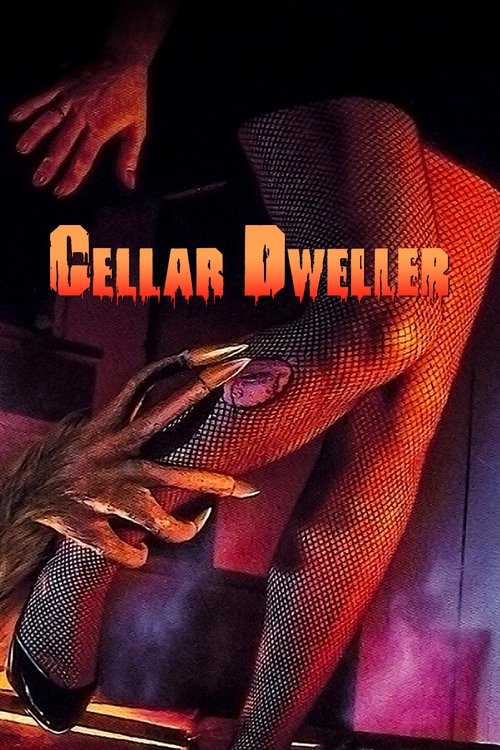
The story opens with Colin Childress alone in his basement studio in a flashback set about thirty years earlier, sometime in the mid-1950s, hunched over the pages of his horror comic Cellar Dweller in the dim, oppressive glow of his underground workspace. The room feels more like a crypt than an artist's studio: stacks of paper, inky brushes, a bottle of paint thinner, and a thick, ominous book of horrific drawings that seems to pulse with a corrupt life of its own. Childress is not simply inventing monsters for entertainment; he is drawing from something vile and ancient, and the act of creation itself feels like an invocation. As he inks a gruesome scene of a woman in peril, the nightmare on the page begins to stir in the real world. The creature literally manifests out of the drawings and erupts into his cellar, a towering, grotesque horror that lurches forward from art into flesh. Colin recoils, stunned by what he has summoned, and the studio is immediately transformed from a place of artistic triumph into a battlefield.
The beast attacks with savage force, and Childress scrambles desperately through the cellar, grabbing at anything he can use as a weapon. In the panic, he tries to undo the disaster the only way he can think of: by destroying the images that gave the monster life. He hurls the pages into flame, hoping to banish the thing back into whatever darkness it came from. For a moment it seems like the act might work, but the cellar becomes a trap. Paint thinner spills, fire races across the floor, and the blaze swallows the room with terrifying speed. The creature is driven back, but the victory is catastrophic. The house catches fire around Colin Childress, and he is burned to death in the inferno he set in motion. The opening ends not with triumph but with the image of the original artist consumed by his own creation, the basement sealed up in tragedy and legend.
Thirty years later, the burned-out home has been transformed into an art institute, and the old horror site now masquerades as a sanctuary for young creatives. Whitney Taylor arrives there as an aspiring comic artist, bright-eyed and determined, carrying with her the reverence of a devoted fan. Colin Childress is her idol, the name she speaks with almost religious admiration, and she wants to draw in the same place where he once worked. The institute is run by the stern and imposing Mrs. Briggs, who carries herself with the weary authority of someone who has learned to keep order in a house full of temperamental artists. She introduces Whitney to the other residents: Phillip, a handsome, easygoing painter; Lisa, an eccentric performance artist; Amanda, a sharp, unpleasant video artist; and Norman, an older, quirky writer with the air of a man always digging for secrets. The atmosphere is at once bohemian and tense, full of creative ambition but also petty rivalries and suspicion. Beneath that surface, of course, is the sealed history of the Childress house, waiting to awaken.
Whitney is fascinated by the basement and by every trace of Childress's legacy. She asks for access to the old studio area, and Mrs. Briggs, after some hesitation, relents. The cellar is dusty, sealed, and unsettling, a forgotten pocket of the house where time seems to have rotted in place. Whitney finds old boxes, old papers, and the remains of a hidden past that no one has bothered to truly erase. Among those remnants is the accursed book or source material tied to Childress's original work, the thing that inspired Cellar Dweller and linked art to manifestation. The film's central supernatural rule becomes clear through Whitney's first drawings in the cellar: what she creates there does not remain on paper. Her pen strokes begin to shape reality. The act of drawing is no longer representational but generative, and the room itself seems to shiver around her as if waiting for the next catastrophe.
The first cracks in the institute's social order appear through Amanda, who is revealed to be spying on Whitney. Mrs. Briggs has clearly been watching the new arrival closely, and Amanda's role is not a friendship but surveillance. Her hostility toward Whitney is sharpened by the secret assignment, and the tension between the two women carries the sense that one is always measuring the other, always looking for weakness. The institute, which should be a haven for art, instead becomes a place of hidden agendas and quiet manipulation. Whitney remains mostly unaware of the full depth of this betrayal, but the audience can feel the noose tightening.
As Whitney continues working, the power in the cellar grows more dangerous. Her pages begin to reflect scenes she has not consciously staged, and the comic seems to continue on its own, as if something inside the art is taking over the storytelling. Deaths start to follow the pages. The Cellar Dweller, now reawakened through Whitney's drawings, emerges again from the boundary between imagination and matter. Amanda is the first major victim. She is attacked and killed by the monster in a brutal, frightening confrontation that tears through the false safety of the institute. The killing is not simply a random attack; it is connected directly to Whitney's work, as though the monster has used her artistic channel to return and claim a body. Amanda's spying and hostility end in monstrous violence, and the institute's residents are finally forced to confront that something deadly has awakened beneath their feet.
After Amanda disappears, Norman becomes suspicious. He starts investigating what has happened, pushing into the mystery with a mix of curiosity and determination that proves fatal in this world. Norman's search for answers leads him deeper into the creature's orbit, and he too is killed. His death underscores the film's cruel logic: investigation does not bring safety, only proximity to the thing hidden in the cellar. He gets too close to the truth, and the truth kills him. The institute grows emptier and more haunted, the creative community turning into a slaughterhouse one victim at a time.
Lisa, too, falls under the shadow of the curse as the comic's pages continue to dictate events. The film builds a race-against-time feeling as Whitney and Phillip begin to understand that the monster is not just attacking at random; the drawings are structuring the violence. Each new panel seems to forecast another death, and the horror becomes a battle over authorship itself. Whitney realizes that she is not simply drawing a monster--she is participating in a cycle that began with Colin Childress and is now repeating through her. The revelation is terrifying: Childress did not merely create a comic that came to life once; he left behind a mechanism by which art can keep resurrecting the same evil. The page becomes prophecy, and prophecy becomes flesh.
Phillip becomes Whitney's closest ally in the final stretch. He is the one person who stands beside her when the situation escalates from strange to impossible, and together they move toward the cellar in a last effort to end the nightmare. The key revelation they reach is that destruction must happen the way it happened before: the image itself must be burned. The monster, tied to the drawings, may be vulnerable only through the annihilation of the art that sustains it. This is the film's cruel echo of Colin Childress's original mistake. Whitney and Phillip decide to repeat the act, hoping that what once led to catastrophe can now serve as salvation. They burn the image of the Cellar Dweller, trying to sever the creature's connection to the world. For a moment, it appears to work. The monster seems to reel, and the threat feels as though it may finally be ending.
But the victory is false. Burning the image does not erase the horror so much as inflame it. The backlash is immediate and vicious. Phillip pays the price first, dying in the final struggle before the creature turns fully on Whitney. His death is tragic because it happens in the very instant that the plan seems closest to success. The film turns that apparent triumph into another wound, proving that there is no clean resolution to this curse. The Cellar Dweller is not defeated in any meaningful sense; it merely shifts its fury.
Whitney is left alone in the final confrontation, standing at the edge of the same abyss that claimed Childress decades earlier. The monster attacks her directly, and the ending becomes a nightmare mirror of the opening. Where Colin had once tried to destroy the thing by fire and was consumed by the blaze, Whitney now tries to undo the evil through the same destructive logic. Yet the beast is still there, still hungry, still tied to the drawn world that birthed it. The last moments do not offer closure. Instead, they leave Whitney facing a horror that survives the attempt to erase it. The final impression is that the curse remains active, the art colony is still contaminated, and the line between imagination and reality has been permanently broken.
The true twist is that the monster is not merely a creature living in the cellar, nor even a demon summoned once and then trapped. It is a force that feeds on artistic creation itself, on the act of picturing evil and giving it form. Colin Childress opened the door decades earlier when he used dark inspiration to build his comic. Whitney unknowingly does the same when she settles into his old studio and begins drawing there. The house, the cellar, the comic, and the artists all become part of one closed circuit of creation and destruction. Mrs. Briggs's control, Amanda's spying, Norman's investigation, Lisa's vulnerability, Phillip's loyalty, and Whitney's obsession all feed into the same fatal mechanism. Every confrontation ends in loss. Every attempt to master the curse only deepens it. The story closes on the cruel realization that the monster may be destroyed in one image, but as long as someone keeps drawing in that cellar, it can come back again.
By the end, Colin Childress is dead in the original fire, Amanda is killed by the Cellar Dweller, Norman dies while investigating the truth, Phillip dies in the last desperate burning of the image, and Whitney is left to face the monster in the final, unresolved attack. Mrs. Briggs survives the immediate chaos, but her institution is morally and spiritually ruined, its walls hiding the remnants of a nightmare no one truly controlled. The final scene leaves the audience with the sense that the cellar has never stopped being alive with evil--that Childress's house was never converted into a school so much as dressed up to look normal while the horror waited below. The story ends where it began: in a basement, with art and death fused together, and with the monstrous thing from the page still hungry in the dark.

What is the ending?
In the ending of "Cellar Dweller," the protagonist, a young artist named Whitney, confronts the monstrous creature that has been unleashed from a comic book. After a tense battle, she manages to defeat the creature, but not without significant loss. The film concludes with Whitney emerging from the chaos, but the lingering threat of the creature remains, leaving an unsettling feeling.
Now, let's delve into the ending in a more detailed narrative fashion.
As the climax of "Cellar Dweller" unfolds, Whitney finds herself in the dimly lit basement of the old mansion, where the malevolent creature, born from the pages of a cursed comic book, has been unleashed. The atmosphere is thick with tension, shadows dancing on the walls as the creature, a grotesque amalgamation of horror and rage, stalks her. Whitney's heart races, her breath quickens; she knows she must confront the terror that has claimed the lives of her friends and mentors.
In a desperate bid for survival, Whitney recalls the advice of her late mentor, who had warned her about the power of creativity and imagination. Armed with her artistic skills, she begins to sketch furiously, channeling her fear and anger into her drawings. The creature, sensing her defiance, lunges at her, its claws slashing through the air. Whitney dodges, her mind racing as she realizes that her art can be a weapon against the creature.
As she completes her drawing, a surge of energy emanates from the paper, illuminating the dark basement. The creature hesitates, momentarily confused by the light. Whitney seizes the opportunity, using her artwork to trap the creature within the confines of the page. The struggle is intense; the creature thrashes and roars, but Whitney's determination fuels her resolve. With one final stroke, she seals the creature back into the comic book, the energy dissipating as the basement falls silent.
However, the victory comes at a cost. Whitney emerges from the basement, her face streaked with dirt and tears, the weight of her loss heavy on her shoulders. She looks around at the remnants of her friends, who have fallen victim to the creature's wrath. The camera lingers on her expression, a mix of relief and sorrow, as she realizes that while she has defeated the monster, the scars of the experience will remain with her forever.
In the final moments, as Whitney steps outside into the daylight, the camera pans back to the basement. A flicker of movement catches the eye; the comic book lies open, a page fluttering ominously. The implication is clear: the creature may be contained, but the threat is not entirely vanquished. The film closes with a haunting sense of uncertainty, leaving the audience to ponder the true nature of creativity and the monsters that can emerge from it.
In summary, Whitney survives the encounter, but the fates of her friends are tragic, as they succumbed to the creature's wrath. The ending leaves viewers with a chilling reminder of the power of imagination and the potential darkness that can arise from it.
Is there a post-credit scene?
The movie "Cellar Dweller," produced in 1988, does not have a post-credit scene. The film concludes with its final moments, wrapping up the story without any additional scenes or content after the credits roll. The narrative focuses on the horror elements and the fate of the characters involved, leaving no room for a post-credit twist or continuation.
What is the significance of the comic book that the main character, a young artist, is working on?
The comic book serves as a crucial plot device, representing the protagonist's creative aspirations and the dark themes that unfold throughout the film. It is a reflection of the horror elements that come to life, as the story within the comic parallels the events occurring in the cellar.
Who is the antagonist in Cellar Dweller and what motivates their actions?
The antagonist is a creature that emerges from the comic book, a manifestation of evil that was created by a previous artist. This creature is driven by a desire to escape its confines and wreak havoc, motivated by a need for revenge against those who wronged it.
What role does the character of the old artist play in the story?
The old artist, who originally created the comic book, serves as a cautionary figure. He embodies the consequences of allowing one's dark creativity to manifest uncontrollably. His tragic backstory reveals the dangers of obsession and the impact of the cellar's dark history.
How does the setting of the cellar contribute to the film's atmosphere?
The cellar is a claustrophobic and eerie environment that heightens the tension throughout the film. Its dim lighting, dampness, and isolation create a sense of dread, making it a character in its own right, where the boundaries between reality and the horror of the comic blur.
What happens to the characters who become trapped in the cellar?
The characters who become trapped in the cellar face terrifying encounters with the creature. Their fates are often grim, as the creature preys on their fears and weaknesses, leading to a series of gruesome deaths that illustrate the horror of being ensnared in a nightmare brought to life.
Is this family friendly?
"Cellar Dweller," produced in 1988, is not considered family-friendly due to its horror genre elements. Here are some potentially objectionable or upsetting aspects that may occur for children or sensitive viewers:
-
Graphic Violence: The film contains scenes of violence, including attacks by the creature, which can be intense and disturbing.
-
Gore: There are moments that involve blood and gore, which may be unsettling for younger audiences.
-
Supernatural Horror: The presence of a malevolent creature and the themes of possession and fear can be frightening.
-
Death: Characters face peril and death, which may be distressing for sensitive viewers.
-
Dark Themes: The film explores themes of fear, isolation, and the consequences of artistic obsession, which may not be suitable for all children.
These elements contribute to an overall atmosphere of horror and suspense that may be inappropriate for younger audiences or those sensitive to such content.









