














Popular
How does the relationship between Holmes and Watson evolve throughout the film?
What motivates Sherlock Holmes to return from his presumed death?
How does Dr. Watson react to Holmes' return?
What role does Professor Moriarty play in the plot?
What specific cases does Holmes investigate upon his return?
Should I watch it?
Ask Your Own Question

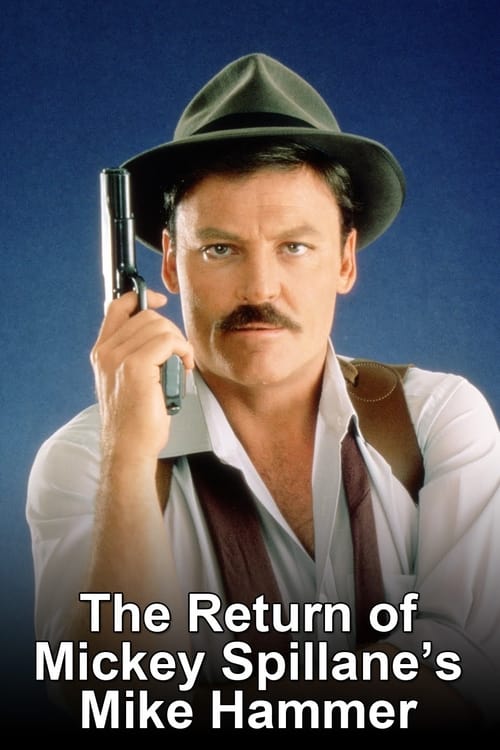
What is the plot?
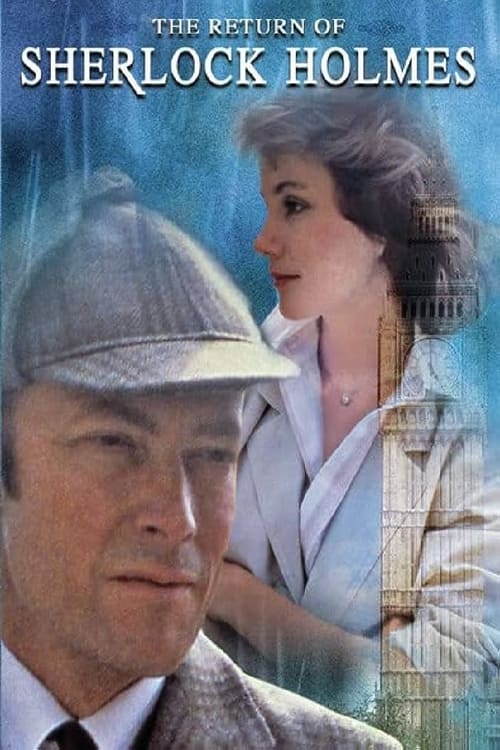
The story opens in 1901 with Carter Morstan, a former FBI agent, receiving an unwelcome visit from a man named Small. Their encounter turns violent almost immediately: a struggle erupts, a gunshot cracks through the room, and before long a body is wrapped in a carpet and set on fire, leaving the first death of the film shrouded in menace and confusion. In the smoke and silence that follow, the prologue establishes the tone of the whole mystery: something has gone badly wrong in the past, and the consequences are still burning in the present.
Years later, the narrative shifts to Boston, where Jane Watson is trying to make a living as a private detective. She works with a kind of stubborn decency that does not pay well, and her secretary, Ms. Houston, keeps reminding her that compassion is a poor business model. Jane is intelligent, practical, and under pressure. Her detective agency is not thriving, and the strain becomes unbearable when she is forced to sell the English country estate inherited from her ancestor, John Watson. The sale feels like more than a financial defeat; it is the closing of a family chapter, the surrender of a piece of history. Jane returns to the old house one last time with the air of someone saying goodbye to a ghost.
Inside the estate, a lawyer hands her an envelope containing detailed instructions. The moment is quiet and strange, almost ceremonial, and the house seems to hold its breath around her. Jane follows the directions down into a hidden basement chamber, a space forgotten by time and sealed away from the world above. There, in the dim cold of the underground room, she discovers a primitive cryogenic capsule. Inside lies a man, suspended in deathlike stillness. The image is uncanny and almost sacred: the lost body of a man preserved in a machine, hidden beneath the Watson family home like a secret waiting for history to catch up. Jane thaws him out, and the frozen stranger slowly returns to life.
The man wakes and reveals himself to be Sherlock Holmes. The revelation lands with the force of myth. Holmes, the legendary detective, is not dead at all, but preserved in suspended animation by a desperate plan devised after he received a booby-trapped gift from the brother of James Moriarty. That gift infected him with bubonic plague, and with no cure available in his own era, the only hope was to freeze him until medicine advanced far enough to save him. The plan had apparently been arranged in concert with John Watson's family, and Jane now finds herself the descendant of the man who helped hide Holmes away. It is a startling fusion of past and present, science and faith, survival and legend.
Holmes, still weak from his ordeal and disoriented by the world around him, is taken to a local doctor. The doctor refuses to believe the impossible story, dismisses Holmes's claim to be Sherlock Holmes, and does not even accept that he has the plague. The scene has a biting absurdity to it: the greatest detective in the world, returned from the grave, is treated like a deluded patient. The doctor's skepticism becomes part of the conflict, and when he fails to recognize Holmes's condition, Jane takes matters into her own hands. She steals the medicine Holmes needs and gives it to him herself. This act of defiance marks the beginning of Jane's true partnership with Holmes, because she is no longer simply the descendant who found him; she becomes the woman who chooses him.
With no place else to go, Holmes accompanies Jane to America. The journey from the old house to Boston is not merely geographical. It is a leap into a modern world Holmes barely understands, a world of automobiles, changed social mores, and American cities that feel alien to a man from Victorian London. Holmes watches it all with wary intelligence, adapting quickly but never losing the sharp, skeptical gaze that defines him. Jane, meanwhile, must translate the world for him even as she begins to trust his extraordinary mind. Their relationship is built in motion, as they leave the buried past behind and step into the bright, cluttered uncertainty of the present.
When Jane returns to Boston, she discovers that her office has been ransacked. Papers are scattered, the room has been searched, and a cryptic message signed "Small" has been left behind. The break-in immediately connects the present to the violent prologue. The name "Small" hangs over the story like a threat, and the message feels less like a clue than a warning. Whatever happened to Carter Morstan did not end with his death. It has reached forward through time to touch Jane Watson's life. Holmes, now fully alert to the pattern of the mystery, understands at once that there is more to this than a burglary. Someone wants Jane frightened, distracted, or silenced.
Soon after, Violet Morstan arrives. She has seen the break-in reported in the paper and comes to Jane with a different but related grief. Her father, Carter Morstan, has been killed, and she has noticed the name Small written in his calendar. That tiny detail matters enormously. It confirms that Small is not just a random intruder or a passing villain; the name is tied directly to Carter Morstan's final days and likely to the motive behind his murder. Violet hires Jane and Holmes to investigate her father's death. What begins as one woman's financial struggle and one man's return from suspension now becomes a murder inquiry with family history at its center.
As Jane and Holmes follow the trail, the mystery broadens into a web of counterfeit money, a hijacking, a band of criminal FBI agents, murder, and revenge. The case is no longer about a single death in an alley or office break-in. It becomes a buried conspiracy that has been festering for years. Evidence points toward a hidden stash of counterfeit money, and the men involved in the original crime circle begin to emerge from the shadows. Holmes's methodical deductions push the story forward piece by piece, while Jane provides local access, modern awareness, and moral urgency. Their partnership is still forming, but already the old detective and the new one operate as complementary halves of the same intelligence.
The clues lead back toward Carter Morstan himself, and the revelations grow darker. The story suggests that Carter Morstan was not merely a victim or an innocent bystander, but the true culprit behind the hidden-money thread. He had taken the money after he and his partners first concealed it, turning a shared criminal venture into a private betrayal. This twist reframes the murder and the entire conspiracy. Carter's death is not just the elimination of a witness; it is the violent consequence of theft, betrayal, and the collapse of trust among criminals who once thought they were all on the same side. Small, the cryptic figure linked to both the opening violence and the message in Jane's office, becomes the shadow that connects the old sin to the new pursuit.
The confrontation between Holmes and the criminal network escalates as the case moves toward its climax. The precise mechanics of every exchange are less fully documented in the surviving summary, but the structure is clear: Holmes and Jane unravel the counterfeit-money operation, identify the men responsible for the hijacking and the broader conspiracy, and expose the revenge motive that has driven the killings. Along the way, they confront the legacy of Carter Morstan's betrayal and the way one hidden act of greed can poison everyone around it for years. The name Small, first heard in violence, reappears as a thread that ties together the murder, the threats, and the buried money. The suspense lies not only in discovering who did what, but in understanding how deeply the past has infected the present.
The emotional center of the film is Holmes's return itself. He is not simply a detective revived for another case; he is a man forced to confront the cost of time. The world he knew is gone, and the people around him are descendants, strangers, or both. Jane Watson is especially important because she embodies continuity without familiarity. She carries John Watson's name and the family house, but she is her own person, modern and independent, unafraid to challenge Holmes when necessary. Their relationship grows from necessity into mutual respect. Holmes, who begins as a preserved relic, becomes active again through Jane's courage and practical intelligence. Jane, who begins the story as an overworked and financially strained investigator, becomes the person capable of reopening history itself.
The final revelations bring the conspiracy to a head. The hidden money, the hijacking, the FBI corruption, and the murders all fold into a larger picture of greed and revenge, with Carter Morstan at the center of the original betrayal. The story resolves the murder investigation by tracing the chain of concealment and retaliation back to its source. Violet Morstan's father is not simply a dead man with a tragic fate; he is a man whose own wrongdoing helped create the conditions for his death. The film does not excuse the violence, but it complicates it, showing how criminal alliances rot from within. In that sense, the moral structure is classical Holmes: every secret leaves a trace, every lie creates a pattern, and every act of concealment eventually demands disclosure.
By the end, Holmes and Jane have solved the case. The conspiracy is exposed, the meaning of the clues is made clear, and the forces behind the killings are brought into the light. Carter Morstan's death, the opening attack by Small, the ransacking of Jane's office, and the trail of counterfeit money all converge into one solved mystery. Holmes survives the ordeal and remains alive in Jane Watson's world, no longer a frozen legend beneath an old house but an active detective in a changed age. Jane, for her part, is no longer merely struggling to keep her business afloat. She has become Holmes's indispensable ally and, in a deeper sense, the keeper of his return.
The final feeling is one of movement rather than closure. Holmes stands restored to life, and Jane stands beside him, the two of them facing a world that is both newly strange and newly alive. The hidden chamber under the Watson estate has done more than preserve a body; it has bridged eras, revived a legend, and tied Jane Watson's future to Sherlock Holmes's unfinished past. The film ends with the partnership established and the mystery resolved, leaving Holmes not buried in history but walking forward into it.
More Movies Like This
Browse All Movies →




What is the ending?
In the ending of "The Return of Sherlock Holmes," Holmes confronts the criminal mastermind, Moriarty, leading to a tense showdown. Holmes ultimately outsmarts Moriarty, resulting in Moriarty's demise. Watson, who has been a steadfast companion, is relieved to have Holmes back, and they share a moment of camaraderie. The film concludes with Holmes and Watson reaffirming their partnership, ready to face new adventures together.
As the climax of "The Return of Sherlock Holmes" unfolds, the tension escalates in a series of meticulously crafted scenes.
Scene 1: The Confrontation The film builds to a dramatic confrontation between Sherlock Holmes and Professor Moriarty. Holmes, having gathered evidence and pieced together Moriarty's intricate web of crime, finds himself in a dimly lit room, the air thick with anticipation. Moriarty, played with chilling charisma, stands confidently, a smirk on his face as he taunts Holmes. The atmosphere is electric, filled with the weight of their long-standing rivalry. Holmes, with his keen intellect and unwavering resolve, counters Moriarty's bravado, revealing the depth of his understanding of Moriarty's plans.
Scene 2: The Struggle As the confrontation escalates, the two engage in a battle of wits and physicality. Moriarty, desperate to maintain his power, attempts to overpower Holmes. The struggle is intense, with both men showcasing their strengths--Holmes with his agility and sharp mind, Moriarty with his brute force and cunning. The room becomes a battleground, filled with the sounds of their struggle, the clattering of furniture, and the tension of their words. Holmes, fueled by his determination to bring justice, ultimately gains the upper hand.
Scene 3: The Downfall In a pivotal moment, Holmes outsmarts Moriarty, leading to a dramatic fall. Moriarty, realizing he has been bested, makes a final, desperate attempt to escape. However, his plans unravel as he loses his footing, leading to a fatal plunge. The camera captures the moment in slow motion, emphasizing the gravity of his defeat. Holmes watches, a mix of relief and sorrow on his face, understanding the cost of their rivalry.
Scene 4: The Reunion With Moriarty defeated, Holmes returns to Watson, who has been anxiously waiting for his friend's return. The reunion is heartfelt, filled with unspoken gratitude and camaraderie. Watson, who has been a loyal companion throughout the ordeal, expresses his relief at Holmes's safety. Their bond, tested by time and danger, is reaffirmed in this moment. They share a quiet conversation, reflecting on the events that transpired, their friendship stronger than ever.
Scene 5: A New Beginning The film concludes with Holmes and Watson walking side by side, ready to face whatever challenges lie ahead. The streets of London stretch before them, symbolizing new adventures and mysteries waiting to be solved. Holmes, with a renewed sense of purpose, is back in his element, while Watson, ever the supportive friend, stands by his side. The final shot captures their silhouettes against the backdrop of the city, a testament to their enduring partnership.
In the end, Holmes emerges victorious, having defeated Moriarty and restored a sense of order. Watson, relieved and proud, remains by Holmes's side, ready for the next chapter in their storied friendship. The film closes on a note of hope and resilience, emphasizing the strength of their bond and the promise of future adventures.
Is there a post-credit scene?
The movie "The Return of Sherlock Holmes," produced in 1987, does not feature a post-credit scene. The film concludes without any additional scenes or content after the credits roll. The story wraps up with the resolution of the central mystery, focusing on the return of Sherlock Holmes and his confrontation with Professor Moriarty, leaving the audience with a sense of closure regarding the characters and their fates.
How does the relationship between Holmes and Watson evolve throughout the film?
The relationship between Holmes and Watson evolves as they navigate the challenges of their renewed partnership. Initially, there is a sense of distance due to the years apart, but as they work together to solve the cases, their bond deepens. Watson's unwavering support and Holmes' appreciation for his friend's loyalty rekindle their camaraderie, highlighting the emotional depth of their friendship.
What motivates Sherlock Holmes to return from his presumed death?
Sherlock Holmes is motivated to return from his presumed death after learning about a series of mysterious events and crimes that have occurred in his absence. His insatiable curiosity and sense of justice compel him to re-enter the world of crime-solving, particularly when he discovers that his arch-nemesis, Professor Moriarty, has left a lingering threat.
How does Dr. Watson react to Holmes' return?
Dr. Watson is initially shocked and overwhelmed with joy upon discovering that Holmes is alive. His emotional state fluctuates between disbelief and elation as he grapples with the implications of Holmes' return. Watson's loyalty and deep friendship with Holmes drive him to support his partner in unraveling the new mysteries that have arisen.
What role does Professor Moriarty play in the plot?
Professor Moriarty serves as the primary antagonist in the story, representing a formidable intellectual challenge for Holmes. His presence looms large over the narrative, as Holmes uncovers Moriarty's criminal network and the chaos it has caused in London. Moriarty's cunning and strategic mind create a tense cat-and-mouse dynamic with Holmes, heightening the stakes of the investigation.
What specific cases does Holmes investigate upon his return?
Upon his return, Holmes investigates a series of interconnected cases that include a mysterious murder, a missing person, and a theft that all seem to tie back to Moriarty's criminal activities. Each case reveals layers of deception and danger, showcasing Holmes' deductive skills and his ability to connect seemingly unrelated events.
Is this family friendly?
The Return of Sherlock Holmes (1987) is generally considered suitable for a family audience, but there are a few elements that may be objectionable or upsetting for children or sensitive viewers.
-
Murder and Violence: The film includes scenes depicting murder and the aftermath of violent crimes, which may be unsettling for younger viewers.
-
Dark Themes: The narrative explores themes of crime, betrayal, and moral ambiguity, which could be heavy for some children.
-
Tension and Suspense: There are moments of high tension and suspense that might be frightening, particularly during confrontations or when the characters are in danger.
-
Emotional Distress: Characters experience significant emotional turmoil, including grief and fear, which may resonate deeply with sensitive viewers.
-
Historical Context: The film is set in a time when societal norms were different, and some attitudes or behaviors may not align with modern sensibilities.
While the film does not contain explicit content, these elements may warrant parental guidance for younger audiences.









