










Popular
What motivates the main character to pursue justice in the film?
How does the relationship between the protagonist and the antagonist evolve throughout the story?
What key evidence does the protagonist uncover that changes the course of the trial?
What role does the supporting character play in aiding the protagonist's quest for justice?
How does the film depict the impact of the legal battle on the protagonist's personal life?
Should I watch it?
Ask Your Own Question

What is the plot?
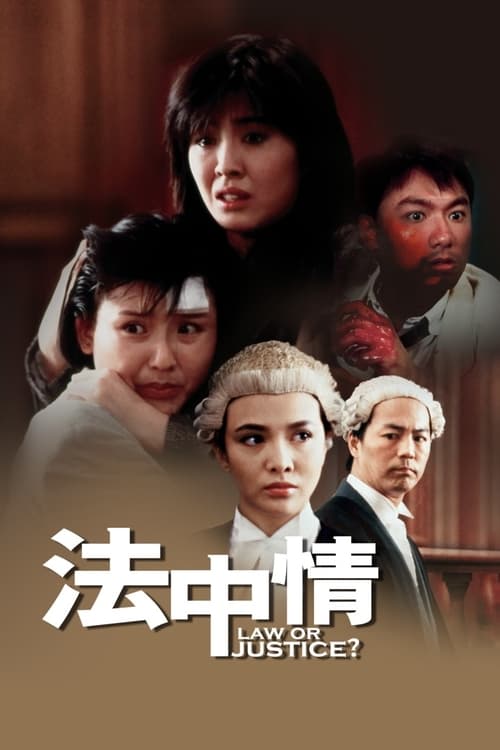
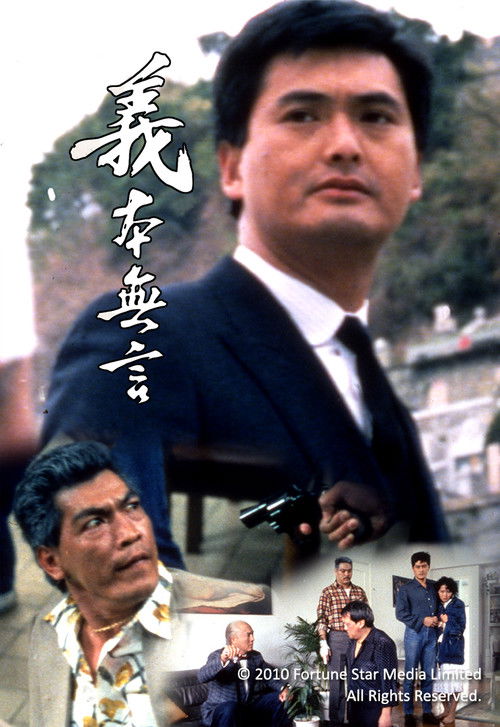
Law or Justice? opens with a moral fracture already visible on Ye Ying-wen's face: she is a capable, high-profile lawyer, but she is also painfully aware that the case she is handling is not just another file on her desk. The man she is defending, Dan Tien, is a photographer accused of rape, and the accusation is not abstract or theoretical; it is tied to a vulnerable young model, Ling Zu-er, whose life has been violently derailed by him. At the same time, Ye Ying-wen's private life is tangled up with the state's other arm of authority, because her boyfriend, Inspector Fong Wai, works in the police force and stands on the side of investigation and punishment rather than defense. The film immediately sets up its central contradiction: the law is supposed to protect people, but the lawyer who understands that system best is forced to help the man who has hurt an innocent woman.
The story moves into the social world around these characters, where the emotional damage spreads beyond the courtroom. Ling Zu-er is introduced as a model, and the film uses her profession to make the violation feel especially cruel: she is someone whose life depends on appearance, confidence, and public image, and Dan Tien's assault tears through all three. What makes the conflict even sharper is that Ye Ying-wen is also close to Ling Shan-shan, who is presented as her best friend. But this friendship is under strain before the legal battle even peaks, because Ling Shan-shan disapproves of Ye Ying-wen's relationship with Fong Wai, and that personal resentment begins to poison everything around them. The film does not treat the courtroom as isolated from ordinary life; instead, every professional choice cuts into a friendship, every romantic loyalty collides with moral duty, and every public decision has private consequences.
As the rape case develops, Dan Tien emerges not merely as a suspect but as the clear center of the film's corruption. The available plot information identifies Ling Zu-er as his first victim, which suggests a pattern rather than a single crime, and that detail darkens the entire narrative because it implies that the attack on her is not an isolated impulse but part of a longer history of predation. The model is not simply hurt; she is shattered by a man who uses his access, charm, and professional proximity to trap her. In the world of the film, the violence is not hidden in the shadows of a crime alley or a backstreet brawl. It grows out of ordinary spaces--fashion, photography, nightlife, legal procedure--and that is what makes it so unsettling. A "club customer" appears in the cast list, hinting at nightlife scenes and social spaces where the characters' lives overlap with the city's more anonymous, morally unstable corners. The result is a world where exploitation can happen under bright lights and still feel invisible until it is too late.
The legal battle becomes the film's main engine. Ye Ying-wen is torn between the demands of advocacy and the force of her conscience, because her duty as a lawyer requires her to defend Dan Tien even though everything in her personal morality recoils from him. The title itself, Law or Justice?, is not a slogan but a wound: if the system requires her to give a rapist the best defense available, is she serving justice or merely law? The film's answer is never simple, and it gains tension from making Ye Ying-wen live inside that question rather than merely argue it. Every courtroom appearance becomes a test of whether procedure can contain truth, and whether truth, once spoken, can matter in a system built on rules, burdens of proof, and adversarial performance. The prosecutors, including the characters identified in the cast as prosecutors, stand opposite her in formal opposition, and the courtroom turns into a moral arena where the same facts can be framed as lawful defense or as betrayal of a victim.
The relationship between Ye Ying-wen and Inspector Fong Wai adds another layer of pressure. He is not just a cop; he is the embodiment of the law's coercive power, the part of the system that arrests, investigates, and seeks punishment, while she occupies the part that must defend even the worst accused. Their romance therefore carries constant friction. In a different film, this might be a source of light banter. Here it becomes a political contradiction inside a love story. He likely sees Dan Tien as a criminal who deserves to be exposed and punished, while she must insist on due process, even if the defendant is abhorrent. The available summaries do not quote their arguments directly, but the setup makes the emotional logic unmistakable: every intimate moment between them is contaminated by the case, and every professional action risks becoming a personal insult. The more Ye Ying-wen tries to separate work from feeling, the more the film insists that those worlds are fused.
Ling Shan-shan's role becomes crucial as the personal damage deepens. As Ye Ying-wen's best friend, she should be a source of support, but instead she becomes one of the story's most painful mirrors. Her conflict with Ye Ying-wen arises partly from the lawyer's relationship with Fong Wai. That means the women are not only divided by romance but by what that romance symbolizes: trust in police authority, trust in institutional power, and trust in whether anyone can be loyal to both justice and love at once. The rupture between them broadens the film beyond the rape case itself. It becomes a story about how violence spreads outward, distorting friendships and making every bond conditional. Ling Shan-shan's anger is not a side plot; it is a sign that the legal case has infected the social fabric around it.
Dan Tien's confrontation with the consequences of his actions forms the narrative's darkest line. Though the summary material does not spell out every step of his arrest or interrogation, it makes clear that he is the villain and the perpetrator, and that the film's central dramatic question is not whether he is guilty but whether the system around him can make that guilt matter in a meaningful way. Ling Zu-er, as the first victim of his abuse, stands as the human center of the case, even when the film's machinery shifts attention toward legal argument and procedural pressure. Her suffering is the reason the conflict exists at all, and every time the story returns to the question of evidence, testimony, or courtroom strategy, her violation remains the unseen force driving the action forward. The film is at its most tense when it lets the audience feel how often institutions ask victims to relive their trauma just so that lawyers can argue over it in clean, polished language.
The courtroom scenes become the arena where all these pressures collide. Ye Ying-wen has to perform professionalism while being visibly conscience-stricken. The prosecutors attempt to establish the truth of Dan Tien's crime. The defense attempts to protect him within the limits of the law. Around them, Fong Wai represents law enforcement, and his proximity to Ye Ying-wen ensures that the case is never merely abstract. What makes the narrative compelling is that each side appears to believe it is pursuing justice. Yet the film keeps asking whether justice is something the law can truly produce, or whether the law simply produces winners and losers. This is not a procedural in which a clever clue cracks the case open at the last second. It is an emotional and ethical drama in which the real revelation is internal: Ye Ying-wen must confront the possibility that doing her job correctly may still leave the victim unrepaired and the moral damage unresolved.
The summaries available do not confirm any named deaths, and the film's dramatic focus appears to be on rape, testimony, friendship breakdown, and institutional conflict rather than on a body count. That absence matters. Instead of relying on murder to escalate stakes, the film makes the violation itself the catastrophe. Ling Zu-er's assault is the decisive act of violence, and the damage radiates outward through every relationship in the story. If there are no confirmed fatalities, that does not reduce the emotional weight; it actually sharpens it. The film is saying that some crimes are devastating even without death. A life can be derailed without the victim dying, and the legal system can still fail that victim even if the defendant is eventually punished.
As the case pushes toward its climax, Ye Ying-wen's inner conflict becomes the story's emotional centerpiece. She has to keep standing in court, speaking on behalf of a man she morally condemns, all while living inside a friendship collapse and a romantic contradiction. The most powerful version of this story is not one where the lawyer suddenly changes sides or storms out of the courtroom; it is one where she is forced to finish what she started, because law requires continuity even when conscience is breaking. The film's title returns in spirit here: law is procedure, but justice is a harder, bloodier, more human demand. The system can demand that Dan Tien receive representation, but it cannot guarantee that Ling Zu-er feels healed, that Ling Shan-shan forgives Ye Ying-wen, or that Inspector Fong Wai accepts her choices.
The ending, as far as the available plot material confirms, is framed around that unresolved tension between legal correctness and moral satisfaction. The narrative culminates in the courtroom and the surrounding emotional wreckage, with Dan Tien still at the center as the accused rapist, Ye Ying-wen still divided against herself, and Fong Wai and Ling Shan-shan each representing different kinds of pressure on her conscience. What the sources do make clear is that the film's resolution is not just about whether a criminal is identified; it is about whether a legal system can ever fully answer the human demand for justice. The question in the title remains alive at the end, because the film does not allow law and justice to become the same thing.
What lingers most in the final stretch is the sense that every character has been changed by the ordeal. Ling Zu-er has been victimized and marked by Dan Tien's abuse. Ye Ying-wen has been forced to live with the contradiction of defending a rapist while trying to preserve her own moral integrity. Inspector Fong Wai has been pushed into painful proximity with a case that tests both his profession and his relationship. Ling Shan-shan's friendship with Ye Ying-wen has been damaged by the same social and emotional pressures that the case unleashes. The film closes not with easy catharsis but with the bitter understanding that the courtroom can pronounce a judgment without restoring what was broken. In that sense, the final scene belongs as much to uncertainty as to closure: the law moves forward, but justice remains something the characters have been chasing all along, never quite able to seize.





What is the ending?
In the ending of "Law or Justice?", the protagonist, a dedicated lawyer, faces a moral dilemma as he uncovers corruption within the legal system. Ultimately, he chooses to expose the truth, leading to a dramatic courtroom confrontation. The film concludes with the lawyer's commitment to justice, despite the personal sacrifices he must make.
As the film approaches its climax, the tension escalates in the courtroom. The protagonist, a passionate and principled lawyer, stands before the judge, his heart racing as he prepares to present the evidence he has painstakingly gathered. The courtroom is filled with a palpable sense of anticipation; the air is thick with the weight of the truth that is about to be revealed.
Scene by scene, the atmosphere shifts dramatically. The lawyer recalls the moments leading up to this confrontation--his late nights poring over documents, the hushed conversations with whistleblowers, and the fear that has gripped him as he realized the extent of the corruption. He feels a mix of determination and trepidation, knowing that exposing the truth could jeopardize not only his career but also his safety.
As he begins to speak, his voice is steady but filled with emotion. He lays out the evidence of corruption, detailing how powerful figures within the legal system have manipulated the law for their own gain. The faces of the jury and the judge reflect a range of emotions--shock, disbelief, and a growing sense of urgency. The camera captures close-ups of the protagonist's face, revealing the intensity of his conviction and the weight of the moment.
The opposing counsel, a slick and confident attorney representing the corrupt officials, rises to counter the claims. He attempts to discredit the protagonist, using intimidation tactics and questioning his motives. The tension in the room thickens as the protagonist stands firm, his resolve unshaken. He knows that this battle is not just about winning a case; it is about standing up for what is right.
As the courtroom drama unfolds, flashbacks intersperse the present, showing the protagonist's journey--his initial idealism, the challenges he faced, and the personal sacrifices he made along the way. These moments serve to deepen the audience's understanding of his character and the stakes involved.
In the final moments of the trial, the jury deliberates. The protagonist waits anxiously, his heart pounding as he reflects on the potential consequences of his actions. He thinks of his family, his career, and the lives that could be affected by the outcome. The tension is palpable, and the silence in the courtroom is deafening.
When the jury returns with their verdict, the atmosphere is electric. The foreman stands, and the words "not guilty" echo through the room, but the protagonist's expression is mixed with relief and sorrow. He knows that while justice has been served in this instance, the fight against corruption is far from over.
As the film concludes, the protagonist walks out of the courthouse, the weight of his choices heavy on his shoulders. He has chosen the path of justice, but it has come at a cost. The final scene captures him standing outside, looking up at the sky, a mixture of hope and uncertainty in his eyes. The camera slowly pulls away, leaving the audience with a sense of the ongoing struggle between law and justice, and the personal sacrifices that come with standing up for what is right.
The fates of the main characters are intertwined with this resolution. The protagonist, though victorious in the courtroom, faces an uncertain future, knowing that his fight is far from over. The corrupt officials, while momentarily thwarted, remain a looming threat, suggesting that the battle against injustice continues. The film closes on a note of resilience, emphasizing the importance of integrity and the relentless pursuit of truth in a flawed system.
Is there a post-credit scene?
The movie "Law or Justice?" produced in 1988 does not have a post-credit scene. The film concludes its narrative without any additional scenes or content after the credits roll. The story wraps up with a focus on the central themes of justice and morality, leaving the audience to reflect on the characters' journeys and the implications of their choices.
What motivates the main character to pursue justice in the film?
The main character, a dedicated lawyer, is driven by a deep sense of moral obligation and personal loss. Having experienced a tragic event in his past that involved a miscarriage of justice, he is determined to ensure that the legal system serves its purpose and protects the innocent. This personal connection fuels his relentless pursuit of truth throughout the film.
How does the relationship between the protagonist and the antagonist evolve throughout the story?
Initially, the protagonist views the antagonist, a corrupt official, as a mere obstacle in his quest for justice. However, as the story unfolds, their relationship becomes more complex. The protagonist discovers that the antagonist is not just a villain but a product of a flawed system, leading to moments of intense confrontation and moral questioning. This evolution highlights the gray areas of justice and personal responsibility.
What key evidence does the protagonist uncover that changes the course of the trial?
The protagonist uncovers a crucial piece of evidence--a hidden witness who provides a different account of the events surrounding the crime. This witness's testimony not only contradicts the established narrative but also reveals the lengths to which the antagonist went to manipulate the truth. The emotional weight of this discovery propels the protagonist into a fierce battle against the odds.
What role does the supporting character play in aiding the protagonist's quest for justice?
The supporting character, a seasoned investigator, serves as both a mentor and a source of emotional support for the protagonist. Their relationship is built on trust and shared ideals, and the investigator's experience in navigating the legal system proves invaluable. This character often provides critical insights and helps the protagonist stay grounded amidst the chaos of the trial.
How does the film depict the impact of the legal battle on the protagonist's personal life?
The legal battle takes a significant toll on the protagonist's personal life, straining relationships with family and friends. As he becomes increasingly consumed by the case, his emotional state fluctuates between determination and despair. The film poignantly illustrates these struggles through scenes of isolation, moments of doubt, and the protagonist's longing for connection, ultimately showcasing the sacrifices made in the name of justice.
Is this family friendly?
The movie "Law or Justice?" produced in 1988 contains several elements that may not be suitable for children or sensitive viewers. Here are some potentially objectionable or upsetting aspects:
-
Violence: There are scenes depicting physical confrontations and aggressive behavior, which may be intense for younger audiences.
-
Legal and Moral Dilemmas: The film explores complex themes of justice and morality, which may be difficult for children to fully understand and could provoke discomfort.
-
Emotional Turmoil: Characters experience significant emotional distress, including grief and betrayal, which may be upsetting for sensitive viewers.
-
Adult Themes: The narrative includes discussions and situations that revolve around crime and punishment, which may not be appropriate for younger viewers.
-
Tense Situations: The film builds suspense through high-stakes scenarios that could be anxiety-inducing for some audiences.
These elements contribute to a tone that may be more suitable for mature viewers rather than a family-friendly environment.








