











Popular
What challenges do the paramedics face during their shifts?
How does the relationship between the main characters evolve?
What role does humor play in the paramedics' daily experiences?
What specific incidents highlight the dangers of being a paramedic?
How do the paramedics handle personal relationships outside of work?
Should I watch it?
Ask Your Own Question

What is the plot?
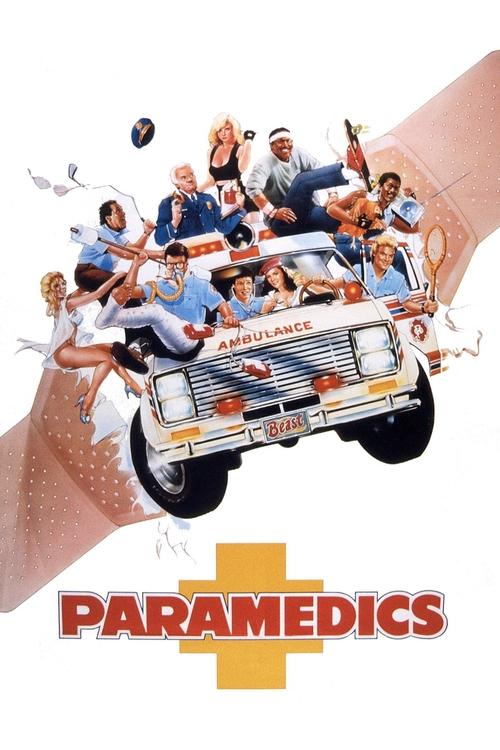
George "Uptown" and Mike "Mad Mike" begin Paramedics as talented but undisciplined ambulance medics working in a relatively comfortable uptown district. They are good at their jobs, but their irreverence, rule-breaking, and casual attitude toward authority constantly irritate their superior, Captain Prescott. Prescott has little patience for their improvisations and decides that the best punishment is to transfer them to the South District, the city's most dangerous and impoverished area. The reassignment is meant to humble them. Instead, it places them at the center of a criminal conspiracy.
The South District is a place of constant emergencies. Uptown and Mad Mike race their ambulance through neighborhoods dominated by violence, poverty, and gang activity, responding to victims who often have little protection and even less access to reliable medical care. Their new workplace is far removed from the comfortable district they know. Every call can become a confrontation, and the paramedics must work amid street criminals, corrupt officials, and patients whose injuries are connected to the neighborhood's wider disorder.
At first, the pair treats the transfer as another unpleasant assignment to survive. Their methods remain unconventional. They joke, bend regulations, and use their street instincts as much as their medical training. Uptown is more thoughtful beneath his cocky exterior, while Mad Mike embraces the reckless side of their profession. Their partnership is built on sarcasm and friction, but the two trust each other when a situation becomes dangerous.
Uptown's private life is also unsettled. His girlfriend, Savannah, wants him to stop treating his ambulance career as an excuse to avoid planning for the future. She urges him to concentrate on his education and attend medical school. To Savannah, becoming a doctor would give Uptown a more stable and respectable life. Uptown, however, is attached to the immediacy of emergency work. He likes being in the streets, making split-second decisions, and helping people directly, even if he pretends not to care about the consequences. Their arguments about medical school reflect a larger conflict in him: he wants the freedom of his present life but is also capable of more than he admits.
Mad Mike develops a different personal complication when he meets Liette, a French woman who has arrived in the city carrying a donor heart from France. The heart is intended for a transplant patient and represents the legitimate, lifesaving side of medicine. It has been carefully transported across international borders because someone is waiting for it. Liette's mission is urgent and morally clear: the organ must reach the hospital before it becomes unusable.
Mad Mike is immediately captivated by her. His interest in Liette adds a romantic and comic thread to the ambulance story, but it also places him close to the medical world that will become the focus of the main mystery. The heart is a symbol of donation, cooperation, and the attempt to save a life. Around it, however, another medical system is operating for the opposite purpose. Criminals in the South District are turning human bodies into merchandise.
The first indications that something is wrong come through the emergency calls. Uptown and Mad Mike begin noticing that certain deaths do not look like isolated tragedies. Bodies appear in circumstances that seem suspicious, and the pattern becomes harder to dismiss as coincidence. The two medics have unusual access to the aftermath of these incidents. They see patients and corpses before the public does, transport victims, hear dispatch information, and observe how emergency personnel and hospital staff handle the dead.
What initially appears to be ordinary South District violence gradually reveals a business arrangement. Gang members are obtaining bodies and supplying them to people inside the emergency and medical system. The corpses are not simply being hidden or disposed of. They are being treated as sources of valuable organs. Organs are removed and sold through a black market, where they can command enormous prices from buyers desperate for transplants and willing to ignore the law.
The revelation turns the South District's violence into something more calculated. The gang is not merely fighting over territory or money. Vulnerable residents are being exploited because their bodies have commercial value after death. In the darkest version of the scheme, people are deliberately killed so that their organs can be harvested. The operation depends on cooperation between street criminals and two paramedics who secretly provide the bodies. Those paramedics use their professional position to move through emergencies, manipulate access to victims, and connect the gang's supply of corpses to the organ market.
This discovery also changes the meaning of the protagonists' reassignment. The ambulance is no longer only a workplace. It becomes a moving vantage point from which Uptown and Mad Mike can trace the conspiracy. Their knowledge of emergency procedure lets them recognize irregularities that outsiders might overlook. They understand how bodies should be handled, how dispatches are logged, and how patients move from the street to the hospital. The corrupt medics may have assumed that their colleagues would not question the system, but Uptown and Mad Mike are too curious--and too defiant--to accept the official explanations.
Their investigation brings them into contact with the medical side of the conspiracy. Doctor Lido helps connect the suspicious deaths to the practical requirements of transplantation. The organ trade needs more than victims and criminals. It requires medical knowledge, preservation, transportation, and buyers. The presence of the donor heart carried by Liette provides a stark contrast. Her heart is being transported through legitimate channels to save a named patient, while the criminals are stripping organs from the dead for profit.
Uptown and Mad Mike begin to understand that the scheme is larger than a few stolen bodies. The gang supplies the human material, corrupt emergency workers provide access and concealment, and the black market turns organs into money. The South District's poor residents are especially vulnerable because their disappearances can be ignored and their deaths can be explained away as the inevitable result of street violence.
Their suspicions put them in conflict with the local criminal environment. The gang's members are not willing to allow two ambulance workers to interfere with a profitable operation. Uptown and Mad Mike face threats while answering calls and while following the trail beyond official duties. The medics' usual comic bravado becomes a survival mechanism. They joke because the alternative is to acknowledge how easily their investigation could get them killed.
The pair also encounters other colorful figures connected to the South District's chaos, including Blade Runner and Danger Girl. Danger Girl's subplot is separate from the organ-trafficking conspiracy but reinforces the film's atmosphere of bizarre danger. She is a mysterious woman whose romantic encounters leave men in extraordinary peril. One of her lovers is a judge who suffers a near-fatal heart attack, while another man drives his car into a water fountain. Her behavior makes her a source of unpredictable trouble, and the film uses her as another example of the strange hazards surrounding the paramedics.
As the central investigation advances, Uptown and Mad Mike confirm that the corruption reaches into their own profession. Two paramedics are working with the gang, supplying dead bodies and helping the criminals exploit the emergency system. This is a particularly bitter revelation for the heroes. They can tolerate an enemy in the street more easily than a colleague who wears the same uniform and has sworn, at least in principle, to save lives.
The corrupt paramedics' actions also complicate the question of responsibility for the deaths. The available account identifies the gang's operation as murderous and confirms that people are killed or otherwise obtained as sources of corpses. However, the film's surviving plot descriptions do not preserve a complete list of every victim, nor do they establish the names of all those who die or specify the exact method behind every death. Some victims are deliberately murdered for their organs; others may be people whose bodies are exploited after they die in the ordinary course of violence or neglect. The confirmed narrative fact is that the criminal enterprise depends on lethal activity and corpse trafficking, but no reliable account identifies every individual death or assigns each one to a named killer.
Uptown and Mad Mike continue investigating despite the danger. Their work forces them to confront the gang directly and to challenge the corrupt paramedics who have been using the ambulance system for criminal purposes. The protagonists rely on their medical expertise, street knowledge, and ability to improvise. Rather than approaching the case as conventional detectives, they follow the evidence through emergency calls, bodies, hospitals, and the people who handle the dead.
Captain Prescott remains part of the story as the authority figure who originally sent them south. At first, Uptown and Mad Mike view him as the man who ruined their working lives. His transfer order was punishment, and they have every reason to assume that he will care more about discipline than justice. The investigation therefore carries a secondary question: will Prescott obstruct them, or is he simply an unpleasant superior who has accidentally placed them where they are needed?
The answer is that Prescott is not part of the organ-trafficking ring. His harshness and dislike of their behavior do not make him corrupt. He has transferred them because they are troublesome, not because he is protecting the criminals. This distinction becomes important as the conspiracy is exposed. The men must separate their personal resentment from the evidence. Prescott may be their antagonist within the department, but he is not their enemy in the criminal case.
At the same time, Uptown's relationship with Savannah reaches its own point of tension. She continues urging him to look beyond ambulance work and prepare for medical school. Uptown's involvement in the investigation demonstrates that he possesses the intelligence and commitment she sees in him, but he still resists being told what kind of future he should want. Their conflict is not resolved through a dramatic betrayal or breakup. Instead, it remains part of the contrast between Uptown's chaotic present and the professional path Savannah believes he should pursue.
Mad Mike's connection with Liette develops amid the danger surrounding the donor heart. His attraction to her is initially playful, but the criminal scheme gives their relationship greater stakes. The heart she carries is vulnerable to the same world of greed and exploitation that Uptown and Mad Mike are trying to stop. Legitimate transplant medicine depends on trust and timing; the black market depends on violence, secrecy, and the removal of consent. Liette's presence keeps that moral contrast visible.
Eventually, the investigation points toward the operational center of the corpse-for-dollars scheme. The gang members and corrupt paramedics have been using their positions to acquire bodies, move them through the system, and ensure that organs can be harvested and sold. Uptown and Mad Mike move from suspicion to confrontation. Their goal is no longer simply to understand what is happening. They must stop the operation before more people are killed and before evidence disappears.
The final confrontation brings the protagonists against both sides of the conspiracy: the gang members who arrange the violence and the corrupt paramedics who make the medical exploitation possible. The film presents the showdown through its mixture of action and comedy, but the stakes are serious. Uptown and Mad Mike are outnumbered and exposed, yet their experience working under pressure allows them to respond with the same improvisational skill that once irritated Captain Prescott.
They survive the criminals' attempts to stop them and expose the operation. The corrupt emergency workers are revealed as collaborators rather than innocent medics caught in circumstances beyond their control. The gang's corpse supply is disrupted, the black-market network is broken, and the process of harvesting and selling organs is brought to an end. The available summaries do not provide a reliable shot-by-shot account of the final assault, the exact location, the weapons used, or the individual fates of every conspirator, so the precise details of who is arrested, incapacitated, or killed cannot be established. No named principal character is reliably identified as dying in the ending.
The important outcome is that Uptown and Mad Mike succeed. The South District's organ-trafficking operation is dismantled, and the criminals can no longer use the ambulance and medical systems to turn dead residents into profit. The victory also proves that the two medics' rebellious behavior can serve a constructive purpose. Their refusal to follow routine unquestioningly is what allows them to see the pattern. Their willingness to go beyond their official duties is what brings the conspiracy to light.
Their success earns them special recognition and commendations. The men who were sent south as punishment are now celebrated for exposing a criminal enterprise that the department failed to stop. Their professional reputations are transformed. What seemed like irresponsibility becomes, in retrospect, a willingness to act when bureaucracy and corruption have failed.
Prescott's situation undergoes the film's principal institutional reversal. Although he had sent Uptown and Mad Mike to the South District to punish them, he benefits from their achievement. He is named Deputy Chief of the South District, reportedly with the heroes' recommendation. The promotion is ironic: the captain who wanted to rid himself of his most troublesome medics ends the story elevated because of the case they solved.
The appointment also changes the meaning of his relationship with the pair. He remains the stern authority figure, but the transfer that began as an act of discipline has produced a major victory. Uptown and Mad Mike no longer regard him simply as the man who exiled them. Their recommendation acknowledges that, despite his abrasiveness, he was not involved in the conspiracy and is capable of leading the district once its criminal structure has been removed.
The South District begins to stabilize after the black market is shut down. The film does not suggest that poverty and violence vanish overnight, but the specific system preying on residents has been dismantled. The streets are no longer being used as an uncontrolled supply chain for organs, and the emergency service is no longer secretly feeding bodies into the criminal network.
The final portion returns to Danger Girl, who meets the newly appointed Deputy Chief Prescott. Her appearance introduces one last note of comic uncertainty. Prescott has escaped the embarrassment of being merely the hated captain, only to find himself placed in charge of the South District--and then confronted by a woman associated with a trail of bizarre accidents and endangered lovers. The encounter adds an enigmatic, mischievous coda to the otherwise resolved plot.
Mad Mike and Liette's storyline ends in the shadow of the successful transplant mission and the collapse of the illegal organ trade. Her donor heart has stood throughout the film for the ethical purpose of medicine: an organ freely placed into a legitimate system so that a patient can live. Mad Mike's attraction to Liette links him emotionally to that life-saving purpose rather than to the criminals' commodification of human remains.
Uptown's future remains less definitively settled. Savannah has made clear that she wants him to attend medical school, and the investigation proves that he has the skill and judgment necessary to become more than an ambulance medic. But the film's ending does not require him to abandon the street or immediately enroll. His achievement comes from the qualities he already possesses--quick thinking, courage, medical knowledge, and an instinct for helping people--even if he expresses those qualities through irreverence and defiance.
The story therefore closes with the central mystery solved and the conspiracy defeated. The gang's murders and corpse trafficking have been exposed, the corrupt paramedics have been brought down, and the black-market organ operation has been broken. Uptown and Mad Mike live, receive commendations, and emerge as unlikely heroes. Captain Prescott is promoted to Deputy Chief of the South District, despite having begun the story by banishing them there. Liette reappears in connection with Prescott, while Danger Girl leaves the audience with one final suggestion that the district's troubles may never become entirely ordinary.
No verified account identifies a named major character who dies during the film, and the available sources do not support a complete victim-by-victim death list. What the story definitively establishes is that the criminal operation kills or exploits people for their bodies, harvesting organs for sale. Against that system, two unruly paramedics turn the tools of their profession--ambulances, emergency calls, medical access, and firsthand knowledge of the city's suffering--into weapons against the criminals. Their punishment assignment becomes an investigation, the investigation becomes a confrontation, and the confrontation ends with the South District's most grotesque secret exposed and destroyed.
More Movies Like This
Browse All Movies →

What is the ending?
In the ending of "Paramedics," the main characters, including the paramedics and their love interests, confront the chaos of their lives and relationships. The film culminates in a series of comedic and dramatic moments that highlight their personal growth and the bonds they share. Ultimately, they find resolution in their relationships, and the film closes on a light-hearted note, emphasizing the importance of camaraderie and love in the face of adversity.
As the film approaches its conclusion, the scene shifts to the bustling emergency room where the paramedics, led by the charismatic and often reckless character, are dealing with the aftermath of a chaotic day. The tension is palpable as they navigate the challenges of their demanding jobs, but there is also a sense of camaraderie among them. They share jokes and banter, which serves to lighten the mood amidst the seriousness of their work.
In a pivotal moment, one of the paramedics, who has been struggling with his feelings for a fellow paramedic, finally gathers the courage to express his emotions. This scene is filled with nervous energy as he fumbles through his words, revealing his vulnerability. The atmosphere shifts from comedic to heartfelt as the other paramedic responds with warmth, acknowledging their mutual feelings. This moment signifies a turning point for both characters, showcasing their growth and the deepening of their relationship.
Meanwhile, another subplot unfolds involving a love triangle that has been brewing throughout the film. The tension reaches its peak when the two men vying for the affections of a female character confront each other. The scene is charged with emotion as they express their frustrations and desires. Ultimately, the woman steps in, asserting her independence and making a choice that reflects her own journey of self-discovery. This resolution not only brings closure to the love triangle but also emphasizes the theme of personal agency.
As the film nears its end, the paramedics are called to a particularly chaotic emergency that tests their skills and teamwork. The scene is frenetic, filled with flashing lights and the sounds of sirens. The urgency of the situation brings the characters together, showcasing their dedication to their work and to each other. In this high-stakes moment, they rely on their training and their bond, which has been strengthened throughout the film.
In the final scenes, the paramedics return to the station, exhausted but fulfilled. They share a moment of reflection, acknowledging the challenges they have faced both in their professional and personal lives. The camaraderie is evident as they laugh and tease each other, reinforcing the theme of friendship and support. The film concludes with a light-hearted scene, perhaps a celebration or a gathering, where the characters can finally relax and enjoy each other's company.
The fate of each main character is one of growth and connection. The paramedics have not only navigated the challenges of their demanding jobs but have also forged deeper relationships with one another. The film ends on a hopeful note, suggesting that despite the chaos of their lives, love and friendship prevail, leaving the audience with a sense of warmth and optimism.
Is there a post-credit scene?
The movie "Paramedics," produced in 1988, does not feature a post-credit scene. The film concludes without any additional scenes or content after the credits roll. The story wraps up with the main characters resolving their conflicts and moving forward in their lives, leaving no further narrative threads to explore in a post-credit sequence.
What challenges do the paramedics face during their shifts?
Throughout the film, the paramedics encounter a series of intense and often humorous challenges that test their skills and resolve. They deal with a variety of emergency situations, from car accidents to medical emergencies, each requiring quick thinking and teamwork. The pressure of saving lives is palpable, and the characters often find themselves in high-stress scenarios that reveal their strengths and weaknesses.
How does the relationship between the main characters evolve?
The main characters, particularly the duo of paramedics, start with a strong camaraderie that is tested by personal conflicts and romantic tensions. As they navigate the chaos of their job, their bond deepens, revealing vulnerabilities and insecurities. Moments of humor and tension highlight their evolving relationship, showcasing how they rely on each other in both professional and personal crises.
What role does humor play in the paramedics' daily experiences?
Humor is a crucial element in the film, serving as a coping mechanism for the paramedics as they face the grim realities of their job. The characters often engage in witty banter and comedic situations, which provide levity amidst the chaos. This humor not only entertains but also highlights the emotional toll of their work, allowing the audience to connect with the characters on a deeper level.
What specific incidents highlight the dangers of being a paramedic?
Several key incidents throughout the film illustrate the inherent dangers of being a paramedic. For instance, a high-speed chase to reach a critical patient showcases the risks involved in emergency response. Additionally, encounters with hostile bystanders or unpredictable patients add to the tension, emphasizing the physical and emotional dangers the paramedics face daily.
How do the paramedics handle personal relationships outside of work?
The film explores the personal lives of the paramedics, revealing how their demanding job impacts their relationships. Romantic entanglements, family dynamics, and friendships are all affected by the stress and unpredictability of their work. Characters struggle to maintain connections with loved ones, often leading to conflicts and moments of introspection about their priorities and commitments.
Is this family friendly?
"Paramedics," produced in 1988, is a comedy that features a mix of humor and adult themes. While it has comedic elements, there are several aspects that may not be suitable for children or sensitive viewers.
-
Language: The film contains strong language and crude humor that may not be appropriate for younger audiences.
-
Sexual Content: There are scenes that include sexual innuendos and suggestive situations, which may be uncomfortable for some viewers.
-
Violence: Although the film is a comedy, it includes scenes of slapstick violence and emergency situations that could be distressing to sensitive viewers.
-
Substance Use: There are references to drug use and alcohol consumption, which may not be suitable for children.
-
Mature Themes: The film touches on themes of relationships, infidelity, and the challenges of adult life, which may be difficult for younger viewers to understand.
Overall, while "Paramedics" has comedic moments, its adult themes and content make it less family-friendly.






