








Popular
What motivates the main character, a young skateboarder, to take risks throughout the film?
How does the rivalry between Billy and the antagonist escalate throughout the film?
What role does the skateboarding competition play in the development of the characters?
How does the film portray the relationship between Billy and his friends?
What are the key moments that highlight Billy's growth as a skateboarder and as a person?
Should I watch it?
Ask Your Own Question

What is the plot?
Sorry, we aren't able to watch and write up a full detailed plot yet. Check back in a few days.
More Movies Like This
Browse All Movies →


What is the ending?
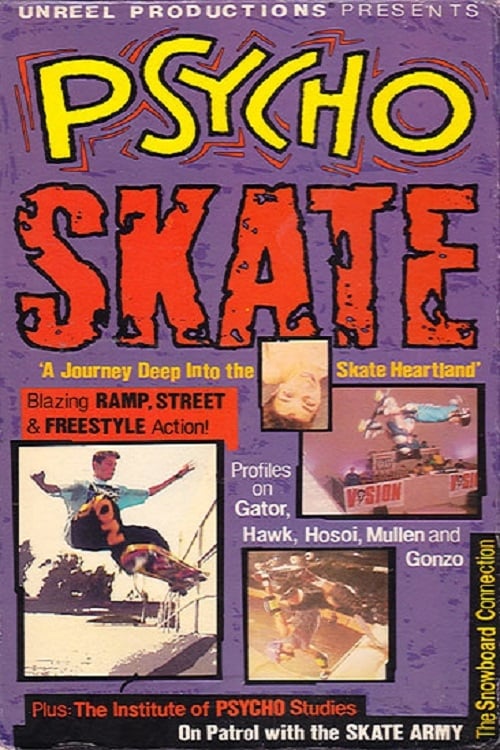
In the ending of Psycho Skate, the main character, a troubled skateboarder named Billy, confronts his inner demons and the antagonist, a rival skater named Mark. The climax unfolds during a high-stakes skate competition where tensions run high. After a series of intense tricks and confrontations, Billy ultimately triumphs over Mark, but not without significant personal cost. The film concludes with Billy reflecting on his journey, realizing that the true victory lies in overcoming his fears and finding a sense of belonging.
As the final act of Psycho Skate unfolds, the atmosphere is charged with anticipation. The scene opens at the skate park, where the sun hangs low in the sky, casting long shadows over the ramps and rails. The crowd buzzes with excitement, a mix of local skaters and spectators eager to witness the showdown between Billy and Mark. Billy stands at the edge of the park, his heart racing, a mix of determination and anxiety coursing through him. He grips his skateboard tightly, feeling the familiar texture of the grip tape beneath his fingers, a grounding sensation amidst the chaos.
The competition begins, and the camera captures the raw energy of the skaters as they launch themselves into the air, performing tricks that defy gravity. Billy watches as Mark effortlessly executes a series of impressive maneuvers, his confidence radiating from him like a beacon. Billy's internal struggle is palpable; he knows he must push past his fears and insecurities to prove himself, not just to Mark, but to himself.
As the competition progresses, Billy takes his turn. He rolls up to the ramp, the world around him fading away as he focuses on the task at hand. With a deep breath, he launches himself into the air, performing a trick he has practiced countless times. The crowd gasps, and for a moment, time seems to stand still. Billy lands the trick perfectly, a surge of adrenaline flooding his system. The cheers from the crowd bolster his confidence, and he begins to feel a sense of belonging he has longed for.
However, Mark is not one to back down easily. He retaliates with a series of increasingly dangerous tricks, pushing the limits of what is possible on a skateboard. The tension escalates as the two skaters go back and forth, each trying to outdo the other. The stakes are high, and the emotional weight of their rivalry hangs heavy in the air. Billy's determination is fueled by a desire to prove himself, but he also grapples with the fear of failure and the need for acceptance.
In a pivotal moment, Billy attempts a trick that he has never successfully landed before. The crowd holds its breath as he launches himself into the air, the world spinning around him. For a heartbeat, it feels as if he is flying, but then gravity takes hold. He crashes hard onto the ground, the impact reverberating through his body. Pain shoots through him, but he refuses to give up. The crowd gasps, and for a moment, silence falls over the park.
Billy struggles to his feet, wincing in pain but fueled by an unyielding spirit. He knows he must finish strong. With renewed determination, he takes a deep breath and prepares for one final attempt. The camera captures the intensity in his eyes, a mix of fear and resolve. He rolls back to the ramp, the cheers of the crowd echoing in his ears, urging him on.
As he launches into the air once more, the world blurs around him. This time, he executes the trick flawlessly, landing with a grace that surprises even him. The crowd erupts into cheers, and for the first time, Billy feels a sense of triumph wash over him. He has not only defeated Mark in the competition but has also conquered his own fears.
In the aftermath, the camera pans to Mark, who stands in disbelief, his expression a mix of anger and respect. He approaches Billy, extending a hand in a gesture of acknowledgment. Billy, still catching his breath, accepts the handshake, a silent understanding passing between them. The rivalry that once defined them begins to shift into a mutual respect, hinting at the possibility of camaraderie.
As the film draws to a close, Billy stands amidst the crowd, a smile breaking across his face. He looks around at the skaters who once seemed so distant, now feeling a part of something greater. The sun sets behind him, casting a warm glow over the park, symbolizing a new beginning. Billy's journey has not just been about skateboarding; it has been about finding his place in the world and embracing who he is.
The final scene captures Billy walking away from the park, skateboard in hand, a sense of purpose in his stride. He has faced his demons, triumphed over adversity, and emerged stronger. The film ends on a hopeful note, leaving the audience with the impression that while the competition may have concluded, Billy's journey of self-discovery and acceptance is just beginning.
Is there a post-credit scene?
"Psycho Skate," produced in 1988, does not feature a post-credit scene. The film concludes with a climactic resolution that ties up the main narrative threads, focusing on the characters' struggles and triumphs throughout the story. The ending leaves viewers with a sense of closure regarding the protagonist's journey and the challenges faced in the world of skateboarding and personal conflict. As the credits roll, the audience is left to reflect on the themes of friendship, rivalry, and the pursuit of passion without any additional scenes or surprises after the credits.
What motivates the main character, a young skateboarder, to take risks throughout the film?
The main character, a young skateboarder named Billy, is driven by a desire to prove himself to his peers and to escape the mundane reality of his life. His passion for skateboarding serves as both an outlet for his frustrations and a means to gain respect within the skateboarding community. As he faces various challenges, including rival skaters and personal insecurities, his motivations evolve, revealing deeper layers of his character.
How does the rivalry between Billy and the antagonist escalate throughout the film?
The rivalry between Billy and the antagonist, a skilled and arrogant skateboarder named Rex, escalates through a series of confrontations that highlight their contrasting personalities. Initially, Rex dismisses Billy as an amateur, which fuels Billy's determination to prove himself. As the film progresses, their encounters become increasingly intense, culminating in a high-stakes skate-off that serves as the climax of their conflict, showcasing both their skills and personal growth.
What role does the skateboarding competition play in the development of the characters?
The skateboarding competition serves as a pivotal moment for character development, particularly for Billy and Rex. It acts as a catalyst for Billy to confront his fears and insecurities, pushing him to tap into his true potential. For Rex, the competition reveals his overconfidence and the consequences of underestimating his opponents. The stakes of the competition force both characters to reflect on their motivations and the nature of their rivalry, ultimately leading to a deeper understanding of themselves.
How does the film portray the relationship between Billy and his friends?
The film portrays Billy's relationship with his friends as a source of support and camaraderie, but also as a reflection of the pressures of adolescence. His friends encourage him to take risks and push his limits, but they also challenge him to stay true to himself. Throughout the film, their interactions reveal the complexities of friendship, loyalty, and the struggle for identity within the skateboarding culture, highlighting moments of both solidarity and tension.
What are the key moments that highlight Billy's growth as a skateboarder and as a person?
Key moments that highlight Billy's growth include his initial struggles to land difficult tricks, his determination to practice despite setbacks, and his eventual success in the competition. Each failure teaches him resilience, while moments of encouragement from his friends and mentors help him build confidence. The climax of the film, where he faces Rex in the skate-off, serves as a culmination of his journey, showcasing not only his technical skills but also his newfound self-assurance and maturity.
Is this family friendly?
"Psycho Skate," produced in 1988, is not considered family-friendly due to several potentially objectionable elements. The film features intense scenes that may be upsetting for children or sensitive viewers.
-
Violence: There are moments of physical confrontations and aggressive behavior among characters, which may be disturbing.
-
Psychological Tension: The film explores themes of obsession and mental instability, leading to unsettling situations that could provoke anxiety.
-
Language: The dialogue includes strong language and derogatory terms that may not be suitable for younger audiences.
-
Dark Themes: The narrative delves into darker aspects of human nature, including betrayal and revenge, which may be too intense for children.
-
Skateboarding Stunts: While skateboarding is a central theme, some stunts may be portrayed in a reckless manner, potentially encouraging dangerous behavior.
These elements contribute to an overall tone that may not be appropriate for a younger audience or those sensitive to such themes.







