























Popular
What is the significance of the setting in shaping the characters' experiences?
What motivates the main character, Andrei, throughout the film?
How does the relationship between Andrei and his girlfriend evolve during the film?
What role does the character of the police officer play in Andrei's journey?
How does the film depict the impact of violence on the characters?
Should I watch it?
Ask Your Own Question

What is the plot?
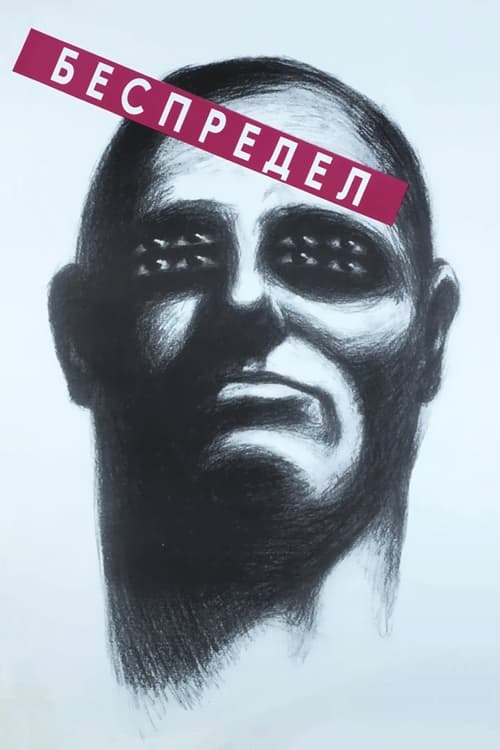
Bespredel opens inside a brutal Soviet correctional colony where the rules of ordinary life do not reach and where every relationship is governed by poniatiia, the criminal code of the prison world, rather than by law or conscience. The place is organized through fear, denunciation, and a rigid split between the powerless mass of prisoners and the privileged inmate elite known as the "blacks," all of it overseen by an administration that manipulates the colony through informants and punishment.
The first force the film gives us is not hope but pressure. A new prisoner, Yuri Kalganov, known as Kalgan, arrives already marked by violence: he has been sentenced to four years for assaulting the new partner of his ex-girlfriend. The colony receives him as it receives every new body, not as a person but as a test of submission. He is sent into the tenth squad, the working unit controlled by the feared inmate boss Mongol and his gang of "blacks," who dominate the hierarchy among the prisoners and collect the benefits of that dominance. Kalgan instantly understands that the colony is its own nation, with its own laws, but he refuses to bow quietly to them. From the beginning he is portrayed as a man who does not know how to keep his head down, and that refusal puts him on a collision course with both the inmates above him and the administration behind them.
His first days are defined by punishment. He resists, argues, and fights, and the response is immediate and brutal: he is sent to solitary confinement, the punishment cell that serves as the colony's most direct instrument of humiliation and correction. The sources do not give a precise date, time, or clock reading for this opening movement, but the impression is of an environment where time itself is swallowed by routine violence. The men around him study him carefully. He is not yet an authority, but he is not broken either, and that stubbornness begins to earn him a kind of respect among the other inmates, who recognize in him a hard refusal to submit.
Soon after Kalgan's arrival, another new inmate enters the colony: Viktor Moshkin, nicknamed Philatelist. His offense is absurd in comparison with the savage world around him--he is falsely convicted of stamp trading or stamp speculation, depending on the source. That absurdity matters, because it immediately marks him as an outsider inside a place where men are divided not only by rank but by criminal identity. Philatelist is younger, physically weaker, and intellectually sharper than the rough men surrounding him; one source describes him as a principled "little" man whose first experience of the colony is an entry into a separate world with its own merciless order. If Kalgan is the body that refuses to bend, Philatelist is the mind that sees the prison system for what it is. He quickly becomes the moral center of the film, the man who says in words what the others are only beginning to feel.
The colony itself functions like a machine designed to convert men into obedient parts. The administration governs not only by guards and punishment but through a system of denunciation that keeps the prisoners turning against one another. The "chief of the Zone" holds people in check by making fear circulate through the population, while the "blacks" enforce their own power inside the prisoner hierarchy by enjoying privileges in exchange for keeping everyone else compliant. In this world, even labor is political. Work is not simply work; it is one more arena where the strong feed on the weak. Kalgan is shown how the colony's power structure really functions when he is offered a foreman position in the work squad, a post that would spare him the hardest labor if he accepts the system's terms. It is a temptation wrapped in a bribe, and the offer is meant to recruit him into the same hierarchy that has already crushed so many others.
At the same time, Philatelist begins to speak against what he sees. He does not shout at first. He observes, calculates, and quietly encourages resistance among the prisoners who are tired of being treated as laboring slaves. The colony's cruelty is not hidden from him; it is organized in plain sight. The "blacks" profit from a quota system that advantages them and deepens the exploitation of everyone else, and when Philatelist finally criticizes the work quotas openly, he is not just complaining about labor. He is attacking the whole structure of privilege that keeps the prison stable. That speech becomes one of the film's key turns. It ignites a strike, alarms the administration, and reveals that even in this controlled environment there remains a collective capacity for refusal.
Kalgan's own path becomes more complicated here. One source notes that after his initial resistance, he begins to move in a darker direction, drawn into the ideology of the "black" criminal world despite a warning from his dead friend Tolich to "remain human" and not become aggressive or arrogant. That warning hangs over the rest of his story like a moral echo. He is a man who wants to keep his dignity, but he is also vulnerable to the logic of the colony, which rewards violence and punishes principle. The film does not offer a simple hero. Instead it shows how prison corrodes everyone it touches, even the people who try most fiercely not to be corrupted.
The uprising inside the squad begins with words and becomes physical. Philatelist's criticism of the quotas and of the "blacks" is the spark, but the deeper fuel is the misery of the prisoners who have been forced to accept humiliation for too long. The "blacks," recognizing that Philatelist is becoming a dangerous influence, decide to destroy his credibility before he can inspire others further. They conspire to discredit him by accusing him of collusion with the authorities, a charge that in this world is more than reputational--it is a death sentence of a sort, because it marks a man as unclean in the eyes of other prisoners. The prison's world depends on this kind of moral contamination. Once a man is said to be working with the administration, he is isolated from the prisoner community and exposed to collective violence.
What follows is the film's first great catastrophe. Philatelist is brutally assaulted after the accusation spreads. The beating is not a random brawl but an execution-by-beating carried out by the social order of the colony, with the "blacks" and their system of influence using physical force to silence a dissenter. The sources do not identify every hand that lands the blows, but they are clear about the result: the attack is severe enough to drive him to suicide. This is the first death in the central plot, and it is caused indirectly by the combined cruelty of the inmate power structure and the administration that allows it to function.
Philatelist's suicide is the turning point that transforms grievance into vengeance. His death lands like a moral shock among the prisoners, especially Kalgan, who has been watching the colony's logic twist everything into submission. The film makes clear that Philatelist's importance was never physical strength; it was the force of his conviction. In the aftermath of the beating and suicide, his glasses become a symbol of the hope he represented, an object that will matter again at the ending when Kalgan holds them up like a relic of a ruined but not extinguished ideal. For now, though, the glasses are only an absent presence, a sign that innocence and clarity have been shattered by the prison machine.
Kalgan responds to Philatelist's death not with grief alone but with action. He retaliates by killing one of Mongol's henchmen. This is the film's second explicit death, and the cause is direct and personal: Kalgan kills in revenge for Philatelist. The act changes his position inside the colony. He is no longer merely a defiant inmate or a potential collaborator; he becomes an avenger, a man who has crossed from resistance into open violence. That killing also changes the scale of the conflict. What began as a struggle over quotas and authority now becomes a prison-wide revolt.
The uprising spreads through the inmate population with the speed of accumulated rage. Men who have been silent, compromised, frightened, or divided begin to move as a body against the system that has been grinding them down. The film's atmosphere shifts from controlled oppression to chaotic motion, and the colony's geography takes on new meaning as spaces once associated with routine labor and punishment become battlegrounds. The administration responds the only way it knows how: with force. Security forces open fire to suppress the uprising, and the climax becomes a violent clash in which the state's authority reveals itself not as order but as raw armed dominance. The sources do not specify the number of casualties in that final barrage, so it is safest to say that the open firing marks the crushing of the revolt and likely causes further deaths and injuries beyond those named explicitly.
In the aftermath of the shooting, the film does not provide healing. Instead it gives one last confrontation that sharpens the moral verdict of the story. Kalgan confronts Kum, the manipulative officer whom the sources identify as responsible for Philatelist's death, and accuses him of betrayal. This is not a formal accusation inside a tribunal; it is a direct confrontation, the voice of a man who has seen too much to pretend the system is anything but rotten. The importance of Kum lies in the fact that he embodies the administration's dirty method: he does not simply punish from above, he manipulates from within, using the colony's internal divisions to produce the outcomes the authorities want. Kalgan's accusation strips that process of its disguise. The film does not report Kum's death, only that he is confronted and blamed, and that the blame is deserved.
Then comes the ending, and it is bleak in form even as it carries a small ember of defiance. Kalgan is transferred to another prison rather than freed. The colony has been broken open by rebellion, but the system has not been defeated; it has merely moved the man who challenged it to a different cage. The final image described by the sources is deeply symbolic: Kalgan raises Philatelist's glasses, a token of their shared hope for justice, while the wounded officer Khasimov vows to support Kalgan's fight for survival. The moment is not a triumph in any simple sense. Kalgan is still in the machinery of punishment, still being moved from one institution to another, still inside the Soviet penal world that has shaped and damaged him. Yet the raised glasses suggest memory, witness, and continuation. Philatelist's moral force survives in the gesture, and Khasimov's promise implies that even inside a corrupted system, alliances can still form around survival and a minimal sense of decency.
The film ends there, not with escape but with an unresolved continuation of struggle. Philatelist is dead by his own hand after being beaten into despair; one of Mongol's henchmen is dead by Kalgan's revenge; the uprising has been met with gunfire; Kum stands exposed as a betrayer; and Kalgan is carried onward into another penal world. What remains is the image of a man who has been changed by the colony's violence, holding up the glasses of the one prisoner who tried to remain morally intact. In the last movement of the story, Bespredel makes its final point: the prison does not simply confine bodies, it tries to reorganize conscience itself, and even when prisoners rise up, the system answers by shifting the violence elsewhere rather than ending it.


What is the ending?
In the ending of "Bespredel," the main characters face the consequences of their actions in a chaotic and violent climax. The film concludes with a sense of despair and unresolved conflict, leaving the characters' fates uncertain.
As the film approaches its conclusion, the tension escalates dramatically. The protagonist, a young man named Andrei, finds himself increasingly entangled in a web of crime and moral ambiguity. He is confronted by the harsh realities of his choices, which have led him down a dark path. The emotional weight of his decisions becomes palpable as he grapples with guilt and fear.
In a pivotal scene, Andrei is cornered by rival gang members. The atmosphere is thick with dread as he realizes the extent of the danger he is in. The camera captures his frantic breathing and wide eyes, reflecting his internal turmoil. He knows that his life hangs in the balance, and the stakes have never been higher.
Simultaneously, his friend and accomplice, Sasha, is also facing dire consequences. Sasha's loyalty to Andrei is tested as he is forced to make a choice between self-preservation and standing by his friend. The tension between them is palpable, and the emotional stakes are heightened as they confront their shared past and the choices that have led them to this moment.
As the confrontation escalates, violence erupts. The screen is filled with chaotic action as the gang members clash with Andrei and Sasha. The cinematography captures the raw intensity of the fight, with close-ups of the characters' faces revealing their fear, anger, and desperation. The sound of gunfire and shouts fills the air, creating a visceral experience for the audience.
In the aftermath of the violence, the fates of the main characters become clear. Andrei, having fought bravely but ultimately overwhelmed, is left wounded and vulnerable. His dreams of a better life are shattered, and he is left to confront the reality of his choices. Sasha, on the other hand, manages to escape but is left haunted by the events that transpired. The bond between the two friends is irrevocably altered, and the weight of their shared experiences lingers in the air.
The film concludes with a haunting sense of ambiguity. The final scenes depict Andrei's broken spirit as he reflects on the choices that led him to this point. The camera lingers on his face, capturing the depth of his despair and the realization that there may be no way out of the cycle of violence and crime. The screen fades to black, leaving the audience with a lingering sense of unease and the stark reality of the characters' fates.
Is there a post-credit scene?
The movie "Bespredel," produced in 1989, does not have a post-credit scene. The film concludes its narrative without any additional scenes or content after the credits roll. The story wraps up with the final events and character arcs, leaving the audience with a sense of closure regarding the themes and conflicts presented throughout the film.
What is the significance of the setting in shaping the characters' experiences?
The bleak urban landscape serves as a reflection of the characters' internal struggles. The oppressive atmosphere of the city amplifies feelings of hopelessness and entrapment, influencing their choices and interactions as they navigate a world rife with moral ambiguity.
What motivates the main character, Andrei, throughout the film?
Andrei is driven by a deep sense of disillusionment with the corrupt society around him. His internal struggle is marked by a desire for justice and a longing for personal redemption, which leads him to confront the moral decay he witnesses.
How does the relationship between Andrei and his girlfriend evolve during the film?
Andrei's relationship with his girlfriend, Lena, is strained by the pressures of their environment. Initially, they share a bond rooted in love and hope, but as Andrei becomes more embroiled in the chaos around him, Lena's concern for his safety grows, leading to tension and emotional distance.
What role does the character of the police officer play in Andrei's journey?
The police officer represents the oppressive authority that Andrei rebels against. His interactions with Andrei highlight the systemic corruption and moral ambiguity of law enforcement, serving as a catalyst for Andrei's transformation and ultimate decisions.
How does the film depict the impact of violence on the characters?
Violence permeates the film, affecting each character's psyche and relationships. The brutal realities of their environment lead to moments of despair and desperation, forcing characters like Andrei to confront their own capacity for violence and the consequences it brings.
Is this family friendly?
"Bespredel," produced in 1989, is not considered family-friendly. The film contains several potentially objectionable or upsetting scenes and aspects that may be distressing for children or sensitive viewers.
-
Violence and Crime: The film depicts various acts of violence, including physical confrontations and criminal activities, which may be graphic and unsettling.
-
Substance Abuse: There are scenes that portray drug use and the effects of addiction, which can be disturbing and inappropriate for younger audiences.
-
Moral Ambiguity: The characters often engage in morally questionable behavior, leading to complex emotional situations that may be difficult for children to understand.
-
Emotional Turmoil: The film explores themes of despair, betrayal, and loss, which can evoke strong emotional responses and may be too intense for sensitive viewers.
-
Adult Themes: There are references to adult relationships and situations that may not be suitable for children.
Overall, the film's mature themes and content make it more appropriate for an adult audience.








