









Popular
What role does the character of the drug dealer play in the story?
What motivates the main characters to travel to Marrakech?
How does the character of Gabriele change throughout the film?
How do the friendships among the characters evolve during the journey?
What is the significance of the train journey to Marrakech in the film?
Should I watch it?
Ask Your Own Question

What is the plot?
Sorry, we aren't able to watch and write up a full detailed plot yet. Check back in a few days.






What is the ending?
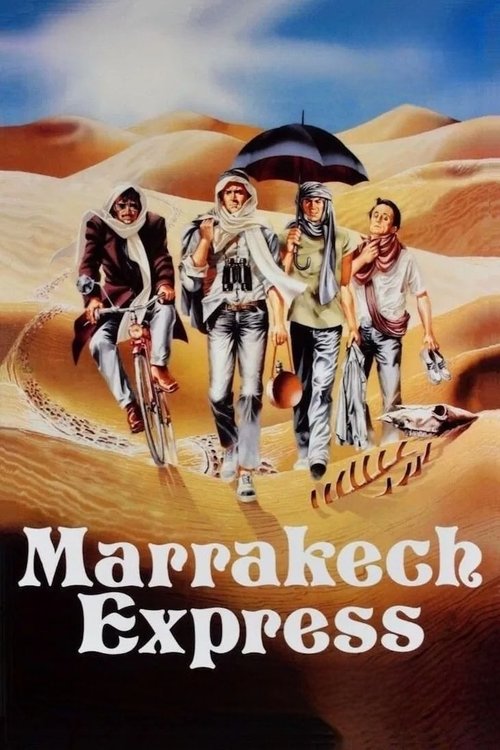
In the ending of "Marrakech Express," the group of friends faces the harsh realities of their journey. After a series of misadventures and personal revelations, they confront the consequences of their choices. The film concludes with a sense of disillusionment as they realize that their idealistic dreams of freedom and adventure have been overshadowed by the complexities of life.
As the film approaches its conclusion, the group finds themselves in a tense situation. They are in Morocco, having traveled there with the hope of reconnecting with their past and each other. However, the reality of their journey begins to weigh heavily on them. The vibrant streets of Marrakech, filled with color and life, contrast sharply with the emotional turmoil each character is experiencing.
The first character to face a pivotal moment is the protagonist, who has been searching for a sense of purpose throughout the film. He stands in the bustling market, surrounded by the chaos of vendors and tourists, feeling increasingly isolated. His internal struggle is palpable as he grapples with the realization that the adventure he sought is not what he imagined. The vibrant colors of the market fade into a blur as he reflects on his life choices, feeling a deep sense of loss.
Next, we see the character who has been the comic relief throughout the journey. He attempts to lighten the mood with jokes, but his laughter feels hollow. As he watches his friends confront their realities, he begins to understand that humor cannot mask the pain they all share. His facade crumbles, revealing a vulnerability that he had previously hidden behind his jokes.
The group gathers at a local café, where they share a moment of camaraderie, but the atmosphere is heavy with unspoken words. Each character's face reflects a mix of nostalgia and regret. They reminisce about their youth and the dreams they once had, but the weight of their current lives looms large. The café, filled with the aroma of spices and the sounds of distant music, becomes a backdrop for their emotional reckoning.
As the sun sets over Marrakech, casting a warm glow over the city, the friends realize that their journey has not brought them the clarity they sought. Instead, it has exposed the fractures in their relationships and the realities of their lives. They part ways, each character heading into the night, symbolizing their individual paths and the uncertainty that lies ahead.
The final scenes depict each character alone, walking through the streets of Marrakech. The vibrant city, once a symbol of adventure, now feels like a labyrinth of their own making. The protagonist looks back one last time at his friends, a mixture of sadness and acceptance in his eyes. The camera lingers on the bustling streets, capturing the essence of Marrakech as a place of both beauty and complexity.
In the end, the characters are left to confront their own realities, having learned that the journey is not just about the destination but also about the connections they forge and the truths they uncover along the way. The film closes with a poignant reminder that life is filled with unexpected turns, and sometimes, the adventure lies in the journey itself rather than the idealized dreams they once held.
Is there a post-credit scene?
The movie "Marrakech Express," produced in 1989, does not have a post-credit scene. The film concludes its narrative without any additional scenes or content after the credits roll. The story wraps up with the characters reflecting on their journey and experiences in Morocco, leaving the audience with a sense of closure regarding their adventures and personal transformations.
What role does the character of the drug dealer play in the story?
The drug dealer serves as a catalyst for conflict and tension within the group. His presence introduces danger and moral dilemmas, forcing the friends to confront their own values and the consequences of their actions as they navigate the complexities of their trip.
What motivates the main characters to travel to Marrakech?
The main characters, a group of friends from Italy, are motivated by a mix of nostalgia and a desire for adventure. They are seeking to reconnect with their past and each other, as well as to experience the vibrant culture and atmosphere of Marrakech.
How does the character of Gabriele change throughout the film?
Gabriele, initially portrayed as carefree and somewhat irresponsible, undergoes significant development as he confronts his own fears and insecurities during the journey. His experiences in Marrakech force him to reflect on his life choices and relationships, leading to a more mature perspective by the end.
How do the friendships among the characters evolve during the journey?
As the journey progresses, the friendships among the characters are tested by various challenges, including personal conflicts and external threats. These experiences lead to moments of vulnerability and honesty, ultimately strengthening their bonds as they learn to support each other through adversity.
What is the significance of the train journey to Marrakech in the film?
The train journey to Marrakech symbolizes both a physical and emotional transition for the characters. It represents their escape from their mundane lives and the beginning of a transformative adventure, filled with unexpected encounters and revelations that shape their identities and relationships.
Is this family friendly?
"Marrakech Express," produced in 1989, is a film that follows a group of friends on a journey to Morocco. While it is primarily a drama with comedic elements, there are several aspects that may be considered objectionable or upsetting for children or sensitive viewers.
-
Substance Use: The film includes scenes depicting drug use, which may be inappropriate for younger audiences.
-
Mature Themes: The narrative explores themes of loss, betrayal, and existential crises, which may be heavy for children to understand or process.
-
Emotional Turmoil: Characters experience significant emotional distress, including moments of despair and conflict, which could be upsetting for sensitive viewers.
-
Cultural Depictions: Some scenes may portray cultural stereotypes or misunderstandings that could be viewed as insensitive.
-
Language: There are instances of strong language that may not be suitable for younger audiences.
Overall, while the film has comedic moments, its deeper themes and certain scenes may not be appropriate for all viewers, particularly children.








