












Popular
What role does the character of the 'Man in the Suit' play in the story?
What is the significance of the Hollowheads' unusual diet?
How does the character of Joe Hollowhead evolve throughout the film?
How does the family dynamic within the Hollowhead household affect the plot?
What is the significance of the setting in the Hollowheads' home?
Should I watch it?
Ask Your Own Question

What is the plot?
Henry Hollowhead's night begins as a hopeful domestic favor and ends as a grotesque parody of suburban bliss, with his promotion dream collapsing into murder, panic, and a frantic cover-up. In the end, the Hollowheads survive the disaster, Marty Crabneck dies in the kitchen, and Billy's quick thinking lets the family slip back into a fake, polished sitcom normality.
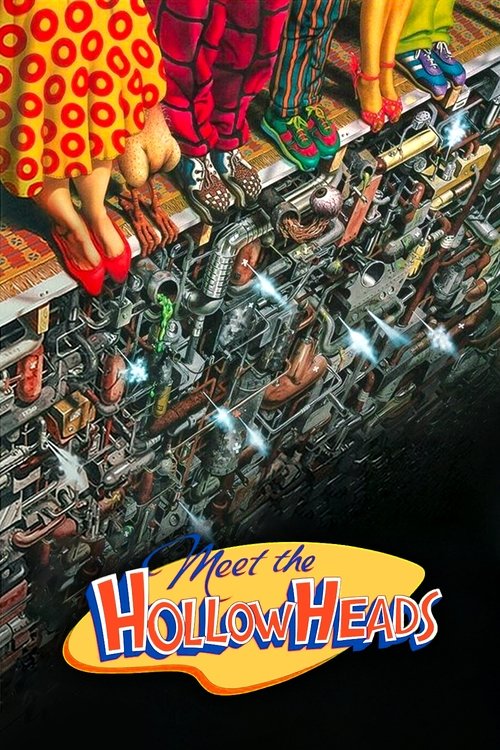
The story opens in a bizarre underground future where people live among pipes, tubes, corridors, suction systems, and other strange biotech conveniences, while the Hollowheads' brightly lit house feels like a cheerful pocket of artificial order in a dark, industrial world. Henry Hollowhead, a meter reader for United Umbilical, is a loving but anxious patriarch who sees status everywhere and believes that one good dinner might finally lift him into a promotion. His boss, Marty Crabneck, also called Mr. Crabneck in some accounts, is the oily regional superior at the company, and Henry is thrilled when Crabneck essentially invites himself to dinner at the Hollowhead home. Henry phones home to tell Miriam that the boss is coming that very evening, and he frames the whole event as his big opportunity. Miriam hears the news and immediately moves from routine household labor into a near panic, because she now has to prepare a perfect meal for a man she has never met while the entire family is already in motion.
Miriam Hollowhead is already in the kitchen, surrounded by the film's unsettlingly whimsical domestic machinery, when the evening begins to go wrong even before the guest arrives. Billy Hollowhead, the youngest son, comes home from school with a black eye, and Miriam notices the injury despite his effort to hide it. She unfolds a built-in apparatus from one of the cupboards and uses it to treat him, a tiny but vivid example of how this world turns ordinary parenting into mechanical procedure. The moment is not just comic detail; it also establishes Miriam as the person who keeps the household functioning under pressure, even when everything around her is strange and malfunctioning. Then Billy's troublemaking friend Joey shows up, and the two boys launch into Billy's new splatspray game in the bedroom. At first it is just another piece of juvenile chaos, but when they run out of pellets, Joey suggests using blood-filled parasites taken from the family pet, a dog-like creature whose body is treated less like a companion animal and more like a grotesque ammunition source. The boys' mess adds to Miriam's stress and stains the afternoon with a disgusting, runaway energy that mirrors the larger disaster about to erupt at dinner.
The Hollowhead children are all in motion before the boss arrives, and that matters because each one carries a different kind of pressure into the evening. Cindy Hollowhead, the teenage daughter, is getting ready for a special date and using softening gel or softening jelly, a futuristic grooming product that becomes one of the film's satirical details about beauty, adolescence, and commodified femininity. Some sources emphasize Miriam's concern that Cindy may be too young for the product, which makes the scene feel like both a parental warning and a joke about a world where even teenage vanity has been industrialized. Bud Hollowhead, the other son, is occupied with strange music rehearsals for an upcoming performance, and his loud avant-garde sound becomes part of the ambient noise of the house. The family is thus already scattered into separate little crises when Henry arrives home with Marty Crabneck, and the night shifts from domestic disorder to social threat.
Crabneck is not the refined opportunity Henry imagines. From the moment he steps into the Hollowhead home, his slimey, horny, rude, and abusive nature becomes obvious. He insults Billy, leers at Miriam, and makes invasive, sexually aggressive moves toward Cindy as well, humiliating the family in the very space where Henry expects to impress him. The dinner invitation, which Henry imagined as a ladder rung to advancement, becomes a trap in which the boss uses his authority to dominate the household. In one account, Crabneck even spells out the cruel logic of power by telling the family that he is lonely and implying that Henry's promotion depends on Miriam being willing to "ease" his loneliness, a vile condition that turns corporate advancement into sexual coercion. Henry remains caught in the middle, still hoping to be noticed at work even as his boss openly degrades his wife and children. The tension is unbearable because Henry's social ambition keeps forcing him to tolerate behavior that should end the evening immediately.
As the dinner moves deeper into humiliation, Crabneck's behavior escalates from sleazy to actively predatory. He attacks Miriam, and the film turns the polite table setting into a battlefield of domestic resistance. Miriam fights back first, refusing to simply absorb the abuse, and Billy joins in as the family's odd, resourceful youngest defender. Henry finally stops dithering and helps subdue his boss, turning the hoped-for promotion dinner into a united act of self-defense. The struggle is chaotic and ugly, but it is also the moment when the family's dynamic shifts: Henry is no longer trying to flatter power, and Crabneck is no longer just a difficult guest. He is now an invader who must be physically stopped.
The confrontation reaches the kitchen, where the film's strange technology becomes lethal. During the struggle, Crabneck is struck with the hard radiation cooker, and he is killed or at least left apparently dead in the middle of the domestic wreckage. The sources agree on the essentials: the family fights back, the kitchen appliance is involved, and Crabneck ends up dead or believed dead on the kitchen floor. The moment is both shocking and darkly comic because a machine meant for household use becomes the instrument of violent consequence. The horror is not only that a man dies, but that he dies in the very room where Miriam has been trying to prepare dinner and hold the household together. The scene also completes Henry's humiliation: the man he hoped would lift him up is now a corpse in his home.
Once Crabneck collapses, the story pivots from confrontation to cover-up, and the suspense becomes almost farcical. The Hollowheads must decide what to do with the body before anyone else sees it, and the problem is made worse by a family secret hidden beneath the house. One source reveals that the Hollowheads keep their grandfather alive in the basement, which means they are already living with a concealed taboo that police attention could expose. That secret transforms the body disposal into a threat not just to their freedom but to the entire structure of the family's hidden life. The fear is not abstract: if the police search the home, the grandfather in the basement will be discovered, and the Hollowheads will be caught in a much larger scandal than one dead boss. The family's desperate attempt to contain the night therefore becomes a scramble to preserve the illusion that their home is normal.
The chaos compounds when Bud staggers in from a party just after Crabneck has apparently expired. His timing is disastrous, because the family is already drowning in the problem of the body, and now there is a son returning from his own offscreen social mess to add another unpredictable variable. The sources do not give every detail of Bud's entrance, but they agree that he arrives in the middle of the aftermath and becomes one more thing the Hollowheads have to manage. The household is now overloaded with overlapping crises: a dead boss, a hidden grandfather, a panicked mother, an ambitious father with shattered illusions, one son arriving from a failed party, another son who has been causing chaos with splatspray, and a daughter whose date and grooming choices have already become part of the pressure cooker.
Then the police arrive with Cindy, and the night sharpens again. The sources indicate that Cindy has been taken into custody after a party raid involving a highly restricted tube and two pounds of softening cream, which gives her arrival a humiliating, intoxicated quality and introduces still more "difficult questions" for the family. Her appearance at the exact moment the household is trying to hide a dead man creates the final escalation of the plot. Crabneck, according to one account, wakes up once more at the sight of Cindy's drunken state before finally expiring, which suggests that the film toys with the possibility that he might survive the earlier attack only to die definitively in this last burst of grotesque irony. Whether he is already dead or dies right then, the outcome is the same: the boss is gone, and his death has been sealed by the family's panic and the humiliating spectacle of Cindy's arrest. The police presence turns the situation from a domestic crime scene into a public crisis, and the Hollowheads' fear of exposure becomes immediate.
What happens next is not described in full beat-by-beat detail by the available sources, but the resolution is clear. Billy emerges as the person whose quick thinking saves the day. He manages to see off the police and steer the chaos toward a deliberately artificial, "perfect 'fifties sitcom-ending," restoring the shape of family comedy after an evening of predation, bodily grotesquerie, and homicide. That ending is the film's final satirical punch: after everything the audience has witnessed, the Hollowheads are folded back into the visual and emotional grammar of a tidy television family, as if the night's horrors can be neutralized by performance and domestic posing. The movie does not pretend the disaster never happened; instead, it mocks the whole idea that a smiling suburban ending can erase violence. But within the story world, the household gets through the night. The police are turned away, the body crisis is managed, the grandfather remains hidden, and the family survives the boss's visit.
By the end, Henry's fantasy of promotion has curdled into bitter irony. He does not climb the corporate ladder through charm and obedience; he watches the authority figure he wanted to impress become a corpse in his kitchen. Miriam, who starts the night in a state of domestic panic, ends as the person who has fought directly for her safety and her family's survival. Cindy's date-night grooming and public humiliation are swept into the same absurd machinery of adult corruption. Bud's music and party problems become part of the same disruptive household orchestra. Billy, the child who begins by messing around with splatspray and parasites, becomes the one who actually resolves the disaster. The story closes on that satirical inversion: the most chaotic, least respectable family member is the one who restores the appearance of order, and the immaculate sitcom finish is only another layer of disguise over a home that has just endured sexual harassment, violent self-defense, a death in the kitchen, police scrutiny, and the threat of revelation from the basement below.

What is the ending?
In the ending of "Meet the Hollowheads," the protagonist, a man named Joe, faces a series of chaotic events that culminate in a confrontation with the sinister forces of his bizarre world. Ultimately, Joe manages to escape the clutches of his oppressive family and the strange society around him, leading to a moment of liberation. The film concludes with a sense of hope as Joe and his family find a way to break free from their hollow existence.
Now, let's delve into the ending in a more detailed narrative fashion:
As the climax of "Meet the Hollowheads" unfolds, Joe, the beleaguered protagonist, finds himself cornered in his own home, a place that has become a prison of absurdity and fear. The atmosphere is thick with tension, the walls of the house seemingly closing in on him as his family, led by the domineering figure of his father, becomes increasingly hostile. The grotesque nature of their existence is highlighted by their hollow, puppet-like faces, which reflect the emptiness of their lives.
In a frantic bid for freedom, Joe makes a desperate decision to confront the oppressive forces that have dictated his life. He gathers his courage, fueled by a desire to protect his family, particularly his wife, who has been caught in the web of their bizarre reality. The scene is charged with emotion as Joe's internal struggle is palpable; he is torn between the fear of the unknown and the hope for a better life.
As the confrontation escalates, Joe's family members reveal their true colors, showcasing their loyalty to the hollow, conformist society that has shaped them. The tension reaches a boiling point when Joe stands up to his father, declaring that he will no longer be a part of this twisted existence. The visuals are striking, with the dim lighting casting eerie shadows on their faces, emphasizing the surreal nature of their conflict.
In a moment of clarity, Joe realizes that the only way to break free is to embrace the chaos around him. He rallies his family, urging them to join him in rejecting the hollow life they have been living. The scene shifts dramatically as they band together, their faces reflecting a mix of fear and determination. The family's unity becomes a powerful symbol of resistance against the oppressive norms of their society.
As they make their escape, the world outside is revealed to be just as bizarre and chaotic as their home, but it is also filled with possibilities. The vibrant colors and strange creatures they encounter symbolize the freedom that comes with breaking away from conformity. Joe's family, once trapped in their hollow existence, begins to find joy in the unpredictability of life.
In the final moments of the film, Joe and his family stand together, looking out at the vast, unknown world before them. The camera captures their expressions of hope and determination, a stark contrast to the fear that once consumed them. They have chosen to embrace their individuality, stepping away from the hollow lives they once led.
The film concludes with a sense of liberation, as Joe and his family walk into the unknown, ready to face whatever challenges lie ahead. Each character has undergone a transformation: Joe has evolved from a passive figure to a courageous leader, his wife has found her voice, and even the children exhibit a newfound sense of agency. The ending leaves the audience with a poignant message about the importance of breaking free from societal constraints and embracing one's true self.
Is there a post-credit scene?
"Meet the Hollowheads," produced in 1989, does not have a post-credit scene. The film concludes without any additional scenes or content after the credits roll. The story wraps up with the main characters facing the consequences of their bizarre and surreal experiences in a world filled with eccentric and grotesque characters. The film's focus remains on the narrative and the peculiar dynamics of the Hollowhead family, leaving no further revelations or scenes to explore after the credits.
What role does the character of the 'Man in the Suit' play in the story?
The 'Man in the Suit' serves as a menacing figure who represents the outside world's dangers and the societal pressures that the Hollowheads face. His presence escalates the tension in the film, as he embodies the threat to Joe's family and their peculiar way of life.
What is the significance of the Hollowheads' unusual diet?
In 'Meet the Hollowheads', the Hollowheads have a bizarre diet that includes consuming various odd and grotesque foods, which reflects their strange and twisted lifestyle. This diet serves as a visual representation of their eccentricity and the darkly comedic tone of the film.
How does the character of Joe Hollowhead evolve throughout the film?
Joe Hollowhead starts as a somewhat hapless and submissive figure, struggling to maintain his family's bizarre household. As the story progresses, he becomes increasingly desperate to protect his family from the outside world and the threats they face, showcasing his internal conflict and growth as he confronts his fears.
How does the family dynamic within the Hollowhead household affect the plot?
The family dynamic is central to the plot, as the interactions between Joe, his wife, and their children highlight the absurdity of their situation. The dysfunction and bizarre behaviors of each family member create both comedic and dramatic moments, driving the narrative forward and influencing Joe's decisions.
What is the significance of the setting in the Hollowheads' home?
The setting of the Hollowheads' home is crucial to the film's atmosphere, filled with strange decor and unsettling features that reflect the family's oddities. The house itself becomes a character, symbolizing the chaotic and surreal world they inhabit, and amplifying the film's dark humor and eccentricity.
Is this family friendly?
"Meet the Hollowheads" is a darkly comedic film that may not be considered family-friendly due to its surreal and sometimes unsettling content. Here are some potentially objectionable or upsetting aspects that could affect children or sensitive viewers:
-
Disturbing Visuals: The film features a bizarre, grotesque aesthetic with characters that have exaggerated, cartoonish features, which may be unsettling for younger audiences.
-
Dark Humor: The humor often leans towards the macabre, with situations that involve absurdity and a sense of dread, which might be confusing or frightening for children.
-
Violence and Threats: There are scenes that depict violence or threats, albeit in a comedic context, which could be alarming for sensitive viewers.
-
Family Dynamics: The portrayal of the Hollowhead family is dysfunctional and may present themes of neglect and fear, which could be distressing.
-
Surreal Situations: The film's surreal and nightmarish scenarios may evoke feelings of anxiety or discomfort, particularly for those who are sensitive to bizarre or illogical narratives.
Overall, while the film has comedic elements, its dark themes and visuals may not be suitable for all audiences, especially children.









