





Popular
What is the significance of Ivasyk-Telesyk's character in the story?
How does the relationship between Ivasyk-Telesyk and his mother develop throughout the film?
What role does the evil witch play in the plot, and how does she affect the characters?
What challenges does Ivasyk-Telesyk face during his journey, and how does he overcome them?
How do the supporting characters contribute to Ivasyk-Telesyk's journey?
Should I watch it?
Ask Your Own Question

What is the plot?
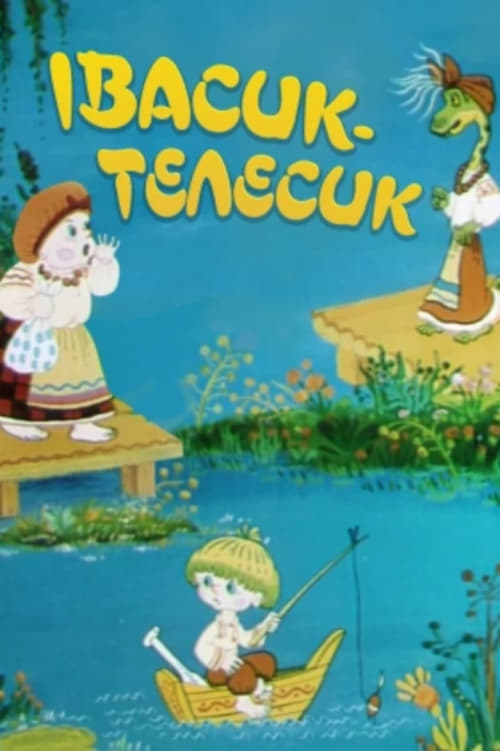
In the beginning, there is only longing. An old man and an old woman live together without children, and the emptiness of their home has become a wound that time does not heal. The woman finally asks her husband to cut a log from a tree and place it in a cradle so she can have something, anyone, to rock as her son. He does as she asks, bringing the carved block into the house and laying it in the cradle in the couple's plain home, a quiet place defined by age, poverty, and hope.
By morning, the impossible has happened: the log has become a real boy. The couple names him Ivasyk-Telesyk, a name tied to the wooden origin that gave him life. The transformation is the first great miracle of the story, and it instantly gives the old man and old woman the family they have wanted for so long. Their home changes from a place of grief into one filled with a child's presence, and the boy grows under their care until he becomes able to work and help them.
When Ivasyk-Telesyk grows older, he asks his father to make him a boat and an oar so he can fish. The request is practical but also symbolic: he is leaving the safety of the home and stepping into the world of danger and responsibility. His father makes the boat, and Ivasyk-Telesyk begins going to the water, where he fishes and brings home what he catches to feed the old man and old woman. The boy is not merely a burden or a miracle; he is a provider, a son whose labor supports the parents who made room for him in their lives.
The peaceful rhythm of this arrangement is broken by a warning. Ivasyk-Telesyk's mother tells him to come back to shore only when he hears her voice alone. The instruction is simple but crucial, because the shore is no longer a neutral place; an evil snake walks there, watching, listening, and waiting for a chance to deceive him. The story tightens around this idea of recognition. The mother's voice is the test, the line between safety and danger, truth and imitation.
The snake first tries to trick the boy by repeating the mother's words, but Ivasyk-Telesyk hears the difference and refuses to obey. This first confrontation is quiet but tense, because the danger lies not in force but in near-perfect imitation. The boy's caution saves him, and the snake fails to lure him from the water. The scene establishes the tale's central conflict: a child who must learn to trust his ears, and a predator who uses language itself as a weapon.
The snake does not give up. Instead, it goes to the blacksmith to have another voice forged for her. This is the story's first major twist and one of its most striking revelations: the snake's power is not only in its own body but in its ability to reshape speech into a disguise. The blacksmith's forge becomes a place of corruption, turning craft into deceit. In the tale's logic, voice itself can be manufactured, and once that happens, ordinary vigilance becomes far more difficult.
With this new voice, the snake calls again, and this time Ivasyk-Telesyk cannot tell the difference between the forged imitation and his mother's real voice. He swims to the shore, trusting what he hears, and the moment his feet are vulnerable on land, the snake grabs him and carries him away to her home. The abduction is swift, sudden, and devastating. Everything that was secure in the boy's life--the boat, the river, the parents waiting for him at home--falls away in a single motion of capture. The tension of the story sharpens into fear.
At the snake's home, the danger becomes domestic and grotesque. The snake orders her daughter to bake Ivasyk-Telesyk in the oven and to call the guests. The house is now a trap, a place where hospitality and cannibalism are twisted into one another. One Ukrainian source names the daughter Olenka, though the film-specific summary only identifies her as the snake's daughter, so the name is not firmly confirmed by the most direct summary. Still, she becomes one of the tale's key figures, because her role in the attempted murder gives the boy a chance to outwit the household from within.
The guests arrive, but the plan collapses in the cruelest possible way: they eat the snake's baked daughter instead of the boy, not realizing who the body is. The sources describe this as a mistaken meal rather than spelling out the death in explicit detail, but the implication is unmistakable--Ivasyk-Telesyk survives, and the snake's own daughter is the one consumed in his place. It is one of the darkest turns in the entire story, because the snake's predatory world turns inward and destroys its own young through its own mistake.
The boy is not safe yet. The snake and the guests then try to seize him, but Ivasyk-Telesyk escapes by climbing a tree. The tree becomes his temporary refuge, a vertical barrier between him and the creatures trying to devour him. The snake and the guests attempt to chew through the tree to get him down, but they fail. The image is vivid and brutal: below, the enemies gnaw and strain; above, the boy clings to height and distance, surviving because he can stay just out of reach. This is the tale's second major confrontation, and it shows how close he comes to death even after escaping the oven.
The snake escalates again. After failing to chew through the tree, she and the guests return to the blacksmith to make iron teeth. This is another major revelation of the snake's strategy: when ordinary force fails, she turns to manufactured violence. The forged voice and the iron teeth are paired instruments of predation, one used to lure, the other to destroy. The blacksmith appears again as a silent accomplice in the story's machinery of threat, reinforcing the sense that the boy is being hunted by a network of forces, not just a single monster.
But the story's momentum begins to shift. Ivasyk-Telesyk does not die in the tree. He does not remain trapped at the snake's home. The sources agree that he ultimately escapes and is rescued by geese that carry him back home. The rescue is the tale's great release of tension after the long sequence of deception and pursuit. The geese appear as a sudden answer to the boy's isolation, and the sky becomes the final passage between horror and safety.
The exact mechanics of the flight are not fully described in the available film-specific summaries, but the outcome is clear: the geese pick up Ivasyk-Telesyk and bring him back to the old man and old woman. The journey home matters because it is the reversal of the abduction. The boy is no longer being carried away by the snake; now he is being borne back by rescuers. The visual contrast between the snake's grasp and the geese's lift gives the ending its emotional force, turning the same idea of being carried into a symbol of salvation rather than captivity.
When Ivasyk-Telesyk reaches home, the final recognition scene unfolds with tenderness rather than terror. Standing outside, he hears his mother counting pies and asks for one pie for himself. At first, the old man and old woman do not hear him. The moment is filled with suspense, because the family has already been through deception once before, and now even the real child's return needs to be verified. Then they recognize his voice and let Ivasyk-Telesyk into the house. The home that once received a log in a cradle now receives the living son back from danger.
The old woman sees the young goose and thinks of eating it, but Ivasyk-Telesyk explains that the goose saved him. That revelation turns the final domestic moment into one of gratitude rather than appetite. The old man and old woman feed the goose and give it grain for the journey. The rescued boy, his parents, and the geese form a final image of restored life and reciprocal care. The family that began in longing ends in survival, strengthened by the fact that they nearly lost their son and now know the value of his return.
No other death is explicitly stated in the supplied sources beyond the snake's daughter being eaten in place of Ivasyk-Telesyk, and the sources do not identify any death for the old man, old woman, Ivasyk-Telesyk, or the snake herself. The snake's own ending is not described in detail in the provided summaries, so the safest reading is that the story closes without a confirmed on-screen death for her, even though she is decisively defeated. What is unmistakable is the resolution: Ivasyk-Telesyk lives, escapes, and returns to the old man and old woman, and the tale ends as a triumph of caution, quick thinking, and familial love over deceit and predation.
The final scene is quiet and domestic again, but now the quiet means peace instead of absence. The boy is home, the parents recognize him, and the rescued goose is fed for its journey. After all the forged voices, the oven, the tree, and the chase, the story settles back into the world where it began: a family reunited in the house that once had no child at all.
More Movies Like This
Browse All Movies →
What is the ending?
In the ending of "Ivasyk-Telesyk," the main character, Ivasyk, is saved from the clutches of the evil witch, who had captured him. With the help of his friends, they manage to defeat the witch, and Ivasyk is reunited with his family. The film concludes on a hopeful note, emphasizing the themes of friendship, bravery, and the triumph of good over evil.
As the climax of "Ivasyk-Telesyk" unfolds, the scene shifts to the dark lair of the witch, where Ivasyk is imprisoned. The atmosphere is thick with tension; shadows dance ominously on the walls, and the air is filled with a sense of foreboding. Ivasyk, a small, brave boy with a heart full of hope, is determined not to give in to despair. He recalls the warmth of his family and the love that surrounds him, which fuels his resolve to escape.
Meanwhile, his friends--a loyal group of animals and a kind-hearted girl--are devising a plan to rescue him. They gather in a clearing, their faces set with determination. The girl, filled with courage, leads the charge, rallying the animals with her unwavering spirit. Each character is motivated by their bond with Ivasyk, showcasing the strength of friendship and loyalty. They embark on a perilous journey through the witch's forest, facing various challenges that test their bravery and unity.
As they approach the witch's lair, the tension escalates. The witch, a menacing figure with a twisted smile, is shown preparing her dark magic, unaware of the impending rescue. The friends work together, using their unique skills to navigate traps and obstacles. The scene is filled with suspense as they inch closer to Ivasyk's prison, their hearts pounding with both fear and hope.
Finally, they reach Ivasyk, who is overjoyed to see them. The reunion is emotional; tears of relief and joy fill their eyes. However, the witch soon discovers their presence and confronts them with fury. A fierce battle ensues, showcasing the characters' bravery as they fight against the witch's dark magic. The animals use their agility and cleverness, while the girl stands firm, embodying the spirit of courage.
In a climactic moment, the friends combine their strengths, and with a final push, they manage to outsmart the witch. The scene is filled with vibrant colors and dynamic action as the witch is defeated, her power dissipating into the air like smoke. The friends embrace Ivasyk, their victory palpable in the air.
As the dust settles, the characters emerge from the lair, the sun shining brightly above them. Ivasyk is finally free, and the bond between him and his friends is stronger than ever. They return to the village, where Ivasyk is joyfully reunited with his family. The scene is heartwarming, filled with laughter and love, as the community celebrates their return.
In the final moments of the film, the camera pans out, capturing the joyous atmosphere. The characters reflect on their adventure, their faces glowing with happiness and relief. The film closes with a message of hope, emphasizing the importance of friendship, bravery, and the triumph of good over evil. Each character, having faced their fears and emerged victorious, is left with a sense of fulfillment and a deeper understanding of the bonds that unite them.
Is there a post-credit scene?
The movie "Ivasyk-Telesyk," produced in 1989, does not have a post-credit scene. The film concludes its narrative without any additional scenes or content after the credits roll. The story wraps up with the resolution of the main plot, focusing on the themes of love, friendship, and the triumph of good over evil, leaving the audience with a sense of closure. The ending emphasizes the bond between the characters and the moral lessons learned throughout their adventures, making a post-credit scene unnecessary for the story's completion.
What is the significance of Ivasyk-Telesyk's character in the story?
Ivasyk-Telesyk is a magical boy created from a lump of clay by a kind-hearted woman. His character embodies innocence and the purity of childhood, representing the joy and wonder of life. Throughout the film, he showcases bravery and loyalty, especially in his quest to save his friends and confront the evil witch.
How does the relationship between Ivasyk-Telesyk and his mother develop throughout the film?
The relationship between Ivasyk-Telesyk and his mother is central to the narrative. Initially, she is protective and nurturing, but as the story progresses, she faces challenges that test her strength and resolve. Her love for Ivasyk-Telesyk drives her to seek him out when he is captured, highlighting the bond between them and her determination to reunite.
What role does the evil witch play in the plot, and how does she affect the characters?
The evil witch serves as the primary antagonist in the film, representing a force of darkness that threatens the happiness of Ivasyk-Telesyk and his friends. Her actions create conflict, as she captures Ivasyk-Telesyk and seeks to use his magical abilities for her own gain. This creates a sense of urgency and danger, motivating the other characters to band together to rescue him.
What challenges does Ivasyk-Telesyk face during his journey, and how does he overcome them?
Throughout his journey, Ivasyk-Telesyk faces numerous challenges, including being captured by the witch and navigating through enchanted forests. He overcomes these obstacles through his cleverness, bravery, and the support of his friends. Each challenge tests his character and ultimately leads to his growth, showcasing his resilience and determination.
How do the supporting characters contribute to Ivasyk-Telesyk's journey?
The supporting characters, including Ivasyk-Telesyk's friends, play crucial roles in his journey. They provide emotional support, assist in his rescue efforts, and embody the themes of friendship and loyalty. Their interactions with Ivasyk-Telesyk highlight his impact on their lives and the collective strength they possess when united against the witch.
Is this family friendly?
"Ivasyk-Telesyk," produced in 1989, is a family-friendly film that primarily targets children and features themes of adventure, friendship, and the importance of kindness. However, there are a few scenes that might be considered potentially upsetting or objectionable for very young children or sensitive viewers:
-
Conflict with the Witch: The film includes a character who is a witch, and her interactions can be menacing. She uses magic in ways that may be frightening to younger viewers, including threatening behavior towards the main characters.
-
Separation and Danger: There are moments where the main characters face danger or are separated from their loved ones, which could evoke feelings of fear or anxiety.
-
Emotional Moments: The film contains scenes that explore themes of loss and longing, particularly when characters face challenges that test their friendships and resolve.
-
Visual Imagery: Some of the magical elements and transformations may be visually intense or surreal, which could be unsettling for very young children.
Overall, while the film is designed to be entertaining and educational for children, these elements may require parental guidance for sensitive viewers.







