

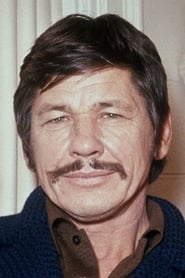

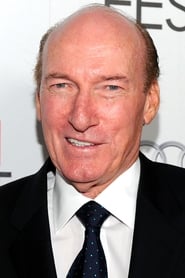

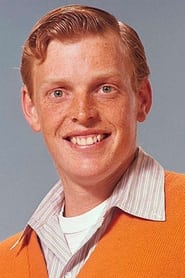












Popular
What motivates Paul Kersey to return to New York City in Death Wish 3?
How does Paul Kersey become involved with the police in Death Wish 3?
What is the significance of the character Charlie in Death Wish 3?
How does Paul Kersey's approach to dealing with crime evolve throughout Death Wish 3?
What role does the gang play in the plot of Death Wish 3?
Should I watch it?
Ask Your Own Question

What is the plot?
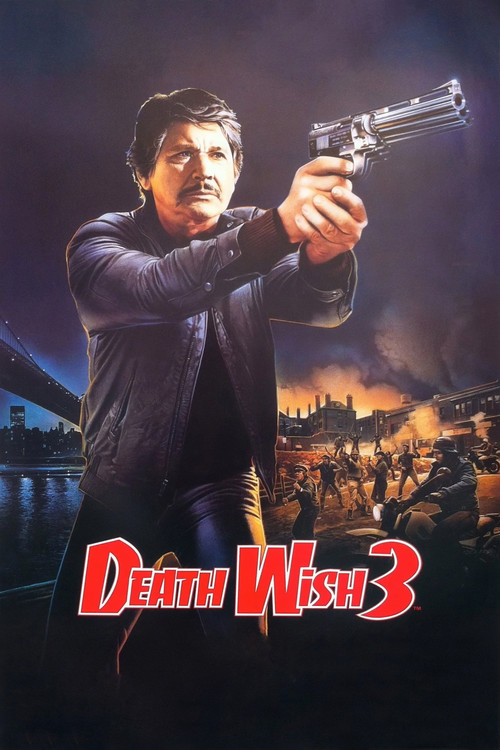
Paul Kersey returns to New York City after years of drifting from one violent cleanup to another, and the city receives him like a wound that never healed. He comes back to visit his old Korean War buddy, Charley, in East New York, but the neighborhood is already in the grip of open terror: burned-out blocks, frightened residents, and a gang that treats the street like conquered territory. The film opens on that bleak note of civic collapse, with the apartment building standing as a shabby island of ordinary life inside a war zone, and Paul's arrival is almost immediately swallowed by the violence that has taken over Charley's world.
Paul reaches Charley's apartment just as the attack has already happened, and the timing is cruelly exact. Charley has been beaten by a gang led by Manny Fraker, and by the time Paul gets inside, his friend is dying on the floor, the room still carrying the aftermath of the assault. The neighbors have heard the commotion and called the police, but help arrives too late to matter. Paul kneels beside Charley and feels him collapse in his arms, the scene turning the reunion into a deathwatch before it can even become a conversation. Charley dies there, in Paul's arms, and that immediate loss gives the film its first hard shock: the city has not merely become dangerous, it has already killed the one person Paul came to see.
When the police arrive, they do not read the scene correctly. They find Paul beside the body with a gun and assume he is the murderer, not the witness. He is arrested and taken to the police station, where the film shifts from domestic tragedy to institutional cynicism. In the holding area, Paul meets Manny Fraker himself, the gang leader responsible for Charley's death, and the encounter instantly makes the violence personal. Fraker is a smug, predatory presence, and Paul, still trapped inside the system that has mistaken him for a killer, now has the chance to see the man behind the beatdown. The two men square off in the cell, and the friction between them makes it clear that this is not just another random street gang; Fraker recognizes Paul too, and the film later reveals that he knows him from prison, turning the conflict into a vendetta as much as a neighborhood war.
At the police station, Inspector Richard Shriker enters the story and changes its direction. He recognizes Paul immediately as "Mr. Vigilante," the infamous avenger the New York police once pushed out of the city. Rather than treat Paul as a criminal to be stopped, Shriker sees him as an instrument to be used. His logic is brutally pragmatic: if Paul wants to kill criminals, Shriker is willing to look the other way as long as Paul reports gang activity so the police can stage arrests and get publicity from the busts. The arrangement is ugly, corrupt, and absurdly candid, but it fits the world the movie has built--a place where the official response to neighborhood collapse is to recruit a lone vigilante and turn him into an unofficial arm of law enforcement.
Paul is released, and with nowhere else to go, he moves into Charley's apartment in the same battered building where his friend has just been killed. The building becomes his base of operations, his improvised fortress in the middle of a neighborhood that feels abandoned by normal civic order. The residents living around him are mostly elderly, frightened, and exhausted by the constant harassment. Among the most important are Mrs. Kaprov and Mr. Kaprov, an old Jewish couple, Maria Rodriguez and her family, and Bennett Cross, a veteran neighbor who understands both the danger and the futility of pretending this area still belongs to the law. Paul befriends them, and more importantly he starts protecting them. The apartment changes from the scene of a death into the center of a tense civilian alliance, with these vulnerable tenants becoming the people Paul will defend as the gang begins testing the building repeatedly.
As soon as Paul settles in, the film locks into its central rhythm: Manny Fraker's crew threatens the building and the street, and Paul answers with sudden, lethal violence. The neighborhood becomes a loop of provocation and retaliation, with each attack escalating the next. Fraker's gang is not merely mugging people; they are terrorizing the entire block, shaking down residents, smashing property, and trying to establish total control over the area. Shriker's deal lets Paul operate with unusual freedom, and the police tolerate his killings because his violence produces arrests and headlines. The result is a grotesque partnership between law and vigilantism in which Paul reports trouble, the police move in for the publicity, and Fraker answers by punishing the people trapped in the middle.
Paul begins arming himself with the seriousness of a man preparing for war. Firearms matter throughout the film, but the most famous is his .475 Wildey Magnum, a huge, overpowered handgun that becomes a symbol of the movie's exaggerated escalation. He also mail-orders heavy hardware, showing how casually the film treats battlefield-level firepower in a city apartment. Paul's weapons are not presented as abstract props; they become extensions of the apartment's new identity as a defensive outpost. He watches from windows, patrols corridors, and turns every approach to the building into a potential kill zone. The violence grows public and theatrical, and the film leans into the spectacle of Paul as a man whose entire answer to social collapse is more firepower.
The first deaths after Charley's are part of that widening war. The plot sources do not preserve a complete roll call of every gang member who dies, but they make clear that Paul kills many of Fraker's men across the film in ambushes, shootouts, and street battles. Two gang members are specifically mentioned trying to break into Paul's car, and he shoots them with his Colt Cobra. Other gang members fall during repeated confrontations outside the building, in the streets, and in the traps Paul sets as the body count climbs steadily. The neighborhood's residents are terrified at first, but as the assaults continue, some of them begin to take up arms themselves, turning the block into a rough civilian militia fighting for survival. The sense of siege deepens with every exchange, and Fraker responds not by backing off but by becoming more vicious, increasingly determined to destroy the new arrival who threatens his dominance.
Manny Fraker's role sharpens as the film goes on. He is revealed not simply as a gang boss but as a sadistic psychotic who treats the neighborhood as his personal kingdom. The fact that he already knows Paul from prison matters because it transforms their conflict into something intimate and humiliating for Fraker: Paul is not just another old man with a gun but a former inmate who now stands in the way of his reign. Fraker's response is to terrorize the tenants more aggressively and make Paul the gang's central target. His attacks are designed as much to break the building's morale as to eliminate Paul directly, and the elderly residents suffer as collateral in his effort to reassert control. The film keeps returning to their fear--faces at windows, doors slammed shut, nerves on edge--so that each new outbreak of violence feels less like isolated action and more like a complete collapse of ordinary urban life.
Shriker remains a crucial figure throughout, not because he stops the violence, but because he helps formalize its absurd arrangement. He is not a clean policeman suddenly corrupted; he is a man who has already decided that the only way to manage the city's crime wave is to use Paul's brutality as a pressure valve. That makes him Paul's ally, but only in the most cynical sense. When the police receive daily reports about the increasing crime, Shriker is willing to exploit the situation for busts and press attention. His relationship with Paul becomes one of mutual convenience: Paul gets to keep killing, and Shriker gets to claim he is restoring order. The city itself never really regains stability; it only develops a new kind of organized chaos in which official and unofficial violence feed off each other.
As the siege intensifies, Paul's war against Fraker's gang grows more open and more reckless. The street outside the building becomes a battlefield, and the film's action expands outward from Charley's apartment into the surrounding blocks. Gang members attack, Paul answers, and the residents are pulled into the conflict whether they want to fight or not. The movie emphasizes that the building is no longer just where Paul lives; it is the last line between the neighborhood's civilians and total domination by Fraker's crew. Every confrontation is immediate and outcome-driven: Paul either drives the gang off, kills them, or forces them to retreat and regroup, while Fraker keeps escalating because he cannot allow this armed outsider to survive without undermining his authority.
The climax builds as the body count rises and the city seems to narrow down to one violent street. In the final phase, Paul and Shriker are effectively operating together, stalking the neighborhood while the police close in around the edges. The film's sources describe the ending as an all-out street war between Paul Kersey and the remaining gang members, with Paul using heavy weapons and traps to kill Fraker's crew in open combat and ambush. The confrontation becomes increasingly frantic, and Paul's ammunition runs low at exactly the wrong moment, forcing him to flee back home for more. That brief retreat creates the final trap: Fraker spots him and follows him into the apartment, breaking in through a window and turning the building itself into the last arena of the film's violence.
Inside the apartment, the final showdown unfolds with brutal speed. Fraker is about to shoot Paul when Shriker suddenly rushes in and shoots Fraker first. But Fraker is still dangerous even after taking a bullet, and he returns fire, hitting Shriker in the shoulder. Paul calls an ambulance while the room hangs in a tense, half-finished silence, but the danger is not over yet. Fraker rises again, and the film reveals the twist that he has been wearing a bulletproof vest. This is one of the movie's biggest late reversals: the monster who has seemed finally cornered is not dead at all, and his survival turns the ending into a last explosion of overkill. Paul responds by grabbing a LAW rocket launcher, the absurdly oversized weapon that gives the film its infamous final image of escalation. He fires it at Fraker and blows him to bits, ending the gang leader's reign in a burst of spectacular destruction.
Fraker's death is the decisive moment that breaks the gang's hold on the neighborhood. Once he is gone, the surviving gang members begin to disperse. The police close in, and Shriker--wounded but still functioning as Paul's crooked protector--gives Paul a few minutes to get away before the net tightens around him. The final scene is quiet after the noise, with Paul walking down the street carrying his suitcases, leaving the neighborhood behind as sirens echo and the social wreckage he has helped create begins to settle into a new, uneasy order. The ending does not offer redemption so much as exhaustion: Fraker is dead, the gang has broken apart, Shriker has chosen to shield Paul one last time, and Paul disappears into the city again as if violence is simply the condition under which he continues to exist.

What is the ending?
In the ending of Death Wish 3, Paul Kersey confronts the gang terrorizing his neighborhood. After a series of violent confrontations, he ultimately defeats the gang leader, and the police arrive just in time to witness Kersey's actions. The film concludes with Kersey walking away, having avenged his friends and restored a sense of order.
Now, let's delve into the ending in a more detailed narrative fashion.
As the climax of Death Wish 3 unfolds, Paul Kersey, portrayed by Charles Bronson, prepares for a final showdown against the violent gang that has been wreaking havoc in his neighborhood. The atmosphere is thick with tension as Kersey, armed and resolute, takes a stand for the residents who have suffered under the gang's reign of terror.
The scene shifts to a dilapidated building where Kersey has set up a trap. He is joined by a group of local residents who have rallied behind him, inspired by his previous acts of vigilante justice. The gang, led by the ruthless and sadistic Fraker, is unaware of the impending confrontation. Kersey's determination is palpable; he is not just fighting for himself but for the community that has been pushed to the brink of despair.
As night falls, the gang begins to patrol the streets, their menacing presence felt as they harass innocent bystanders. Kersey, hidden in the shadows, watches as they commit acts of violence, his heart heavy with the memories of those he has lost. The camera captures his steely resolve, a man transformed by grief and anger into a force of retribution.
The first major confrontation occurs when Kersey ambushes a group of gang members. The scene is chaotic, filled with gunfire and explosions. Kersey's movements are swift and calculated; he takes down several gang members with precision, showcasing his skills as a vigilante. The residents, emboldened by his actions, join the fray, fighting back against their oppressors. The sense of camaraderie among the community is evident as they band together, united against a common enemy.
As the battle intensifies, Kersey faces off against Fraker in a dramatic showdown. The two men embody the conflict at the heart of the film: Kersey, the avenger seeking justice, and Fraker, the embodiment of chaos and violence. Their confrontation is brutal, filled with tension as they exchange blows and gunfire. Kersey's motivation is clear; he is fighting not just for his own survival but for the future of the neighborhood.
In a climactic moment, Kersey manages to overpower Fraker, delivering a fatal blow. The scene is visceral, capturing the raw emotion of Kersey's victory. As Fraker lies defeated, the remaining gang members scatter, their reign of terror finally coming to an end. The camera lingers on Kersey, a mix of relief and sorrow washing over him as he realizes the cost of his actions.
Just as the dust begins to settle, the police arrive on the scene, led by Lieutenant Mankiewicz. Initially, there is tension as Kersey stands over Fraker's body, gun in hand. However, Mankiewicz, who has come to understand Kersey's motivations throughout the film, chooses to look the other way. He acknowledges the chaos that has unfolded but recognizes that Kersey's actions have ultimately restored a sense of order to the community.
In the final moments of the film, Kersey walks away from the scene, a solitary figure against the backdrop of the city. The weight of his choices hangs heavy on him, but there is a glimmer of hope as the residents begin to reclaim their neighborhood. The film closes with Kersey disappearing into the night, leaving behind a community that has been forever changed by his presence.
As for the fates of the main characters: Paul Kersey survives, having avenged his friends and taken a stand against the gang. Fraker is killed, marking the end of his violent reign. Lieutenant Mankiewicz, while initially conflicted, ultimately supports Kersey, allowing him to walk free. The residents, inspired by Kersey's bravery, begin to rebuild their lives, suggesting a newfound strength and resilience in the face of adversity.
Is there a post-credit scene?
Death Wish 3 does not have a post-credit scene. The film concludes with a climactic showdown between Paul Kersey, played by Charles Bronson, and the gang terrorizing the neighborhood. After Kersey successfully eliminates the gang members and restores a sense of safety to the community, the film ends without any additional scenes or epilogues during or after the credits. The focus remains on the resolution of Kersey's battle against crime, leaving the audience with a sense of closure regarding his vigilante actions.
What motivates Paul Kersey to return to New York City in Death Wish 3?
Paul Kersey returns to New York City to visit his friend, a fellow veteran named Charlie, who has been living in a neighborhood plagued by crime. Kersey is motivated by a sense of loyalty and concern for Charlie's safety, as he learns that the area has become increasingly dangerous due to a violent gang.
How does Paul Kersey become involved with the police in Death Wish 3?
Upon his arrival in New York, Kersey quickly becomes embroiled in the local crime scene when he witnesses a gang attack. After he intervenes to save a woman from being assaulted, he catches the attention of the police, particularly Lieutenant Mankiewicz, who is both wary of Kersey's vigilante methods and intrigued by his willingness to fight back against crime.
What is the significance of the character Charlie in Death Wish 3?
Charlie serves as a catalyst for Kersey's return to New York and represents the personal stakes involved in the fight against crime. His brutal murder at the hands of the gang not only deepens Kersey's resolve to take action but also symbolizes the loss of innocence in the community, pushing Kersey further into his role as a vigilante.
How does Paul Kersey's approach to dealing with crime evolve throughout Death Wish 3?
Initially, Kersey tries to work within the system, but after witnessing the ineffectiveness of the police and the brutality of the gang, he adopts a more aggressive and lethal approach. He begins to set traps and orchestrate violent confrontations with the gang, showcasing a shift from a reluctant vigilante to a more ruthless enforcer of his own brand of justice.
What role does the gang play in the plot of Death Wish 3?
The gang, led by a character named 'Fraker,' serves as the primary antagonistic force in the film. Their violent actions and terrorizing of the neighborhood create a backdrop for Kersey's vigilante justice. The gang's escalating brutality not only heightens the stakes for Kersey but also illustrates the pervasive lawlessness that drives him to take matters into his own hands.
Is this family friendly?
"Death Wish 3" is not considered family-friendly due to its graphic violence, strong language, and mature themes. Here are some potentially objectionable or upsetting aspects:
-
Graphic Violence: The film features numerous scenes of brutal violence, including shootings, stabbings, and physical assaults, which may be disturbing to children and sensitive viewers.
-
Murder and Crime: The storyline revolves around vigilantism and the protagonist's quest for revenge against criminals, showcasing a range of criminal activities that may be unsettling.
-
Strong Language: The dialogue includes frequent use of profanity and derogatory terms, which may not be suitable for younger audiences.
-
Sexual Content: There are suggestive themes and situations that may be inappropriate for children.
-
Death and Injury: The film depicts the aftermath of violent encounters, including graphic depictions of injuries and fatalities, which could be distressing.
Overall, the film's intense and violent nature makes it more appropriate for mature audiences.







