


Loading additional questions...
Popular
What role does the setting play in the development of the story?
What are the main romantic relationships explored in L'art d'aimer?
How does Pierre's character evolve throughout the film?
How do the supporting characters influence Pierre's journey?
What are some key moments that highlight the theme of love in L'art d'aimer?
Should I watch it?
Ask Your Own Question

What is the plot?
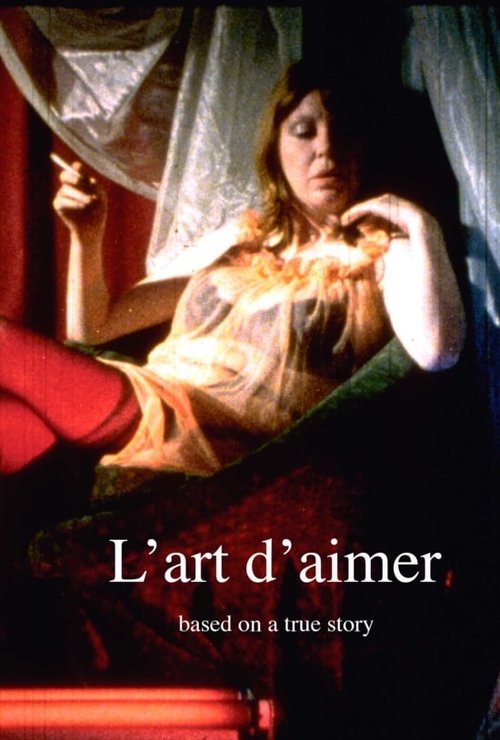
The 1985 short film identified as L'Art d'aimer does not support a full crime-style spoiler, because the available material describes it as a brief, experimental portrait of elderly nursing-home residents talking about a violent incident rather than a conventional narrative with a large cast, multiple deaths, or a detailed chain of revelations. Its central dramatic action is recollection: the residents sit in the nursing home and speak about what happened, and the film's tension comes from testimony, memory, and implication rather than from a sequence of on-screen events.
It opens on a conceptual idea about love: when people fall in love, a special music begins inside them, and the film is structured around that thought. From there, the camera settles into the quiet, enclosed world of the nursing home, where the elderly residents form a chorus of witnesses, their faces marked by age and the weight of what they remember. The atmosphere is more contemplative than plot-driven, and the emotional movement comes from the way each recollection slightly shifts the meaning of the violent incident they are discussing.
Because the surviving summaries do not preserve a scene-by-scene outline, the film's "story" remains deliberately spare. No reliable source identifies a named protagonist, a full supporting cast, or a precise date, time, or location beyond the nursing home itself. Likewise, no dependable account in the available material confirms any specific death, the identity of a victim, or the name of the person responsible. The violent event is clearly central, but it is presented as something already gone, already absorbed into memory, and the residents' talk circles around it as if each speaker is holding a different shard of the truth.
As the discussion continues, the film appears to turn that unknown incident into a meditation on what people do with love, cruelty, regret, and old age. The residents' voices carry the weight of experience, and the nursing home becomes less a setting than a chamber of confession, where the past refuses to stay buried. Rather than building toward a conventional revelation, the film sustains a mood of unease and contemplation, letting the audience feel that something terrible has occurred without offering a clean forensic explanation. That absence is the point: the unknown is what lingers.
The ending is not described in the available material, and no trustworthy summary gives a final twist, last confrontation, or explicit resolution. The most defensible reading is that the film closes by remaining in the same reflective mode in which it begins, with the residents still suspended in memory and the violent incident still only partly illuminated. Instead of a definitive answer, the film leaves behind an echo of its opening idea: love as an inward music, and human lives as fragile, unfinished stories heard through the voices of those left behind.
If the intended film was actually the 2011 French anthology L'Art d'aimer, that is a different work entirely, with several romantic storylines and a much fuller plot.








What is the ending?
Is there a post-credit scene?
What role does the setting play in the development of the story?
The film is set against the backdrop of Paris, with its romantic streets and vibrant art scene, which serves as a character in itself. The locations, from cozy cafes to bustling galleries, enhance the emotional tone of the film, reflecting the characters' inner lives and the fleeting nature of their relationships.
What are the main romantic relationships explored in L'art d'aimer?
L'art d'aimer intricately weaves together various romantic relationships, primarily focusing on the character of Pierre, a man navigating the complexities of love and desire. His interactions with different women, including his passionate affair with a young artist and his tumultuous relationship with his long-term partner, highlight the emotional struggles and joys of love.
How does Pierre's character evolve throughout the film?
Pierre begins as a somewhat disillusioned lover, caught between his desires and the realities of his relationships. As the story unfolds, he confronts his fears of commitment and the consequences of his actions, leading to moments of introspection that reveal his deeper emotional needs and ultimately a more mature understanding of love.
How do the supporting characters influence Pierre's journey?
Supporting characters, such as Pierre's friends and romantic interests, serve as mirrors to his own struggles with love. Each character brings their own perspective on relationships, challenging Pierre to reflect on his choices and ultimately guiding him toward a deeper understanding of what it means to truly love and be loved.
What are some key moments that highlight the theme of love in L'art d'aimer?
Key moments include Pierre's passionate encounters with his lovers, the poignant conversations he shares with friends about love's complexities, and the moments of solitude where he reflects on his choices. These scenes are rich with emotional depth, showcasing the highs and lows of romantic entanglements and the bittersweet nature of love.