









Popular
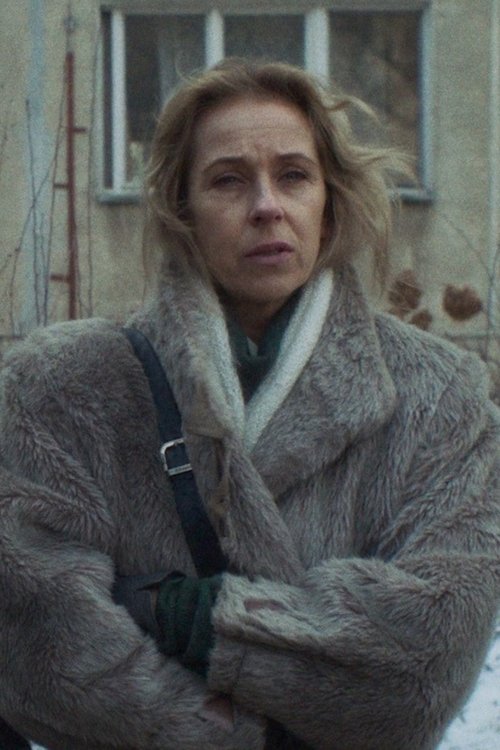
Who joins Daiva in the hunger strike at the Lithuanian Radio and Television headquarters?
Why does Daiva start the hunger strike after the TV studios are taken over?
What role does Mykolas play in the story, and why is he hesitant?
Who is Sigis, and why does he get involved in the protest?
What happens inside the trailer during the hunger strike between the characters?
Should I watch it?
Ask Your Own Question

What is the plot?
Three teenagers arrive at Enola Vale, a juvenile detention center in rural Montana, to begin their sentences. Correctional Officer Sands processes their intake forms and records details: Butch is transferred here after a previous incident in which he attacked and permanently blinded a correctional officer at another facility. Sands notes the charge and moves through the paperwork while the two other boys, Davis and Angel, are led into the institution alongside him.
Officer Goodyear, known among staff and inmates as a strict but evenhanded disciplinarian, addresses the newcomers in the dormitory yard. He tells them that following the center's regulations and serving their time quietly will give them a chance at rehabilitation and a future outside. The three friends take his words in different ways. Butch listens, appearing willing to keep a low profile; Davis and Angel accept the advice with less resolve.
The facility's social order quickly reasserts itself. Banks, the dormitory's dominant bully, patrols the bunks like a petty warlord, flanked by his lieutenants Eckersley and a boy nicknamed Loony. On his first day, Butch and his companions are set upon by Banks and his crew. The trio of aggressors pounces, shoving and slugging the newcomers in a corridor. When staff arrive to break up the scuffle, authorities press the boys for names. Butch refuses to betray who attacked him and his friends, invoking an inmate code rather than cooperating with the officers. For his silence, the administration punishes him by locking him in solitary confinement.
Released from isolation after several days, Butch does not try to meekly accept his place. He tracks Banks, Eckersley, and Loony through the dorms and turns the tables. In a sequence of confrontations, Butch assaults each of them: he confronts Eckersley in a washroom stall and rains blows until Eckersley is bloodied; he ambushes Loony during lights-out, tackling him to the mattress and pummeling him until guards break them apart; and he hunts Banks down in the yard, beating him with such ferocity that other inmates who had watched Banks' reign of intimidation begin to view Butch as a new power. The savage beating of Banks is the most pronounced. Butch kneels over Banks, striking repeatedly until Banks is left gasping on the concrete as other boys scramble away. Those beatings reestablish a pecking order in the dormitory and give Davis and Angel a temporary buffer from the predations of Banks' gang.
During a routine maintenance assignment, Angel is partnered with Officer Goodyear to repaint a common area. While working, Angel and Goodyear become embroiled in a physical confrontation. Their argument escalates; Goodyear shoves Angel hard enough that he slams against a cement wall. Angel's skull strikes exposed plumbing; blood pools as he staggers. Staff call for medical assistance. Angel is rushed to the hospital where doctors treat severe head trauma, but his injuries are critical. The next day he dies in the hospital from the traumatic brain injury sustained when his head hit the pipes. The staff at Enola Vale label the episode an on-duty altercation; administration opens an inquiry. Because Butch saw the scuffle and he refuses to be the facility's scapegoat, officials place him back into solitary confinement while the investigation proceeds.
Once Butch is isolated, the fragile protection he had afforded Davis evaporates. In the quiet hours after lights-out, Loony and Eckersley enter Davis's bunk area. They assault Davis physically and then sexually assault him. The attack is coerced and violent; Davis is left physically and emotionally shattered. In the hours after the rape, Davis tries to reach out to his mother. He presses buttons at the dormitory phone and asks an on-duty officer for permission to make a call, saying he needs to speak with his family. An officer denies the request, telling him he must wait until the morning. Left with no immediate support and overwhelmed by humiliation and despair, Davis returns to his bunk. Later that night he takes a razor or other sharp instrument and cuts the veins in his wrists. The incision is sufficient to cause rapid blood loss. Medical responders are summoned, but Davis succumbs to the wounds; his death is ruled a suicide.
The deaths of Angel and Davis send shockwaves through the dormitory. At the breakfast period the following morning, an entire block of inmates rises in protest: they refuse to eat and stage a sit-down at the long cafeteria tables. They keep silent, heads bowed, holding their bowls empty as a hunger strike. The atmosphere in the cafeteria becomes tense. Staff circulate and attempt to reason with the group, but resentment is palpable. Butch, having been released from solitary pending the internal investigation into Angel's death, returns to the dining hall. He moves through the room and locks eyes with Loony across the long table. The stare escalates into an explosion of anger. Butch picks up a plastic chair and hurls it into the row of tables. The impact triggers shouts and shoving; men stand, plates clatter, and tempers ignite. What begins as a protest turns into a full-scale riot as inmates surge from their benches.
Chaos engulfs the cafeteria. Tables are overturned; food and trays fly. Several staff members attempt to regain control but are outnumbered. In the center of the melee, Butch zeroes in on Loony. He charges, tackles Loony to the linoleum, and assaults him with concentrated violence--punches, kicks, and knee strikes delivered until Loony is left crumpled. Other inmates spill into the aisles, some fighting with guards, others looting utensils and chairs as improvised weapons. The detention officers radio for backup and hurriedly retreat to a secure area to reorganize.
When reinforcements arrive, the officers return in full riot gear. They wear helmets and face shields and carry shields and batons. The tactical team advances in formation into the cafeteria, issuing commands that few of the boys heed. As the officers move in, they deploy chemical agents: they fire canisters that release a cloud of tear gas, forcing coughing and retching among those nearby. To subdue the more active assailants, officers also use plastic projectiles--nonlethal rounds aimed to incapacitate without penetrating flesh. The sound of canisters, the staccato of rubber bullets, and the crush of bodies fill the room. Officers and youth struggle under the assault of emotion and fear.
Amid the crush, Butch seizes the chance to escape the building. He launches himself toward an emergency exit, ducking past a collapsing table and a fallen officer. Guards stationed near the doors lunge to block him. In the scuffle, one of the detention officers brings a baton down hard on Butch's right leg. The blow hits bone and muscle, and Butch cries out in immediate, acute pain. The strike disables his ability to run; he collapses, clutching his leg as blood slicks the concrete. Two officers seize him and drag him by the arms back into the dining area. He continues to scream, both from the leg wound and from the realization that his bid for freedom has failed.
The tactical team tightens its control around the cafeteria. Medics enter and attend to those injured, including Loony and Banks; staff assess the damage to the room and begin to separate the boys from one another. Butch is hauled toward a secured medical bay inside the facility, still shouting as his right leg--crushed or severely bruised by the baton--is examined and splinted by staff. Officers secure the scene and begin writing incident reports, while administrators prepare notifications to families and external authorities. The hunger strike ends as guards disperse the group and place several inmates into solitary confinement pending further disciplinary hearings.
The film closes with a final image inside the detention center: Butch, subdued and in pain, sits slumped on a gurney as officers stand over him. He sobs and howls intermittently, his cries echoing down the institutional corridors. Staff wheel him away to the medical wing and the riot teams move through the cafeteria collecting evidence. The barracks settle into an uneasy silence as the facility processes two deaths, multiple assaults, and the aftermath of the riot. The last frame shows Butch being dragged back into the building, his right leg injured by the baton strike, and the scene fades while he continues to scream as staff pull him through a doorway back into Enola Vale.






What is the ending?
Daiva and the others do not win the television station back in the ending. The protest loses momentum, the hunger strike breaks down, and the film ends on a note of exhaustion and disappointment rather than victory.
Daiva is left having pressed on with the strike even as the situation around her turns inward and bleak. Mykolas, who had been reluctant from the start, remains caught in his fear and indecision rather than becoming a force that changes the outcome. Sigis, who joined partly out of anger and partly out of a need to speak about his own life, remains trapped in the small, improvised world of the protest and its personal tensions. The story's endpoint, as described in reviews and summaries, is that the sit-in "fizzles out" and the group is forced back into ordinary bodily needs after their attempt to resist draws little attention from the outside world.
The ending unfolds in a small, enclosed space outside the occupied building. Daiva has already been positioned as the one who pushes hardest toward action, and the trailer becomes the center of the protest. The hunger strike begins with a sense of purpose, but that purpose is steadily worn down by hunger, fatigue, and the feeling that almost nobody is watching. Mykolas stays near the protest but does not turn it into something larger or more effective; he remains hesitant, trying to avoid trouble even as the situation worsens. Sigis joins the group and turns the gathering into a place where private frustrations and confessions surface, but his presence does not change the external result. The strike ends not in a dramatic breakthrough, but in a collapse of will and endurance.
In scene-by-scene terms, the final movement is one of shrinking rather than expansion. The protest stays confined to the trailer, the soldiers remain distant and indifferent, and the surrounding community does not rise up to transform the situation. The group's hunger becomes the central force, and the film shows that physical need overtakes political intention. By the end, the characters are no longer sustained by the idea of resistance; they are reduced to surviving the immediate moment. The main participants in the ending are Daiva, Mykolas, and Sigis, and each is left without a decisive victory, with the protest simply dying out around them.
Is there a post-credit scene?
I could not verify any post-credits or mid-credits scene for Hunger Strike Breakfast (2025) from the available results. The film is identified in IMDb and the PÖFF listing, but neither source mentions any credits scene, and the post-credits-scene reference result does not include this title.
So, based on the information available here, there is no confirmed post-credit scene to describe.
Who joins Daiva in the hunger strike at the Lithuanian Radio and Television headquarters?
Daiva is joined by her television supervisor Mykolas, who is anxious about the consequences of protesting, and by Sigis, a young stage actor and neighbor who initially comes across as a reluctant helper but becomes part of the small group in the trailer outside the station. Some descriptions also mention another quiet colleague from the radio network who is part of the protest circle, but the most consistently identified characters are Mykolas and Sigis.
Why does Daiva start the hunger strike after the TV studios are taken over?
Daiva begins the hunger strike after Soviet soldiers seize the Lithuanian Radio and Television headquarters and she loses her job as a TV announcer. The protest is her attempt to reclaim the station and resist the occupation that followed Lithuania's newly asserted independence.
What role does Mykolas play in the story, and why is he hesitant?
Mykolas is Daiva's supervisor and a former director-type figure who has already lost his place when the station is seized. He is depicted as principled but nervous, worried that open resistance will bring repercussions and that the occupiers may remember everyone who spoke out. His hesitation makes him a counterpoint to Daiva's resolve.
Who is Sigis, and why does he get involved in the protest?
Sigis is a young actor who joins the small protest group around the trailer. He is drawn in partly because he wants to help, but his participation is also tangled up with personal pressure at home, including concern about disturbing his newborn baby and family tensions that he channels into the improvised, confessional atmosphere of the strike.
What happens inside the trailer during the hunger strike between the characters?
The trailer becomes a cramped, intimate space where the protest is less about mass politics than about awkward human closeness, frustration, and private confession. The characters talk, argue, and reveal personal anxieties while waiting for the strike to gain attention, and the situation gradually shifts from hopeful collective action to bodily exhaustion and emotional strain as their hunger and isolation take over.
Is this family friendly?
Not really family-friendly for young children. It is a historical drama about a real political protest, and the likely concerns are intense tension, occupation/military context, and emotional distress, rather than graphic horror or explicit content.
Potentially upsetting or objectionable elements may include: - Military occupation / soldiers and the stress of living under a hostile takeover. - Protest-related conflict and heavy emotional themes, including desperation, frustration, and endurance under pressure. - Hunger strike imagery and discussion of refusing food, which may be unsettling for children or anyone sensitive to scenes involving starvation or bodily strain. - Sad or anxious atmosphere tied to job loss, public upheaval, and uncertainty about the future.
I did not find evidence in the available sources of graphic violence, sexual content, or strong profanity, but the film's subject matter is still likely better suited to teens and adults than small children.








