




















Popular
Who are the main detectives investigating Mr. Shiny, and how do Joe Kirby and Lexi Taylor differ in the way they approach the case?
What is the significance of Mr. Shiny’s letters and the phrase about “10 transits” in the murders?
How is the first murder in 1993 discovered, and what makes it stand out from the later killings?
What happens in the 2010 family murder case, and why does it reopen the old investigation?
What clues at the crime scenes connect the killings to a larger ritual or cult-like pattern?
Should I watch it?
Ask Your Own Question

What is the plot?
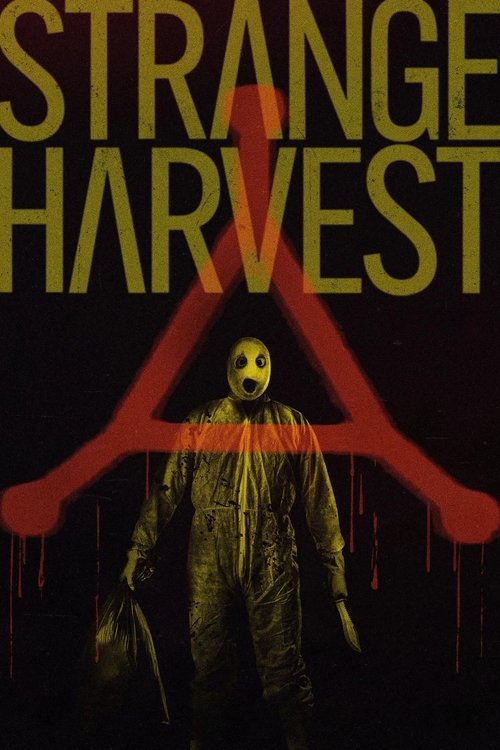
Strange Harvest opens like a cold case dossier come alive, with Detectives Joe Kirby and Lexi Taylor looking back on the most infamous investigation of their careers as if they are still trying to make sense of it. The film's mockumentary form turns every interview, police-camera clip, and grainy crime-scene image into part of the story's machinery, and from the start the case feels less like a single murder spree than a long, festering infection in the Inland Empire of Southern California.
The first thread goes back to 1993, when a young woman is found dismembered in the San Bernardino National Forest. The case is already grotesque enough to haunt the detectives, but what makes it worse is the sense that the body is not just dumped there; it is arranged with intent, as if the killer wants the discovery to feel ceremonial. At this point, Mr. Shiny is only a name attached to horror, an unseen figure operating somewhere beyond the edges of the police's understanding. The investigation does not yet have a face, only a pattern of mutilation and a whisper of ritual.
As the years pass, the murders do not stop. The film moves through a decade-spanning series of attacks, and Kirby and Taylor describe how each scene seems to echo the last while still escalating in cruelty. One early case involves a bedridden elderly man in a retirement facility, where Mr. Shiny kills him by bludgeoning and stabbing him to death. The setting is painfully ordinary, which makes the violence feel even more invasive: a place associated with frailty and waiting becomes a site of deliberate slaughter. The detectives are forced to confront the possibility that the killer is not targeting a type of victim so much as performing a private ritual across different environments, each one selected to maximize dread.
Another murder brings the investigators to a bog, where Noah Lafone is abducted and later discovered dead, his liver removed. That detail lands like a sick signature. The removal of the organ is not presented as random mutilation but as part of the killer's method, one more sign that these deaths are being arranged according to rules only he understands. Kirby and Taylor begin to realize that the case is not just about catching a murderer; it is about deciphering a language written in blood, disfigurement, and absence.
The killers' messages become as important as the corpses. Mr. Shiny leaves cryptic letters that connect the crimes and taunt law enforcement, and one of the most chilling claims he makes is that there are "10 transits" remaining. That phrase hangs over the entire investigation like a countdown from an unknown apocalypse. The letters turn the murders into something broader and more deliberate, making the detectives feel less like they are responding to crimes and more like they are being drawn into a predestined design. The film implies a dark, cult-like or cosmic framework behind the violence, and even when the exact mechanics remain obscured, the tone of the messages makes clear that Mr. Shiny believes himself to be serving something far larger than ordinary human desire.
By July 2010, the case explodes into public nightmare. A routine wellness check at a quiet family home reveals a scene of staggering brutality: a family of three is found zip-tied, bled out into buckets, and positioned beneath an ominous symbol painted on the ceiling. The murder is not just a killing but a tableau. Blood is not spilled accidentally; it is harvested, collected, and used as part of the visual composition of the room. Kirby and Taylor describe this case as the point where the old murders suddenly connect into something coherent. What looked like isolated atrocities now reveal themselves as chapters in a single long ritual.
That discovery changes the shape of the story. The detectives understand that Mr. Shiny has not simply reappeared after a long absence; he has been building toward something, leaving a trail that stretches across decades in the Inland Empire. The murders between 1993 and 1995 are now seen as the first visible cluster in a pattern that has continued, with long gaps and renewed bursts of violence, all of it bound together by the killer's letters and symbols. The retrospective structure of the film deepens the unease here, because Kirby and Taylor are not solving a normal case so much as reconstructing a history that was always larger and stranger than anyone first understood.
One of the most vivid confrontations in the story occurs at a victim's home where an unnamed young woman is murdered by Mr. Shiny while her boyfriend, Glen, is present. The killer does not merely kill; he terrorizes. Glen is burned in the face with a blowtorch, leaving him severely disfigured. The violence is intimate and theatrical, the kind that seems designed to break a witness as much as to eliminate one. Glen survives the attack, but survival here is not victory. He carries the mark of the killer as a permanent reminder that Mr. Shiny is willing to leave evidence behind if that evidence can deepen fear.
As Kirby and Taylor continue, the film's pattern becomes more explicit: every crime scene carries the sensation of a message being delivered. The detectives' interviews reveal a mix of frustration, obsession, and dread as they revisit the same failures and dead ends. They speak with the weary intensity of people who have spent years staring at photographs and letters, trying to find a logic in the carnage. The mockumentary format makes their recollections feel both authoritative and haunted, as if each memory has been sharpened by the knowledge of what it cost to learn it.
At some point in the investigation, the detectives trace the killer to a rented house that Leslie Sykes has occupied for a year. The house is mostly empty when they arrive, which only heightens the sense of absence and concealment. Instead of the lair they expect, they find the residue of a life that has been carefully minimized, as if Sykes has already anticipated being hunted and has erased himself in advance. This is the moment when the case begins to shift from anonymous menace to identification: Mr. Shiny is Leslie Sykes. The revelation transforms the story from a manhunt into something more unsettling, because the killer is no longer a faceless demon but a human being who has successfully hidden among the ordinary world for years.
The pursuit is not over, though, and the final stretch of the film keeps building toward a new catastrophe. Sykes does not simply vanish; he strikes again. In the later part of the story, he kills a young couple in their home and kidnaps their infant son. This is one of the most disturbing turns in the film because it broadens the scope of the horror from murder to abduction. The deaths are horrific enough, but the theft of the child suggests that the killer's plans are still unfolding, still unfinished. It is as though the murders are merely part of a larger work, and the infant is the next piece he intends to carry with him.
The film's final phase intensifies the sense that Kirby and Taylor are chasing a man who believes he is operating under some cosmic timetable. A later letter indicates that Sykes intends to return again in 800 years to continue his mission. That detail pushes the story past simple serial-killer logic and into apocalyptic mythology. The implication is not just that Sykes is deranged, but that he imagines himself part of a cycle so vast that human law barely applies to it. The investigators are left facing a mind that sees time itself as a mechanism for repetition, sacrifice, and rebirth.
What the sources confirm about the ending is limited, but the film's structure makes the last movements feel like the culmination of a long, sick ritual. Kirby and Taylor have traced the killer to Sykes's rented house, and the surrounding evidence suggests they are confronting the end of a trail that has stretched across nearly twenty years. The final revelation is not simply that Leslie Sykes is Mr. Shiny, but that the murders were always more than murders to him. They are presented as part of a grotesque theology, a set of acts meant to satisfy a force that the film frames as both occult and possibly cosmic. The detectives' narration carries the weight of people who know they have not fully understood what they have survived, only that they have looked directly into it.
The very last impression the film leaves is one of unresolved dread rather than closure. Mr. Shiny's final communications insist on recurrence, not ending, and the image of his return in centuries to come turns the case into a nightmare that outlives the present. The documentary frame gives the story a completed shape, but the content inside that frame denies true finality. The murders are cataloged, the name Leslie Sykes is uncovered, and the investigation reaches the point where the detectives can finally state what they have been pursuing; yet the deeper meaning of the killings remains nightmarishly open, as if the film is telling viewers that understanding the monster does not neutralize him.
What lingers most is the combination of human procedure and inhuman purpose. Kirby and Taylor bring order to the case through files, interviews, and chronology, but every discovery only reveals a larger darkness underneath. The young woman in 1993, the elderly man in the retirement facility, Noah Lafone in the bog, the Sheridan family in July 2010, the unnamed young woman whose home becomes a slaughterhouse, Glen left mutilated by the blowtorch, and the later young couple murdered before their infant is taken--each atrocity fits into the same design, each one performed by Leslie Sykes / Mr. Shiny with escalating confidence and ritual intent.
By the time the film ends, the case has become less a mystery than an infection of history. The detectives have named the killer, but the name does not contain him. The letters, the "10 transits," the blood symbol, the organ removal, the staged family massacre, and the promise of a return in 800 years all point to a horror that the film refuses to reduce to a simple arrest-and-resolution ending. Instead, Strange Harvest closes on the terrible idea that the violence has been only one cycle in a much longer pattern, and that the story the audience has just watched is itself another transit in the murderer's design.
More Movies Like This
Browse All Movies →



What is the ending?
At the end of Strange Harvest, the detectives finally corner Leslie Sykes, also known as Mr. Shiny, in the forest as he tries to complete his ritual with the kidnapped baby. Kirby and Lexi interrupt the sacrifice, shoot Sykes, and save the child, but the case does not end cleanly because strange signs and the body's later disappearance leave the final moments uneasy.
The ending opens with Sykes taking Sawyer to a prepared site in the San Bernardino National Forest, where he has set up triangular pyres for the sacrifice. Police officer Pearce and two other officers arrive after a 911 call, trying to catch him in the act. Sykes attacks first. One officer is killed, one is wounded, and Pearce is left unable to continue the pursuit.
Sykes then turns back to the ritual and prepares to sacrifice Sawyer. As the ceremony reaches its peak, a portal-like phenomenon appears in the sky, and people who see it directly begin to experience psychological and physical reactions. Kirby and Lexi then find the altar, shoot Sykes, and pull Sawyer out of danger.
After that, they check on Pearce and the injured officer. In the confusion, Sykes seems to vanish. Later, his body is found in a creek, badly disfigured by leeches, and so damaged that identification is difficult. Kirby says forensic testing confirms the body is Sykes through fingerprints and DNA, and the body is cremated with no one coming to claim the remains.
For the main characters at the end: - Leslie Sykes / Mr. Shiny is shot, later confirmed dead, and his body is cremated. - Sawyer is rescued alive before the sacrifice is completed. - Kirby survives and later states that Sykes was conclusively identified by forensics. - Lexi survives and helps stop the ritual and save Sawyer. - Pearce survives but is incapacitated during the ambush. - The injured officer survives the attack, but is left wounded.
The film then closes by stating that Sykes is dead, giving the victims and the Inland Empire some closure. But a letter mailed to Kirby and Taylor two days before Sykes's death says he will return again in 800 years, and the post-credits scene shows Kirby searching for the cave where Sykes said he had his supernatural experience.
Is there a post-credit scene?
Yes. Strange Harvest has a post-credits scene, and it shows Detective Joe Kirby in the desert, using footage on his phone as he searches for the cave tied to Leslie "Mr. Shiny" Sykes's origins.
The scene does not resolve the mystery; instead, it shows Kirby continuing the hunt even after the case is officially closed. In the footage, he is moving through the Joshua Tree area with marked map locations, and the search appears to be heading toward the Coxcomb Mountains, where cave systems might be found. The moment leaves the story open-ended and suggests Kirby remains convinced that the cave still matters, whether as a clue to Sykes's crimes or as something more unsettling.
Who are the main detectives investigating Mr. Shiny, and how do Joe Kirby and Lexi Taylor differ in the way they approach the case?
Detectives Joe Kirby and Lexi Taylor are the central investigators in the story, and the film frames the case through their recollections as they track the serial killer known as Mr. Shiny across multiple decades. The available descriptions identify them as a pair working the case, but they do not provide enough detail in the search results to compare their personalities or investigative styles with certainty.
What is the significance of Mr. Shiny’s letters and the phrase about “10 transits” in the murders?
Mr. Shiny sends a cryptic letter that connects the murders and announces that there are "10 transits" remaining, which suggests the killings are being carried out according to a larger pattern or sequence. The results describe the letters as ominous clues tied to the killer's ritualistic behavior, but they do not fully explain the meaning of the phrase itself.
How is the first murder in 1993 discovered, and what makes it stand out from the later killings?
According to the film's plot description, the first known victim is a young woman found dismembered in the San Bernardino National Forest in 1993. The later summaries indicate that subsequent murders become part of a decades-spanning pattern involving ritualistic and cult-like elements, which makes the first case important as the beginning of Mr. Shiny's documented reign of terror.
What happens in the 2010 family murder case, and why does it reopen the old investigation?
The 2010 case begins with a routine wellness check that turns into a crime scene when officers discover a family of three zip-tied, bled out into buckets, and arranged beneath an ominous symbol painted on the ceiling. That grotesque staging makes investigators realize the killing fits the same pattern as the earlier murders, bringing Mr. Shiny back into focus after years of silence.
What clues at the crime scenes connect the killings to a larger ritual or cult-like pattern?
The search results describe the murders as ritualistic, with recurring ominous symbols and staged bodies that make the crimes feel increasingly cult-like. They also mention that the clues are cryptic enough to suggest a pattern stretching across decades, but the results do not provide a full breakdown of every symbol or ritual element used in the story.
Is this family friendly?
No, Strange Harvest is not family friendly. It is an R-rated horror crime film with disturbing violent content, language, and grisly violence, and reviews describe it as deeply unsettling and "not for the faint of heart."
Potentially objectionable or upsetting elements for children or sensitive viewers include: - Serial-killer violence and a bleak true-crime-style tone. - Grisly crime scenes and gory, gruesome imagery. - Nightmare-inducing, unsettling visuals and a documentary-like realism that can make the violence feel more intense. - Language. - Scenes involving children and animals are mentioned in reviews as part of the violence, which may be especially upsetting.
If you want, I can also give you a very short "age suitability" verdict by age group, such as whether it is suitable for teens.









