



































Popular
What role does Margaret play in the protagonist's life and career?
How does Joanna's relationship with J.D. Salinger's work evolve throughout the film?
What challenges does Joanna face while working at the literary agency?
How does Joanna's personal life intersect with her professional life in the film?
What significance does the fan mail to J.D. Salinger hold in the story?
Should I watch it?
Ask Your Own Question

What is the plot?
Sorry, we aren't able to watch and write up a full detailed plot yet. Check back in a few days.








What is the ending?
In the ending of "My Salinger Year," Joan, the protagonist, makes a pivotal decision to leave her job at the literary agency representing J.D. Salinger. She embraces her own voice as a writer, culminating in a moment of personal growth and independence.
As the film progresses towards its conclusion, Joan finds herself increasingly disillusioned with the constraints of her job and the expectations placed upon her by the literary world. The tension between her aspirations and the demands of her role at the agency becomes palpable.
In the final scenes, Joan confronts her boss, Margaret, about the ethical implications of their work, particularly regarding the treatment of Salinger's legacy. This confrontation is charged with emotion, as Joan expresses her desire to pursue her own writing rather than remain in the shadow of Salinger's fame.
Ultimately, Joan decides to leave the agency, symbolizing her commitment to her own identity as a writer. The film closes with her stepping into a new chapter of her life, filled with uncertainty but also with hope and determination.
As the film approaches its conclusion, we find Joan, played by Margaret Qualley, grappling with the weight of her experiences at the literary agency. The atmosphere is thick with tension as she navigates her feelings about her job and her aspirations.
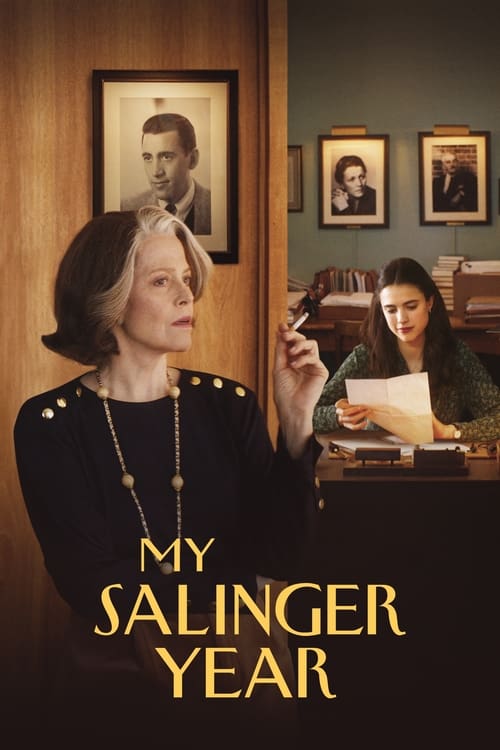
In a pivotal scene, Joan sits in her cluttered office, surrounded by stacks of manuscripts and letters. The camera captures her furrowed brow, reflecting her internal conflict. She has been increasingly frustrated with the demands of her boss, Margaret (played by Sigourney Weaver), who embodies the rigid expectations of the literary world. Margaret is a formidable presence, often dismissive of Joan's creative ambitions, which adds to Joan's growing sense of entrapment.
One day, after a particularly heated discussion about Salinger's work and the agency's approach to managing his legacy, Joan reaches a breaking point. The scene is charged with emotion as she confronts Margaret, articulating her discontent with the way they handle Salinger's correspondence and the ethical dilemmas it presents. Joan's voice trembles with passion as she argues that they are not just gatekeepers of Salinger's legacy but also responsible for the impact of their actions on aspiring writers.
Margaret, taken aback by Joan's boldness, tries to assert her authority, but Joan stands her ground. The camera lingers on Joan's face, capturing her determination and the flicker of fear as she contemplates the consequences of her decision. This confrontation serves as a turning point for Joan, marking her transition from a passive employee to an assertive individual ready to claim her own narrative.
In the following scenes, Joan reflects on her journey. She walks through the bustling streets of New York City, the vibrant energy of the city mirroring her internal awakening. The cinematography captures her sense of liberation as she sheds the weight of her job. She visits places that inspire her, allowing the audience to witness her rekindled passion for writing.
The climax of her journey comes when she finally decides to leave the agency. In a quiet moment, she packs her belongings, the camera focusing on her hands as she carefully places her personal items into a box. This act symbolizes her departure not just from the agency but from the constraints that have held her back.
As she walks out of the agency for the last time, the sunlight floods the hallway, illuminating her path forward. Joan's expression is a mix of relief and uncertainty, but there is a newfound strength in her demeanor. She steps into the unknown, ready to embrace her identity as a writer.
The film concludes with a poignant scene where Joan sits at a café, notebook in hand, ready to write her own story. The final shot captures her deep in thought, a smile creeping onto her face as she begins to pen her thoughts. This moment encapsulates her journey of self-discovery and the courage it takes to pursue one's own voice.
In the end, Joan's decision to leave the agency signifies her growth and the importance of authenticity in the creative process. Margaret, while still entrenched in her role, is left to reflect on the implications of their work, hinting at her own internal struggles. The film closes on a note of hope, emphasizing the power of personal agency and the pursuit of one's true passion.
Is there a post-credit scene?
The movie "My Salinger Year," produced in 2020, does not contain a post-credit scene. The film concludes with a focus on the protagonist, Joanna, reflecting on her journey and the impact of her experiences working for the reclusive author J.D. Salinger. The narrative wraps up without any additional scenes or content after the credits, leaving the audience with a sense of closure regarding Joanna's personal and professional growth throughout the story.
What role does Margaret play in the protagonist's life and career?
Margaret, the protagonist's boss at the literary agency, serves as a mentor and a source of inspiration. She embodies the complexities of the literary world and challenges the protagonist, Joanna, to grow both personally and professionally. Margaret's strong personality and dedication to her work push Joanna to confront her own aspirations and insecurities.
How does Joanna's relationship with J.D. Salinger's work evolve throughout the film?
Joanna's relationship with Salinger's work deepens as she becomes more immersed in her job at the literary agency. Initially, she is somewhat indifferent to Salinger's writing, but as she handles his fan mail and learns more about his life and philosophy, she develops a profound respect for his artistry and the themes of isolation and authenticity that resonate with her own struggles.
What challenges does Joanna face while working at the literary agency?
Joanna faces several challenges at the literary agency, including navigating the demanding expectations of her boss, Margaret, and dealing with the overwhelming volume of fan mail addressed to Salinger. She also grapples with her own insecurities about her writing career and the pressure to succeed in a competitive environment, which leads to moments of self-doubt and conflict.
How does Joanna's personal life intersect with her professional life in the film?
Joanna's personal life is intricately linked to her professional experiences. Her romantic relationship with a fellow writer, which is marked by passion and tension, reflects her internal struggles with commitment and ambition. As she becomes more involved in the literary world, her personal relationships are tested, highlighting the sacrifices she must make in pursuit of her dreams.
What significance does the fan mail to J.D. Salinger hold in the story?
The fan mail to J.D. Salinger serves as a crucial narrative device that reveals the impact of Salinger's work on his readers. It highlights themes of longing, connection, and the search for understanding. Through reading and responding to the letters, Joanna gains insight into the diverse experiences of Salinger's fans, which ultimately influences her own journey of self-discovery and her understanding of the power of literature.
Is this family friendly?
"My Salinger Year" is generally suitable for a mature audience, and while it may not be explicitly objectionable, there are elements that could be sensitive for children or those who are easily upset.
-
Themes of Mental Health: The film touches on issues related to anxiety and depression, particularly through the protagonist's experiences and her interactions with others.
-
Substance Use: There are scenes that depict smoking and drinking, which may not be appropriate for younger viewers.
-
Adult Language: The dialogue includes some strong language, which could be considered inappropriate for children.
-
Emotional Turmoil: The protagonist experiences significant emotional struggles, including feelings of inadequacy and the pressures of her job, which may resonate deeply with sensitive viewers.
-
Complex Relationships: The film explores complicated relationships, including those that involve unrequited feelings and personal conflicts, which may be difficult for younger audiences to fully understand.
Overall, while the film does not contain graphic content, its themes and emotional depth may be more suitable for older teens and adults.