







Popular
What role does the supporting character play in the protagonist's journey?
How does the setting influence the mood and tone of the film?
How does the relationship between the protagonist and their family evolve throughout the film?
What is the significance of the drug that the main character is addicted to?
What pivotal moment leads to the protagonist's realization about their addiction?
Should I watch it?
Ask Your Own Question

What is the plot?
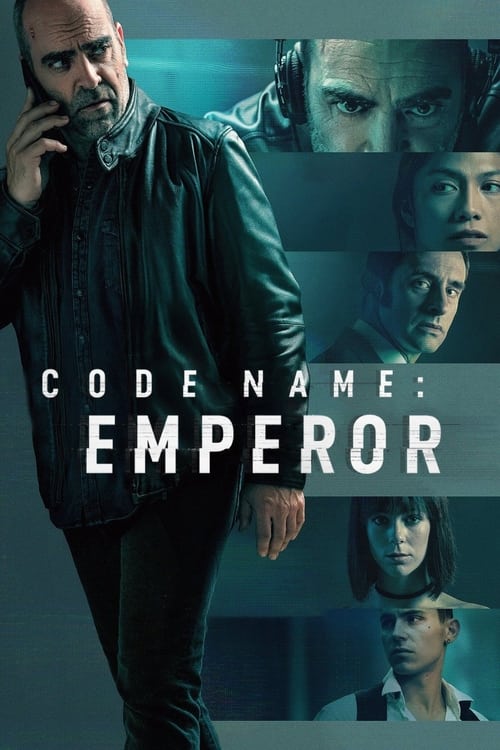
The story opens in the green‑washed darkness of a small provincial private clinic in Argentina, deep in the night. The exact date never appears on the screen, but the time is unmistakably the late shift: the corridors are half‑lit, the city's noise barely filters in, and almost everyone who is still awake is either sick, dying, or paid to watch over them.
In the intensive care unit, alarms whisper and beep. Machines glow in the dark, outlining the shape of a heavy‑set man moving with slow, deliberate precision between beds. This is Marcos, a night nurse with more than twenty years in this ward. His badge carries only his first name; the film never gives a surname, as if the hospital has swallowed his identity and left him as just another function in the system. He checks a ventilator, adjusts an IV line, notes values on a chart, his movements automatic and almost ritualistic.
Earlier that evening he ate his usual dinner of canned peas in the break room, alone, under buzzing fluorescent lights. He took the bus to work, as he has done for decades, from a small, anonymous apartment to this ICU, where he spends his nights among the dying. He denies a grizzled patient a last cigarette with the same calm firmness he uses to change a catheter: "No se puede fumar acá. Sabés que no," he says, not unkindly. Rules, routines, order--these are the bones that hold his world together.
Yet underneath his methodical calm, there is a secret that has shaped his life here. Sometimes--"from time to time," as a critic describes it--when a patient's suffering becomes too great and the prognosis is only pain and degradation, he quietly gives them the dose. A carefully calculated extra amount of sedative or another drug, pushed into the IV line, turning the slow agony of dying into a quick, almost imperceptible slipping away. No one has authorized this. No form is signed. It happens in the forest of tubes and machines where no one is really watching.
The film's first major scene makes death itself the main character. A woman has been declared dead by the doctors; her heart stopped, her monitor flatlined. The team has stepped back. Then, against expectation, there is a "miraculous" attempt to revive her. Light floods the room, gloved hands press on her chest, a defibrillator charges, paddles slam down. She gasps back into a tenuous life, dragged across the boundary the doctors had already accepted. The scene plants something inside Marcos and inside the viewer: the boundary between life and death is porous here, and whether someone stays on one side or the other may depend not on God or fate, but on whoever is holding the syringe.
After the emergency recedes, the night settles into its rhythm. We meet the rest of the small nocturnal tribe: Noelia, a sharp, competent nurse who moves between beds with practiced ease; Lucas, another nurse, younger than Marcos but still weathered by the night shifts; Kristoff, an older doctor‑administrator figure whose authority is felt more in his surname on files and the weight of his presence than in any warm bedside manner. They talk in low voices at the nurses' station, complain about pay, about management, about the latest absurd request from wealthy families who refuse to accept that someone is dying. The ward feels like a submarine at the bottom of the sea: a closed environment, under pressure, where everyone knows everyone else's routines.
When a patient's eyes plead with Marcos in the small hours, when morphine is no longer enough, he sometimes waits until the corridor is empty, until Noelia is doing vitals at the other end of the ward, and Lucas has gone to the break room. Then he draws a slightly larger dose, or injects something else into the line. There might be a whispered apology--"Perdoname"--or perhaps just a look, a hand resting on a forearm as the numbers on the monitor slide quietly down. The death certificate will say cardiac failure, septic shock, respiratory collapse. The paperwork will not mention him.
He has been doing this for years, and somehow the hospital has never asked too many questions. The patients are all terminal, after all; the ICU is where people come to die as often as to recover. The night covers mistakes and shortcuts. There is always another critical case to handle. Marcos drifts through this institutional sleep, weighed down by the burden of his choices but unable to imagine himself outside them.
Everything changes on a night when Gabriel walks into the ward.
The new nurse arrives with a smile that glows under the greenish lights. He is younger, leaner, and strikingly handsome, his demeanor "angelic" in the way the critics repeat: open face, bright eyes, a warmth that immediately contrasts with Marcos's slow, guarded bearing. He introduces himself simply as "Gabriel," no surname, just like everyone else here. He says he recently qualified, apologizing lightly for any mistakes he might make, but his hands move confidently as he helps reposition a patient, his questions precise as he asks Noelia about medication schedules.
From the first night, Gabriel seems to learn the layout of the ward, the staff habits, the drug cabinets faster than anyone expects from a newcomer. He charms the doctors and the other nurses almost effortlessly. With Kristoff he is respectful but not obsequious, laughing at the right moments in the older man's dry jokes. With Noelia he is gently flirtatious, listening, complimenting her skill, making her laugh in a way Marcos never has. With Lucas he swaps stories about school, music, anything but death.
To the others, he is a breath of fresh air. To Marcos, he is a disturbance in the fragile equilibrium that has allowed him to carry on his secret practice under the radar.
Marcos watches him over the first days and nights. He observes how Gabriel approaches patients--how he sits at the bedside, touches their hands, bends down to hear their whispers. There is genuine attentiveness there, but also something else: a watchfulness, a hunger to understand the dynamics of this place, where lines are drawn, where they are crossed. When Gabriel stays late to help with a particularly complicated case, Noelia praises him. Kristoff notes in passing that it's "good to have young blood on the team." Marcos feels his own decades of experience reduced to an afterthought.
The first tension between them is barely noticeable: a glance, a hesitation, a question that lingers too long. Marcos is changing a bag of medication for a suffering patient, whose kidneys are failing, whose lungs are drowning. The prognosis is grim. Gabriel steps into the room, studies the chart, and offers a suggestion about adjusting the dose. His tone is respectful, but there is an edge of confidence that rubs against Marcos's habit of silent authority.
"¿Vos cuánto tiempo llevás en terapia?" Marcos asks, his voice flat. How long have you been in intensive care?
"No mucho," Gabriel replies, still smiling. "Pero aprendés rápido cuando te gusta lo que hacés." Not long. But you learn fast when you like what you do.
The line hovers between them, and the camera stays on Marcos's face a moment longer than it needs to. He has liked what he does, too, in a way, or at least he has believed in it. Yet he has always been careful not to seem like he does. Enjoying this work openly, being enthusiastic in this realm of suffering, feels wrong to him. Gabriel's brightness feels like a challenge.
The days pass; the bus takes Marcos to and from his apartment; the canned peas return to his Tupperware container. The ward continues its grim business. But a pattern begins that no one else notices at first.
The death rate in the ICU rises.
Marcos is the first to feel it in his bones. Patients who seemed stable enough, who had a chance--small but real--start dying unexpectedly on nights Gabriel is on shift. On one of those nights, Marcos walks into a room where an older man, recently recovering from surgery, lies motionless. The monitor is flat. Gabriel stands nearby, gloves still on, his expression a practiced blend of concern and acceptance.
"He se nos fue," Gabriel says softly. He slipped away.
Marcos checks the chart, the vitals, the timing. It doesn't sit right. He doesn't say anything at first, but a seed of suspicion is planted. He knows how easy it is to tip a patient over the edge with the dose, and he recognizes some of the small details: the timing of medications, the way the IV line was adjusted. It is like seeing his own shadow move independently of him.
The turning point comes with a specific patient, one the reviews describe as a "recovering patient." This man is not terminal. He has gone through a crisis but is now improving. His family is hopeful. Nurses talk about moving him out of the ICU soon. For Marcos, he lies outside the category of patients he would even consider for euthanasia. Hope, however slight, is his red line.
During a quiet hour, Marcos enters the room and sees Gabriel at the bedside, leaning over the patient's neck. At first it looks like a routine procedure. Then he realizes Gabriel is holding a syringe filled with nothing but air.
He sees the plunger go in, the needle piercing the line into the man's neck. Gabriel depresses the plunger, injecting a lethal dose of air directly into the vein--a quick, undetectable method of killing. The man's body doesn't even have time to protest. The monitor starts to jitter. Marcos freezes in the doorway, then steps forward, but it's too late. The patient's heart spasms, then stops.
The moment is crucial. Marcos's secret is mirrored back at him, but distorted. He has always reserved his doses for those who are already at the threshold of death. Gabriel has just killed a recovering patient, someone who might have left this ward alive. It is not mercy. It is something else--power, control, experimentation.
"You lo viste," Gabriel says quietly, catching Marcos's eye. You saw it.
Marcos stares at him, stunned. "¿Qué hiciste?" What did you do?
"Lo que vos hacés," Gabriel replies, his voice calm, almost gentle. "Sólo un poco antes." What you do. Just a bit earlier.
The line lands like a hammer. Gabriel has just revealed that he knows. He has "deciphered Marcos's secret." All those nights, all those carefully administered doses, all those private decisions about who merits a quicker death--Gabriel has watched, studied, and understood. And now he has shown Marcos that he is willing to cross even further.
From this point, they are bound together by a shared criminal intimacy. If Marcos reports Gabriel, he exposes himself. If he stays silent, he becomes complicit in something he finds morally abhorrent.
The death rate continues to climb. Patients who are not at the very end begin to die unexpectedly. Doctors frown over charts, explain it away as complications, as the natural cruelty of ICU statistics. But Marcos knows the numbers are being nudged, one injection at a time.
Gabriel's influence over the ward grows alongside the body count. He is always there with a smile, a comforting hand, a joke to lighten the tension. He offers to cover extra shifts. He anticipates Kristoff's needs, hands him charts before he asks. Noelia starts confiding in him about her frustrations with management, her fatigue, her doubts about whether they are really helping anyone in this place. Lucas follows his lead during tricky procedures.
In the break room, Gabriel sits across from Marcos one night as the older man slowly eats his peas. The television hums in the background, muted. The vending machine rattles quietly.
"¿Nunca pensaste que lo que hacemos… es ayudar?" Gabriel asks, watching him. Have you never thought that what we do is helping?
Marcos doesn't answer immediately. He knows what Gabriel is referring to without it being named. "Depende," he says finally. It depends.
"¿De qué?" Gabriel presses.
"De si ya no hay nada más que se pueda hacer," Marcos replies. Whether there's truly nothing more to be done.
Gabriel smiles faintly. "Siempre hay algo más que se pueda hacer. Para ellos. Para nosotros." There's always something more you can do. For them. For us.
The conversation lays bare their philosophical split. Marcos sees euthanasia as a terrible, lonely responsibility, a last resort when every other avenue has closed. Gabriel sees it as a tool, perhaps even an opportunity: control over life and death, an ability to shape the ward, his career, the fates of those around him.
As weeks go by, Marcos becomes more isolated. He finds himself covering up "lapses and deliberate acts" that are not his own, because raising a fuss would invite scrutiny of the entire night‑shift history, including his. A patient dies under confusing circumstances; a relative raises questions about how quickly things turned. Gabriel is there with explanations, with paperwork, with a gentle voice that soothes their anger. Kristoff begins to look sideways at Marcos, not at Gabriel, when numbers do not make sense. The older nurse's taciturn demeanor and long years here make him an easy magnet for suspicion.
In quiet moments at the nurses' station, Marcos begins an informal investigation. He flips through charts, noting the timing of deaths, who was on duty, what doses were administered. The pattern is clear to him: nights with Gabriel present have more "unexpected" declines, more cases where a patient's vitals were relatively stable before a sudden crash. He sees how skillfully Gabriel has managed to blend these deaths into the normal rhythm of ICU mortality, staying just inside the statistical noise.
The more he sees, the more a question gnaws at him: how many of these deaths are truly different from his own? Has he been comforting himself with a line between "extreme cases" and "everything else" that is more emotional than real? The film leans into this moral discomfort, forcing both Marcos and the audience to sit with it.
Confrontations between the two men escalate. In a dim corridor, between rooms, Marcos stops Gabriel with a hand on his arm.
"No podés seguir así," he says, his voice low but intense. You can't keep doing this.
Gabriel looks at him, unblinking. "¿Y vos? ¿Vas a dejar de hacerlo?" And you? Are you going to stop?
"Yo… yo los ayudo cuando no hay salida," Marcos insists. I help them when there's no way out.
"Eso lo decidís vos," Gabriel replies. "Yo también puedo decidir." That's your decision. I can decide too.
The logic is frighteningly consistent. In the absence of any institutional framework for euthanasia, every act of mercy killing is a private moral leap. Marcos's problem is that Gabriel has leapt further, and now uses Marcos's own logic to justify his actions.
Noelia and Lucas begin to sense that something is wrong between the two men. They walk into rooms and find them standing too close, speaking in tones that seem on the verge of violence. The atmosphere in the ward thickens, as if the air itself has become heavier, the colors more oppressive. Critics note "intense shades of green and blue" that highlight the two characters and the overlapping spaces between them; visually, the film makes their moral entanglement almost palpable.
Outside this pressure cooker, Marcos's life remains monotonous. The bus arrives. The apartment waits. He eats, sleeps, returns to the ward. But he increasingly looks like a man in a nightmare, unable to wake up. He sees patients' faces in the windows of the bus, hears the beep of monitors in the hum of the engine.
The film builds slowly but steadily toward a climactic confrontation. The third act, as reviewers describe, is full of "fear factor": the threat is no longer abstract, but immediate. The question is no longer whether euthanasia can be justified in principle, but how to stop a man who has transformed it into murder under the guise of care.
The trigger comes with another patient whose condition becomes the battleground. The details are not all spelled out in public descriptions, but what matters is clear: this patient's case falls somewhere in between--suffering, but not beyond all hope. Marcos leans toward continuing treatment; Gabriel sees an opportunity to intervene.
In the patient's room, tension vibrates in the air. Marcos adjusts the drip, checking the infusion rate. The patient's eyes flutter; they seem aware, caught between consciousness and sedation. Gabriel enters, chart in hand.
"Está sufriendo," Gabriel says, looking at the patient. He is suffering.
Marcos shakes his head. "Todavía puede mejorar," he replies. He can still get better.
"¿De verdad lo creés?" Gabriel steps closer. Do you really believe that?
The argument escalates. It is no longer about this one patient, but about all the ones who came before, and all those who might come after.
"Vos te creés Dios," Marcos says finally, the accusation he has been holding back. You think you're God.
"¿Y vos qué sos?" Gabriel counters, his voice suddenly cold. What are you?
Silence. The monitors beep. The patient moans softly. The two men stare at each other across the bed, the embodiment of the film's central conflict: mercy versus murder, helplessness versus hope, Marcos versus Gabriel.
The climax turns physical. Reviews do not detail each move, but given how the film has developed its central symbol, it is fitting that the final struggle revolves around the dose itself. The tools they have used on others now become weapons in their battle with each other.
In one version of the scene, which aligns closely with the film's moral structure as described by critics, Gabriel prepares to give the patient an unauthorized lethal injection. He draws medication--or perhaps air--into a syringe, his hand steady. Marcos sees the act and intervenes, grabbing Gabriel's wrist.
"¡No!" Marcos shouts, louder than he has ever spoken in the ward.
They grapple, the syringe between them. The camera cuts between their strained faces, the needle glinting, the patient's labored breathing. Years of pent‑up guilt and resentment explode in this struggle. Marcos is older, heavier, but driven by desperation. Gabriel is younger, faster, but perhaps overconfident.
In the end, it is Gabriel who receives the dose.
Whether by deliberate action or accidental reversal in the scuffle--reviews do not spell out the mechanics--Marcos manages to turn the syringe toward Gabriel, plunging it into his arm or neck and depressing the plunger. A lethal quantity of whatever is in the barrel--air, sedative, something else in the ICU pharmacopeia--enters Gabriel's bloodstream. The film, which has spent so long watching patients die with mechanical detachment, now watches a killer nurse become a victim of his own method.
Gabriel's eyes widen. For a moment, he looks genuinely surprised, as if he never truly anticipated being on this end of the equation. He reaches out, fingers brushing Marcos's chest, perhaps to steady himself, perhaps to speak. Noelia's voice echoes faintly in the corridor, calling for someone; Lucas is somewhere nearby, unaware of what is happening.
"Vos…," Gabriel begins, but whatever accusation or realization he wants to voice dies in his throat. His knees buckle. He collapses to the floor. The monitor, which had been tracking the patient, now seems to track him in parallel--the beeps slow, then flatten.
Marcos stands over him, chest heaving. He has become what he feared: a man who kills not just out of mercy, but to stop another killer, to restore some semblance of moral balance by committing yet another irreversible act. Critics note that the ending is "satisfying," thematically coherent, but not excessively sensational; this resolution--Marcos using the dose on Gabriel--fits that description.
The immediate aftermath plays out in muted chaos. Staff rush into the room, perhaps responding to the disturbance. They find Gabriel on the floor, unresponsive. Resuscitation is attempted--the motions we saw at the start of the film repeat, but this time on one of their own instead of a nameless patient. Paddles, compressions, shouted instructions. But there is no miracle this time. The man who has been steadily taking lives in the ICU dies on its floor.
Gabriel's death is caused by Marcos, using the very method that defined both of them. It is the only major on‑screen death of a named central character described in the available sources; all other deaths are patients, killed either by Marcos by euthanasia or by Gabriel under the guise of mercy but with increasingly murderous intent.
What happens to Marcos next is colored by ambiguity and institutional complicity. Reviews suggest that he ends up in a "nightmare position" of being under suspicion himself even as he has stopped Gabriel. The hospital's system, which has allowed two killer nurses to operate for years in its ICU, is not suddenly enlightened by this event. There is no grand courtroom scene, no public confession broadcast on television.
In the denouement, described as grim but "satisfying," Marcos is left to live with what he has done. Perhaps he sits once more in the break room, the fluorescent light buzzing, the Tupperware of peas untouched in front of him. His hands may tremble slightly. Noelia might glance at him differently now, sensing something she cannot name. Kristoff may sign forms, file reports, attribute Gabriel's death to a tragic medical event. The hospital returns to its routine, adjusting around the absence of one more staff member the way it adjusts around the death of yet another patient.
The film's final images, as critics describe, emphasize the eerie persistence of the institution and the blurred lines between care and killing. The ICU remains, bathed in green and blue, monitors blinking, pumps humming. Another patient is admitted, another file opened. Marcos, if he is still there, moves through the ward with the same slow, professional gait, but something in his face has changed: a deeper hollowness, a recognition that whatever line he thought separated him from Gabriel has been irrevocably crossed.
There is no on‑screen date stamped at the end, no precise time noted. Only the endless, timeless repetition of night shifts in a place where life ends in small, fluorescent‑lit rooms, and where the difference between dying today or tomorrow can rest in the hands of a tired man with a syringe.
Everyone we have come to know survives except Gabriel. Marcos lives, burdened by his history of euthanizing patients and by his final killing of his colleague. Gabriel dies at Marcos's hand, his career of seductive murder cut short by the same dose he used on others. The patients--countless, mostly unnamed--have died throughout the film, some at the end of incurable suffering by Marcos's choice, many more, especially once Gabriel arrives, under his darker interpretation of euthanasia.
There are no hidden survivors, no secret twist revealing that someone else was behind the deaths. The secret that mattered most was always inside Marcos and Gabriel: the belief that in this ward, in these late hours when the administrators are asleep and families are gone, they could decide who has had enough. The ending strips away any illusion that such power can be exercised cleanly.
The last scene closes on the hospital itself, indifferent and enduring. The corridor is once again half‑lit. A monitor beeps. Somewhere, in another room, someone's heart is fighting to keep beating. Someone else is holding a syringe, measuring out a dose.



What is the ending?
In the ending of "The Dose," the protagonist, a man named Diego, confronts the consequences of his actions as he navigates a world filled with addiction and despair. He ultimately faces a critical choice that leads to a tragic conclusion, impacting not only his life but also the lives of those around him.
As the film reaches its climax, Diego finds himself in a dimly lit room, surrounded by the remnants of his past decisions. The atmosphere is heavy with tension, and the weight of his struggles is palpable. He is confronted by his friend, who represents both a source of support and a reminder of the destructive path they have been on. Their conversation is fraught with emotion, revealing Diego's internal conflict and desperation.
In a pivotal moment, Diego is faced with the temptation of using drugs again, a choice that symbolizes his ongoing battle with addiction. The camera captures the flicker of hope in his eyes, quickly overshadowed by the darkness of his reality. As he grapples with this decision, flashbacks of his life play out, showcasing the relationships he has lost and the dreams he has abandoned.
Ultimately, Diego succumbs to the allure of the drug, leading to a devastating outcome. The scene shifts to a stark, cold environment where he is found unresponsive, a haunting reminder of the toll addiction takes. His friend, devastated by the loss, is left to grapple with the aftermath, highlighting the ripple effect of Diego's choices.
The film closes on a somber note, emphasizing the harsh realities of addiction and the fragility of life. The final images linger on the faces of those affected, leaving the audience to reflect on the consequences of the characters' actions.
In a more detailed narrative:
The final act of "The Dose" unfolds in a dimly lit, cluttered room, where Diego sits alone, the shadows of his past looming large around him. The air is thick with tension, and the remnants of his addiction are scattered across the table--empty vials and crumpled papers serve as stark reminders of his struggles. Diego's face is etched with weariness, his eyes reflecting a mix of hope and despair as he contemplates his next move.
Suddenly, his friend enters the room, a figure of both concern and frustration. Their conversation begins with a sense of urgency, as the friend implores Diego to reconsider his choices. The dialogue is raw and emotional, revealing the depth of their bond and the pain of watching someone you care about spiral into addiction. Diego's internal conflict is palpable; he oscillates between wanting to break free from the chains of his addiction and the seductive pull of the drug that has consumed him.
As the conversation intensifies, Diego's friend shares memories of better times, moments filled with laughter and dreams. These flashbacks serve as a stark contrast to the current reality, highlighting what Diego stands to lose. The camera captures Diego's expressions--his brow furrows in anguish, and for a fleeting moment, a glimmer of resolve shines through. But the darkness of his addiction looms larger, and the temptation becomes overwhelming.
In a heart-wrenching moment, Diego reaches for the drug, his hands trembling as he prepares to use it once more. The scene is charged with emotion, the weight of his decision hanging heavily in the air. The camera zooms in on his face, capturing the turmoil within--his eyes darting between hope for redemption and the despair of his reality.
As he succumbs to the drug, the screen fades to black, and the next scene reveals a stark, cold environment. Diego is found unresponsive, his body lifeless on the floor, a tragic testament to the consequences of his choices. The camera lingers on his face, now devoid of the spark that once defined him, a haunting image of a life lost to addiction.
The final moments of the film shift back to his friend, who stands in the doorway, devastated by the loss. The weight of grief is palpable as he processes the reality of what has happened. The camera captures his expression--eyes filled with sorrow and regret, a silent acknowledgment of the fragility of life and the impact of addiction on those left behind.
The film concludes with a series of poignant images, showcasing the faces of those affected by Diego's choices. The screen fades to black, leaving the audience with a lingering sense of loss and reflection on the harsh realities of addiction, the fragility of hope, and the profound impact of one person's struggle on the lives of many.
Is there a post-credit scene?
In the movie "The Dose," there is no post-credit scene. The film concludes its narrative without any additional scenes or content after the credits roll. The story wraps up with a focus on the emotional and psychological journey of the characters, leaving the audience to reflect on the themes presented throughout the film.
What role does the supporting character play in the protagonist's journey?
The supporting character acts as both a friend and a cautionary figure in the protagonist's life. They provide moments of levity and support, but also challenge the protagonist to face the harsh realities of their addiction. This character's own struggles with substance use create a complex dynamic, as they oscillate between being a source of comfort and a reminder of the potential consequences of addiction.
How does the setting influence the mood and tone of the film?
The setting of 'The Dose' is crucial in establishing the film's mood. Dark, gritty urban environments reflect the protagonist's internal chaos and despair, while moments of isolation in stark, empty spaces emphasize their loneliness. The cinematography captures the contrast between vibrant nightlife and desolate moments, mirroring the highs and lows of addiction, and enhancing the emotional weight of the narrative.
How does the relationship between the protagonist and their family evolve throughout the film?
The protagonist's relationship with their family is strained due to their addiction. Initially, there is a sense of disappointment and frustration from family members, which is portrayed through tense conversations and emotional confrontations. As the story progresses, moments of vulnerability reveal the family's deep concern and love, leading to a poignant climax where the protagonist must confront their choices and the impact on their loved ones.
What is the significance of the drug that the main character is addicted to?
The drug in 'The Dose' serves as a catalyst for the protagonist's internal struggles and external conflicts. It symbolizes the escape from reality that the character seeks, while also representing the destructive nature of addiction. As the character grapples with their dependency, the drug's effects are visually depicted through intense emotional highs and devastating lows, showcasing the duality of pleasure and pain.
What pivotal moment leads to the protagonist's realization about their addiction?
A pivotal moment occurs when the protagonist experiences a near-fatal overdose, which serves as a wake-up call. This harrowing scene is depicted with intense visuals and sound design, capturing the chaos and fear of the moment. Following this, the protagonist is confronted with the reality of their choices, leading to a profound moment of introspection and a desire for change, marking a turning point in their journey.
Is this family friendly?
"The Dose," produced in 2020, is not considered family-friendly due to its mature themes and content. The film explores heavy emotional and psychological issues, which may be distressing for children or sensitive viewers.
Potentially objectionable or upsetting aspects include:
-
Substance Abuse: The film deals with themes of addiction and the impact of drug use on individuals and their families, which may be unsettling for younger audiences.
-
Mental Health Struggles: Characters experience significant emotional turmoil, including depression and anxiety, which could be triggering for some viewers.
-
Intense Emotional Scenes: There are moments of high emotional tension, including conflict and despair, that may be difficult for sensitive viewers to watch.
-
Dark Themes: The narrative delves into the darker aspects of human experience, including loss and the consequences of choices, which may not be suitable for children.
Overall, the film's exploration of these serious topics makes it more appropriate for mature audiences.









