























Popular
What challenges does Udo Lindenberg face in his early career?
How does Udo's relationship with his mother influence his music?
What role does the character of 'Paddy' play in Udo's journey?
How does Udo's experience in the military affect his outlook on life and music?
What is the significance of Udo's first big performance in the film?
Should I watch it?
Ask Your Own Question

What is the plot?
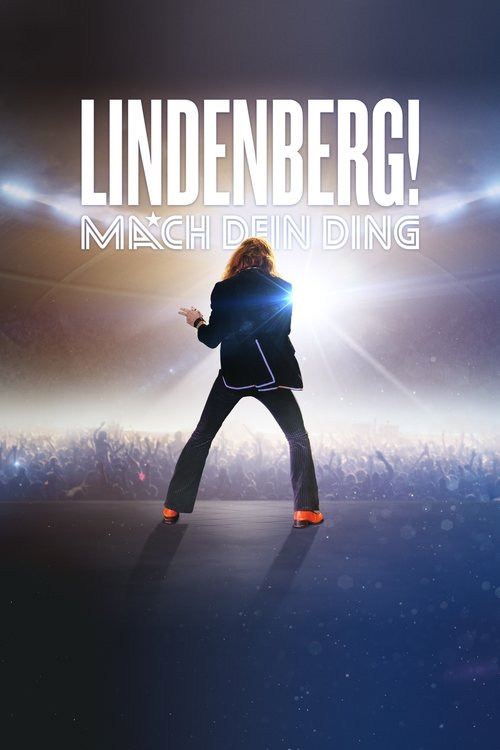
Udo Lindenberg's story begins in postwar Gronau, Westphalia, in the 1950s, where he is a boy already obsessed with rhythm and performance, convinced long before anyone else that he is meant for the spotlight. His mother Hermine Lindenberg encourages him, but his father Gustav Lindenberg distrusts the idea of a life outside the family's working-class tradition and, in many summaries, struggles with alcoholism that poisons the household atmosphere. Even so, Gustav gives his son a drum set, and that gift becomes the first decisive turn in the film: the instrument is not just a present, but the physical proof that Udo's restless talent has somewhere to go. The child is shown drumming with fierce concentration, his face lit by the possibility of escape, while the family's cramped reality presses in around him. The film plants its central contradiction immediately: Udo wants to become Germany's biggest rock star, yet everything around him says he should stay small, stay local, and stay ordinary.
As Udo grows older, that dream hardens into a life plan. He does not simply like music; he believes from an early age that he will make it. Still, his path does not begin in any glamorous way. In one of the film's early practical compromises, he takes a waiter apprenticeship so he can later go to sea, a conventional route that briefly seems like an escape hatch from provincial life. But the pull of music is stronger than the pull of respectability, and the apprenticeship becomes just another detour that cannot hold him. He abandons it, and the movie uses that choice to show how completely he has rejected the life his family and town imagine for him.
By the time Udo is about twenty, he leaves Gronau for Hamburg, the city that becomes the real engine room of the film. Hamburg is shown as loud, smoky, seductive, and unstable, especially the Reeperbahn and the Kiez, where the demimonde and the bohemian world overlap. Here, freedom feels real for the first time, but it comes with chaos. Udo drifts through brothels, bars, recording rooms, and rock bands, taking whatever work he can get as a drummer while chasing the larger career he can almost taste but not yet reach. The city gives him contact with the nightlife and the music business at once; it offers opportunity, but not certainty. In this phase he meets people who will shape him, above all his loyal friend Steffi Stephan, who is usually presented as his bassist, sidekick, and eventually guitarist, and Paula, a lively companion in the Hamburg scene. The film also introduces the commercial machinery that will either elevate or flatten him, especially the Teldec talent scout and producer Mattheisen, who becomes the gatekeeper for Udo's first serious record opportunity.
Before the breakthrough, there is wandering. Udo works in small gigs as a drummer, including jazz jobs and studio work, and in one especially wild stretch he ends up on a dangerous trip to a US military base in Libya, where he performs for American troops in the desert. That episode is treated as both adventure and warning: Udo is going farther than Gronau ever allowed, but he is still not where he wants to be. The desert scenes underline that his ambitions are larger than the opportunities in front of him, and that his talent is being used by others before he has control over it. He keeps going anyway, driven by the same conviction that has followed him since childhood.
Back in Hamburg, the crucial professional turning point begins at Onkel Pö, the music bar where Udo plays in a rock band. When the band's leader rejects a record deal offer, Udo sees his own opening and goes directly to Mattheisen, essentially recommending himself. This is a major act of self-invention: he stops waiting for permission and starts trying to seize his future. Yet the industry response is initially all wrong. Mattheisen believes, as the record bosses do, that success for a German artist requires English-language rock songs. The logic is brutally simple in the film: German, in their view, means Schlager, not rock. Udo accepts the strategy long enough to make an English-language album, but it flops. The failure lands hard. It is not presented as a small setback; it is a public, humiliating dead end that leaves him more confused than before. The film uses this disappointment to expose one of its central themes: copying Anglo-American rock does not make Udo powerful, it makes him invisible.
The emotional cost of this failure deepens as his private life destabilizes too. Udo drinks heavily, and several summaries describe him as getting close to ruining himself through alcohol, especially in the bar culture of the Kiez. He also moves through relationships without finding stability. One account mentions Paula as part of his carefree, flirtatious Hamburg life; another emphasizes Petra, the East German woman he meets later, as the relationship that actually cracks his heart open. The film does not treat romance as a side plot. It shows Udo using desire, flirtation, and intoxication to fill the space where success should be, but none of it lasts. He is charming, restless, and increasingly frustrated, and the tension builds because he can feel himself standing just outside the life he wants.
The story's artistic breakthrough comes through a marginal figure who understands him better than the industry does. In a pub setting on the edge of Hamburg nightlife, the transvestite performer Butterfly tells Udo to stop trying to be someone else and to reveal his own soul. In the summaries, this advice is remarkably direct: he should reinvent himself, be who he wants to be, and show the world what he feels. It is one of the film's key revelations because it solves the central problem without making it easy. The movie is not saying Udo lacks talent; it is saying his talent has been trapped inside imitation. Butterfly's counsel breaks that trap open. Udo responds not with a carefully planned strategy, but with spontaneous self-expression: he sings "Mädchen aus Ost-Berlin" in front of the gathered guests, including Mattheisen, and the song lands. The moment matters because the song is not polished commercial product; it is emotionally direct, rooted in his own life, and sung in German. For the first time, the room hears something unmistakably his.
That song is tied to one of the film's most painful personal threads: Udo's brief, passionate romance with Petra, the East Berlin woman he falls for after traveling to East Berlin. The relationship is intense precisely because it is impossible. The Berlin Wall makes the division concrete; the movie uses the romance to show how Cold War politics invade private life. Udo experiences not just heartbreak, but the sense that an entire country is split against his desire. When the relationship ends, he returns to Hamburg carrying the wound with him, and that wound becomes material. The pain of losing Petra is not wasted; it is transformed into songs. The film's emotional logic here is clear: Udo does not become an artist by escaping pain, but by learning how to turn it into voice.
Back in Hamburg, Udo still has to fight the industry. Mattheisen and the record world remain skeptical of German-language rock, so the compromise comes in the form of a single. Mattheisen pushes for a conventional Schlager track, but Udo insists that "Hoch im Norden" be placed as the B-side. That decision is small on paper and huge in meaning. It is a hidden act of rebellion inside the commercial package. The front side may satisfy the suits, but the back side contains the real Udo Lindenberg. And then the impossible happens: the B-side gets played on the radio and becomes the surprise success that the band celebrates with disbelief and joy. The scene marks a structural twist in the story, because the song the industry treats as secondary turns out to be the one with life in it. Udo's stubbornness is vindicated, and the film makes a point of showing that authenticity can win where imitation fails.
The success of "Hoch im Norden" leads to a bigger breakthrough album, Alles klar auf der Andrea Doria, which becomes the decisive turning point in Udo's career. The film builds this toward 1973, when "Andrea Doria" and the album around it mark his arrival as a major German rock figure. Another hit associated with this phase is "Cello," which appears alongside the title song in the success story around the album. Udo's rise is no longer theoretical; it is concrete, measurable, public. He negotiates a large advance with Mattheisen after the album succeeds, a sign that the power balance has shifted. The boy from Gronau is now forcing the industry to take him seriously on his own terms.
Yet the film does not let that success arrive cleanly. Just before the decisive concert that will secure his breakthrough, Udo has a serious conflict with Steffi Stephan, his faithful friend and musical ally. This is one of the most important confrontations in the movie because it threatens not only the performance, but the whole foundation of Udo's support system. Steffi temporarily leaves, and the career path that seemed to be opening suddenly looks fragile again. The tension is personal and professional at the same time: if Udo cannot hold onto the people around him, he may not be able to hold onto the future he has fought for.
The climax unfolds at an important concert in Hamburg. The show itself is in danger even before the first note, because Udo is still vulnerable to alcohol and the aftermath of his arguments. One summary explicitly says he suffers an alcohol-related collapse or fall at the beginning of the concert, only for the night to recover into a triumph. The film stages this as a near-disaster: the audience sees not a polished star but a man still wobbling on the edge of self-destruction. And then Steffi returns at the last possible moment. That return is the emotional release of the story's longest-running friendship conflict. The friend who left comes back, the band holds together, and the show can begin.
From there, the concert turns into the payoff for everything that came before. Udo stands in front of the audience in Hamburg, no longer trying to sound like an English import or a generic German crooner. He is now openly, unmistakably himself. The performance transforms his earlier failures into triumph. The drunken stumble, the heartbreak with Petra, the rejected English album, the family tension, the years in brothels and studios, the desert detour in Libya, the barroom advice from Butterfly--all of it converges into the same moment of release. The concert is not just a career milestone; it is the emotional resolution of the whole film.
By the end, Udo's breakthrough is complete. He has learned that the thing the industry dismissed--his German voice, his own life, his own stories--is exactly what gives him power. The movie closes on the sense that he has moved from provincial boyhood and chaotic apprenticeship into national prominence, with 1973 standing as the moment when his name becomes impossible to ignore. The final state of the world is simple but hard-won: Udo lives, his career survives the crisis, Steffi has returned, Mattheisen has been outmaneuvered, and the music finally sounds like the man making it. There are no reported deaths in the story, no fatal showdown, no body count at all; the drama is entirely about identity, failure, addiction, love, and the slow, bruising discovery that the only way forward is to sing in his own language.
More Movies Like This
Browse All Movies →





What is the ending?
In the ending of "Lindenberg! Mach dein Ding," Udo Lindenberg finally embraces his identity as a musician and artist, overcoming personal and professional challenges. He performs a significant concert that symbolizes his triumph and acceptance of his true self. The film concludes with a sense of hope and determination, showcasing Udo's journey and the impact of his music on his life and those around him.
As the film approaches its climax, we find Udo Lindenberg grappling with the pressures of fame and the expectations placed upon him. The scene opens with Udo backstage, surrounded by the buzz of the concert venue. The air is thick with anticipation, and Udo's heart races as he prepares to step onto the stage. He reflects on his journey, the struggles he faced, and the people who supported him along the way. His internal conflict is palpable; he is torn between the desire for success and the need to stay true to himself.
As the lights dim and the crowd roars, Udo takes a deep breath, stepping into the spotlight. The moment is electric, and he feels a surge of adrenaline. He begins to perform, pouring his heart into the music. Each note resonates with the audience, and Udo's passion is infectious. The camera captures the faces of his fans, their joy and connection to his music evident. This performance is not just a career milestone; it is a cathartic release for Udo, a moment where he fully embraces who he is.
In the midst of the performance, flashbacks intersperse the scene, showing Udo's past struggles, including his relationships with family and friends. We see moments of doubt, rejection, and the loneliness that often accompanies the pursuit of dreams. Yet, these memories are juxtaposed with scenes of support from his bandmates and loyal fans, highlighting the importance of community in Udo's life.
As the concert reaches its peak, Udo delivers a powerful message through his lyrics, encouraging others to follow their dreams and be true to themselves. The audience is captivated, singing along, and the atmosphere is charged with a sense of unity and empowerment. Udo's emotional state shifts from anxiety to exhilaration, and he realizes that he is not alone in his journey.
The concert concludes with a triumphant finale, and Udo stands before the crowd, soaking in the applause and adoration. In this moment, he feels a profound sense of belonging and acceptance. The camera pans over the audience, capturing their joy and the impact of Udo's music on their lives.
As the film wraps up, we see Udo reflecting on his journey once more, now filled with a sense of purpose and clarity. He has not only found success but has also discovered the importance of authenticity and connection. The final scenes show Udo surrounded by friends and family, celebrating his achievements and looking forward to the future with hope.
In the end, Udo Lindenberg emerges as a symbol of resilience and self-acceptance. His journey is a testament to the power of music and the importance of staying true to oneself, leaving the audience with a sense of inspiration and the belief that it is never too late to pursue one's dreams.
Is there a post-credit scene?
In the movie "Lindenberg! Mach dein Ding," there is no post-credit scene. The film concludes its narrative without any additional scenes after the credits roll. The story wraps up with a focus on the journey of the protagonist, Udo Lindenberg, and his rise to fame, leaving the audience with a sense of closure regarding his character development and the themes of pursuing one's dreams and individuality. The absence of a post-credit scene emphasizes the film's focus on the main storyline and the emotional arcs of the characters throughout the film.
What challenges does Udo Lindenberg face in his early career?
In 'Lindenberg! Mach dein Ding', Udo Lindenberg faces numerous challenges in his early career, including the struggle to be recognized as a serious musician in a competitive industry. He deals with rejection from record labels and the pressure to conform to mainstream expectations, which conflicts with his desire to create authentic music that reflects his unique style and personality.
How does Udo's relationship with his mother influence his music?
Udo's relationship with his mother is pivotal in shaping his music and artistic identity. She is a source of both support and conflict; her traditional values clash with Udo's rebellious spirit. Her encouragement to pursue his passion for music instills in him a sense of purpose, while her concerns about his unconventional lifestyle create emotional tension that he channels into his songwriting.
What role does the character of 'Paddy' play in Udo's journey?
Paddy, Udo's friend and confidant, plays a crucial role in his journey by providing emotional support and encouragement. He represents the voice of reason and loyalty, often helping Udo navigate the ups and downs of his career. Paddy's unwavering belief in Udo's talent motivates him to persevere through setbacks and remain true to his artistic vision.
How does Udo's experience in the military affect his outlook on life and music?
Udo's experience in the military profoundly impacts his outlook on life and music. The strict discipline and the harsh realities of military life force him to confront his fears and insecurities. This period of introspection leads him to embrace his individuality and fuels his desire to express himself through music, ultimately shaping his artistic voice.
What is the significance of Udo's first big performance in the film?
Udo's first big performance is a significant turning point in the film, symbolizing his breakthrough moment as an artist. The performance is filled with tension and anticipation, showcasing Udo's vulnerability and determination. It marks the culmination of his struggles and the beginning of his journey towards fame, as he finally steps onto the stage to share his music with a wider audience, solidifying his identity as a rock musician.
Is this family friendly?
"Lindenberg! Mach dein Ding" is a biographical musical film that follows the life of the German rock musician Udo Lindenberg. While the film is largely focused on his rise to fame and his artistic journey, there are several aspects that may be considered objectionable or upsetting for children or sensitive viewers:
-
Mature Themes: The film explores themes of rebellion, personal struggles, and the pursuit of dreams, which may include references to existential crises and the pressures of fame.
-
Substance Use: There are scenes depicting alcohol consumption and references to drug use, reflecting the rock and roll lifestyle that Udo Lindenberg was part of during his career.
-
Emotional Turmoil: Characters experience emotional struggles, including feelings of loneliness, rejection, and the impact of family dynamics, which may be intense for younger viewers.
-
Romantic Relationships: The film includes depictions of romantic relationships that may involve complexity and emotional conflict, which could be challenging for younger audiences to understand.
-
Conflict and Tension: There are moments of conflict, both personal and professional, that may involve arguments or confrontations, potentially creating a tense atmosphere.
Overall, while the film has a vibrant musical quality and an inspiring message about following one's dreams, parents may want to consider these elements when determining its suitability for children or sensitive viewers.








