









Popular
How does the relationship between the main character and their mentor evolve throughout the film?
What motivates the main character to start the takeaway business?
What challenges does the main character face while running the takeaway business?
How does the main character's family react to their decision to open a takeaway?
What role does community play in the success of the takeaway business?
Should I watch it?
Ask Your Own Question

What is the plot?
Takeaway opens in 2008, in a small mountain village that is already thinning out under the pressure of economic collapse and depopulation. The place feels suspended between ruin and stubborn survival: an aging hotel struggles to stay open, the locals are weary and skeptical, and the future seems to have leaked out of the town long before the film begins. In that bleak setting, Maria Pedrini keeps training. She is a young racewalker with damaged hopes and an injured body, someone who should already have given up by the village's standards, but cannot quite let go of the dream that she might still become somebody. Her father, whose pride in her is almost painful to watch, believes in her completely, while her mother sees the reality more clearly and fears the family can barely afford another gamble. The tension in the house is not simply emotional; it is financial, practical, and desperate, the kind of pressure that turns hope into a liability.
Maria's closest ally in public is Johnny, her older partner, who has a disarming confidence and the kind of authority that makes people listen even when they should not. He manages a bar in town and presents himself as the man who can keep Maria's dream alive. But Johnny is not a benign mentor or supportive boyfriend. He is an ex-coach banned for life for doping, and the film makes his corruption part of the atmosphere from the start: he has a fridge full of little bottles, he speaks in the language of performance and efficiency, and his help is always edged with control. The villagers may not fully understand what is happening, but the audience is invited to feel the rot under the surface immediately. Johnny is the kind of man who wraps exploitation in encouragement.
That manipulation begins to tighten when Johnny proposes a new drug regimen for Maria. He sells it as a cutting-edge treatment, a "new-generation" method that could restore her body, erase the years of injury, and produce the kind of times that would finally force everyone to take her seriously. The price is 10,000 euros, a sum that lands like a verdict in a family already stretching itself thin to keep the hotel functioning. Maria's father pays it anyway, because he wants to believe that sacrifice can still buy destiny. Her mother resists, not because she lacks love, but because she sees how impossible the calculation is: they are pouring money into a dream while the hotel remains half-empty and workers cannot even be found to renovate it. The transaction is more than a payment for drugs; it is a family placing its remaining faith into Johnny's hands.
Once the doping starts, the film turns increasingly physical and claustrophobic. Maria trains through pain, through the stale air of the village, through the judgment of people who have long since stopped believing that anyone from there can make it out. Her body becomes the battlefield where Johnny's promises and lies are tested. At the same time, the story begins to introduce another layer of instability: Maria discovers she is pregnant. The revelation lands as both intimacy and threat. It changes the emotional stakes immediately, because pregnancy should be a private fact of life, but in this world it becomes another condition to be managed, exploited, and controlled. Johnny's response is chillingly pragmatic. Instead of seeing the pregnancy as a limit, he sees it as an opportunity. He believes Maria's hormonal state can be used to intensify the doping even further, and he pushes toward greater doses, convinced that he will not be caught.
The film's moral center begins to crack at that point. Johnny's affection and Maria's dependence are no longer separable from coercion. The more he insists he is helping, the clearer it becomes that he is using her body as a vehicle for his own delusion and ambition. Maria is trapped between her desire to succeed, her father's sacrifices, her mother's fears, and the uncomfortable realization that the man closest to her is not protecting her at all. The pregnancy only sharpens the trap. She is carrying new life while being chemically driven toward an artificial version of victory, and the contradiction gives the story its most painful tension.
The broader world around Maria also becomes more active as Johnny's past catches up with him. One important figure is Tom, a former victim of Johnny's doping culture, someone who blames Johnny for destroying his career and health. The trailer and available plot material frame Tom as a man who comes looking for revenge. His presence externalizes what Maria is gradually discovering internally: Johnny's brilliance is not accidental, and his success has always depended on damage done to other people. Tom's arrival turns the story from a family drama into something closer to a reckoning, because Johnny's lies are no longer buried in the village. They have faces, histories, and consequences.
Maria's own path, however, is still moving upward, at least for a while. The doping, however monstrous, appears to work. She keeps training, and the film builds toward a breakthrough that feels both exhilarating and ominous. Her rise culminates when she wins the interregional championships, a result that opens the possibility of advancing to the national level. On the surface, this is the dream the family has been chasing: the daughter from the forgotten mountain village is finally breaking through, finally proving that the sacrifice was worth it. But the victory is poisoned by everything behind it. Every stride now carries the implication of fraud, bodily damage, and dependence on Johnny's secret supply of substances. The triumph is real only in the most superficial sense; underneath, it is a collapse waiting to happen.
That collapse arrives during later training, when Maria suffers another malore, a sudden physical breakdown that strongly suggests the doping has pushed her body beyond safety. The film does not need to over-explain the cause, because by this point the link between Johnny's regimen and Maria's deterioration is already clear. What matters is the emotional violence of the moment: after all the pressure, all the money, all the hope, her body betrays the lie in the most public and undeniable way possible. The collapse is the turning point where Maria stops being merely manipulated and begins to reclaim agency.
Her response is devastating and final. Maria decides to self-denounce. She does not continue the lie, does not try to hide the abuse, and does not preserve the system that has been consuming her. This is the most important moral act in the film: she chooses truth, even though truth will destroy the dream she was supposed to be living. The self-denunciation is also the story's clearest revelation, because it forces the fraud into the open and confirms what had been circling the narrative all along: Johnny has not been a coach, lover, or savior, but the engine of her exploitation.
Johnny's reaction strips away the last of his composure. In a panic, he grabs the cash from the register of his local bar, the place that has served as his public face and private base of operations, and flees by car. The escape is not triumphant or clever. It is the reflex of a cornered man who understands, at least in part, that the structure protecting him has collapsed. The film ends not with vindication, but with a grim exposure of character: Maria has broken the silence around what was done to her, while Johnny runs with stolen money, fleeing the consequences rather than facing them.
The final emotional texture of the ending is one of ruin mixed with clarity. Maria's future is uncertain, but she has reclaimed ownership of her own body and story. Johnny, by contrast, is left as he always was underneath the charm and pseudo-expertise: a man who uses other people's desperation to sustain his own delusions. The village remains a place of decline, the hotel remains under strain, and the economic pressure that made everyone vulnerable has not vanished. But the central deception has been shattered. The film closes on the bitter knowledge that success built on doping, manipulation, and family sacrifice is not a victory at all, and that in the end the cost is paid not in medals but in bodies, trust, and the ruins left behind.
No confirmed death is documented in the available plot summaries for Takeaway; the film's devastation is psychological, physical, and moral rather than openly fatal. The most important confrontations are Maria versus Johnny's control, Maria versus the pressure to perform, and Maria versus the lie that her talent can be purchased without consequences. Johnny's secret is that he is not a redeemer but a repeat offender, a man already condemned by his own past, and Maria's pregnancy becomes the unbearable twist that shows just how far he is willing to go. By the time she denounces him, the film has made one thing unmistakable: the dream was always being fed by poison, and the only way out is to name it.








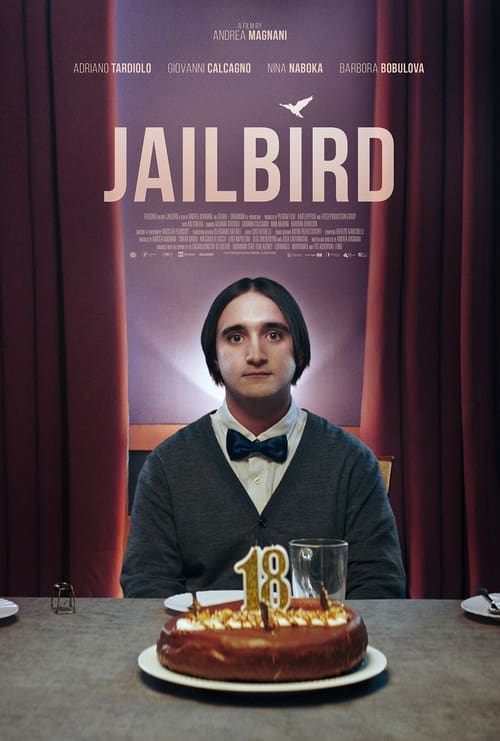
What is the ending?
In the ending of "Takeaway," the main characters confront their personal struggles and relationships, leading to a resolution that emphasizes growth and understanding. The film concludes with a sense of hope as they find a way to move forward, both individually and together.
As the final act unfolds, we find ourselves in a bustling city, where the atmosphere is charged with tension and anticipation. The protagonist, Alex, stands outside the takeaway restaurant, his face a mixture of determination and uncertainty. He has just had a pivotal conversation with his estranged father, which has left him grappling with feelings of abandonment and the desire for reconciliation.
Scene by scene, the narrative progresses:
The camera shifts to Alex's father, Tom, who is inside the restaurant, preparing food. He is visibly conflicted, torn between his past mistakes and the hope of mending his relationship with Alex. The sizzling sounds of the kitchen contrast with the emotional weight of their conversation, highlighting the duality of their lives--one filled with the mundane routine of work, the other with the complexities of familial bonds.
As Alex steps inside, the atmosphere thickens with unspoken words. The two men lock eyes, and for a moment, time seems to stand still. Alex's heart races as he recalls the years of hurt and disappointment. He takes a deep breath, summoning the courage to express his feelings. "Why did you leave?" he finally asks, his voice trembling with vulnerability.
Tom, caught off guard, struggles to articulate his regrets. He explains the circumstances that led to his departure, revealing layers of his own pain and the mistakes he made. The conversation is raw and emotional, filled with pauses that speak volumes. As they talk, the camera captures the subtle shifts in their expressions--anger, sadness, and ultimately, a glimmer of understanding.
Meanwhile, in another part of the city, Alex's friend, Mia, is dealing with her own challenges. She has been a steadfast support for Alex throughout his journey, but now she faces a crossroads in her own life. The film intercuts between Alex and Tom's conversation and Mia's struggle to find her own path. Her scenes are filled with moments of introspection, as she reflects on her dreams and the sacrifices she has made for her friends.
Back in the restaurant, the tension begins to dissipate as Alex and Tom start to share memories of happier times. Laughter breaks through the heaviness, and for the first time, they begin to see each other not just as father and son, but as flawed individuals trying to navigate their lives. The camera captures the warmth of their connection, a stark contrast to the coldness that had defined their relationship for so long.
As the scene progresses, Alex reaches out, placing a hand on Tom's shoulder. This simple gesture signifies a breakthrough--a willingness to forgive and to move forward. Tom, with tears in his eyes, acknowledges his mistakes and expresses his desire to be a part of Alex's life again. The emotional weight of this moment is palpable, as both characters realize that healing takes time, but it is possible.
The film then shifts back to Mia, who has made a decision. She walks into the restaurant, her presence a reminder of the support system that has been crucial for Alex. The three characters come together, and in this moment, they embody the film's central theme of connection and resilience. They share a meal, a symbolic act of unity and understanding, as they begin to forge a new path together.
In the final scenes, the camera pans out, showing the restaurant bustling with life. The takeaway, once a place of conflict and pain, transforms into a space of hope and new beginnings. Alex, Tom, and Mia sit together, laughing and sharing stories, their faces illuminated by the warm glow of the restaurant lights. The film closes on this hopeful note, leaving the audience with a sense of possibility for the future.
In summary, the fates of the main characters are intertwined as they navigate their personal struggles and relationships. Alex and Tom begin to rebuild their father-son bond, while Mia finds her own strength and purpose. The ending encapsulates the film's exploration of forgiveness, growth, and the importance of connection in overcoming life's challenges.
Is there a post-credit scene?
In the movie "Takeaway," produced in 2022, there is indeed a post-credit scene that adds a humorous twist to the film's conclusion.
As the credits roll, the scene opens in the bustling kitchen of the takeaway restaurant where much of the film's action takes place. The camera pans over the chaotic environment, with staff members rushing around, preparing orders and managing the hectic dinner rush. The atmosphere is filled with the sounds of sizzling pans and the chatter of customers.
Suddenly, the focus shifts to the restaurant's owner, who is seen in a light-hearted moment, attempting to juggle several takeout containers while balancing a phone on his shoulder. He is clearly overwhelmed but trying to maintain a sense of humor about the situation. As he fumbles, one of the containers tips over, spilling its contents all over the floor.
In a comedic twist, the owner looks directly at the camera, shrugs, and quips, "Well, at least it's not a food fight!" This line elicits a chuckle, and the scene ends with him laughing at his own misfortune, embodying the film's overall theme of resilience and finding joy in the chaos of everyday life.
This post-credit scene serves to reinforce the film's light-hearted tone and leaves the audience with a smile, reminding them of the quirky charm of the characters they've just spent time with.
How does the relationship between the main character and their mentor evolve throughout the film?
Initially, the main character views their mentor as a source of guidance and inspiration, but as the story progresses, the relationship becomes more complex. The mentor challenges the protagonist to confront their fears and insecurities, leading to moments of tension and growth. Ultimately, this relationship becomes a pivotal part of the protagonist's journey towards self-discovery and resilience.
What motivates the main character to start the takeaway business?
The main character, struggling with personal and financial issues, is motivated to start the takeaway business as a means of escaping a dead-end job and pursuing a dream of independence and success. This desire is fueled by a need to provide for their family and to prove to themselves that they can achieve something meaningful.
What challenges does the main character face while running the takeaway business?
The main character faces numerous challenges, including financial difficulties, competition from established businesses, and personal conflicts with family members who doubt their decision. These obstacles test their resolve and force them to adapt their strategies, leading to moments of both despair and triumph as they learn to navigate the complexities of entrepreneurship.
How does the main character's family react to their decision to open a takeaway?
The main character's family initially reacts with skepticism and concern, fearing the financial risks involved. This creates tension within the household, as the protagonist feels torn between their aspirations and their family's expectations. Over time, as the business begins to show promise, some family members start to support the protagonist, leading to a gradual shift in dynamics and understanding.
What role does community play in the success of the takeaway business?
Community plays a crucial role in the success of the takeaway business, as the protagonist learns to engage with local customers and build relationships. Through community events and word-of-mouth, the business gains popularity, highlighting the importance of support and connection. This aspect of the story emphasizes the protagonist's growth and the impact of collective effort in overcoming challenges.
Is this family friendly?
"Takeaway," produced in 2022, is a film that explores themes of family, relationships, and personal growth. While it has a heartwarming core, there are elements that may be considered objectionable or upsetting for children or sensitive viewers.
-
Emotional Conflict: The film features scenes of intense emotional conflict between family members, which may be distressing for younger audiences. Characters experience moments of anger, frustration, and sadness that could resonate deeply.
-
Loss and Grief: There are themes surrounding loss that may be portrayed in a way that could be upsetting. Characters deal with the absence of loved ones, leading to moments of reflection and sorrow.
-
Mature Themes: The film touches on issues such as divorce and familial separation, which may be difficult for children to understand or process.
-
Mild Language: There may be instances of mild language that could be inappropriate for younger viewers.
-
Tense Situations: Certain scenes may involve tension or conflict that could be unsettling, particularly for sensitive viewers.
Overall, while "Takeaway" has a positive message about family and connection, it does contain elements that may require parental guidance for younger audiences.








