
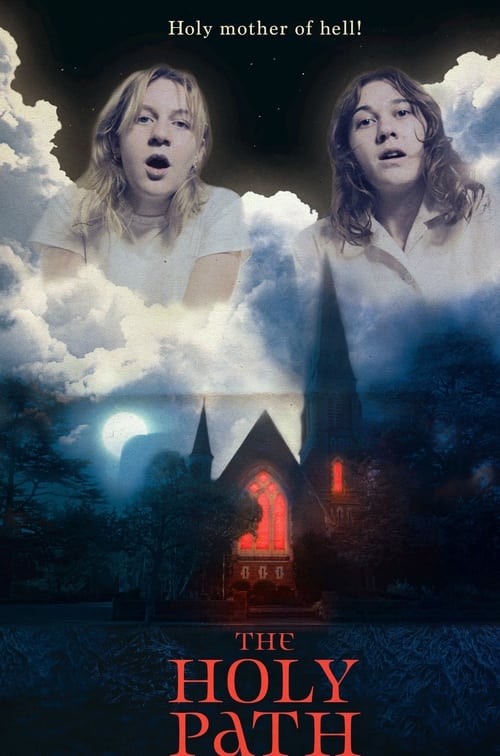




Popular
What motivates the main character, Sarah, to embark on her journey in The Holy Path?
How does the character of Father Michael influence Sarah's journey?
What role does the mystical forest play in the story?
Who are the key supporting characters that Sarah meets along her journey, and how do they impact her?
What is the significance of the final pilgrimage that Sarah undertakes?
Should I watch it?
Ask Your Own Question

What is the plot?
Sorry, we aren't able to watch and write up a full detailed plot yet. Check back in a few days.






What is the ending?
In the ending of "The Holy Path," the protagonist, Sarah, confronts the antagonist, Father Michael, in a climactic showdown that reveals the truth about their intertwined pasts. After a tense exchange, Sarah ultimately chooses forgiveness over vengeance, leading to a resolution that allows her to move forward with her life. The film concludes with Sarah walking away from the church, symbolizing her newfound freedom and the beginning of her healing journey.
As the final act unfolds, the scene opens in the dimly lit interior of the old church, where Sarah stands at the altar, her heart racing as she faces Father Michael. The air is thick with tension, the flickering candlelight casting shadows that dance ominously on the walls. Father Michael, clad in his priestly robes, exudes a calm yet menacing presence, his eyes betraying a flicker of regret as he recalls their shared history.
"Why did you do it?" Sarah's voice trembles, a mixture of anger and sorrow. She steps closer, her fists clenched at her sides, the weight of her past pressing heavily on her shoulders. Father Michael, his expression shifting from stern to pained, begins to explain his actions, revealing the dark secrets that have haunted him for years. He speaks of his misguided intentions, the belief that he was saving her from a life of sin, and the twisted sense of duty that led him to betray her trust.
As the conversation escalates, Sarah's emotions surge. Memories flood her mind--her childhood innocence shattered, the years of pain and confusion that followed. She grapples with the desire for revenge, the urge to make him pay for the suffering he caused. Yet, as she looks into his eyes, she sees not just the man who wronged her, but a deeply flawed individual wrestling with his own demons.
In a pivotal moment, Sarah takes a deep breath, her resolve hardening. "I won't let you control my life anymore," she declares, her voice steady. The weight of her decision hangs in the air, a turning point that signifies her reclaiming her power. Father Michael, realizing the depth of her strength, begins to weep, the facade of authority crumbling as he acknowledges the pain he has inflicted.
The scene shifts as Sarah steps back, the church's stained glass windows casting colorful patterns on the floor, symbolizing hope and renewal. "I forgive you," she whispers, the words heavy yet liberating. Father Michael collapses to his knees, overwhelmed by the gravity of her forgiveness. The camera lingers on Sarah's face, a mixture of relief and sorrow, as she turns away from the altar, leaving behind the shadows of her past.
The final moments of the film depict Sarah walking out of the church, the sunlight pouring in as she steps into the world outside. The vibrant colors of the landscape contrast sharply with the darkness of the church, representing her journey toward healing. As she walks, a sense of peace envelops her, the burdens of her past slowly lifting. The sound of birds chirping fills the air, a symbol of new beginnings.
In the closing scene, the camera pans back to the church, now silent and still, as Father Michael remains on the floor, grappling with the consequences of his actions. The film ends with a lingering shot of Sarah, her silhouette framed against the bright sky, embodying the strength and resilience she has found within herself.
The fates of the main characters are sealed in this moment of catharsis. Sarah emerges as a survivor, ready to embrace her future, while Father Michael is left to confront the reality of his choices, a man forever changed by the forgiveness he never expected to receive. The film concludes on a note of hope, emphasizing the power of forgiveness and the possibility of redemption, even in the darkest of circumstances.
Is there a post-credit scene?
In "The Holy Path," there is indeed a post-credit scene that adds an intriguing layer to the film's narrative. After the credits roll, the screen fades back in to reveal a serene landscape, reminiscent of the film's earlier scenes, but now shrouded in a soft, golden light of dawn.
The camera pans slowly over a tranquil forest, the sound of birds chirping fills the air, creating a sense of peace. As the view shifts, we see the protagonist, Maya, standing at the edge of a cliff, looking out over a vast valley. Her expression is contemplative, a mix of hope and uncertainty. The weight of her journey is evident in her posture, yet there is a newfound strength in her stance.
Suddenly, a figure appears beside her--an old mentor, who had guided her throughout her trials. He places a reassuring hand on her shoulder, and they share a moment of silence, both gazing into the horizon. The mentor speaks softly, reminding Maya that the path she has chosen is just the beginning, hinting at further challenges and adventures that lie ahead.
As they turn to leave, the camera zooms in on a small, glowing artifact that Maya holds tightly in her hand, a symbol of her growth and the choices she has made. The scene fades to black, leaving the audience with a sense of anticipation for what is to come, suggesting that the journey of self-discovery and the quest for truth is far from over.
What motivates the main character, Sarah, to embark on her journey in The Holy Path?
Sarah is driven by a deep sense of loss and a quest for redemption after the tragic death of her brother, who was a devoted follower of the faith. Her internal struggle is marked by guilt and a desire to understand the spiritual beliefs that he held dear, pushing her to seek answers along the path.
How does the character of Father Michael influence Sarah's journey?
Father Michael serves as both a mentor and a moral compass for Sarah. His unwavering faith and compassionate guidance challenge her skepticism and help her confront her grief. He shares stories of his own struggles, which resonate with Sarah, ultimately leading her to a deeper understanding of her brother's beliefs.
What role does the mystical forest play in the story?
The mystical forest is a pivotal setting that symbolizes both danger and enlightenment. As Sarah navigates through its dense, shadowy paths, she encounters various trials that test her faith and resolve. The forest is alive with ethereal sounds and visions that reflect her inner turmoil, serving as a catalyst for her transformation.
Who are the key supporting characters that Sarah meets along her journey, and how do they impact her?
Sarah meets several key supporting characters, including a wise old woman named Elara, who shares ancient wisdom about the faith, and a skeptical traveler named Tom, who challenges her beliefs. Each character represents different perspectives on faith and doubt, pushing Sarah to confront her own beliefs and ultimately shaping her spiritual awakening.
What is the significance of the final pilgrimage that Sarah undertakes?
The final pilgrimage represents the culmination of Sarah's emotional and spiritual journey. It is a test of her faith and resilience, where she must confront her deepest fears and doubts. The pilgrimage is filled with symbolic challenges that reflect her growth, leading to a profound moment of clarity and acceptance of her brother's legacy.
Is this family friendly?
"The Holy Path," produced in 2022, contains several elements that may not be suitable for children or sensitive viewers. Here are some potentially objectionable or upsetting aspects:
-
Intense Emotional Scenes: The film explores themes of loss, grief, and existential crises, which may be emotionally heavy for younger audiences.
-
Violence and Conflict: There are scenes depicting conflict that may include physical confrontations or intense arguments, which could be distressing.
-
Religious Themes: The film delves into complex religious and spiritual themes that might be confusing or unsettling for younger viewers.
-
Mature Language: Some dialogue may include strong language or mature discussions that are not appropriate for children.
-
Dark Imagery: Certain visual elements may include dark or unsettling imagery that could be frightening or disturbing.
-
Mental Health Struggles: Characters grapple with mental health issues, which may be triggering for some viewers.
These elements contribute to a narrative that, while rich and thought-provoking, may not be suitable for all audiences, particularly children or those sensitive to such themes.








