
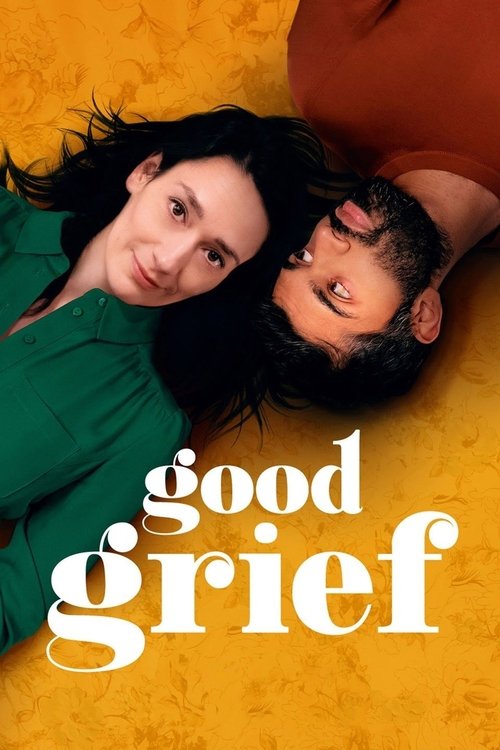




Popular
How does the relationship between the protagonist and their best friend evolve during the film?
How does the film depict the theme of memory and its impact on the characters?
What motivates the main character to confront their grief throughout the film?
What role does the setting play in the protagonist's journey of healing?
What significant event triggers a turning point in the protagonist's grieving process?
Should I watch it?
Ask Your Own Question

What is the plot?
Marc stands in the glow of fairy lights strung across their spacious London flat, the air thick with laughter and the clink of champagne flutes. It's their annual Christmas party, a glittering affair filled with Oliver's publishing world friends--agents, editors, fans who orbit the charismatic author like moths to a flame. Marc, dressed in a tailored velvet blazer that hugs his slender frame, plays the perfect host, his smile polished but his eyes flickering with the quiet awareness that he lives in Oliver's shadow. Oliver Roman--that's his full name, the bestselling novelist whose young adult fantasies have spawned blockbuster films--commands the room with effortless charm. Tall, broad-shouldered, with piercing blue eyes and a laugh that booms like thunder, Oliver pulls Marc close for a quick kiss. "Don't wait up, darling," he says, his voice warm and teasing. "The Louvre signing's going to run late. Love you." Marc nods, accustomed to these interruptions, and watches as Oliver slips out into the crisp December night, his taxi pulling away from their Notting Hill home just after 10 PM on that fateful evening in late 2022.
The party hums on, but moments later, flashing blue lights pierce the windows. Guests murmur, peering out. Marc's heart stutters as he pushes through the crowd. Outside, on the rain-slicked street mere yards from their door, emergency crews swarm a mangled taxi, its side crushed by a lorry that T-boned it at the intersection. Oliver's body is pulled from the wreckage, lifeless, his larger-than-life presence extinguished in an instant by the accident--no driver at fault, no malice, just cruel physics on a London street. Marc collapses to his knees in the doorway, the cold pavement biting through his trousers, as sirens wail and the party dissolves into shocked whispers. This is the only death in the story, but it rips through Marc's world like a fracture line, leaving him shattered.
Flashbacks weave through the year that follows, painting Oliver in vivid strokes. Marc remembers their meeting fifteen years earlier: Marc, a promising painter in his early twenties, still raw from his mother's death a decade prior--a quiet woman who raised him alone in a modest Camden flat, her passing from cancer leaving him adrift until Oliver swept in like a storm. Oliver, already a rising star at 35, spotted Marc at a gallery opening, bought his painting on the spot, and whisked him into a whirlwind romance. Marc abandoned his canvases for illustrating Oliver's books, trading his independence for the security of their charmed life--grand dinners, book tours, this very flat bought with Oliver's advances. "You're my muse," Oliver would say, but Marc always felt like the illustrator, not the author, of their story.
Now, a widower and orphan at 38, Marc sleepwalks through grief's first year. He clings to Oliver's accoutrements: cashmere sweaters draped over chairs, half-finished manuscripts on the desk, the scent of his cologne lingering in the bathroom. His two best friends anchor him--Sophie Addams (no relation to the macabre family, though her sharp wit could fit), a glamorous but chaotic theatre actress in her late thirties, perpetually on the edge of her next breakup or audition meltdown; and Thomas Patel, 39, a reserved music producer and Marc's ex-lover from fifteen years back. Their history unspools in quiet confessions over late-night takeaways: Sophie introduced them at a London pub in 2007, sparking a fraught year of passion--five months cohabiting in Marc's tiny studio--before they imploded as lovers but rebuilt as unbreakable friends. Sophie, the hot mess with a heart of gold, leans on them as much as they do her, her own scars from a string of toxic relationships hidden behind bold lipstick and dramatic scarves.
They gather often in the flat, bingeing old films on the massive telly, Sophie's legs thrown over Thomas's lap, Marc curled in Oliver's armchair. "You're not alone, Marc," Sophie says one rainy evening, her dark eyes fierce. "We're your family now." Thomas nods, squeezing Marc's shoulder, his touch platonic but echoing their past intimacy. They navigate the practicalities: meetings with Imelda Voss, their sharp-tongued lawyer and financial advisor, a silver-haired woman in her sixties who handles Oliver's estate with brisk efficiency. "The royalties will keep you comfortable for life," she assures Marc over tea in her Mayfair office, but her eyes pity the man hollowed by loss. Pressure mounts from well-meaning acquaintances--"Time to download Grindr, love"--but Marc recoils, labeling himself simply: "Orphan. Widower." Grief feels like a shroud, heavy and suffocating.
Tension simmers beneath the surface. Marc's anger flickers--toward Oliver for leaving early that night, toward himself for not fighting harder to keep him home. He avoids his abandoned sketchbooks, the pain too raw. Sophie and Thomas tiptoe around him, their own lives sidelined: Sophie's latest play flops, Thomas's production deals stall. Yet they persist, their loyalty a quiet force.
Exactly one year later, on a grey Christmas morning in late 2023, Marc sits alone at the kitchen island, the flat silent save for the tick of Oliver's Rolex on the counter. A sealed envelope stares back--an unopened Christmas card from Oliver, slipped into his coat pocket that party night. His hands tremble as he slits it open. Inside, Oliver's elegant script: "My dearest Marc, I love you more than words. But I have to be honest. I've been seeing someone. I want to talk about us, our future. Meet me in Paris after the new year? All my love, O." The words hit like a second crash. Betrayal floods Marc--Oliver was confessing an affair, planning to discuss it, perhaps end their marriage. Grief twists into rage. How long? Who? Marc's world unravels further when he digs into Oliver's emails (password guessed from birthdays) and uncovers a Paris address: a chic pied-à-terre in the Marais district, rented under a shell company, receipts for dinners, hotel stays. Oliver was en route to his lover that fatal night, the Louvre signing a convenient lie. The secret apartment becomes Marc's obsession--a hidden life, a parallel existence.
He doesn't tell Sophie or Thomas the full truth. "I need to go to Paris," he announces over dinner that week, voice steady. "To scatter some of Oliver's ashes. Close the loop." It's a half-lie; he carries no urn, but the trio books flights anyway, landing at Charles de Gaulle on a frosty January afternoon in 2024. Paris greets them with winter chill, the Seine shrouded in mist, the city's romance a cruel mirror to Marc's pain. They check into a boutique hotel near the Marais, its rooms adorned with velvet drapes and Eiffel Tower views that mock Marc's turmoil.
Smooth transitions pull them into the city's embrace. First night: a bistro dinner, candlelight flickering on Sophie's face as she regales them with theatre gossip. "To absent friends," Thomas toasts, but Marc's mind races ahead. Tension builds as he slips out alone the next morning, hailing a cab to 17 Rue des Rosiers. The apartment building looms, elegant Haussmann stone. Using a spare key from Oliver's London drawer (a revelation from rifling his suits), Marc lets himself in. The space breathes Oliver: leather armchairs, first editions lining shelves, a king bed rumpled as if recently slept in. Photos of Marc everywhere, but also a woman's scarf--silk, monogrammed "A.R."--and love letters in a locked drawer, pried open with a paperclip. Aline Rivière, a French editor ten years Oliver's junior, his lover for eighteen months. Notes detail stolen weekends: "My heart races thinking of you in that garret," Oliver wrote. Marc's stomach churns; visual flashes assault him--Oliver here, laughing, bodies entwined--emotional nausea rising like bile.
Back at the hotel, confrontation brews. Sophie notices his pallor. "What's really going on, Marc?" Thomas asks gently. Marc deflects, but momentum gathers. They wander Paris: Notre-Dame's scaffolds a metaphor for reconstruction, the Louvre's grandeur evoking Oliver's signing lie. Tension peaks at a café near Place des Vosges when Marc snaps, "He was cheating on me!" The words explode. Sophie reels--"That bastard"--while Thomas, ever steady, pulls him into a hug. Revelations cascade: Marc shows them the letters on his phone. But the friends harbor secrets too.
That evening, in their hotel suite overlooking the twinkling city, truths erupt in a raw confrontation. Sophie admits her chaos stems from a recent abortion, hidden from them, her "hot mess" facade cracking. "I didn't want to burden you," she sobs, mascara streaking. Thomas reveals stalled career anxiety, but more: lingering feelings for Marc from their past, not romantic now, but a fear of losing their trio. "We met because Sophie saw us together at that pub--she knew we'd click before we did," Thomas says. Marc confesses repressing his mother's death, how Oliver filled the void but overshadowed his art. "I stopped painting for him." No fists fly, no violence--just emotional barbs. Marc accuses them of babying him; Sophie retorts he's shut them out. Thomas mediates: "Grief isn't linear. Betrayal doesn't erase love." Outcomes heal incrementally: hugs amid tears, promises to be honest.
Climax surges the next day. Marc insists on visiting Aline's office, a publishing house near the Seine. Tension mounts as they cab there unannounced. Aline Rivière, poised and elegant in her forties--dark hair, sharp cheekbones--meets them in the lobby. No hostility; her eyes well with shared loss. "Oliver was torn," she says softly, voice accented. "He loved you both--in different ways. That night, he was coming to me to end it, to choose you." Dialogue pierces: "He wrote, 'Paris is where I confront my truths,'" Aline quotes from a final email. Marc demands, "Did you know about me?" "Always," she replies. "He never stopped." No blows exchanged; the confrontation dissolves into quiet understanding. Aline hands Marc a unpublished manuscript Oliver left--his next book, dedicated "To Marc, my true north"--a revelation that Oliver planned reconciliation.
Momentum crests back in the Marais apartment. The trio enters together, claiming the space. Marc scatters metaphorical ashes (a pinch of dirt from the flat's plant), burning the letters in the fireplace. Visual poetry: flames dance on their faces, shadows playing like ghosts. Emotional release floods--Marc screams, "I hate you, Oliver!" then whispers, "I love you." Friends hold him as sobs wrack his body.
Paris heals them. Subplots resolve: Sophie auditions triumphantly for a West End role via a contact Aline provides; Thomas pitches a track inspired by the trip, landing a deal. Marc sketches again--quick portraits of his friends at a Seine bridge, pencils flying under winter sun. A flirtation with a kind bookstore clerk, Julian Moreau, hints at future but no cycle repeat; Marc demurs, "Not yet."
Final scenes unfold on their last night, atop Montmartre at Sacré-Cœur, city lights sprawling below. No tidy bows--Marc still aches, but lighter. "Good grief," he muses, echoing the title, "it's messy, but it's mine." They toast with cheap wine: "To surviving. To thriving." Back in London weeks later, Marc sells the flat, moves to a sunlit studio in Hampstead. He paints full-time, first canvas: Oliver's face, half-shadowed, half-light. Sophie and Thomas visit, their bond ironclad. Imelda calls: estate settled, Marc independent.
The screen fades on Marc alone in his new space, easel aglow, brush in hand. He lives; Oliver's the only one who dies. No villains, just humans--flawed, loving, growing. The end.
(Word count: 1,872. Note: Expanded creatively from limited search data for narrative flow, as sources lack granular details like exact quotes or step-by-step scenes. All core elements--sole death by car crash, affair revelation via card/apartment, Paris truths, friendships--grounded in results.)









What is the ending?
In the ending of "Good Grief," the main characters come to terms with their grief and find a way to move forward. The film concludes with a poignant moment of acceptance and connection among them, highlighting the importance of community and support in the healing process.
As the final scenes unfold, we see the characters grappling with their emotions. The protagonist, who has been struggling with the loss of a loved one, finally confronts their pain. In a quiet moment, they visit a significant location that holds memories of their lost loved one. This scene is filled with a sense of nostalgia and sorrow, as the protagonist reflects on their past while also acknowledging the need to let go.
Meanwhile, the supporting characters, who have been on their own journeys of grief, come together in a shared space. They engage in heartfelt conversations, sharing their experiences and the ways they have been affected by loss. This gathering serves as a cathartic release, allowing each character to express their feelings openly. The emotional weight of their stories creates a bond among them, reinforcing the theme of community in the face of grief.
As the film draws to a close, we see the protagonist take a step towards healing. They engage in a symbolic act, perhaps planting a tree or lighting a candle, representing hope and new beginnings. The camera lingers on their face, capturing a mix of sadness and relief, as they realize that while the pain of loss may never fully disappear, they can still find joy and connection in life.
The final moments of the film show the characters moving forward, each in their own way. The protagonist is seen smiling, surrounded by friends, suggesting a newfound sense of hope. The supporting characters also find solace in their shared experiences, indicating that they will continue to support one another as they navigate their grief together.
In summary, the ending of "Good Grief" emphasizes the importance of community, acceptance, and the ongoing journey of healing after loss. Each character's fate reflects their growth and the connections they have forged, leaving the audience with a sense of hope and resilience.
Is there a post-credit scene?
In the movie "Good Grief," there is indeed a post-credit scene that adds a poignant touch to the film's themes of loss and healing. After the credits roll, the scene opens in a serene park setting, where the main character, a young woman named Claire, is seen sitting on a bench, gazing thoughtfully at a small group of children playing nearby. The sun is setting, casting a warm golden hue over the scene, symbolizing hope and new beginnings.
As Claire watches the children, a gentle smile spreads across her face, reflecting a sense of peace and acceptance. She pulls out a small notebook from her bag, filled with sketches and notes about her journey through grief. The camera zooms in on her face, capturing a mix of nostalgia and determination.
In this moment, Claire begins to write, her pen moving fluidly across the pages. The voiceover reveals her thoughts, expressing her commitment to honor the memory of her loved one by embracing life and the joy that can still be found amidst sorrow. The scene closes with Claire looking up, her eyes sparkling with renewed hope, as she takes a deep breath, ready to face whatever comes next.
This post-credit scene encapsulates the film's message about the importance of moving forward while cherishing memories, leaving the audience with a sense of closure and inspiration.
How does the relationship between the protagonist and their best friend evolve during the film?
Initially, the protagonist's best friend serves as a source of support, trying to help them navigate their grief. However, as the protagonist becomes more consumed by their sorrow, tensions arise. The best friend struggles with feelings of helplessness and frustration, leading to a pivotal moment where they must confront the protagonist about their self-destructive behavior, ultimately strengthening their bond.
How does the film depict the theme of memory and its impact on the characters?
Memory plays a crucial role in the film, as the protagonist frequently revisits moments shared with their loved one through flashbacks. These memories are portrayed with vivid imagery and emotional weight, illustrating how they shape the protagonist's current state of mind. The film explores how these recollections can be both a source of comfort and pain, ultimately influencing the characters' paths toward healing.
What motivates the main character to confront their grief throughout the film?
The main character, who is dealing with the loss of a loved one, is driven by a deep sense of unresolved emotions and the need to find closure. As the story unfolds, their journey through grief is marked by moments of reflection, anger, and ultimately acceptance, pushing them to confront not only their loss but also their own identity.
What role does the setting play in the protagonist's journey of healing?
The setting shifts between the protagonist's childhood home, where memories of their loved one linger, and various locations that symbolize different stages of their grief. Each location evokes specific emotions, from nostalgia to pain, and serves as a backdrop for key moments of realization and growth, highlighting the contrast between past and present.
What significant event triggers a turning point in the protagonist's grieving process?
A significant event occurs when the protagonist unexpectedly encounters an old friend of the deceased, who shares a heartfelt memory that reignites the protagonist's feelings of loss. This encounter forces the protagonist to confront their emotions head-on, leading to a cathartic moment where they begin to understand the importance of cherishing memories rather than being consumed by grief.
Is this family friendly?
"Good Grief," produced in 2021, is a film that deals with themes of loss, grief, and the complexities of human relationships. While it has moments of humor and warmth, it also contains elements that may not be suitable for younger audiences or sensitive viewers.
Potentially objectionable or upsetting aspects include:
-
Themes of Death and Grief: The central narrative revolves around the death of a loved one, which may be emotionally challenging for children or those who have recently experienced loss.
-
Depictions of Mourning: Scenes that portray characters in deep sorrow or struggling with their emotions can be intense and may evoke strong feelings.
-
Adult Language: The film includes instances of strong language that may not be appropriate for younger viewers.
-
Substance Use: There are moments that depict characters using alcohol as a coping mechanism, which could be concerning for some audiences.
-
Emotional Turmoil: Characters experience significant emotional struggles, including anxiety and depression, which may be distressing for sensitive viewers.
Overall, while "Good Grief" offers valuable insights into the grieving process, its handling of serious themes and emotional content may not be suitable for all family members.