
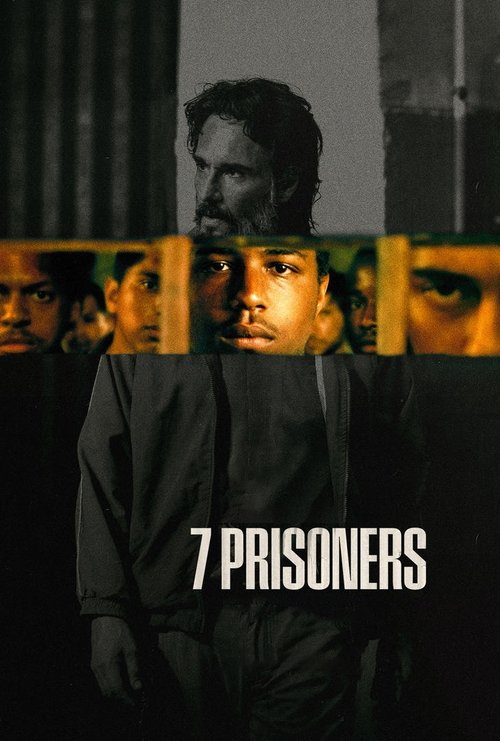











Popular
What motivates the main character, Mateus, to initially accept the job offer from the human trafficker?
How does Mateus's relationship with the other prisoners evolve throughout the film?
What role does the character of the trafficker, Luca, play in Mateus's transformation?
How does the setting of the scrapyard contribute to the film's tension and atmosphere?
What pivotal moment leads Mateus to decide to take action against his captors?
Should I watch it?
Ask Your Own Question

What is the plot?
Sorry, we aren't able to watch and write up a full detailed plot yet. Check back in a few days.





What is the ending?
In the ending of "7 Prisoners," the protagonist, Mateus, confronts the harsh realities of his situation. After a series of events that lead to betrayal and moral dilemmas, he ultimately decides to take a stand against the oppressive system he has been trapped in. The film concludes with Mateus making a significant choice that impacts his future and the lives of those around him.
As the film approaches its climax, we find Mateus, a young man who has been coerced into a life of servitude and exploitation, grappling with the weight of his decisions. He has witnessed the suffering of his fellow workers, who are trapped in a cycle of debt and violence orchestrated by the ruthless trafficker, Luca. The tension escalates when Mateus realizes that his loyalty to Luca is not only compromising his own integrity but also endangering the lives of his friends.
In a pivotal scene, Mateus is faced with a choice: to continue submitting to Luca's demands or to fight back against the system that has ensnared him. The emotional turmoil is palpable as he reflects on the sacrifices made by his friends, particularly the sacrifices of those who have already suffered under Luca's control. The weight of responsibility hangs heavily on his shoulders, and the fear of retribution looms large.
As the confrontation with Luca unfolds, Mateus's internal struggle becomes evident. He is torn between the desire for freedom and the fear of the consequences that come with defiance. In a moment of clarity, he decides to take action. He gathers the courage to confront Luca, leading to a tense standoff that encapsulates the film's central conflict. The atmosphere is charged with desperation and hope as Mateus stands up for himself and his friends.
In the final moments, the outcome of this confrontation is both tragic and liberating. Mateus's decision to resist leads to a violent clash, resulting in significant consequences for both him and Luca. The film does not shy away from the brutality of the situation, showcasing the harsh realities faced by those trapped in human trafficking and exploitation.
As the dust settles, we see the fates of the main characters unfold. Mateus, having made his stand, faces an uncertain future. He has chosen to fight for his freedom, but the cost is high. His friends, who have been part of this harrowing journey, are left to grapple with the aftermath of his choices. Some find a glimmer of hope in Mateus's bravery, while others are left to ponder the sacrifices made along the way.
In the end, "7 Prisoners" leaves the audience with a haunting reminder of the struggles faced by those caught in the web of exploitation. Mateus's journey is one of resilience and courage, but it also serves as a stark reflection of the harsh realities that many endure in their quest for freedom. The film closes on a note of ambiguity, emphasizing the ongoing fight against oppression and the personal costs that come with standing up for what is right.
Is there a post-credit scene?
The movie "7 Prisoners," released in 2021, does not contain a post-credit scene. The film concludes its narrative without any additional scenes or content after the credits roll. The story wraps up with a focus on the characters' fates and the moral implications of their choices, leaving the audience to reflect on the themes of exploitation and survival that permeate the film.
What motivates the main character, Mateus, to initially accept the job offer from the human trafficker?
Mateus, a young man from a poor background, is driven by the desire to provide a better life for his family. He sees the job as a means to escape poverty and support his loved ones, despite the moral implications.
How does Mateus's relationship with the other prisoners evolve throughout the film?
Initially, Mateus is wary and distant from the other prisoners, but as they endure the harsh conditions together, he begins to form bonds with them. Their shared suffering fosters a sense of camaraderie, and he becomes a reluctant leader, trying to protect them and find a way out.
What role does the character of the trafficker, Luca, play in Mateus's transformation?
Luca represents the corrupting influence of power and greed. His manipulative nature forces Mateus to confront his own morals and the lengths he is willing to go to survive. As Mateus witnesses Luca's cruelty, it ignites a determination within him to resist and ultimately seek freedom.
How does the setting of the scrapyard contribute to the film's tension and atmosphere?
The scrapyard is a grim and oppressive environment, filled with rusted metal and debris, symbolizing the entrapment of the prisoners. The claustrophobic and dangerous setting amplifies the sense of hopelessness and desperation, making every escape attempt fraught with peril.
What pivotal moment leads Mateus to decide to take action against his captors?
The turning point for Mateus occurs when he witnesses the brutal treatment of one of the other prisoners, which shatters his initial compliance. This moment of realization ignites a fierce resolve within him to fight back against the exploitation and seek freedom for himself and his fellow captives.
Is this family friendly?
"7 Prisoners," produced in 2021, is not considered family-friendly due to its mature themes and intense subject matter. The film explores the harsh realities of human trafficking and exploitation, which may be distressing for children and sensitive viewers.
Potentially objectionable or upsetting aspects include:
- Violence and Threats: There are scenes depicting physical violence and intimidation, which can be unsettling.
- Exploitation: The film addresses themes of forced labor and human trafficking, showcasing the grim conditions faced by the characters.
- Emotional Distress: Characters experience significant emotional turmoil, including fear, desperation, and hopelessness, which may be difficult for younger audiences to process.
- Mature Language: The dialogue includes strong language that may not be suitable for children.
- Dark Themes: The overall tone of the film is somber and deals with serious societal issues, which may be inappropriate for younger viewers.
These elements contribute to a narrative that is more suitable for mature audiences.








