
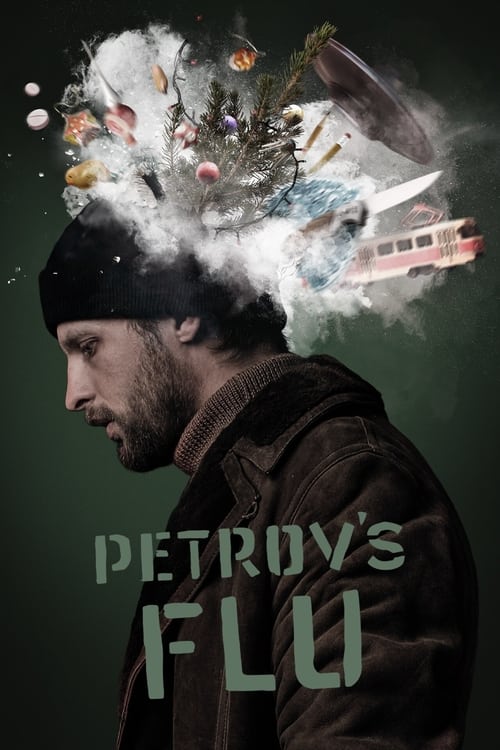




































Popular
What is the significance of Petrov's illness in the story?
How does Petrov's relationship with his family evolve throughout the film?
What role does the character of Petrov's wife play in the narrative?
How does the film portray the theme of surrealism through Petrov's experiences?
What are the key moments that highlight Petrov's internal struggles?
Should I watch it?
Ask Your Own Question

What is the plot?
Sorry, we aren't able to watch and write up a full detailed plot yet. Check back in a few days.





What is the ending?
In the ending of "Petrov's Flu," the protagonist, Petrov, navigates through a surreal and chaotic world as he grapples with the effects of a flu epidemic. The film culminates in a series of disjointed yet poignant moments that reflect the characters' struggles and the absurdity of their lives. Petrov's journey leads him to confront his own identity and the relationships around him, ultimately leaving viewers with a sense of ambiguity about his fate and the world he inhabits.
As the film approaches its conclusion, Petrov finds himself in a dreamlike state, wandering through a city that feels both familiar and alien. He encounters various characters, including his wife, who is dealing with her own challenges, and his son, who represents innocence amidst the chaos. The narrative becomes increasingly fragmented, mirroring the disarray of Petrov's mind as he tries to make sense of his existence in a world ravaged by illness and despair.
In the final scenes, Petrov's interactions with those around him reveal the deep emotional currents that run through his life. He experiences moments of connection and disconnection, reflecting the broader themes of isolation and the search for meaning. The film ends on an ambiguous note, leaving Petrov's ultimate fate uncertain, as he continues to navigate the surreal landscape of his reality.
Expanding on the ending in a chronological and narrative fashion:
As the film nears its conclusion, Petrov is seen wandering through the streets of a city that is eerily quiet, a stark contrast to the bustling life that once filled it. The flu epidemic has taken hold, and the atmosphere is thick with a sense of dread and confusion. Petrov's face is a canvas of exhaustion and bewilderment, reflecting the toll that the illness has taken on him both physically and mentally.
In one scene, Petrov encounters a group of people gathered in a public space, their faces masked and their bodies shuffling aimlessly. The surreal nature of the scene is amplified by the disjointed conversations that float through the air, snippets of dialogue that hint at the chaos of their lives. Petrov stands at the periphery, feeling both a part of this collective suffering and profoundly alone.
As he continues his journey, Petrov's thoughts drift to his wife, who is struggling with her own demons. In a poignant moment, he imagines her in their home, surrounded by the remnants of their life together. The memories are bittersweet, filled with laughter and love, but also tinged with the sadness of what has been lost. This internal conflict is palpable, as Petrov grapples with his desire to reconnect with her while being overwhelmed by the weight of his own despair.
In a later scene, Petrov's son appears, a symbol of hope and innocence amidst the chaos. The boy's laughter echoes in Petrov's mind, a stark reminder of the joy that once filled their lives. However, the reality of their situation looms large, and Petrov's heart aches with the knowledge that he may not be able to protect his son from the harshness of the world outside.
The film's climax unfolds in a series of surreal vignettes, where Petrov's reality blurs with his imagination. He finds himself in a dreamlike sequence, where he confronts various aspects of his life--his failures, his fears, and his longing for connection. Each encounter is marked by a sense of urgency, as if time is slipping away from him. The visuals are striking, with vibrant colors and distorted imagery that reflect Petrov's fractured psyche.
In the final moments, Petrov stands alone in a vast, empty space, the weight of his choices pressing down on him. The camera lingers on his face, capturing the myriad emotions that play across it--regret, longing, and a flicker of hope. As the screen fades to black, the audience is left with a haunting sense of ambiguity. Petrov's fate remains uncertain, a reflection of the unpredictable nature of life itself in the face of overwhelming adversity.
The film concludes without providing clear resolutions for its characters. Petrov's wife continues to battle her own struggles, and his son remains a beacon of innocence in a world that feels increasingly hostile. The ending encapsulates the film's exploration of the human condition, leaving viewers to ponder the complexities of existence, connection, and the search for meaning in a chaotic world.
Is there a post-credit scene?
In the movie "Petrov's Flu," there is no post-credit scene. The film concludes its narrative without any additional scenes after the credits roll. The story wraps up with a surreal and introspective exploration of the characters' experiences during a flu epidemic, leaving the audience to reflect on the themes of illness, existential dread, and the absurdity of life. The absence of a post-credit scene aligns with the film's overall tone, focusing on the emotional and psychological states of the characters rather than providing further plot developments.
What is the significance of Petrov's illness in the story?
Petrov's illness serves as a catalyst for the unfolding narrative, reflecting the chaos and surrealism of life in a post-Soviet society. His flu not only affects his physical state but also symbolizes the emotional and psychological malaise of the characters around him, illustrating how illness can disrupt daily life and relationships.
How does Petrov's relationship with his family evolve throughout the film?
Petrov's relationship with his family is strained and complex. As the flu takes hold, his interactions with his wife and son reveal underlying tensions and unspoken fears. The family's dynamics shift as they navigate the absurdity of their circumstances, leading to moments of both conflict and unexpected connection.
What role does the character of Petrov's wife play in the narrative?
Petrov's wife is a pivotal character who embodies the struggles of domestic life amidst chaos. Her emotional state fluctuates between frustration and concern for Petrov's health, and she often acts as a grounding force, trying to maintain some semblance of normalcy while grappling with her own fears and desires.
How does the film portray the theme of surrealism through Petrov's experiences?
The film employs surrealism to depict Petrov's experiences, blurring the lines between reality and hallucination. As he navigates his feverish state, the audience witnesses bizarre and dreamlike sequences that reflect his internal turmoil and the absurdity of his surroundings, enhancing the emotional weight of his journey.
What are the key moments that highlight Petrov's internal struggles?
Key moments that highlight Petrov's internal struggles include his fever-induced hallucinations, which reveal his fears about mortality and societal decay. Additionally, his interactions with various characters, such as friends and strangers, expose his feelings of isolation and confusion, culminating in a profound sense of existential dread.
Is this family friendly?
"Petrov's Flu," produced in 2021, is not considered family-friendly. The film contains several potentially objectionable or upsetting scenes and aspects that may be distressing for children or sensitive viewers.
-
Graphic Violence: There are scenes depicting violence and physical altercations that can be unsettling.
-
Dark Humor: The film employs a form of dark humor that may not be suitable for younger audiences, as it often touches on morbid themes.
-
Illness and Suffering: The narrative revolves around a flu epidemic, showcasing characters in various states of illness and despair, which can be distressing.
-
Substance Abuse: There are instances of drug use and alcohol consumption that are portrayed in a raw and unfiltered manner.
-
Existential Themes: The film explores heavy themes such as mortality, existential dread, and societal decay, which may be difficult for younger viewers to comprehend.
-
Surreal Imagery: The film features surreal and disturbing imagery that can be confusing or frightening.
These elements contribute to an overall tone that is more suited for mature audiences, making it inappropriate for children.









