










































Popular
What motivates Emil Zátopek to become a long-distance runner?
How does Zátopek's relationship with his wife, Dana, evolve throughout the film?
What role does the 1952 Helsinki Olympics play in Zátopek's journey?
How does Zátopek's training regimen reflect his character and determination?
What challenges does Zátopek face due to the political climate in Czechoslovakia?
Should I watch it?
Ask Your Own Question

What is the plot?
Sorry, we aren't able to watch and write up a full detailed plot yet. Check back in a few days.

What is the ending?
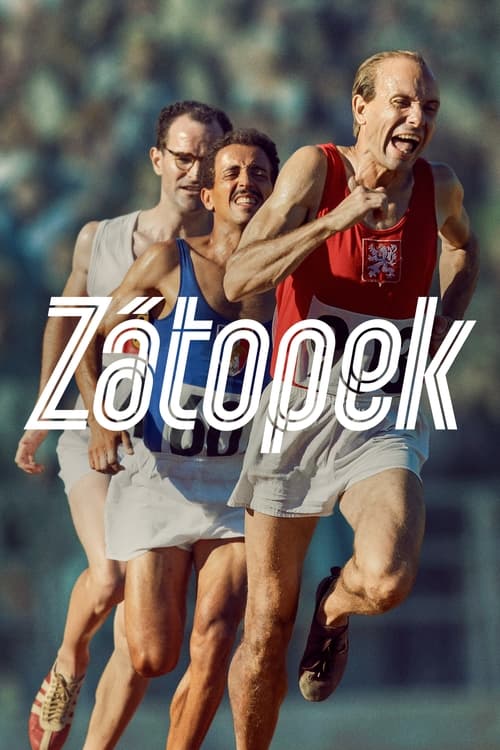
In the ending of "Zátopek," Emil Zátopek competes in the 1952 Helsinki Olympics, where he achieves remarkable success, winning three gold medals. The film concludes with a poignant reflection on his life, showcasing his dedication to running and the sacrifices he made, as well as the impact of his relationship with his wife, Dana. The story emphasizes the triumph of the human spirit and the importance of love and support in achieving one's dreams.
As the film approaches its climax, we find Emil Zátopek preparing for the 1952 Helsinki Olympics. The atmosphere is charged with anticipation, and the stakes are high. Emil, portrayed with a mix of determination and vulnerability, is seen training rigorously, pushing his body to its limits. His internal struggle is palpable; he grapples with self-doubt and the pressure of expectations, both from himself and from the world around him.
Scene by scene, the narrative unfolds. Emil's wife, Dana, is a constant presence, providing emotional support and encouragement. Their relationship is depicted with warmth and tenderness, showcasing the deep bond they share. As Emil trains, he often reflects on their life together, the sacrifices they have made, and the dreams they hold. This personal connection adds depth to his character, illustrating that his journey is not just about athletic achievement but also about love and partnership.
The day of the 10,000-meter race arrives, and the stadium is filled with spectators. Emil stands at the starting line, his heart racing, a mix of excitement and anxiety coursing through him. The race begins, and the camera captures the intensity of the competition. Emil runs with a unique style, his face a canvas of determination and focus. As the laps progress, he faces challenges from his competitors, but he remains resolute, drawing strength from his training and the support of Dana, who watches anxiously from the stands.
In a breathtaking moment, Emil surges ahead, crossing the finish line first, securing his first gold medal. The crowd erupts in cheers, and Emil's joy is palpable. He raises his arms in triumph, a mixture of disbelief and elation washing over him. This victory is not just a personal achievement; it symbolizes the culmination of years of hard work and perseverance.
The narrative continues as Emil competes in the 5,000-meter race, where he again faces fierce competition. The tension builds as he navigates the race, pushing through fatigue and pain. With each lap, the stakes rise, and the audience is drawn into the emotional rollercoaster of the event. Emil's determination shines through as he battles not only his opponents but also his own physical limits. In a stunning display of endurance, he crosses the finish line first once more, earning his second gold medal.
The final event is the marathon, a grueling test of stamina and willpower. Emil, now a celebrated athlete, faces the challenge with a mix of confidence and trepidation. The marathon is depicted with striking visuals, capturing the grueling nature of the race and the toll it takes on the runners. As Emil runs, the film intersperses flashbacks of his training, his struggles, and the unwavering support of Dana, reinforcing the emotional stakes of the moment.
In a climactic finish, Emil completes the marathon, securing his third gold medal. The victory is bittersweet; while he has achieved greatness, the toll of his journey is evident. The film closes with Emil and Dana embracing, their love a testament to the sacrifices made along the way. Emil's journey is celebrated, not just for his athletic prowess but for the resilience of the human spirit and the power of love and support in overcoming life's challenges.
As the credits roll, the audience is left with a sense of inspiration, reflecting on Emil Zátopek's legacy as a champion and a devoted husband, encapsulating the essence of perseverance and the importance of personal connections in the pursuit of dreams.
Is there a post-credit scene?
The movie "Zátopek," produced in 2021, does not feature a post-credit scene. The film concludes with a poignant reflection on the life and legacy of Emil Zátopek, the legendary Czech long-distance runner. After the final credits roll, the audience is left with a sense of closure regarding Zátopek's journey, his struggles, and his triumphs, encapsulating the spirit of perseverance and dedication that defined his character throughout the film. The absence of a post-credit scene reinforces the film's focus on Zátopek's historical significance and personal story rather than setting up any further narrative.
What motivates Emil Zátopek to become a long-distance runner?
Emil Zátopek's motivation to become a long-distance runner stems from his desire to prove himself and escape the mundane life of factory work. Initially, he is inspired by the success of other athletes and driven by a competitive spirit. His determination is further fueled by his passion for running, which he discovers during his time in the army, where he begins to train rigorously.
How does Zátopek's relationship with his wife, Dana, evolve throughout the film?
Zátopek's relationship with his wife, Dana, evolves from a supportive partnership to one strained by the pressures of his athletic career and the political climate in Czechoslovakia. Initially, Dana is his biggest supporter, but as Zátopek's fame grows, the demands of his training and the scrutiny from the government create tension. Despite these challenges, their bond is characterized by deep love and mutual respect, ultimately showcasing their resilience.
What role does the 1952 Helsinki Olympics play in Zátopek's journey?
The 1952 Helsinki Olympics serve as a pivotal moment in Zátopek's journey, marking the culmination of his hard work and determination. It is here that he competes in multiple events, including the 5,000 meters and the marathon, showcasing his unique running style and mental fortitude. The pressure of the Olympics tests his limits, but it also solidifies his legacy as one of the greatest long-distance runners in history.
How does Zátopek's training regimen reflect his character and determination?
Zátopek's training regimen is intense and unconventional, reflecting his relentless determination and innovative spirit. He is known for his grueling workouts, which include running in various conditions and experimenting with different techniques. His commitment to pushing boundaries, even when faced with skepticism from others, highlights his character as a pioneer in the sport and his unwavering belief in his abilities.
What challenges does Zátopek face due to the political climate in Czechoslovakia?
Zátopek faces significant challenges due to the political climate in Czechoslovakia, particularly during the Communist regime. His fame makes him a target for scrutiny, and he grapples with the expectations placed upon him as a national hero. The film portrays his internal conflict as he navigates the pressures of representing his country while remaining true to his values, especially during times of political unrest.
Is this family friendly?
The movie "Zátopek," released in 2021, is generally considered suitable for a family audience, but it does contain some scenes that may be sensitive for children or those who are particularly sensitive. Here are a few aspects to consider:
-
War and Conflict: The film touches on themes related to the political climate of Czechoslovakia during the Cold War, including references to oppression and the impact of war, which may be distressing for younger viewers.
-
Emotional Struggles: There are scenes depicting the emotional and psychological struggles of the main character, Emil Zátopek, as he faces personal and professional challenges. These moments may evoke feelings of sadness or anxiety.
-
Physical Strain and Injury: The film showcases the intense physical training and competition of long-distance running, which includes scenes of exhaustion and injury. While not graphic, the portrayal of physical pain may be unsettling for some.
-
Family Dynamics: There are moments that explore the complexities of family relationships, including tension and conflict, which may resonate differently with various audiences.
Overall, while "Zátopek" is an inspiring story of perseverance and triumph, it does contain elements that could be challenging for younger viewers or those sensitive to emotional and historical themes.









