








Popular
Who are the main characters in The Albanian Virgin, and how are Luana and Agim connected?
Why does Luana’s father force her into an arranged marriage?
What role does Agim play in Luana’s life besides being her love interest?
What specific dilemma does Luana face when she is deciding whether to stay or flee?
How does Luana try to live within the village code while still resisting it?
Should I watch it?
Ask Your Own Question

What is the plot?
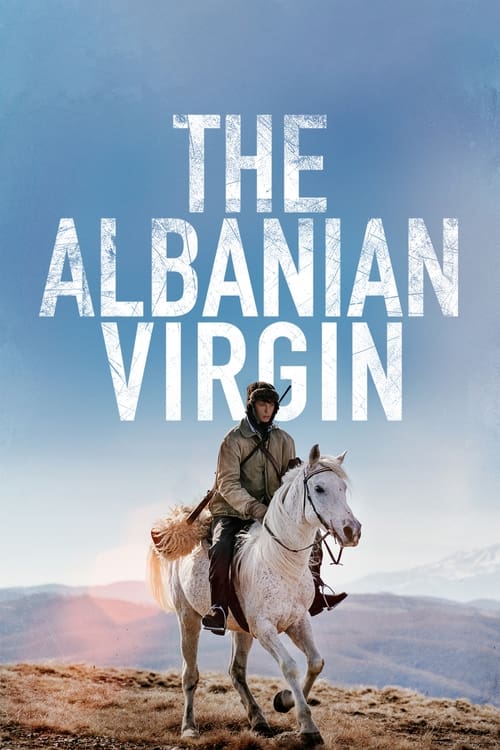
Albania in 1958 opens not with peace, but with a social world already rigged against the two children at its center: Luana, the daughter of a well-respected village man, and Agim, the son of people branded traitors and driven out of the city by the communists. In the same village, under the same hard sky, they grow up side by side and become inseparable friends over the course of roughly ten years, their bond deepening from childhood companionship into something that quietly turns into teenage love. The film's emotional weight comes from the fact that everyone around them understands the rules long before they do: Luana is not free to choose her own future, because her father has already promised her in marriage to another man when she is still a child. Even before anyone says it aloud, the village has decided what Luana's body, labor, and loyalty are for.
The early scenes establish a world where custom and political fear reinforce each other. Luana lives under the authority of a father who is respected publicly but oppressive at home, while Agim carries the stigma of his family's political disgrace like a wound he cannot set down. Their friendship survives precisely because it begins before adulthood gives the village the chance to police it more aggressively. As children, they can still move through the fields and paths together with a kind of innocence, but that innocence becomes fragile as they get older and the signs of separation begin to close in around them. Luana's growing awareness of her place in the village is central to the film's tension: she is not merely a girl being courted, but a person slowly realizing that every significant decision in her life has already been made by others.
Agim is more than just the boy she loves. One of the most important revelations in the story is that he teaches Luana how to read, and that act becomes one of the film's most meaningful sources of freedom. Literacy is not treated as a small skill; it is a dangerous form of independence. Through Agim, Luana gains access to thought beyond custom, beyond the village code, beyond the narrow limits of what she has been allowed to inherit. The gesture is intimate and transformative, because it gives her not just love but a private interior life. She begins to understand that there is a wider world of choice, even if the world around her is built to deny it.
For a long time, Luana and Agim's attachment remains hidden in the emotional cracks of village life. Their love grows in silence, without prospects, because both of them know that the social order is stacked against them. Agim's family background alone makes him a forbidden match in the eyes of the community, and Luana's promised marriage makes the relationship even more impossible. The film makes clear that the older generation's control is not abstract: it is personal, immediate, and capable of turning violent in its own way. Luana's father is not a distant figure of custom but the living instrument of it. When he discovers the truth about Luana and Agim, the story turns sharply. His reaction is fury. He does not hesitate, does not reflect, and does not negotiate. He immediately arranges for Luana to marry the man he chose for her, the man she was promised to long before she was old enough to understand the meaning of that promise.
That decision is the film's central confrontation. Luana's private life and her father's authority collide, and the collision is brutal precisely because it is so socially sanctioned. He is not simply angry as a father; he is enforcing a system. The film's world insists that his outrage is justified by honor, obedience, and order, but the emotional reality is much simpler: he is severing his daughter from the only person who has ever truly seen her. The arranged marriage is not a background detail. It is the mechanism by which the village attempts to erase Luana's selfhood. Her father's power is presented as total, and yet the very severity of his response exposes how threatening Luana's bond with Agim has become. The possibility of love has made her dangerous.
Once the marriage arrangement is forced into place, the story moves toward its most painful dilemma. Luana is made to choose between two forms of captivity: the family structure that has already claimed her and the possibility of escape with Agim. The escape route points toward Germany, which the synopsis frames as the lovers' destination and as a symbol of freedom. But the film does not romanticize the idea of running. Flight is not simply a door opening; it is a leap into political danger. The sources specify that if Luana and Agim flee, they risk being caught by the communists and "probably killed." That threat hangs over every scene that moves toward the ending, transforming love into a matter of survival.
What makes the final stretch tense is that the film places Luana in a double bind. If she stays, she must submit to a marriage she did not choose and a future designed to erase the life she has built with Agim. If she leaves, she may preserve her love but lose her life. The pressure is not only romantic but existential: she is being asked to decide whether freedom is worth death. The surrounding world offers no safe compromise. The village demands obedience, the state threatens punishment, and the lovers' bond has no approved place inside either system. This is why the film's emotional core is not just "Will they be together?" but "What does freedom cost when every structure around you is built to punish it?"
The most vivid emotional movement in the story comes from the way Luana's inner life has already changed before the final decision arrives. Her literacy, her years with Agim, and her slow awakening to the condition of women in the village have already made her impossible to return to the person she once was. She is no longer simply the daughter her father can hand over. She has learned to think independently, to imagine a future that is hers, and to feel the humiliation of having that future taken from her. The sources describe her as strong-willed and rebellious, and that characterization becomes most visible in the way she is forced to weigh obedience against selfhood. Even if she outwardly conforms, the film frames her as someone who has been changed in ways the village cannot fully contain.
The climax is built around Luana's final dilemma: she must decide whether to flee with Agim to Germany or remain loyal to her family and accepted social order. The sources do not provide a frame-by-frame account of the final minutes, and they do not confirm a specific on-screen death, but they do make clear that the danger is extreme and the emotional stakes are absolute. The ending is therefore driven less by spectacle than by pressure. Every prior humiliation, every lesson in reading, every memory of childhood friendship, and every demand of tribal custom converges in that last choice. Luana's father's arranged marriage has made the home she grew up in into a trap. Agim's family history has made him an outsider by birth. The communists' threat makes even love itself into an act of resistance.
Because the available sources do not fully detail the last scene, the film's final resolution must be stated carefully. What is known is that Luana stands at the edge of a terrible decision, with the possibility of escape always shadowed by the likelihood of being caught and killed. The film's title and its thematic framing suggest that the central issue is not virginity in a literal sense alone, but womanhood under a system of control, where identity is defined by duty, ownership, and sacrifice. The story's power lies in the collision between old tradition and modern political repression, both of which restrict Luana's life from different directions. By the end, the audience is left with the unbearable image of a young woman whose love has made her aware of freedom, but whose world offers freedom only at the price of exile, danger, or destruction.
No confirmed deaths are described in the film summaries provided, and no source here names a killed character in the 1958 plot. The only explicit death-related outcome mentioned is the danger that Luana and Agim would probably be killed if the communists catch them while fleeing. That means the story's true violence is structural as much as physical: Luana is forced into a life where the real threat is not a single murder, but the annihilation of choice itself. The final emotional note is one of suspended dread, with the lovers' future determined by the brutal logic of family authority, political surveillance, and social custom rather than by romance.
What remains most vivid is the contrast between the innocence of the opening and the severity of the ending. A boy and a girl who begin as best friends in the same village become adults who can scarcely claim their own lives. Agim's instruction in reading opens a crack in the wall, but it does not break the wall down. Luana's father closes the village ranks with a marriage arrangement that turns love into defiance. And the road to Germany, however luminous it may seem, is not a happy escape route but a corridor of mortal risk. The film closes its story on the edge of that risk, with Luana's heart, family, and future pulled in opposite directions and the possibility of freedom made inseparable from fear.


What is the ending?
The ending of The Albanian Virgin follows Luana after her father's plans for her marriage collapse into fear, pressure, and a forced choice between obedience and escape. In the final movement, she is given a new identity as a sworn virgin, and that status becomes the only way she can avoid being handed off into a marriage arranged by others.
After Luana's situation is decided, the story ends with her leaving Albania rather than staying inside the role that has been imposed on her. The priest helps arrange her departure, and she is taken to Trieste with plans for her to return home by boat. At the dock, she sees the priest as the boat pulls away, and she calls for him before the separation becomes final.
In a more detailed narrative form, the ending unfolds like this:
Luana has already been pushed through one last public transformation. The women of the village dress her and shave her head, and she stands there confused until the priest arrives. He tells her that she has been sold to a Muslim man for money and asks whether she wants that to happen. Luana says no. In response, the priest swears her in as a Virgin and warns her that she must never go with a man. After that, she is sent to live on her own.
Winter then closes in, and the priest takes Luana to Skodra, the nearest town, because he intends to bring her to the Bishop's house, where someone can decide what to do next. The priest is acting as her protector, but the story does not present the arrangement as warm or settled; it is a practical attempt to keep her from being forced into a marriage. When they reach the Bishop's house, the British Consulate has already been contacted, and preparations are being made for Luana's return home. Luana does not want to leave the priest. As the boat begins its trip from Trieste, she calls his name repeatedly. She then sees him standing on the dock as the boat pulls away, and that is the last moment described in the ending.
The fates of the main characters at the end are:
- Luana / Lottar: she is sworn in as a Virgin, separated from ordinary marriage prospects, and then arranged to leave Albania by boat, with her return home being prepared.
- The priest: he remains behind on the dock after helping arrange her protection and departure.
- Luana's father: by the end of the available summary, his power has already forced the situation into crisis through the arranged marriage, but the ending information provided does not describe a separate final scene for him.
- Agim: the available ending summaries do not give a final on-screen fate for him in the closing sequence.
Is there a post-credit scene?
There is no reliable evidence in the available sources that The Albanian Virgin (2023) has a post-credit scene. The film listings and trailer materials available here describe the film's basic premise and cast, but they do not mention any mid- or post-credit sequence.
If you want, I can also help by checking whether any festival screening reports, viewer reviews, or release notes mention an after-credits scene.
Who are the main characters in The Albanian Virgin, and how are Luana and Agim connected?
In the 2023 film, the central characters are Luana and Agim, two children who grow up together in the same Albanian village and remain close friends for years before their relationship turns into teenage love. Luana is the daughter of a well-respected man, while Agim is the son of people the communists have banned from the city, which makes their bond socially and politically difficult from the start.
Why does Luana’s father force her into an arranged marriage?
Luana's father has already promised her in marriage to another man since she was a child, and when he discovers her love for Agim, he becomes furious and immediately moves to marry her off to the man he chose. The pressure comes from the strict family and tribal code that expects Luana to obey her elders and accept the marriage arranged for her.
What role does Agim play in Luana’s life besides being her love interest?
Agim is not only Luana's childhood friend and later lover; he also teaches her how to read, which helps her become more independent and think for herself. That education becomes important because it gives Luana a way to question the tradition and authority shaping her life.
What specific dilemma does Luana face when she is deciding whether to stay or flee?
Luana must choose between fleeing with Agim to Germany or remaining loyal to her family and village. The escape option is dangerous because it risks communist capture and likely death, while staying means accepting the marriage and the obligations imposed by her family and community.
How does Luana try to live within the village code while still resisting it?
According to the film's descriptions, Luana finds a way to fight for her freedom while still obeying the village code, but doing so comes at a major personal cost. Her resistance is shaped by the strict mountain-tribe customs and the harsh political climate of 1950s and 1960s Albania.
Is this family friendly?
No--based on the available information, The Albanian Virgin is not especially family friendly, and it is rated 16+ / Ab 16 on Apple TV, which strongly suggests it is better suited to older teens and adults.
Potentially objectionable or upsetting elements likely include: - Teen romance and forced-marriage pressure, including a father angrily arranging a marriage for his daughter. - Threats of political danger and possible death, as the characters face the risk of being caught by the communists and "probably killed." - Emotional conflict and family coercion, with loyalty to family set against personal freedom and love. - Dark historical oppression, including a harsh village setting shaped by old traditions and political repression. - Mature dramatic themes rather than light adventure or comedy, which may feel heavy for sensitive viewers.
There is no clear indication in the available sources of explicit violence, gore, or sexual content, but the film's central conflicts are intense and potentially distressing for children or sensitive viewers.









