














Popular
How does Sarah first become targeted by the old woman in the restaurant, and what does Sarah believe is happening to her afterward?
What role do Dustin and Melissa play when Sarah and Simon visit them, and how does the Ouija board scene affect Sarah?
Who are Rachel and Masha in the second chapter, and what is the nature of their relationship?
Why does Masha become so dangerous, and how does her grandmother’s role shape her actions?
How do the Christmas party and Masha’s behavior change the relationship between Masha, Rachel, Dustin, and Melissa?
Should I watch it?
Ask Your Own Question

What is the plot?
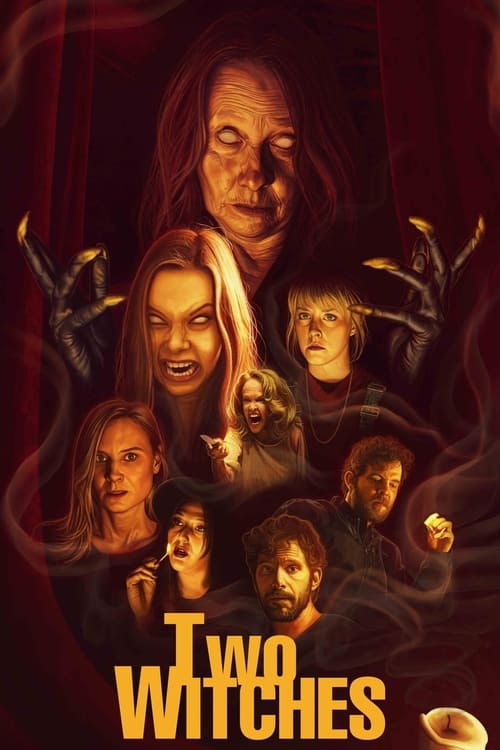
In the first chapter, Sarah Johnson's night out begins like a small, ordinary disaster that slowly curdles into something ancient and malignant. She is 27 years old and six months pregnant, trying to enjoy dinner with her boyfriend Simon Fleming when an elderly stranger, known only as The Boogeywoman, locks eyes on her with a stare so prolonged and deliberate that it feels less like a glance and more like a curse being placed. The restaurant is warm, full of clinking glasses and background chatter, but Sarah suddenly feels singled out, watched, as if the air itself has turned heavy around her. The old woman says little or nothing, yet her presence lands with frightening weight; Sarah leaves with the gnawing certainty that she has been marked by the evil eye, while Simon, practical to the point of cruelty, dismisses it as nerves, pregnancy, and anxiety. He tells her, in effect, that she is imagining things, and the more frightened she becomes, the more he treats her fear as a nuisance rather than a warning.
Back home, or as the night stretches on, Sarah's unease stops being merely emotional and starts seeming physical. She grows pale, restless, and sick, her dread sharpening into conviction that the woman at the restaurant has done something to her unborn child. Simon, still skeptical, keeps insisting that her condition is probably just pregnancy-related, but his refusal to take her seriously only deepens the isolation around her. The story moves with a grim inevitability as Sarah's fear hardens into obsession. She cannot let go of the Boogeywoman's face, the stare, the sense of being chosen. Every small bodily symptom becomes evidence. Every shadow becomes a threat. The film makes the supernatural feel intimate and invasive, as though the curse is crawling under Sarah's skin before it has even fully announced itself.
Desperate for answers and comfort, Sarah and Simon go to see their friends Dustin Green and Melissa Green, a couple whose home is steeped in occult curiosity and new-age confidence. Dustin and Melissa are the kind of people who treat the supernatural as something to be managed with rituals, tools, and the right attitude, and their certainty contrasts sharply with Sarah's panic and Simon's disbelief. The group decides to use a Ouija board to contact spirits and figure out what is happening to Sarah. The atmosphere turns tense almost immediately: candles, hushed voices, the small wooden planchette sliding under unseen pressure. What is meant to be a calming attempt at spiritual diagnosis becomes the point where the film crosses fully into possession and bodily horror. The spirits do not soothe Sarah. They seem to open her. The session unleashes a worse force, and the people around her begin to understand that they have not been investigating a harmless superstition but meddling with something hungry.
From that point on, Sarah's condition worsens rapidly. The night becomes a storm of dread and hallucination. She is no longer simply frightened; she is overtaken. Her body seems alien to her, her gaze slipping out of focus, her movements turning abrupt and violent. Simon, who has spent the story brushing off her terror, is suddenly trapped in the nightmare with her. The chapter's central confrontation erupts when Sarah attacks him in a state that reads as possession-like and feral. Simon flees and barricades himself in the bathroom, helpless behind a thin locked door while the apartment or house around him fills with the sounds of Sarah's breakdown. The bathroom becomes a tiny pocket of false safety, a place where he can only listen and wait while the thing that has entered Sarah rages outside. The tension is brutal because it is so domestic: a pregnant woman, a frightened boyfriend, a bathroom lock, and the horrible realization that none of it is enough.
The first chapter's violence leaves a trail of damage and uncertainty. One review notes that this sequence ends with one person dead, another missing, and another grievously injured, and while the available summaries do not spell out every single detail of the aftermath, they make clear that the séance has catastrophic consequences. The important point is that Sarah is no longer just a victim of fear; she has become the immediate agent of supernatural violence. The Boogeywoman's stare, the evil eye, the misguided Ouija session, and the group's amateur occult meddling all collapse together into a single bloody event. Sarah's discovery is not a clean answer but a terrible confirmation that her intuition was right: something has attached itself to her, and the baby she carries is at the center of it. Simon's skepticism dies with the night, replaced by horror, guilt, and the knowledge that he ignored her too long.
The film then shifts into its second chapter, and the mood changes from cursed pregnancy to parasitic inheritance. The story now follows Rachel Howard, a responsible, hard-working student and curator whose life is disrupted by her new roommate, Masha. Rachel is grounded, stressed, and trying to maintain order; Masha is impulsive, unstable, and immediately difficult to read. From the beginning, there is something off about the way Masha moves through the shared home, as if she is testing the boundaries of Rachel's patience and privacy. Their domestic space becomes a pressure cooker. Rachel has a loving boyfriend, Charlie, and that fact seems to gnaw at Masha almost immediately. The jealousy is not subtle. Masha watches, compares, resents. The dynamic turns sour in small ways first, then becomes openly toxic. Rachel is trying to be kind, trying to accommodate a difficult roommate, but Masha's presence turns every normal interaction into a threat.
The second chapter deepens when Masha reveals the key truth of her identity: her dying grandmother is a witch, and when the grandmother dies, Masha will inherit all of her power. The revelation is chilling not because it feels earned by rational explanation, but because it reframes everything that came before. Masha is not simply troubled; she is waiting. Her cruelty, her volatility, her eerie confidence all now have a source. The power is not metaphorical. It is passed down like an inheritance, and Masha seems to know exactly what she is becoming. The grandmother's death hangs over her like a countdown, a natural event transformed into a supernatural succession. Rather than fear the transfer of power, Masha appears to welcome it, as if she has been starving for the day her old woman dies and leaves her the family darkness.
Once Masha begins to act on that inheritance, the film becomes more openly vicious. Her resentment toward Rachel deepens into a kind of obsession, and the story starts to resemble a warped, witchy variant of a roommate thriller, full of imitation, manipulation, and private humiliation. Masha's power is not only inherited; it is performed. She uses it in ways that are petty, erotic, and cruel. One of the chapter's most shocking moments comes when she brings a man home and, during sex, strangles him to death. The scene is framed as sudden and grotesque, a burst of violence that reveals how casually Masha can turn intimacy into murder. It is one of the film's clearest deaths, and it confirms that the witchcraft here is not ornamental. Masha is dangerous in the most literal sense. Her sexuality, jealousy, and supernatural gifts all blend into the same predatory force.
A Christmas party brings the two storylines closer together and widens the sense of a shared occult world. Dustin and Melissa, the same couple who tried to help Sarah with the Ouija board, encounter Masha there and begin to recognize the truth about her. The social gathering is bright, festive, and superficially normal, which makes the underlying menace feel sharper. The party becomes a stage where Masha's hidden identity starts leaking into public view. She is no longer just a strange roommate in a private apartment; she is part of a lineage, a threat recognized by people who have already brushed against the supernatural in Sarah's story. This linkage between the chapters gives the film a circular, fated quality, as though the same dark current is moving through different households, different bodies, different forms of female power and violence.
As Rachel and Masha's relationship deteriorates, the emotional core of the second chapter becomes clear. Rachel is not merely living with a difficult roommate; she is trapped beside someone who envies her life and wants to destroy it. Masha's anger toward Rachel sharpens with every reminder of stability Rachel possesses: her career, her love life, her social legitimacy, her ability to appear normal. Masha does not simply want what Rachel has. She wants to unmake Rachel for having it. The horror comes from the intimacy of that resentment. They share rooms, routines, meals, air. The threat is not external; it is in the walls, the kitchen, the shared domestic rituals. The home that should shelter Rachel instead becomes a laboratory for jealousy and occult inheritance.
The climactic movement of the film is split between these two collapsing worlds. In Sarah's story, the possession-like attack after the Ouija session leaves the house, the bathroom, and the people inside them in ruins. Sarah's visions and the evil eye that began the film pay off in a savage eruption that confirms the curse has done its work. Simon's disbelief is fully punished now, and the earlier restaurant scene takes on the shape of a fatal misreading: the old woman's gaze was never harmless, and Sarah's warning was always real. The first chapter ends in blood and loss, with Sarah's pregnancy becoming the most vulnerable point of the haunting. One later synopsis of the film reveals that Sarah is eventually found by authorities in a raving state and tells a detective that a witch ate her baby, which makes the tragedy even more complete: the curse is not merely about torment, but about consumption, bodily violation, and the destruction of future life. That final revelation confirms the worst interpretation of the Boogeywoman's hunger and the scale of what Sarah has survived.
In the second chapter, Masha's inherited witchcraft spirals into its own form of doom. Her powers intensify alongside her cruelty, and Rachel's patience gives way to fear. The more Masha asserts herself, the more she seems to erase the boundary between roommate and predator. Her relationship to her grandmother's death becomes central to the story's sense of fate; the old witch is dying, Masha is waiting, and the inheritance feels less like a gift than a transfer of rot. By the time the chapter reaches its end, the violence is no longer incidental. It is Masha's language. She uses her new authority to control, frighten, and destroy, and Rachel's hope of an ordinary life collapses under the weight of that supernatural abuse. The exact final beats vary in how they are described across summaries, but the ending is unmistakably bleak: Masha embraces the darkness she has inherited, Rachel is left trapped in its wake, and the film closes the chapter on the sense that the witch line will continue.
The final scene structure is especially unsettling because it does not resolve these horrors into neat closure. Instead, the film ends with the lingering impression of continuation, as if the curse has only changed hands. Sarah's suffering and Masha's inheritance are presented as two expressions of the same terrible lineage: one woman is attacked by a witch's gaze and a botched spiritual intervention, while another becomes the next vessel for the same kind of power. The Boogeywoman and Masha are linked as grandmother and granddaughter, and that relationship redefines the whole film as a story of transmission rather than isolated incidents. Evil is not defeated; it is handed down, fed, and made younger. The line of witches survives.
What remains in the aftermath is a world in which the vulnerable are punished for seeking help in the wrong places, the skeptical are destroyed by their refusal to listen, and the occult spreads through family, sex, and domestic life with horrifying ease. Sarah Johnson begins the film as a pregnant woman hoping for a quiet dinner and ends as a traumatized survivor of a supernatural assault on her body and child. Simon Fleming begins as a dismissive boyfriend and ends as a man forced to confront the reality he mocked too late. Dustin Green and Melissa Green, who first appear as helpful occult-minded friends, become witnesses to a chain of events they cannot control. Rachel Howard, who only wants stability, is consumed by Masha's jealousy and violence. Charlie is drawn into the orbit of that destruction by proximity to Rachel. The Boogeywoman, ancient and hungry, initiates the first catastrophe. Masha, her granddaughter, carries that hunger into a new generation.
By the end, the film has made its point with brutal clarity: the curse is not an interruption to ordinary life but something that hides inside it, waiting for the right look, the right ritual, the right inheritance. The restaurant, the bathroom, the shared apartment, and the Christmas party all become sites where private life is invaded by the supernatural. The story begins with a stare and ends with blood, grief, and the confirmation that what passes through these women is larger than any one relationship. The last image leaves behind a chill that is more generational than immediate, suggesting that the cycle is not broken at all. It simply moves on, carrying the same evil eye, the same appetite, and the same terrible power into the next victim's life.








What is the ending?
Sarah's story ends in horror after the Ouija board session unleashes a violent force around her, and Masha's story ends with her turning her grandmother's death into her own inheritance of power. In the final moments, the witch lineage is carried forward, and the film closes on a darker supernatural note.
Sarah's ending begins after the restaurant scene and the later visit with Simon, Dustin, and Melissa, where the attempt to quiet Sarah's fear through a Ouija board instead opens the door to something far worse. The force that follows does not comfort her or explain itself; it overwhelms the room, and Sarah is left trapped inside a nightmare that grows more violent and physical. Simon, who kept dismissing her fear, is caught up in the consequences of that disbelief, while Dustin and Melissa are pulled into the same collapse of control. The ending of Sarah's segment leaves her marked by the encounter, and the film makes clear that what happened to her was not just anxiety or imagination.
Masha's ending comes later, after the tension with Rachel has deepened and Masha's unstable, threatening behavior has become impossible to ignore. She has already revealed that her grandmother is a witch and that she expects to inherit those powers when the old woman dies. By the end, Masha uses her connection to that power to force the final act of inheritance. Her grandmother dies by stabbing herself, driven to that death by Masha's influence, and Masha receives the power she has been waiting for. Rachel is left behind in the wake of that transformation, with the friendship and household relationship ruined by Masha's cruelty and need for control.
After that, the film shifts into an epilogue involving witches and a dark ritual atmosphere, confirming that the story is larger than either woman alone. The ending leaves Sarah as a victim of unleashed supernatural violence, Simon as a man undone by his dismissal and the chaos that follows, Dustin and Melissa as collateral figures drawn into the disaster, Rachel as someone who survives Masha's betrayal, and Masha as the new bearer of the witch's power.
Is there a post-credit scene?
Yes -- there is a post-credit scene in Two Witches, and IMDb describes it as a lengthy scene involving Sarah.
The search results available here do not provide a full scene-by-scene description of what happens in that post-credit sequence, only that Sarah is the focus. The film's general plot centers on Sarah, a pregnant woman who becomes entangled with an older witch and the aftermath of that horror story, so the post-credit scene likely continues or revisits that thread, but that specific detail is not explicitly confirmed in the sources provided.
How does Sarah first become targeted by the old woman in the restaurant, and what does Sarah believe is happening to her afterward?
In the film's first chapter, Sarah is dining with Simon when she notices an older woman giving her a disturbing, hostile look. That moment seems to lodge in Sarah's mind immediately, and she grows increasingly anxious, convinced that the woman has somehow marked her. As the unease intensifies, Sarah begins seeing visions of the woman as a witch-like figure, and the fear becomes physical and consuming rather than abstract. Her emotional state is a mix of dread, vulnerability, and confusion, because she cannot tell whether the threat is supernatural or a breakdown in her own mind.
What role do Dustin and Melissa play when Sarah and Simon visit them, and how does the Ouija board scene affect Sarah?
When Sarah and Simon go to visit Dustin and Melissa, the couple's new-age and occult-leaning environment becomes the setting for the story's most dangerous escalation. Melissa, who makes her living as a psychic healer, and Dustin help draw the group into an ill-advised attempt to use a Ouija board to calm Sarah's fears. Instead of reassuring her, the ritual opens the door to something darker, and Sarah's terror shifts into full-on supernatural violation. The scene turns the others' casual curiosity into a catastrophe, leaving Sarah overwhelmed as the forces she feared appear to seize control.
Who are Rachel and Masha in the second chapter, and what is the nature of their relationship?
The second chapter follows Rachel, a graduate student, and her new roommate Masha, whose presence quickly unsettles the home. Their relationship is built on tension from the start: Rachel is grounded, cautious, and trying to preserve her life and relationship, while Masha is impulsive, invasive, and intensely envious. Masha fixates on what Rachel has, especially her loving boyfriend, and that envy curdles into resentment. The emotional dynamic is less simple roommate friction than a slow, threatening invasion of Rachel's personal and emotional space.
Why does Masha become so dangerous, and how does her grandmother’s role shape her actions?
Masha's menace comes from both her personality and the inheritance she expects from her dying grandmother, who is revealed to be a witch. Masha knows that when the grandmother dies, she will receive her powers, and that knowledge feeds her sense of entitlement and growing cruelty. Rather than waiting passively, she begins acting as if she already deserves control over other people's lives. Her jealousy and hunger for power sharpen into deliberate revenge, making her feel less like a confused young woman and more like someone willingly stepping into darkness.
How do the Christmas party and Masha’s behavior change the relationship between Masha, Rachel, Dustin, and Melissa?
At the Christmas party, Masha's hidden nature starts to surface in a more public and socially destructive way. Dustin and Melissa encounter her there and begin to realize that the strange, impulsive woman they are dealing with is not merely eccentric but dangerous. The party shifts the conflict from private roommate tension into a wider web of exposure and threat, where Masha's identity as a witch becomes harder to conceal. Rachel is left to deal not only with betrayal and dread at home, but also with the sense that Masha is now moving through other people's lives with predatory intent.
Is this family friendly?
No -- for children, Two Witches is not family friendly. It is a horror film with severe violence/gore, severe profanity, severe frightening scenes, and moderate sexual content/nudity, so it is better suited to adults and mature teens at most.
Potentially objectionable or upsetting elements include: - Graphic violence and gore. - Frequent jump scares and a generally intense, disturbing horror tone. - Severe profanity. - Sexual/nudity content, including brief nudity noted in the parental guide. - Alcohol/drug/smoking content. - Pregnancy and baby-related distressing material, which some viewers specifically flag as triggering.
If you want, I can also give you a very short spoiler-free age recommendation like "OK for 13+ / 16+ / adults only."