





























Popular
What role does the character of the sheriff play in the story?
What is the significance of the demon that possesses people in Don't Kill It?
How does the character of Jebediah Woodley evolve throughout the film?
What are the consequences of the demon's possession on the victims?
How does the film depict the theme of trust among the characters?
Should I watch it?
Ask Your Own Question

What is the plot?
Sorry, we aren't able to watch and write up a full detailed plot yet. Check back in a few days.


What is the ending?
In the ending of "Don't Kill It," the main character, Jebediah Woodley, confronts the demon that has been wreaking havoc. After a series of intense confrontations, he ultimately sacrifices himself to stop the demon, ensuring that it cannot continue its rampage. The film concludes with a sense of unresolved tension, as the demon's influence lingers, leaving the fate of the world uncertain.
Now, let's delve into the ending in a more detailed narrative fashion:
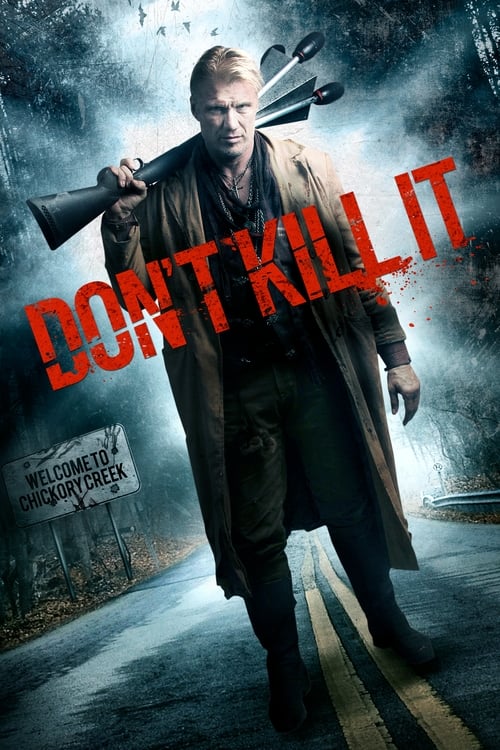
As the climax of "Don't Kill It" unfolds, Jebediah Woodley, portrayed by Dolph Lundgren, finds himself in a desperate race against time. The demon, which has been unleashed and is capable of possessing individuals, has already claimed several victims, leaving a trail of chaos and death. Jebediah, a seasoned demon hunter, is determined to end the threat once and for all.
In the final scenes, Jebediah teams up with a local sheriff, who has been skeptical of his methods but is now forced to confront the reality of the supernatural threat. They gather their remaining allies, including a few townsfolk who have witnessed the horrors firsthand. The group devises a plan to confront the demon at its source, a location steeped in dark history.
As they arrive at the site, tension fills the air. The atmosphere is thick with dread, and the characters are acutely aware of the stakes. Jebediah, driven by a mix of determination and a sense of duty, leads the charge. He knows that the only way to truly defeat the demon is to confront it directly, even if it means risking his own life.
The confrontation is intense. The demon, a grotesque and powerful entity, manifests in a terrifying form, showcasing its ability to manipulate and instill fear. Jebediah fights valiantly, using his knowledge of the demon's weaknesses. However, the battle takes a toll on him, both physically and emotionally. He is haunted by the memories of those who have fallen victim to the demon, fueling his resolve.
In a pivotal moment, Jebediah realizes that the only way to ensure the demon's defeat is through self-sacrifice. He understands that the demon feeds on fear and chaos, and by willingly offering himself, he can sever its connection to the mortal realm. With a heavy heart, he bids farewell to his companions, urging them to carry on and protect the town.
As he confronts the demon one last time, a fierce struggle ensues. The scene is filled with visceral action, showcasing Jebediah's bravery and the demon's malevolence. In a final act of defiance, Jebediah manages to bind the demon, but it comes at the cost of his own life. The moment is poignant, filled with a mix of triumph and tragedy as he sacrifices himself for the greater good.
In the aftermath, the remaining characters are left to grapple with the loss of Jebediah. The sheriff, once a skeptic, now carries the weight of understanding the supernatural world and the sacrifices made to protect it. The townsfolk, though shaken, find a renewed sense of purpose, vowing to honor Jebediah's legacy by standing together against any future threats.
The film concludes with a lingering sense of unease. While the immediate threat of the demon has been quelled, the final scenes hint at the possibility of its return. The camera pans out, leaving viewers with the unsettling notion that evil can never be fully vanquished, and the fight against darkness is an ongoing battle.
In summary, Jebediah Woodley sacrifices himself to defeat the demon, ensuring the safety of the town but leaving a haunting legacy. The sheriff and townsfolk are left to carry on, forever changed by the events that transpired, while the specter of the demon's influence remains, suggesting that the struggle against evil is far from over.
Is there a post-credit scene?
In the movie "Don't Kill It," there is indeed a post-credit scene that adds an intriguing twist to the story. After the credits roll, the scene opens in a dimly lit room where a group of people is gathered around a table. They are discussing the events that have transpired throughout the film, particularly the demon that has been unleashed and the chaos it caused.
As the conversation unfolds, it becomes clear that they are part of a larger organization that is aware of supernatural threats. They express concern about the demon's potential return and the need to prepare for future encounters. The atmosphere is tense, filled with a sense of urgency and foreboding.
Suddenly, the camera shifts to a close-up of a mysterious artifact on the table, hinting at the possibility of more supernatural elements at play. The scene ends with a lingering sense of dread, suggesting that the battle against evil is far from over, and leaving the audience with a chilling reminder that the demon could rise again. This post-credit moment effectively sets the stage for potential future conflicts and deepens the lore of the film's universe.
What role does the character of the sheriff play in the story?
The sheriff, played by Kristina Klebe, serves as a crucial character who embodies the conflict between law enforcement and the supernatural chaos unleashed by the demon. Initially skeptical of Jebediah's claims about the demon, she represents the rational, grounded perspective of the town. However, as the body count rises and the threat becomes undeniable, she transitions from skepticism to collaboration. Her character arc reflects the struggle to balance duty to the law with the need to protect her community, ultimately leading her to ally with Jebediah in the fight against the demon.
What is the significance of the demon that possesses people in Don't Kill It?
The demon in 'Don't Kill It' is a malevolent entity that possesses individuals, driving them to commit violent acts. Its significance lies in its ability to manipulate human emotions and actions, creating chaos and destruction. The demon's possession is not just a physical transformation; it reflects the darker aspects of human nature and the struggle between good and evil. As characters confront the demon, they are forced to face their own inner demons, making the battle against the entity both external and internal.
How does the character of Jebediah Woodley evolve throughout the film?
Jebediah Woodley, played by Dolph Lundgren, starts as a hardened demon hunter with a troubled past. Initially, he is portrayed as a lone wolf, driven by a sense of duty and a desire for redemption. As the story progresses, Jebediah's character evolves; he becomes more vulnerable, revealing his emotional scars and the weight of his past failures. His interactions with other characters, particularly the local sheriff and the townspeople, force him to confront his own fears and insecurities, ultimately leading him to embrace teamwork and trust in others.
What are the consequences of the demon's possession on the victims?
The consequences of the demon's possession are dire and gruesome. Victims become violent and lose control over their actions, often leading to horrific acts of murder and self-destruction. The physical transformation is accompanied by a psychological unraveling, as the possessed individuals are driven by primal instincts and rage. This loss of agency creates a sense of horror not only for the victims but also for their loved ones, who witness the transformation. The film explores the tragic impact of the demon's influence, highlighting the fragility of human nature when faced with such malevolence.
How does the film depict the theme of trust among the characters?
Trust is a central theme in 'Don't Kill It,' particularly in the relationships between Jebediah, the sheriff, and the townspeople. Initially, there is a significant lack of trust, as the sheriff doubts Jebediah's expertise and intentions. As the demon wreaks havoc, the characters are forced to confront their prejudices and fears, leading to moments of reluctant collaboration. The film illustrates how trust is built through shared experiences and the necessity of working together to combat a common enemy. This evolution in trust is pivotal for the characters' survival and their ability to confront the demon effectively.
Is this family friendly?
"Don't Kill It," produced in 2016, is not considered family-friendly due to its graphic content and themes. Here are some potentially objectionable or upsetting aspects that may occur for children or sensitive viewers:
-
Graphic Violence: The film features numerous scenes of intense violence, including brutal killings and dismemberment, which may be disturbing to viewers.
-
Supernatural Horror Elements: The presence of a demonic entity and the horror associated with it can be frightening, particularly for younger audiences.
-
Strong Language: The dialogue includes frequent use of profanity, which may not be suitable for children.
-
Gore and Blood: There are explicit depictions of blood and gore throughout the film, which can be unsettling.
-
Themes of Death and Possession: The narrative revolves around themes of death, possession, and the struggle against a malevolent force, which may be too intense for sensitive viewers.
-
Adult Situations: The film contains adult themes and situations that may not be appropriate for younger audiences.
Overall, the combination of horror, violence, and adult content makes "Don't Kill It" more suitable for mature audiences.







