
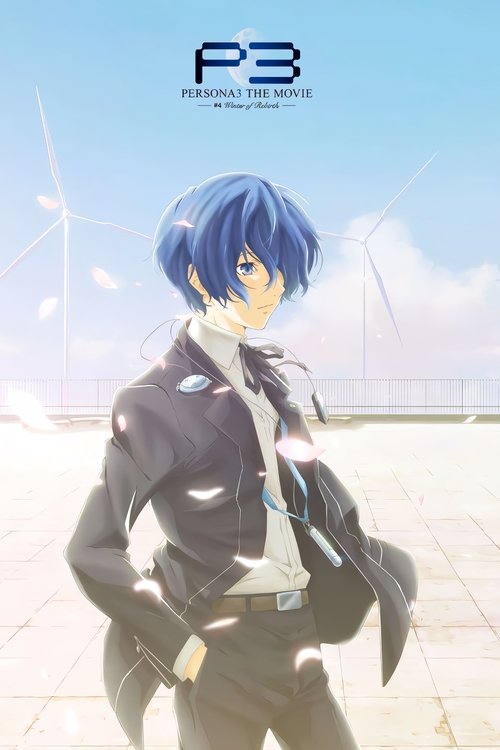























Popular
What happens to Makoto Yuki after the events of the previous films?
How does the relationship between Yukari Takeba and Makoto Yuki evolve in this film?
What role does the character of Aigis play in the story?
How does the film depict the concept of death and rebirth through its characters?
What is the significance of the new characters introduced in this film?
Should I watch it?
Ask Your Own Question

What is the plot?
Sorry, we aren't able to watch and write up a full detailed plot yet. Check back in a few days.
More Movies Like This
Browse All Movies →



What is the ending?
In the ending of "Persona 3 The Movie #4: Winter of Rebirth," the story culminates in a poignant resolution as the protagonist, Makoto Yuki, sacrifices himself to save his friends and bring an end to the conflict with Nyx. The film concludes with a sense of hope and rebirth, as the remaining characters reflect on their journey and the bonds they have formed.
As the film progresses towards its conclusion, the atmosphere is heavy with tension and emotion. The scene opens with the remaining members of SEES--Mitsuru Kirijo, Akihiko Sanada, Fuuka Yamagishi, and Aigis--gathered in the darkened halls of the Dark Hour. They are preparing for the final confrontation with Nyx, the embodiment of death, which looms over them like a shadow. Each character is filled with a mix of determination and dread, knowing that the stakes have never been higher.
The group shares a moment of camaraderie, reminiscing about their past battles and the friendships they have forged. This scene is filled with emotional weight, as they acknowledge the sacrifices made by their fallen comrades, particularly the loss of their friend, Shinjiro Aragaki. The camera lingers on their faces, capturing the resolve in their eyes, but also the fear of what lies ahead.
As they approach the final battle, the atmosphere shifts dramatically. The setting transforms into a surreal landscape, where the boundaries between reality and the metaphysical blur. Nyx appears, a towering figure shrouded in darkness, representing the inevitability of death. The confrontation is intense, with each member of SEES fighting valiantly, but it becomes clear that they are outmatched.
In a moment of desperation, Makoto steps forward, realizing that the only way to truly defeat Nyx is to embrace his own fate. He understands that his death is necessary to protect his friends and to bring peace to the world. This moment is filled with a profound sense of sacrifice, as he bids farewell to his friends, urging them to live on and cherish the life they have.
As Makoto faces Nyx, the battle reaches its climax. He channels the power of his Persona, Orpheus, and unleashes a final attack. The scene is visually stunning, with vibrant colors and dynamic animation illustrating the clash between light and darkness. In this moment, Makoto's resolve shines through, and he becomes a beacon of hope for his friends.
With a final, heart-wrenching scream, Makoto sacrifices himself, and Nyx is ultimately defeated. The darkness dissipates, and the world begins to return to normal. The remaining members of SEES are left in the aftermath, grappling with their loss but also filled with a renewed sense of purpose.
In the closing scenes, the characters reflect on their journey. Mitsuru, Akihiko, Fuuka, and Aigis stand together, united in their grief but also in their determination to honor Makoto's memory. They vow to continue living, to embrace the future, and to protect the bonds they have formed. The film ends on a hopeful note, with the sun rising over the horizon, symbolizing rebirth and the promise of a new beginning.
In summary, the fates of the main characters are intertwined with themes of sacrifice, friendship, and the acceptance of life and death. Makoto's selfless act serves as a catalyst for the others to move forward, ensuring that his legacy lives on in their hearts.
Is there a post-credit scene?
Yes, "Persona 3 The Movie #4: Winter of Rebirth" features a post-credit scene.
As the credits roll, the scene transitions to a serene setting, showcasing a snowy landscape that reflects the themes of rebirth and new beginnings. The camera pans over a tranquil scene, eventually focusing on a familiar character, Makoto Yuki, who is seen walking through the snow-covered streets of Iwatodai.
In this moment, there is a sense of peace and resolution. Makoto appears contemplative, reflecting on the journey he and his friends have undergone. The atmosphere is filled with a soft, ethereal light, symbolizing hope and the potential for a brighter future.
As he walks, he encounters familiar faces from his past, including his friends from SEES, who greet him with warm smiles. This reunion emphasizes the bonds formed through their shared experiences and struggles. The scene conveys a feeling of closure, yet also hints at the enduring connections that remain, suggesting that while their battles may be over, their friendships will continue to thrive.
The post-credit scene encapsulates the film's overarching themes of friendship, sacrifice, and the cyclical nature of life, leaving viewers with a sense of optimism and the idea that new journeys await.
What happens to Makoto Yuki after the events of the previous films?
In 'Persona 3 The Movie #4: Winter of Rebirth', Makoto Yuki, also known as the protagonist, faces the consequences of his choices and the burden of his responsibilities. After the battle against Nyx, he is seen in a state of reflection, grappling with the loss of his friends and the weight of his sacrifice. His internal struggle is depicted through poignant flashbacks and emotional encounters with his former teammates.
How does the relationship between Yukari Takeba and Makoto Yuki evolve in this film?
Yukari Takeba's relationship with Makoto Yuki deepens in 'Winter of Rebirth'. Throughout the film, she confronts her feelings of loss and longing for Makoto, who has become a symbol of hope and sacrifice. Their interactions are filled with emotional tension, as Yukari seeks closure and understanding of her own feelings, ultimately leading to a bittersweet acceptance of their shared past.
What role does the character of Aigis play in the story?
Aigis plays a crucial role in 'Winter of Rebirth' as she embodies the themes of humanity and sacrifice. As an android with a deep connection to Makoto, she struggles with her own identity and purpose after the events of the previous films. Aigis's journey is marked by her desire to protect her friends and honor Makoto's legacy, leading her to confront her own emotions and the meaning of her existence.
How does the film depict the concept of death and rebirth through its characters?
The film explores the concept of death and rebirth through the experiences of its characters, particularly focusing on Makoto and Aigis. As they navigate their grief and the aftermath of their battles, the narrative illustrates how they confront their pasts and the inevitability of loss. The imagery of winter serves as a metaphor for this cycle, with scenes of desolation contrasted by moments of hope and renewal, emphasizing the characters' growth and resilience.
What is the significance of the new characters introduced in this film?
In 'Winter of Rebirth', new characters are introduced to expand the narrative and provide fresh perspectives on the existing themes. These characters serve as catalysts for the main cast's development, challenging their beliefs and pushing them to confront their fears. Their interactions with the protagonists highlight the ongoing struggle against despair and the importance of connection, ultimately enriching the emotional landscape of the story.
Is this family friendly?
"Persona 3 The Movie #4: Winter of Rebirth" contains several themes and scenes that may not be suitable for children or sensitive viewers. Here are some potentially objectionable aspects:
-
Death and Mortality: The film deals heavily with themes of death, loss, and the consequences of choices related to life and death, which may be distressing for younger audiences.
-
Violence: There are scenes of combat and violence, including battles with supernatural entities, which may be intense or frightening.
-
Emotional Trauma: Characters experience significant emotional pain, including grief and existential crises, which could be upsetting for sensitive viewers.
-
Dark Themes: The narrative explores darker psychological themes, including despair and the struggle against inner demons, which may be challenging for younger viewers to process.
-
Mature Relationships: There are complex relationships and emotional conflicts among characters that may not be appropriate for children.
These elements contribute to a narrative that is more suited for older teens and adults rather than a family-friendly audience.








