


Popular
What motivates Kristina to abdicate the throne of Sweden?
How does Kristina's relationship with her father, King Gustav II Adolf, influence her decisions?
What role does the character of Cardinal Azzolino play in Kristina's life?
How does Kristina's friendship with the philosopher René Descartes impact her worldview?
What are the consequences of Kristina's decision to convert to Catholicism?
Should I watch it?
Ask Your Own Question

What is the plot?
Sorry, we aren't able to watch and write up a full detailed plot yet. Check back in a few days.







What is the ending?
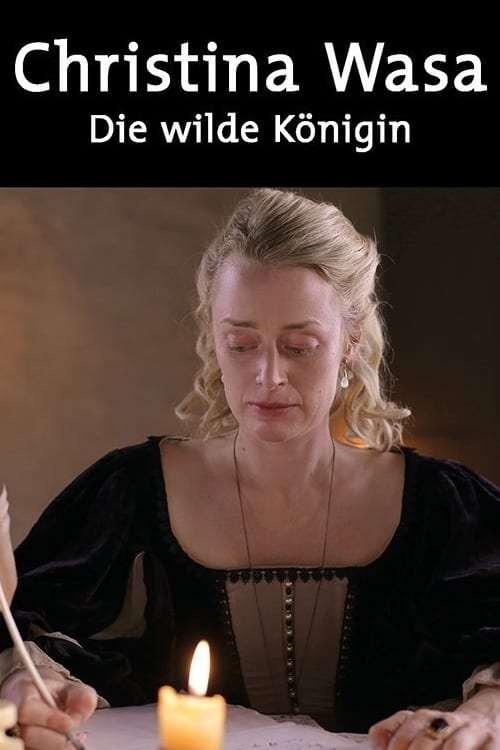
In the ending of "Kristina von Schweden - Die wilde Königin," Kristina, having faced numerous challenges and conflicts throughout her reign, ultimately decides to abdicate the throne of Sweden. She chooses to leave her royal life behind to pursue her own desires and identity. The film concludes with her departure from Sweden, symbolizing her quest for freedom and self-discovery.
As the final scenes unfold, we see Kristina standing in her grand palace, the weight of her crown heavy upon her. The atmosphere is thick with tension as she contemplates her future. The court is abuzz with whispers of her unconventional choices, and her advisors express their concerns about her leadership. Kristina, however, is resolute. She feels trapped by the expectations of her role as queen, yearning for a life that allows her to explore her true self.
In a poignant moment, Kristina gathers her closest confidants, including her loyal friend and advisor, Axel Oxenstierna. She expresses her desire to abdicate, revealing her longing for freedom and the pursuit of knowledge and art. Axel, though supportive, is visibly torn, understanding the implications of her decision for the kingdom. He pleads with her to reconsider, but Kristina's mind is made up. She feels that her reign has been marked by a struggle between duty and desire, and she can no longer ignore her own needs.
The scene shifts to the grand hall where Kristina formally announces her abdication to the court. The nobles and dignitaries are shocked, their faces a mix of disbelief and concern. Kristina stands tall, her voice steady as she declares her intention to leave the throne. She speaks passionately about her vision for a new life, one that embraces her individuality and passions. The court is silent, the weight of her words hanging in the air.
As she steps down from the throne, Kristina's expression is a blend of relief and sadness. She knows that her decision will have far-reaching consequences for Sweden, but she feels a sense of liberation. The camera captures her as she walks away from the throne, symbolizing her departure from the constraints of her royal duties.
In the final moments, Kristina is seen boarding a ship, ready to embark on her journey to Rome. The wind blows through her hair, and there is a sense of hope and uncertainty in her eyes. She looks back at Sweden one last time, a bittersweet smile on her face, as she embraces the unknown future ahead of her.
The film closes with a reflection on the fates of the main characters. Kristina, now free from the crown, seeks her own path, while Axel remains in Sweden, tasked with navigating the political landscape left in the wake of her abdication. The kingdom faces a new chapter, one that will be shaped by Kristina's bold choice to prioritize her own identity over the expectations of her role as queen.
Is there a post-credit scene?
The movie "Kristina von Schweden - Die wilde Königin" does not feature a post-credit scene. The film concludes its narrative without any additional scenes or content after the credits roll. The story wraps up with a focus on Kristina's journey and her decisions, leaving the audience with a sense of closure regarding her character and the historical context in which she lived.
What motivates Kristina to abdicate the throne of Sweden?
Kristina von Schweden, portrayed as a fiercely independent and intellectual young woman, grapples with the constraints of her royal duties and the expectations placed upon her as a queen. Her desire for personal freedom, intellectual exploration, and a life beyond the confines of monarchy drives her to consider abdication. Throughout the film, her internal conflict is palpable as she weighs her responsibilities against her yearning for a life filled with passion and knowledge.
How does Kristina's relationship with her father, King Gustav II Adolf, influence her decisions?
Kristina's relationship with her father is complex and deeply influential. King Gustav II Adolf, a strong and ambitious ruler, instills in Kristina a sense of duty and the importance of leadership. However, his expectations also create a rift, as Kristina feels suffocated by the weight of her father's legacy. His death profoundly impacts her, leading her to question her role as queen and ultimately pushing her towards the decision to abdicate in search of her own identity.
What role does the character of Cardinal Azzolino play in Kristina's life?
Cardinal Azzolino serves as both a mentor and a manipulator in Kristina's life. He recognizes her intelligence and potential, often guiding her in political matters. However, his ambitions for power and influence over her decisions create tension. As Kristina seeks to assert her independence, Azzolino's attempts to control her path lead to a struggle between her desire for autonomy and the political machinations surrounding her.
How does Kristina's friendship with the philosopher René Descartes impact her worldview?
Kristina's friendship with René Descartes is pivotal in shaping her intellectual and philosophical outlook. Their discussions challenge her to think critically about her role as a monarch and the nature of existence. Descartes encourages her to pursue knowledge and question societal norms, which resonates deeply with Kristina's rebellious spirit. This relationship not only fuels her desire for personal freedom but also solidifies her commitment to a life driven by intellect rather than obligation.
What are the consequences of Kristina's decision to convert to Catholicism?
Kristina's conversion to Catholicism is a significant turning point in the film, symbolizing her rejection of the Lutheran faith that dominated Sweden. This decision alienates her from her subjects and creates political turmoil, as it is seen as a betrayal of her role as queen. The conversion reflects her quest for spiritual fulfillment and personal identity, but it also leads to increased scrutiny and conflict with the Protestant establishment, ultimately complicating her reign and relationships.
Is this family friendly?
The movie "Kristina von Schweden - Die wilde Königin" contains several elements that may not be suitable for younger audiences or sensitive viewers. Here are some potentially objectionable or upsetting aspects:
-
Political Intrigue and Betrayal: The film delves into themes of political maneuvering, betrayal, and the heavy burdens of leadership, which may be complex and intense for children to understand.
-
Emotional Turmoil: The protagonist, Kristina, experiences significant emotional struggles, including feelings of isolation, pressure, and conflict with her identity, which may be distressing for some viewers.
-
Depictions of War and Conflict: There are scenes that portray the consequences of war and the impact of political decisions on people's lives, which can be intense and unsettling.
-
Romantic Tensions: The film explores Kristina's relationships, including romantic tensions that may include themes of unrequited love and societal expectations, which could be confusing for younger viewers.
-
Historical Context: The film's historical setting includes references to societal norms and practices that may be difficult for children to grasp, including issues of gender roles and power dynamics.
These elements contribute to a narrative that, while rich in historical context and character development, may not be entirely family-friendly.









