









Popular
Should I watch it?
Ask Your Own Question

What is the plot?
Sorry, we aren't able to watch and write up a full detailed plot yet. Check back in a few days.

What is the ending?
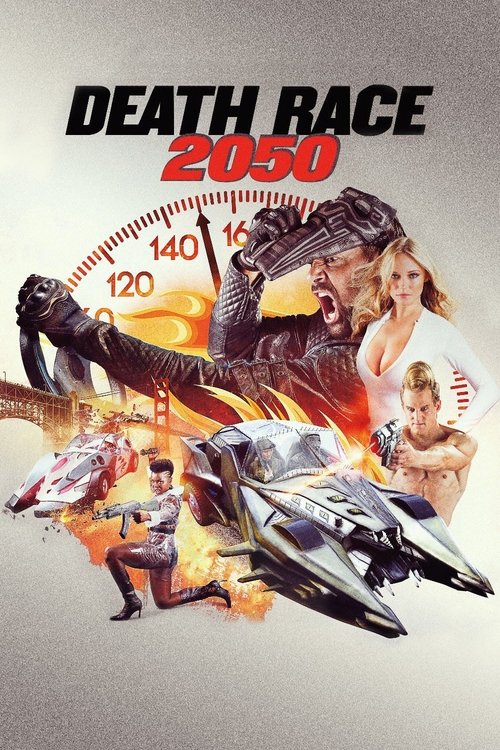
In the ending of "Death Race 2050," the race culminates in a chaotic showdown where the main characters face their fates. The protagonist, Frankenstein, ultimately sacrifices himself to save his fellow racer, Minerva, and the two of them manage to escape the oppressive regime. Meanwhile, the other racers meet their own grim ends, with some being eliminated in the brutal race and others facing the consequences of their actions.
As the film draws to a close, the dystopian world remains unchanged, but the hope for a better future lingers in the air as Minerva and Frankenstein drive away together, symbolizing a glimmer of rebellion against the oppressive system.
The final scenes of "Death Race 2050" unfold with a palpable tension as the racers approach the climax of the deadly competition. The atmosphere is charged with the roar of engines and the cheers of the bloodthirsty audience, who revel in the carnage that unfolds on the track.
Frankenstein, portrayed as a fierce and determined racer, is driven by a desire not only to win but to challenge the corrupt system that orchestrates the race. His internal conflict is evident as he grapples with the morality of the race and the lives at stake. As the race progresses, he forms a bond with Minerva, a fellow racer who embodies the spirit of rebellion against the oppressive regime. Their connection deepens, and they share a mutual understanding of the stakes involved.
As the race reaches its climax, the remaining racers are whittled down through a series of violent confrontations. The audience is treated to a spectacle of destruction, with cars crashing and racers meeting gruesome fates. The tension escalates when the ruthless antagonist, the Chairman, manipulates the race to ensure that only the most brutal survive.
In a pivotal moment, Frankenstein realizes that the only way to truly challenge the system is to make a sacrifice. He decides to confront the Chairman directly, leading to a dramatic showdown. In a heart-pounding sequence, he faces off against the Chairman's forces, showcasing his bravery and determination. However, the stakes are high, and the cost of rebellion becomes painfully clear.
As the chaos unfolds, Minerva finds herself in a precarious situation, caught between the desire to win and the need to escape the oppressive regime. Frankenstein, seeing her in danger, makes a fateful decision. He sacrifices himself to ensure her safety, a moment that is both tragic and heroic. The emotional weight of this sacrifice resonates deeply, highlighting the themes of loyalty and the fight against tyranny.
In the aftermath of the race, Minerva manages to escape the clutches of the regime, driving away with Frankenstein's spirit guiding her. The final scenes depict her as a symbol of hope, embodying the possibility of change in a world that has been ravaged by violence and oppression. The film closes with a sense of unresolved tension, as the dystopian society remains intact, but the flicker of rebellion ignited by Frankenstein and Minerva suggests that the fight for freedom is far from over.
The fates of the other racers are grim; many meet their ends in the chaos of the race, either through direct confrontation or the ruthless machinations of the Chairman. The film leaves the audience with a stark reminder of the cost of survival in a world where entertainment is derived from violence, and the struggle for freedom is fraught with peril.
Is there a post-credit scene?
In "Death Race 2050," there is indeed a post-credit scene that adds a humorous twist to the film's satirical tone. After the credits roll, the scene reveals a brief moment featuring the character known as "Frankenstein," who is portrayed by Manu Bennett. In this scene, Frankenstein is seen in a comical situation where he is being interviewed by a news reporter. The reporter asks him about his plans following the chaotic events of the race.
Frankenstein, maintaining his tough persona, responds with a mix of bravado and absurdity, hinting at his desire to continue racing and possibly even taking on new challenges. The scene encapsulates the film's over-the-top style and dark humor, leaving the audience with a sense of the ongoing madness in the world of "Death Race 2050." It serves as a light-hearted conclusion to the film, reinforcing the satirical commentary on society's obsession with violence and entertainment.
Who are the main characters in Death Race 2050?
The main characters in Death Race 2050 include Frankenstein, a legendary racer who is both feared and revered; Minerva, a ruthless and ambitious racer who is determined to win at any cost; and the Driver, a new contender who is trying to prove himself. Additionally, there is the character of the Chairman, who oversees the race and embodies the oppressive regime.
What motivates Frankenstein to participate in the Death Race?
Frankenstein is motivated by a desire to maintain his status as the top racer while also seeking revenge against the oppressive regime that controls the race. He grapples with his own identity and the expectations placed upon him, as he is both a symbol of hope for the people and a pawn in the system.
How does the character of Minerva impact the race?
Minerva is a fierce competitor who uses her cunning and ruthlessness to manipulate situations to her advantage. Her desire to win drives her to sabotage other racers and form temporary alliances, showcasing her willingness to do whatever it takes to secure victory.
What role does the Chairman play in the Death Race?
The Chairman serves as the antagonist of the film, representing the corrupt and authoritarian government that controls the race. He manipulates the events of the race to maintain power and entertain the masses, often using brutal tactics to ensure that the racers adhere to his rules.
What are the unique features of the vehicles used in the Death Race?
The vehicles in Death Race 2050 are equipped with various weapons and modifications that enhance their performance and lethality. Each car reflects the personality of its driver, with features like spikes, flamethrowers, and other deadly gadgets designed to eliminate competitors and create chaos during the race.
Is this family friendly?
"Death Race 2050" is not considered family-friendly due to its mature themes and graphic content. Here are some potentially objectionable or upsetting aspects that may occur for children or sensitive viewers:
-
Violence and Gore: The film features intense car racing scenes where competitors engage in violent acts, including running over pedestrians and other racers, leading to graphic depictions of injury and death.
-
Death and Destruction: The central premise revolves around a deadly race where contestants are encouraged to kill for points, showcasing a dystopian society that glorifies violence.
-
Sexual Content: There are suggestive themes and scenes that include sexual innuendos and objectification of characters, which may be inappropriate for younger audiences.
-
Dark Humor: The film employs a satirical tone that addresses serious societal issues through a lens of dark comedy, which may not resonate well with all viewers.
-
Dystopian Themes: The portrayal of a future society that is corrupt and brutal can be unsettling, especially for younger viewers who may not grasp the satire.
Overall, the film's combination of violence, sexual content, and dark humor makes it unsuitable for children and potentially distressing for sensitive individuals.








