
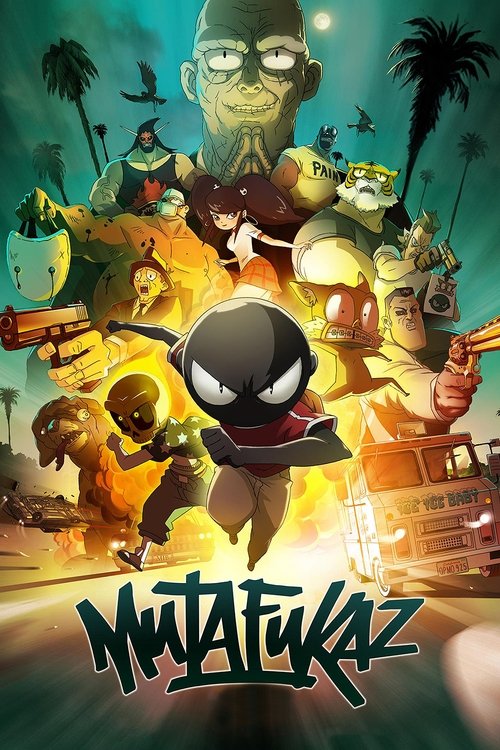













Popular
What is the significance of Angelino's transformation throughout the film?
How does the relationship between Angelino and his love interest, Luna, develop?
What role do the antagonists, particularly the government agents and the supernatural beings, play in the story?
What is the significance of the city setting in MFKZ?
How does Angelino's relationship with his friends impact his journey?
Should I watch it?
Ask Your Own Question

What is the plot?
Sorry, we aren't able to watch and write up a full detailed plot yet. Check back in a few days.





What is the ending?
In the ending of MFKZ, Angelino confronts the truth about his identity and the forces that have been manipulating him. He battles against the antagonistic forces led by the mysterious organization, ultimately embracing his true self. The film concludes with a climactic showdown, leading to a resolution that leaves Angelino and his friends with a sense of hope and determination for the future.
As the film approaches its climax, we find Angelino, now fully aware of his unique heritage as a half-human, half-demon hybrid, grappling with the implications of his identity. The city around him is in chaos, with the sinister organization, known as the "MFKZ," tightening its grip. The atmosphere is thick with tension, and the neon-lit streets of the dystopian city pulse with a sense of impending doom.
In a pivotal scene, Angelino, alongside his loyal friends, including the tough and resourceful Pino, prepares for the final confrontation. They gather in a hidden location, strategizing their next moves. Angelino's internal struggle is palpable; he feels the weight of his destiny pressing down on him, torn between the human side that craves normalcy and the demonic side that yearns for power. His friends rally around him, providing support and encouragement, reminding him of the importance of their bond.
As they venture into the heart of the enemy's lair, the visuals become increasingly frenetic, with vibrant colors contrasting against the dark, oppressive environment. The group faces numerous challenges, battling against the organization's henchmen, each encounter heightening the stakes. Angelino's powers begin to manifest more prominently, showcasing his transformation as he taps into his demonic abilities. The action is intense, with fluid animation capturing the chaos of the fights, punctuated by moments of camaraderie and bravery among the group.
In a climactic showdown, Angelino confronts the leader of the MFKZ organization. The battle is fierce, with both sides unleashing their full potential. Angelino's emotional turmoil reaches its peak as he fights not just for his life but for the lives of his friends and the future of the city. The visuals are striking, with bursts of energy and color as Angelino embraces his true nature, channeling his powers in a way that reflects his growth throughout the film.
As the dust settles, Angelino emerges victorious, but not without cost. The organization is dismantled, and the city begins to breathe a sigh of relief. However, the victory is bittersweet. Angelino's friends, including Pino, have stood by him through the chaos, and their bond is stronger than ever. They share a moment of reflection, acknowledging the trials they faced together and the uncertainty that lies ahead.
In the final scenes, we see Angelino standing on a rooftop, overlooking the city. The neon lights flicker, and the sounds of the bustling streets fill the air. He contemplates his identity, no longer shying away from his dual nature. The film closes with a sense of hope, as Angelino and his friends prepare to face whatever challenges the future may hold, united in their resolve to protect their home and each other.
The fates of the main characters are intertwined with this resolution. Angelino, having embraced his identity, steps into a new role as a protector of the city. Pino, ever the loyal friend, stands by his side, ready to face the unknown. The other characters, who have supported Angelino throughout his journey, also find their places in this new world, suggesting a future filled with possibilities and the strength of friendship.
Is there a post-credit scene?
Yes, "MFKZ" features a post-credit scene that adds an intriguing layer to the film's narrative.
As the credits roll, the scene opens with a dark, desolate landscape, hinting at the aftermath of the chaotic events that unfolded throughout the movie. The atmosphere is thick with tension, and the sound of distant sirens can be heard, echoing the turmoil of the city.
In this scene, we see the character Angelino, who has undergone significant transformation and growth throughout the film. He is depicted sitting on a rooftop, gazing out over the cityscape, which is now a mix of vibrant colors and shadows, reflecting the duality of his existence. His expression is contemplative, a blend of relief and uncertainty, as he processes the choices he has made and the consequences they carry.
Suddenly, a figure appears beside him. It is his friend, Vinz, who has been a loyal companion throughout their journey. Vinz's demeanor is light-hearted, attempting to lift the heavy mood. He cracks a joke, and for a moment, the tension dissipates, showcasing their enduring friendship despite the chaos surrounding them.
As they share a laugh, the scene shifts slightly, revealing a mysterious silhouette in the distance, hinting at potential new threats or adventures that lie ahead. The camera zooms in on Angelino's face, capturing a flicker of determination in his eyes. He stands up, ready to face whatever comes next, embodying the spirit of resilience that defines his character.
The post-credit scene leaves viewers with a sense of anticipation, suggesting that Angelino's story is far from over and that the world he inhabits is still rife with challenges and mysteries to unravel.
What is the significance of Angelino's transformation throughout the film?
Angelino, the protagonist, undergoes a significant transformation as he grapples with his identity and the strange powers he begins to manifest. Initially, he is a slacker living in a dystopian city, but as he discovers his abilities, he becomes more aware of his purpose and the larger conflict at play. His transformation is not just physical but also emotional, as he learns to embrace his heritage and the responsibilities that come with it.
How does the relationship between Angelino and his love interest, Luna, develop?
Angelino's relationship with Luna is central to the narrative. Initially, Luna is a mysterious figure who captivates Angelino, but as the story progresses, their bond deepens. Luna represents both a source of motivation for Angelino and a connection to his humanity. Their interactions are filled with tension, longing, and moments of vulnerability, showcasing Angelino's desire to protect her while also navigating his own chaotic existence.
What role do the antagonists, particularly the government agents and the supernatural beings, play in the story?
The antagonists, including government agents and supernatural beings, serve as catalysts for Angelino's journey. The agents represent the oppressive forces of the dystopian society, seeking to control or eliminate those who possess powers like Angelino. The supernatural beings, on the other hand, embody the mystical elements of the story, challenging Angelino to confront his fears and embrace his true self. Their presence heightens the stakes and drives the narrative forward.
What is the significance of the city setting in MFKZ?
The city in MFKZ is a character in itself, reflecting the chaos and corruption of the world Angelino inhabits. It is a vibrant yet dangerous place, filled with neon lights, graffiti, and a mix of cultures. The setting amplifies the themes of alienation and struggle, as Angelino navigates through its dark alleys and bustling streets. The city's atmosphere influences the characters' actions and decisions, making it a crucial backdrop for the unfolding drama.
How does Angelino's relationship with his friends impact his journey?
Angelino's friends play a vital role in his journey, providing both comic relief and emotional support. They represent a sense of camaraderie and loyalty in a chaotic world. As Angelino faces challenges, his friends encourage him to embrace his powers and confront the dangers ahead. Their interactions highlight themes of friendship and solidarity, showcasing how their bond helps Angelino grow and ultimately influences his decisions throughout the film.
Is this family friendly?
MFKZ, produced in 2018, is not considered family-friendly due to its mature themes and graphic content. Here are some potentially objectionable or upsetting aspects that may occur for children or sensitive viewers:
-
Violence: The film contains scenes of intense violence, including gunfights and brutal confrontations that may be disturbing.
-
Gore: There are graphic depictions of injuries and bloodshed, which can be unsettling for younger audiences.
-
Language: The dialogue includes strong profanity and crude language, which may not be suitable for children.
-
Drug Use: There are references to drug use and substance abuse, portrayed in a way that may be inappropriate for younger viewers.
-
Adult Themes: The film explores themes of crime, betrayal, and existential dread, which may be too complex or dark for children.
-
Sexual Content: There are suggestive scenes and adult situations that may be uncomfortable for younger audiences.
Overall, MFKZ is aimed at an adult audience and contains numerous elements that could be distressing for children or sensitive individuals.







