









Popular
What motivates Jeff to try to save the bowling alley?
How does Jeff's relationship with his co-workers evolve throughout the film?
What role does the character of the bowling alley owner play in Jeff's journey?
How does Jeff's personal life impact his actions in the bowling alley?
What challenges does Jeff face while trying to save the bowling alley?
Should I watch it?
Ask Your Own Question

What is the plot?
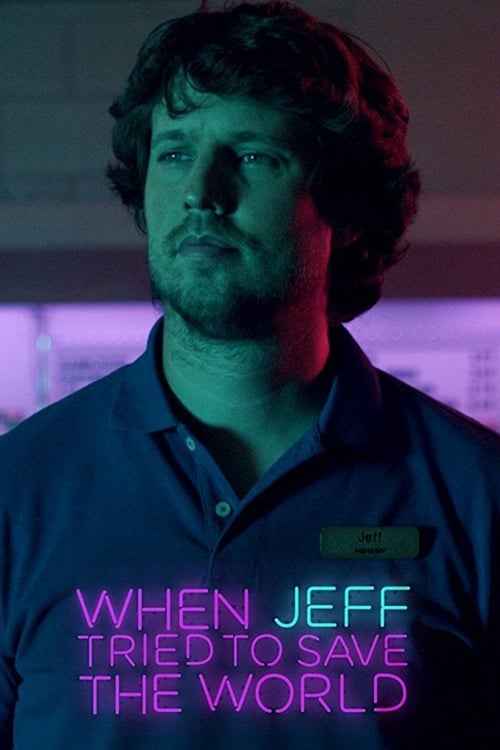
Jeff Winger's world is small, stale, and strangely comforting when the film opens: he spends his days managing Winky's World, a faded suburban Chicago bowling alley where the neon is dim, the carpet is tired, and the routine is so familiar it feels like armor. Jeff is in his thirties, anxious, awkward, and half-hidden inside a life he has reduced to manageable repetitions. Everyone around him believes a version of him that he has carefully maintained for years: that he is using his computer-engineering background in an IT job, when in fact he is quietly stranded in the alley, letting the place become both his refuge and his excuse. The film frames him as a man who has not so much built a life as paused one, and that pause is shattered the moment Sheila tells him that Carl, the owner, plans to sell Winky's World and close it down within thirty days.
That news lands like a physical blow. Jeff's attachment to the alley is not sentimental in a superficial way; it is the one environment where his anxiety settles, where he knows the rules, where he feels useful. Winky's World may be worn out, but to Jeff it is alive in a way the rest of his life is not. As the reality of the sale sinks in, he begins scrambling for a way to change Carl's mind before the bulldozers and investors arrive. He does not confront Carl with any grand speech at first. Instead, he tries to revive the place and make it impossible to ignore, arranging a "Friday Fun Day" style event with free pizza, live music, and discount bowling, hoping that if Carl sees the alley crowded, laughing, and full of energy again, nostalgia might do what logic cannot.
The atmosphere around the bowling alley grows tense but also oddly comic, because everyone is trying to save something in their own limited way. Sheila, who is Carl's soon-to-be ex-wife, tries her own approach by wined-and-dining him, trying to soften him emotionally and persuade him not to go through with the sale, but that effort fails. Stanford, Carl's teenage nephew and a perpetually underwhelming employee, throws himself into helping Jeff in his half-serious, half-loafing way, but his attempts are also too small to move Carl. Frank, the resident fix-it guy, and Raul, the soft-spoken bartender, fill out the modest world of the alley, a makeshift family of workers who understand that if Winky's closes, they lose not just jobs but identity. The movie turns the alley into a living organism at the edge of death, with Jeff as the anxious heart trying to keep it beating one more night.
As Jeff pushes toward the event, the film begins threading in a second crisis, one that is more personal and more humiliating than the sale. His sister Lindy arrives unannounced at his apartment with her friend and roommate Samantha, and their visit throws his elaborate lie into danger. Lindy believes Jeff has been working in the respectable world of information technology, the kind of career his family would approve of, and Jeff has done nothing to correct that misunderstanding. The apartment itself becomes a pressure cooker of shame and avoidance: books, clothes, and sparse furniture become evidence of a life built around secrecy. Jeff is forced to juggle conversations, hide the truth, and maintain the image that he is more successful and more stable than he really is. The contrast between his apartment and Winky's World matters: one is the sterile space where he pretends, the other is the shabby place where he is honest with himself.
Samantha quickly becomes more than a complication. She is observant, calm, and less invested in the false version of Jeff than Lindy is, and the movie lets a quiet connection develop between them. Their relationship is not presented as a sweeping romance but as a slow recognition between two people who can see through each other's defenses. Samantha's presence intensifies Jeff's anxiety because she makes it harder for him to continue hiding behind the old story he tells his family, yet she also gives him a brief glimpse of a possible future not defined by failure. The emotional center of the film deepens here: Jeff is no longer just trying to save a bowling alley, he is trying not to be exposed as the version of himself he fears everyone has already outgrown.
Meanwhile, Carl remains stubbornly unmoved. The weekend event succeeds on the level Jeff hoped for in the simplest sense: people show up, the alley feels alive, and there is a burst of the communal energy Jeff has been chasing. The music, pizza, and bowling create a bright, busy scene that briefly restores the building to what it once was. It is the kind of moment Jeff has been craving, a visual proof that the alley still matters. But Carl is not persuaded. He sees through the performance. He understands that the event is an attempt to manipulate his emotions, and while he is impressed by the turnout, he still intends to move forward with the sale.
That refusal pushes the story into its next layer. Rather than simply being a battle over a business, the film reveals itself as a story about hidden things: hidden feelings, hidden failures, hidden histories. The bowling alley itself contains a secret. Later summaries describe a mysterious older bowler, known as El Diablo, living behind the lanes, a strange figure who appears to be part of the alley's forgotten understructure and to suggest that something is literally hidden inside the walls of the place Jeff is trying to save. The old man's presence becomes one of the film's major oddities, a reminder that Winky's World is not just a building for commerce but a container for lives that have slipped out of public view. The revelation does not turn the movie into a mystery thriller; instead, it deepens the melancholy. The alley is full of ghosts, and some of them are still alive.
As the story moves toward its climax, Jeff's efforts stop looking like business strategy and start looking like a desperate attempt to avoid change. He is not only trying to preserve the bowling alley; he is trying to preserve the version of himself that exists inside it. His anxieties about his family, his stalled career, and his sense that he has failed to become the person he was supposed to be all collapse into the same crisis. The film's tension comes from watching him inch closer and closer to the truth that no amount of free pizza or live music can protect him from adulthood forever. The alley can be saved, but only if something more honest happens than a sales pitch.
The closing stretch does not revolve around violence or sudden catastrophe, and there are no major character deaths in the film's plot. Instead, the emotional climax is quieter and more painful: Carl does not reverse the sale in a triumphant breakthrough, and the building's fate remains tied to closure. The bowling alley is not rescued by a last-minute miracle. What the event does accomplish is more human than that. It gathers the people who care about the place, gives them one last night of noise and movement, and forces each of them to admit, in their own way, that this chapter is ending. The film leans into the sadness of that fact rather than pretending otherwise.
There is also an important practical twist in the final movement: Ernie, the old man living in the bowling alley back room, is found and taken to the hospital, then later released. His hidden existence in the building had become a kind of absurd secret lodged inside the story, and his eventual return for the farewell ceremony turns that secret into something tender instead of merely bizarre. He is not killed; instead, he survives long enough to become part of the goodbye, a living reminder that the alley has sheltered people in ways no one else noticed.
The final ceremony is small, intimate, and deeply sad. Sheila hosts a closing gathering with Jeff, Stanford, and the other employees, and the mood is not bitter so much as exhausted and affectionate. They stand in the place that has shaped their routines, their identities, and in some cases their delusions, and they say goodbye to it together. The farewell goes well, and there is a feeling that the people here, for all their dysfunction, actually do care about one another. The employees promise to stay in touch, as people do when they are trying to preserve a sense of continuity after a place has vanished. The bowling alley's closing is not treated as a neat triumph or a tragic collapse, but as something closer to a wound being cleaned and dressed. It hurts, but it also clarifies what matters.
Jeff's emotional resolution comes in the last scenes. He does not leave the story as a man who has "won" the battle for Winky's World, because the building is still being sold, and the future remains uncertain. What changes is Jeff himself. He accepts that he cannot control everything he loves, and that clinging to a failing place has also been a way of avoiding his own life. The film makes this shift visible in small gestures rather than speeches. When Samantha texts him, he encourages her to come back and visit again, a sign that he is no longer retreating from connection. That brief exchange matters because it suggests that Jeff is beginning to move toward a life that can include other people without the safety net of fantasy.
The last, most important emotional beat is Jeff finally calling his mother. It is a simple action, but in the context of the entire story it is enormous. For the whole film, Jeff has been living inside a lie that isolates him from his family and freezes him in a state of shame. Making that call means he is at last willing to stop hiding, to let his real life be seen, and to face whatever disappointment or forgiveness may follow. The movie ends not with a restored bowling alley or a flashy victory, but with that act of reconciliation and the quiet suggestion that Jeff may finally be ready to step forward into an uncertain future. Winky's World is gone, or going, but the ending treats that loss as the beginning of something more honest.








What is the ending?
In the ending of "When Jeff Tried to Save the World," Jeff, after a series of personal struggles and revelations, ultimately decides to take a stand for what he believes in. He confronts the reality of his life and the fate of the bowling alley he loves. The film concludes with a sense of hope and renewal as Jeff embraces his passion and the connections he has made with those around him.
As the final act unfolds, we find Jeff grappling with the impending closure of the bowling alley, a place that has been a sanctuary for him and his friends. The atmosphere is heavy with tension as Jeff realizes that the alley is not just a business; it represents a community and a part of his identity. He is determined to save it, not just for himself but for everyone who has found solace there.
In a pivotal scene, Jeff gathers his friends and fellow bowlers, including his supportive co-worker, to rally them together. He passionately speaks about the importance of the bowling alley, sharing memories and the joy it has brought to their lives. His words resonate deeply, igniting a spark of hope among the group. They begin to brainstorm ideas to save the alley, showcasing their camaraderie and shared love for the place.
As they work together, the group faces various challenges, including financial hurdles and the looming threat of closure. Jeff's internal struggle is palpable; he battles feelings of inadequacy and fear of failure. However, with each small victory, he grows more confident, realizing that the fight to save the bowling alley is also a fight for his own self-worth and purpose.
In the climax, Jeff and his friends organize a bowling tournament to raise funds and awareness. The event is filled with laughter, competition, and a sense of community. As they bowl, the atmosphere is electric, and Jeff feels a renewed sense of belonging. The tournament not only brings in much-needed funds but also strengthens the bonds between the characters, highlighting the importance of friendship and support.
In the final moments, Jeff stands at the bowling alley, looking around at the people he cares about. He understands that even if they do not succeed in saving the alley, the connections they have forged are invaluable. The film closes with a sense of optimism as Jeff embraces his role as a leader and a friend, ready to face whatever comes next.
The fates of the main characters are intertwined with this journey. Jeff emerges as a more confident individual, having learned to value himself and his relationships. His co-worker, who has been a source of support, also finds her own strength through the experience. The group of bowlers, once just acquaintances, become a tight-knit community, united by their shared love for the bowling alley and each other. The ending leaves viewers with a sense of hope, emphasizing the power of community and the importance of fighting for what you love.
Is there a post-credit scene?
In the movie "When Jeff Tried to Save the World," there is no post-credit scene. The film concludes its narrative without any additional scenes after the credits roll. The story wraps up with a focus on Jeff's journey and the resolution of his struggles, leaving the audience with a sense of closure regarding his character development and the fate of the bowling alley. The film emphasizes themes of community, personal growth, and the importance of connection, which are fully explored within the main storyline.
What motivates Jeff to try to save the bowling alley?
Jeff, played by Sam Huntington, is deeply connected to the bowling alley, which serves as a refuge for him and a community hub. His motivation stems from a desire to preserve this space that holds personal significance and memories of his late father, who was a passionate bowler. As the bowling alley faces closure, Jeff feels a sense of responsibility to protect it, driven by nostalgia and a longing for connection.
How does Jeff's relationship with his co-workers evolve throughout the film?
Initially, Jeff's relationship with his co-workers, particularly with his boss, is strained. He is seen as somewhat of an outsider, struggling with his own insecurities. However, as he embarks on his mission to save the bowling alley, he begins to bond with his co-workers, including the quirky and supportive characters like the enthusiastic bowler, and the skeptical but caring manager. This evolution showcases Jeff's growth as he learns to collaborate and appreciate the diverse personalities around him.
What role does the character of the bowling alley owner play in Jeff's journey?
The bowling alley owner, played by a seasoned actor, serves as a mentor figure for Jeff. Initially, the owner is skeptical of Jeff's grand plans to save the alley, but as the story unfolds, he becomes a source of wisdom and encouragement. His own experiences and love for the bowling alley inspire Jeff to dig deeper into his motivations and ultimately help him realize the importance of community and friendship.
How does Jeff's personal life impact his actions in the bowling alley?
Jeff's personal life is marked by a sense of disillusionment and a lack of direction. His struggles with self-worth and his complicated relationship with his estranged father weigh heavily on him. These internal conflicts drive his actions in the bowling alley, as he seeks validation and purpose through his efforts to save it. His journey reflects his desire to find a place where he belongs and to reconnect with his past.
What challenges does Jeff face while trying to save the bowling alley?
Jeff faces numerous challenges, including financial obstacles, the skepticism of his co-workers, and the looming threat of the bowling alley's closure. He also grapples with his own self-doubt and the pressure to succeed. As he rallies support from the community, he encounters resistance from those who believe the bowling alley is outdated. These challenges test his resolve and force him to confront his fears and insecurities.
Is this family friendly?
"When Jeff Tried to Save the World" is generally considered suitable for a family audience, but it does contain some themes and scenes that may be sensitive for children or more sensitive viewers. Here are a few potentially objectionable or upsetting aspects:
-
Mental Health Themes: The film explores issues related to depression and existential crises, which may be heavy for younger viewers to fully understand or process.
-
Loss and Grief: Characters deal with loss, and there are emotional moments that reflect on the impact of losing loved ones, which could be upsetting.
-
Conflict and Tension: There are scenes of interpersonal conflict that may create a sense of discomfort, particularly in the context of relationships and personal struggles.
-
Mature Language: Some dialogue may include mild profanity or adult themes that could be inappropriate for younger audiences.
-
Emotional Struggles: The protagonist faces significant emotional challenges, which may resonate deeply and evoke feelings of sadness or empathy.
While the film has a heartwarming message about friendship and perseverance, these elements may require parental guidance for younger viewers.