













Popular
What motivates Vikram to pursue Vedha throughout the film?
How does Vedha manipulate Vikram during their encounters?
What is the significance of the relationship between Vikram and his partner, Simon?
What role does Vedha's backstory play in shaping his character?
How does the film depict the moral ambiguity of its characters?
Should I watch it?
Ask Your Own Question

What is the plot?
Sorry, we aren't able to watch and write up a full detailed plot yet. Check back in a few days.


What is the ending?
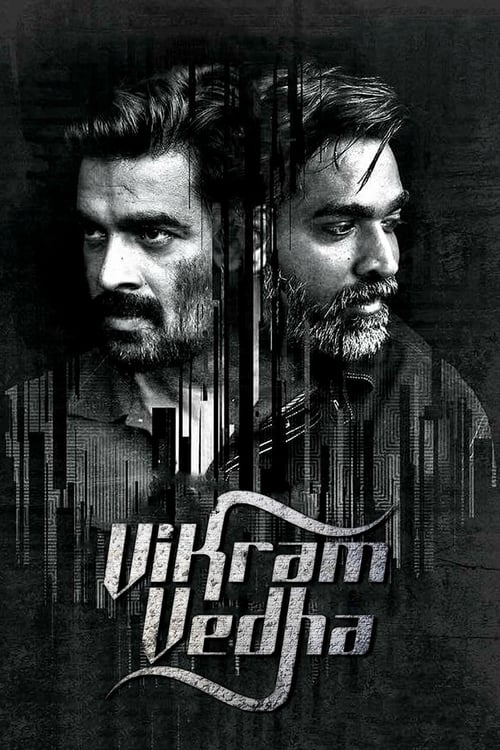
In the ending of "Vikram Vedha," Vikram, the police officer, confronts Vedha, the gangster, in a final showdown. After a series of intense exchanges and revelations, Vikram learns the truth about Vedha's past and the moral complexities of their lives. Ultimately, Vikram kills Vedha, but not before Vedha's story deeply impacts him. The film concludes with Vikram reflecting on the choices he has made, and the cycle of violence continues as he faces the consequences of his actions.
As the climax of "Vikram Vedha" unfolds, the tension between Vikram, the determined police officer, and Vedha, the cunning gangster, reaches its peak. The scene is set in a dimly lit warehouse, where the air is thick with anticipation. Vikram, played with a steely resolve, enters the space, his heart pounding with the weight of his mission. He is driven not just by duty but by a personal vendetta against Vedha, who has eluded him for so long.
Vedha, portrayed with a charismatic yet menacing demeanor, awaits Vikram's arrival. The two men are locked in a battle of wits, each representing opposing sides of the law. As they exchange words, the atmosphere crackles with tension. Vedha begins to recount his life story, weaving a narrative that reveals the harsh realities of his upbringing and the choices that led him down a dark path. Vikram listens intently, his initial resolve beginning to waver as he grapples with the moral ambiguity of Vedha's actions.
In a pivotal moment, Vedha shares a story about a time he was betrayed, drawing parallels to Vikram's own life. The emotional weight of Vedha's tale resonates with Vikram, who is forced to confront the complexities of good and evil. The lines between hero and villain blur as Vikram reflects on his own motivations and the impact of his choices.
As the confrontation escalates, the tension culminates in a violent clash. Vikram, fueled by a mix of anger and understanding, ultimately draws his weapon. In a heart-wrenching moment, he pulls the trigger, and Vedha falls to the ground, a look of acceptance on his face. The finality of this act weighs heavily on Vikram, who realizes that he has not only taken a life but has also extinguished a flicker of understanding that could have bridged their worlds.
In the aftermath, Vikram stands over Vedha's lifeless body, a mixture of triumph and sorrow washing over him. The camera lingers on Vikram's face, capturing the turmoil within. He has achieved his goal, but at what cost? The cycle of violence continues, as the film closes with Vikram reflecting on the choices he has made, hinting at the inevitable consequences that await him.
The fate of the main characters is sealed in this final act. Vikram, despite his victory, is left to grapple with the moral implications of his actions, suggesting that the battle between good and evil is far from black and white. Vedha, having met his end, leaves behind a legacy of questions about justice and redemption, challenging Vikram--and the audience--to reconsider the nature of their own beliefs. The film concludes on a somber note, emphasizing the complexities of human nature and the perpetual cycle of violence that ensnares both the law enforcers and the lawbreakers.
Is there a post-credit scene?
The movie "Vikram Vedha," produced in 2017, does not have a post-credit scene. The film concludes its narrative without any additional scenes after the credits roll. The story wraps up with a powerful climax that ties together the themes of morality, justice, and the complexities of good and evil, leaving the audience with a sense of resolution regarding the characters' arcs. The absence of a post-credit scene emphasizes the film's focus on its central storyline and character development rather than setting up for a sequel or additional content.
What motivates Vikram to pursue Vedha throughout the film?
Vikram, a determined and principled police officer, is driven by a strong sense of justice and duty. His motivation to pursue Vedha stems from his desire to uphold the law and protect society from crime. As he delves deeper into Vedha's world, he becomes increasingly intrigued by Vedha's philosophical outlook on life and crime, which challenges Vikram's own beliefs.
How does Vedha manipulate Vikram during their encounters?
Vedha, a cunning and charismatic gangster, uses storytelling as a tool to manipulate Vikram during their encounters. Each time they meet, Vedha recounts a story from his past that reveals the complexities of his character and the circumstances that led him to become a criminal. These stories not only serve to confuse Vikram but also force him to confront his own moral dilemmas and the gray areas of justice.
What is the significance of the relationship between Vikram and his partner, Simon?
The relationship between Vikram and Simon is significant as it highlights themes of loyalty, trust, and the moral complexities of their profession. Simon serves as a grounding force for Vikram, often providing a contrasting perspective on their pursuit of Vedha. Their camaraderie is tested throughout the film, especially as Vikram becomes more obsessed with Vedha's philosophical challenges, leading to tension and conflict in their partnership.
What role does Vedha's backstory play in shaping his character?
Vedha's backstory is crucial in shaping his character and motivations. Through flashbacks, the audience learns about his traumatic childhood, the loss of his family, and the betrayal he faced, which ultimately led him to a life of crime. These experiences provide context for his actions and decisions, making him a more sympathetic character despite his criminal activities. Vedha's past also serves to challenge Vikram's perceptions of good and evil.
How does the film depict the moral ambiguity of its characters?
The film intricately depicts the moral ambiguity of its characters, particularly through the interactions between Vikram and Vedha. Vikram, initially seen as the 'hero,' grapples with the realization that his rigid sense of justice may not be as clear-cut as he believed. Vedha, on the other hand, presents himself as a villain but reveals layers of complexity that force Vikram to reconsider his definitions of right and wrong. This moral ambiguity is a central theme that drives the narrative forward.
Is this family friendly?
"Vikram Vedha," produced in 2017, is not considered family-friendly due to its mature themes and content. Here are some potentially objectionable or upsetting aspects that may affect children or sensitive viewers:
-
Violence: The film contains several intense action sequences, including shootouts and physical confrontations that can be graphic and disturbing.
-
Crime and Morality: The narrative revolves around crime, with themes of morality and justice that may be complex and unsettling for younger audiences.
-
Death and Loss: There are scenes depicting death and the emotional aftermath, which can be heavy and distressing.
-
Strong Language: The dialogue includes strong language and profanity, which may not be suitable for children.
-
Mature Themes: The film explores themes of betrayal, revenge, and the gray areas of good versus evil, which may be difficult for younger viewers to comprehend.
-
Emotional Turmoil: Characters experience significant emotional struggles, including guilt, remorse, and existential dilemmas, which may be intense for sensitive viewers.
Overall, the film's content is geared towards an adult audience and may not be appropriate for children or those who are sensitive to violence and complex moral issues.








