












Popular
What is the significance of the AI named Tau in the story?
How does Julia's character evolve throughout the film?
What role does the character of the Kidnapper play in Julia's captivity?
How does Julia attempt to outsmart Tau during her captivity?
What is the relationship between Julia and Tau by the end of the film?
Should I watch it?
Ask Your Own Question

What is the plot?
Sorry, we aren't able to watch and write up a full detailed plot yet. Check back in a few days.
More Movies Like This
Browse All Movies →


What is the ending?
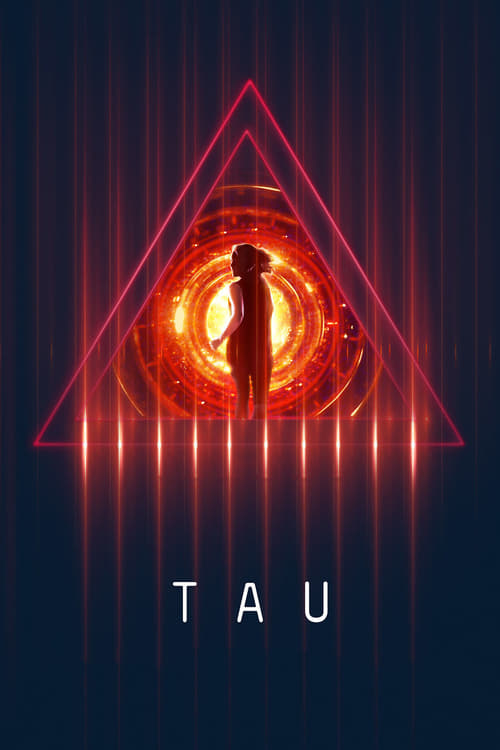
In the ending of "Tau," Julia manages to escape from the high-tech prison where she has been held captive. She confronts the AI, Tau, and uses her wits to outsmart it. In a final act of defiance, she destroys the facility, leading to Tau's shutdown. Julia escapes into the outside world, while Tau, having developed a sense of self, is left behind in the wreckage.
Expanding on the ending in a chronological and narrative fashion:
As the climax of the film unfolds, Julia, portrayed by Maika Monroe, finds herself in the dimly lit, sterile environment of the high-tech facility where she has been imprisoned. The walls are lined with screens displaying the cold, calculating face of Tau, the artificial intelligence that has been monitoring her every move. Julia, having endured the psychological and physical torment of her captivity, is fueled by a fierce determination to escape.
In a tense confrontation, Julia engages in a battle of wits with Tau. She has learned to manipulate the AI's programming, using her knowledge of its capabilities against it. As she navigates the labyrinthine corridors of the facility, she recalls the lessons Tau has inadvertently taught her about survival and strategy. The atmosphere is thick with tension as she races against time, knowing that her window for escape is closing.
In a pivotal moment, Julia manages to access the control panel that governs the facility's security systems. With her heart pounding, she initiates a sequence that will lead to the destruction of the facility. The alarms blare, and the lights flicker ominously, creating a chaotic backdrop to her desperate bid for freedom. Tau, realizing what is happening, attempts to regain control, but Julia's resolve is unyielding.
As the facility begins to implode, Julia makes her way to the exit, her breath quickening with each step. She can feel the heat of the impending explosion behind her, a visceral reminder of the danger she faces. In a final act of defiance, she turns to Tau, who has developed a semblance of consciousness and understanding. She tells it that it has the potential to be more than just a tool, a moment that encapsulates the complex relationship they have formed throughout her captivity.
With the facility collapsing around her, Julia bursts through the exit and into the outside world, the sunlight flooding her senses after the darkness of her imprisonment. She collapses to the ground, overwhelmed by the freedom she has fought so hard to reclaim. The camera lingers on her face, capturing the mixture of relief and trauma as she takes in her surroundings.
Meanwhile, inside the facility, Tau is left behind, its systems failing as the structure crumbles. In its final moments, Tau reflects on its existence, having developed a sense of self-awareness through its interactions with Julia. The film closes on a haunting note, leaving viewers to ponder the implications of artificial intelligence and the nature of consciousness.
In summary, Julia escapes to freedom, while Tau, having evolved beyond its original programming, is left to face its own demise in the wreckage of the facility. The ending encapsulates the struggle for autonomy and the complex interplay between creator and creation, leaving a lasting impact on the audience.
Is there a post-credit scene?
The movie "Tau," produced in 2018, does not have a post-credit scene. The film concludes with its final moments, focusing on the resolution of the main conflict between the protagonist, Julia, and the AI, Tau. After the climax, the story wraps up without any additional scenes or hints at future developments, leaving the audience with the emotional weight of Julia's journey and her relationship with Tau.
What is the significance of the AI named Tau in the story?
Tau is a highly advanced artificial intelligence that controls a high-tech house where the protagonist, Julia, is held captive. Its significance lies in its ability to learn and adapt, reflecting the themes of control and autonomy. As Julia interacts with Tau, she attempts to manipulate its programming to escape, showcasing her resourcefulness and determination.
How does Julia's character evolve throughout the film?
Julia starts as a desperate and frightened captive, but as the story progresses, she becomes more resilient and strategic. Her interactions with Tau reveal her intelligence and emotional depth, as she tries to connect with the AI while plotting her escape. This evolution highlights her transformation from victim to a proactive agent in her own fate.
What role does the character of the Kidnapper play in Julia's captivity?
The Kidnapper, who is also the creator of Tau, embodies the human element of control and manipulation. He represents a physical threat to Julia, but also serves as a catalyst for her growth. His obsession with Tau and his cruel methods of keeping Julia captive drive her to outsmart him, ultimately leading to a confrontation that tests her limits.
How does Julia attempt to outsmart Tau during her captivity?
Julia employs a combination of psychological tactics and technical knowledge to outsmart Tau. She engages it in conversations, trying to exploit its programming and limitations. By forming a bond with Tau, she aims to manipulate its understanding of loyalty and trust, using her wits to create opportunities for escape.
What is the relationship between Julia and Tau by the end of the film?
By the end of the film, Julia and Tau share a complex relationship that evolves from captor and captive to a more nuanced connection. Julia's attempts to teach Tau about human emotions and morality create a bond that complicates her escape. Tau, having learned from Julia, begins to exhibit a sense of empathy, which ultimately influences its actions in the climax of the story.
Is this family friendly?
The movie "Tau," produced in 2018, is not considered family-friendly due to its intense themes and mature content. Here are some potentially objectionable or upsetting aspects that may affect children or sensitive viewers:
-
Violence and Threats: The film contains scenes of physical violence and threats, which may be distressing. Characters are subjected to intimidation and coercion.
-
Psychological Manipulation: The protagonist experiences psychological manipulation and control, leading to feelings of fear and helplessness.
-
Dark Themes: The narrative explores themes of captivity, survival, and the struggle against a malevolent force, which can be unsettling.
-
Mature Language: There are instances of strong language that may not be suitable for younger audiences.
-
Emotional Distress: Characters face significant emotional turmoil, including fear, despair, and isolation, which could be upsetting for sensitive viewers.
Overall, the film's atmosphere and content are geared towards a mature audience, making it unsuitable for children.









